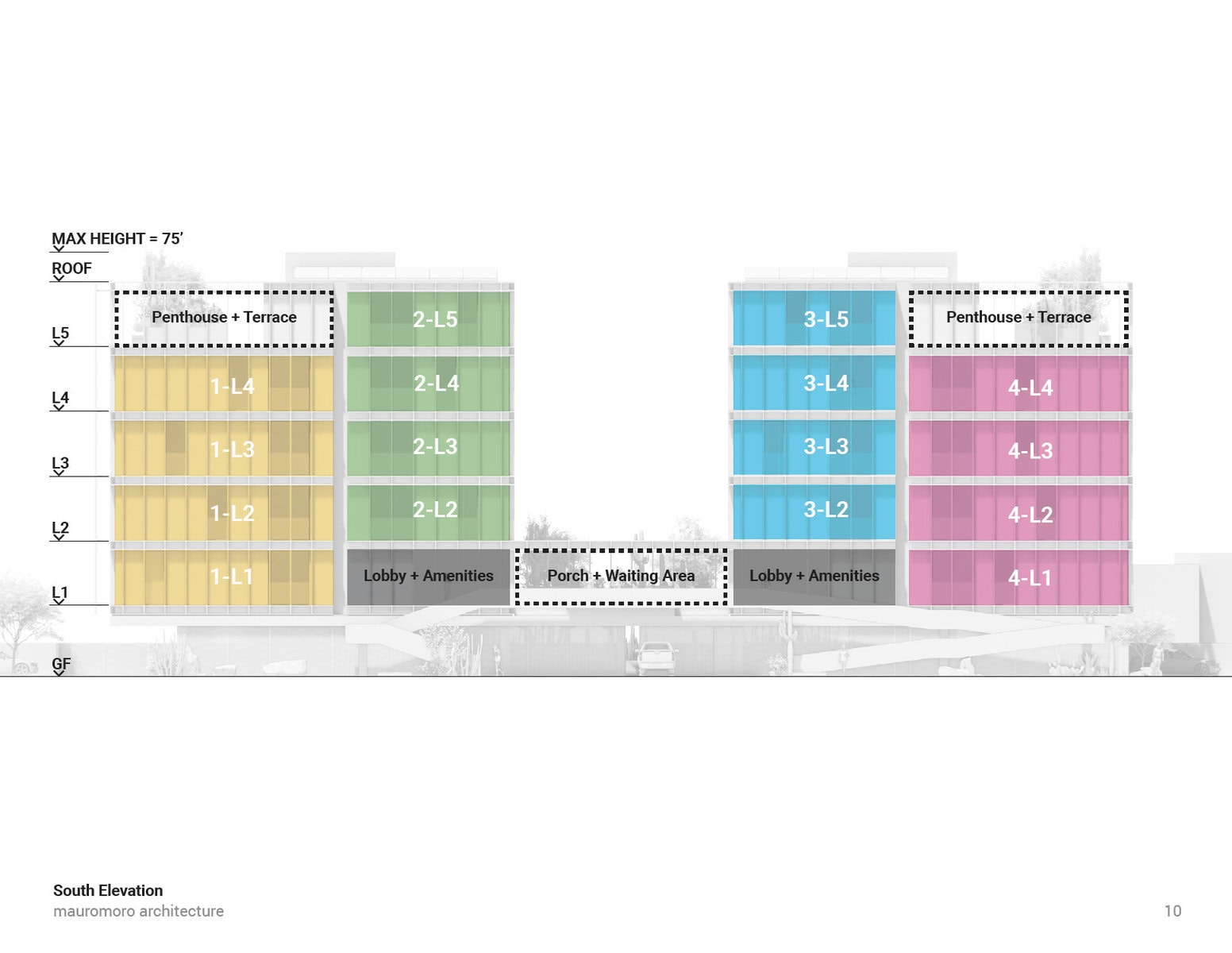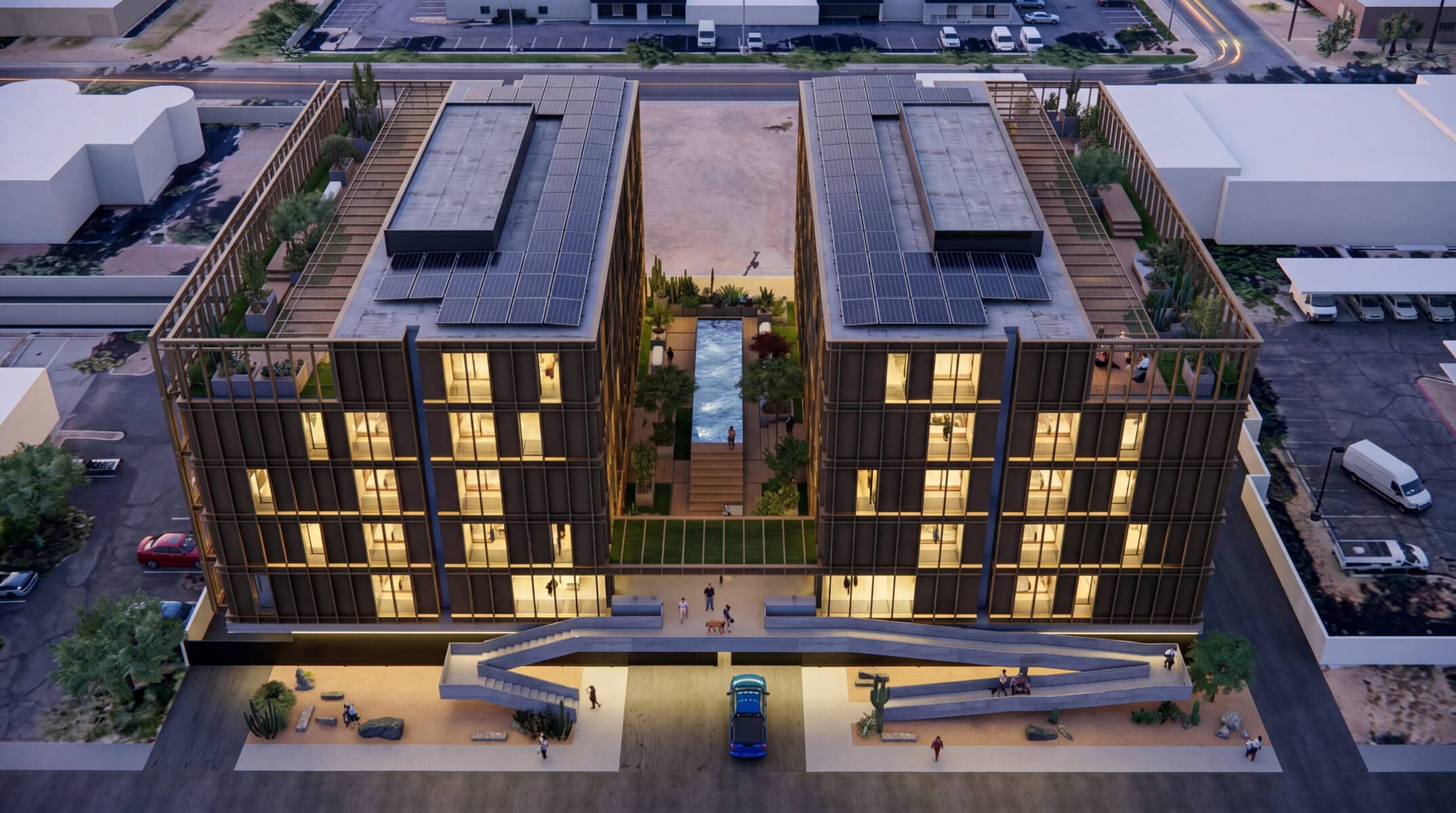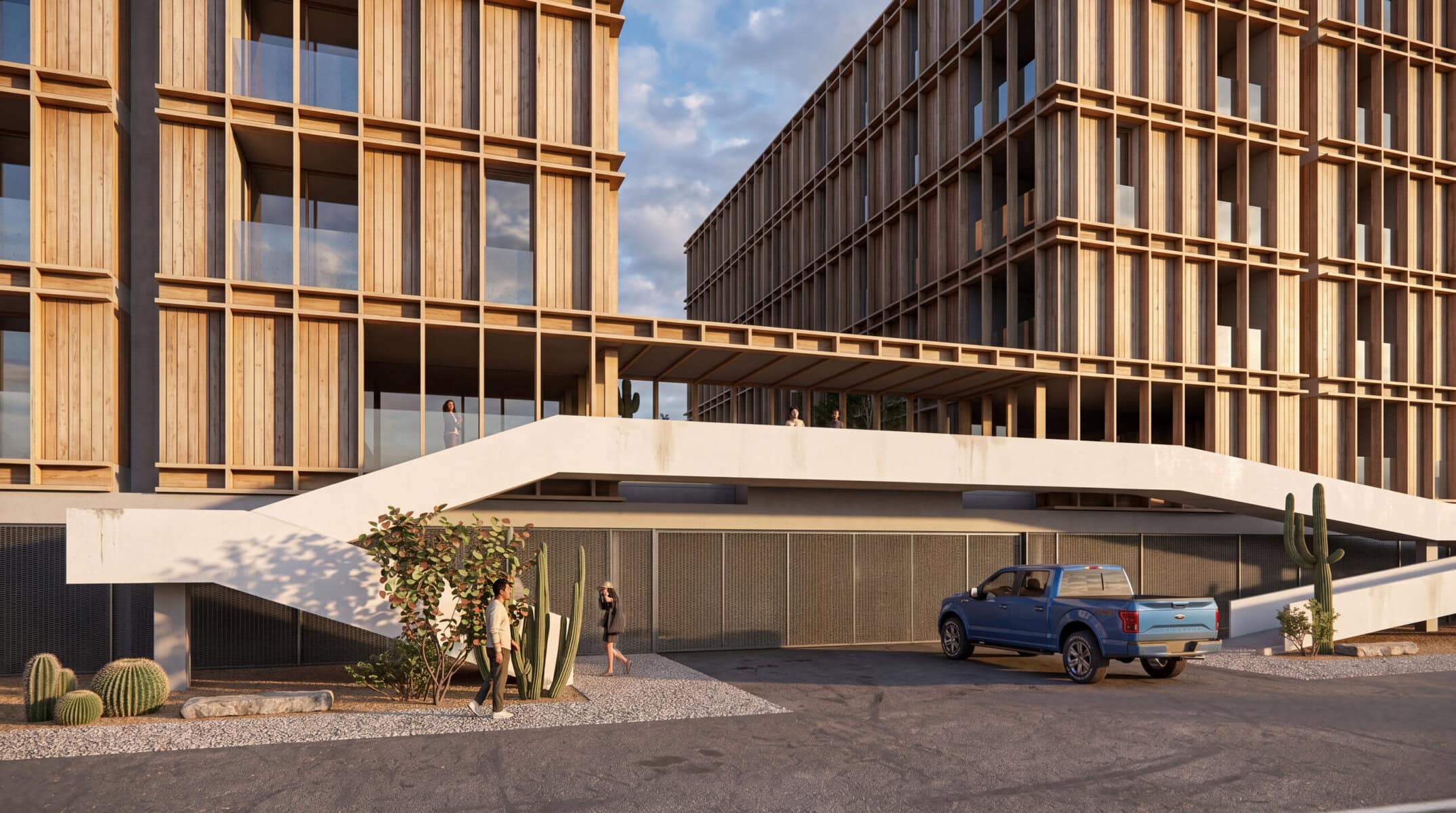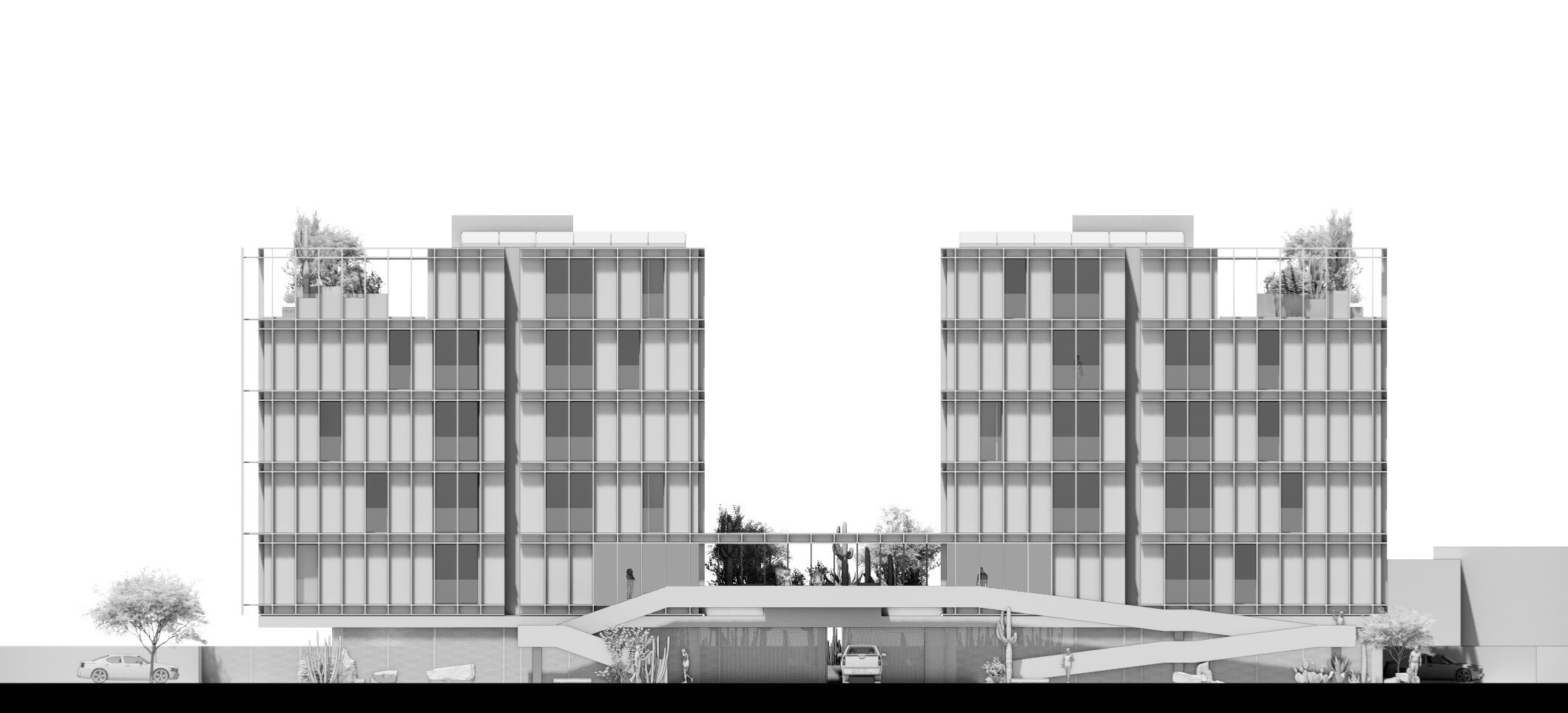
PROJECT OVERVIEW Type: Residential Condominium Concept Design Location: Phoenix, Arizona, USA Programme: High-Density Residential / Mixed-Use Base Configuration: 2 blocks × 4 floors | Shared podium parking
THE BRIEF
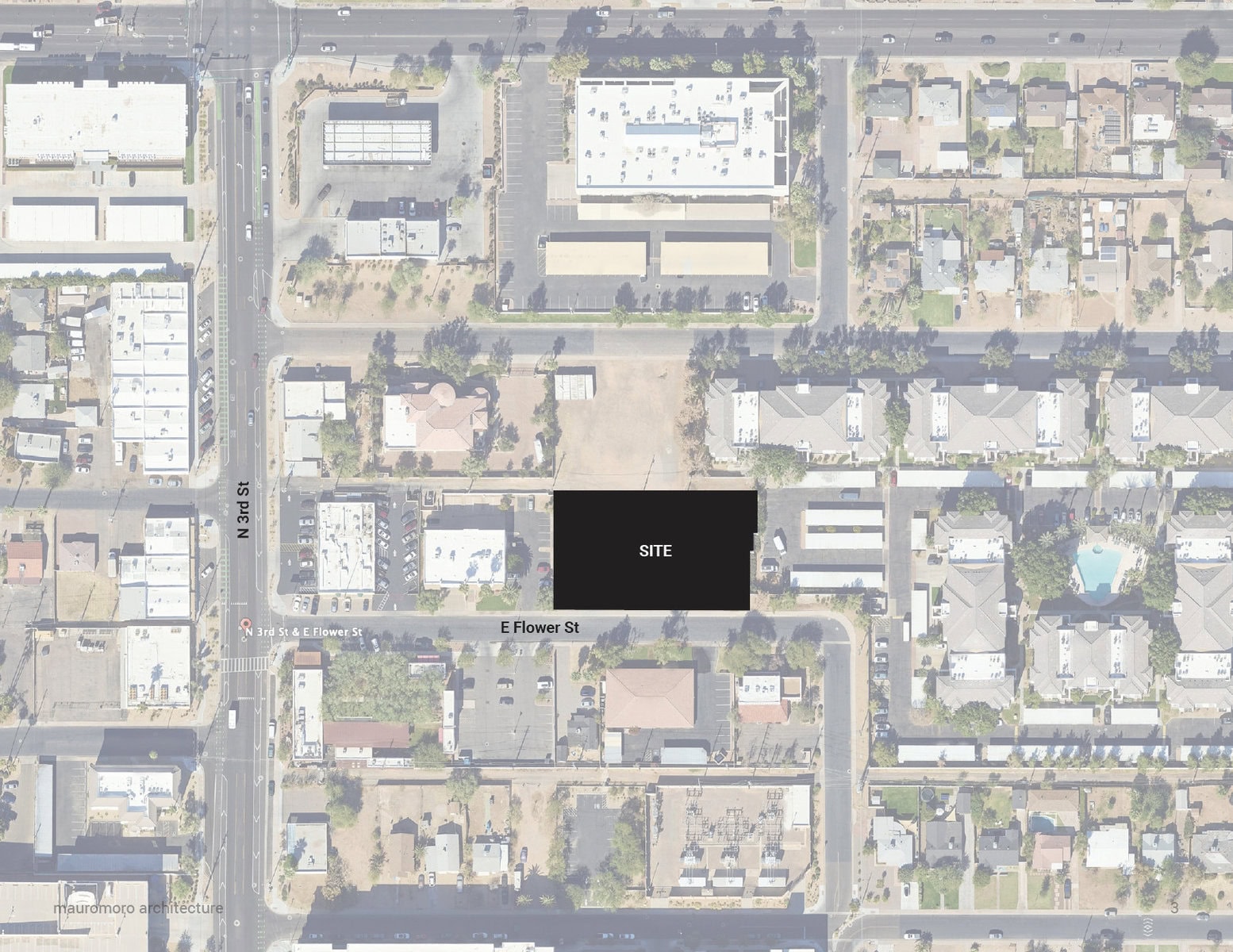
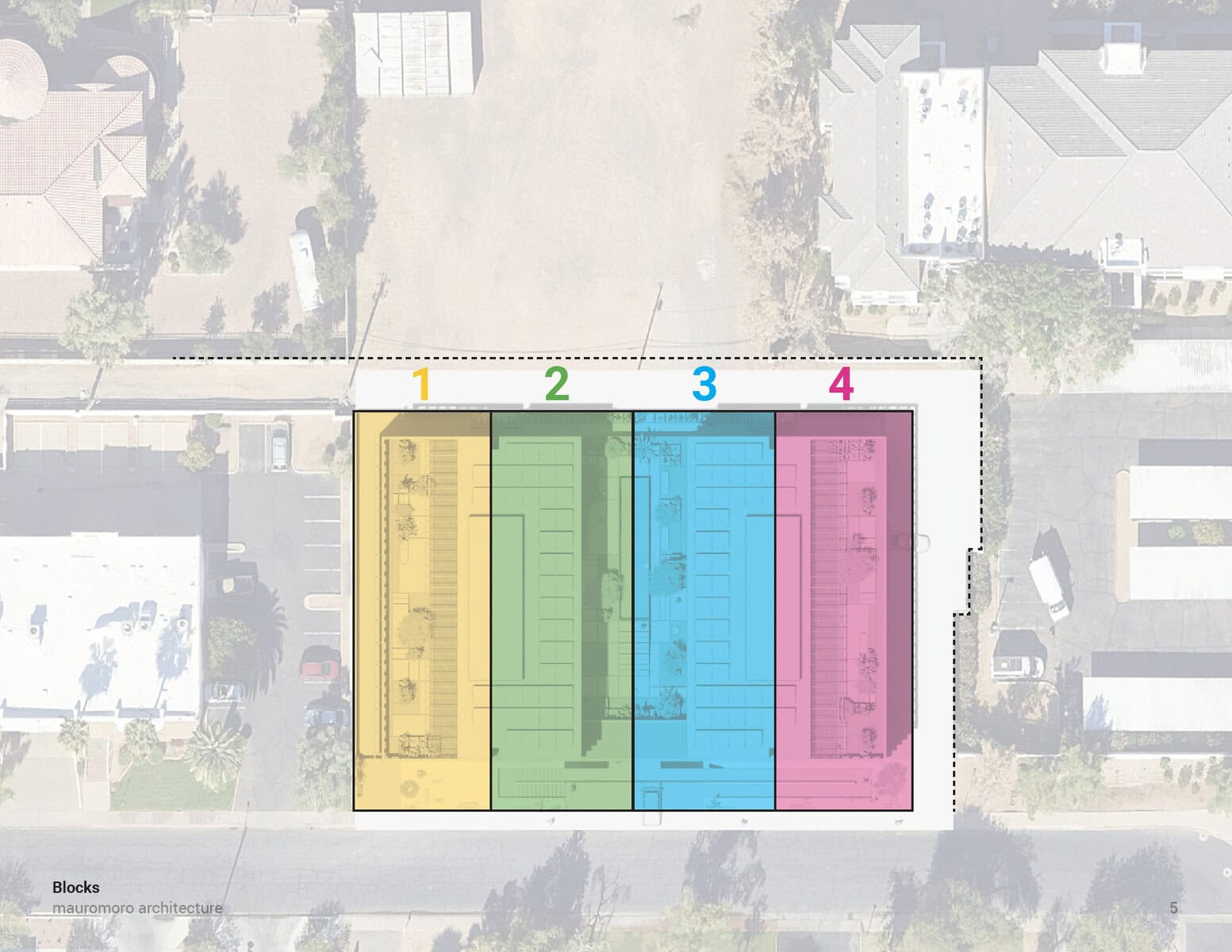
Phoenix is growing rapidly. The area around E-Flower Street, close to the city centre, is experiencing significant increases in population density driven by sustained demand for urban residential accommodation. The site presented an opportunity — and a constraint. Four narrow, adjoining lots in private ownership had individually limited development potential. Together, they offered something more.
The brief emerged from a consortium of the four lot owners who chose to combine their parcels and develop them jointly. The objective was to maximise residential yield on a tight urban footprint, deliver quality shared amenity, and produce a building that could be constructed efficiently and remain financially viable for all parties.
THE CONCEPT
The concept is built around the idea of making constraints productive. Four narrow lots, merged and rationalised, become the generator of the design rather than its limitation.
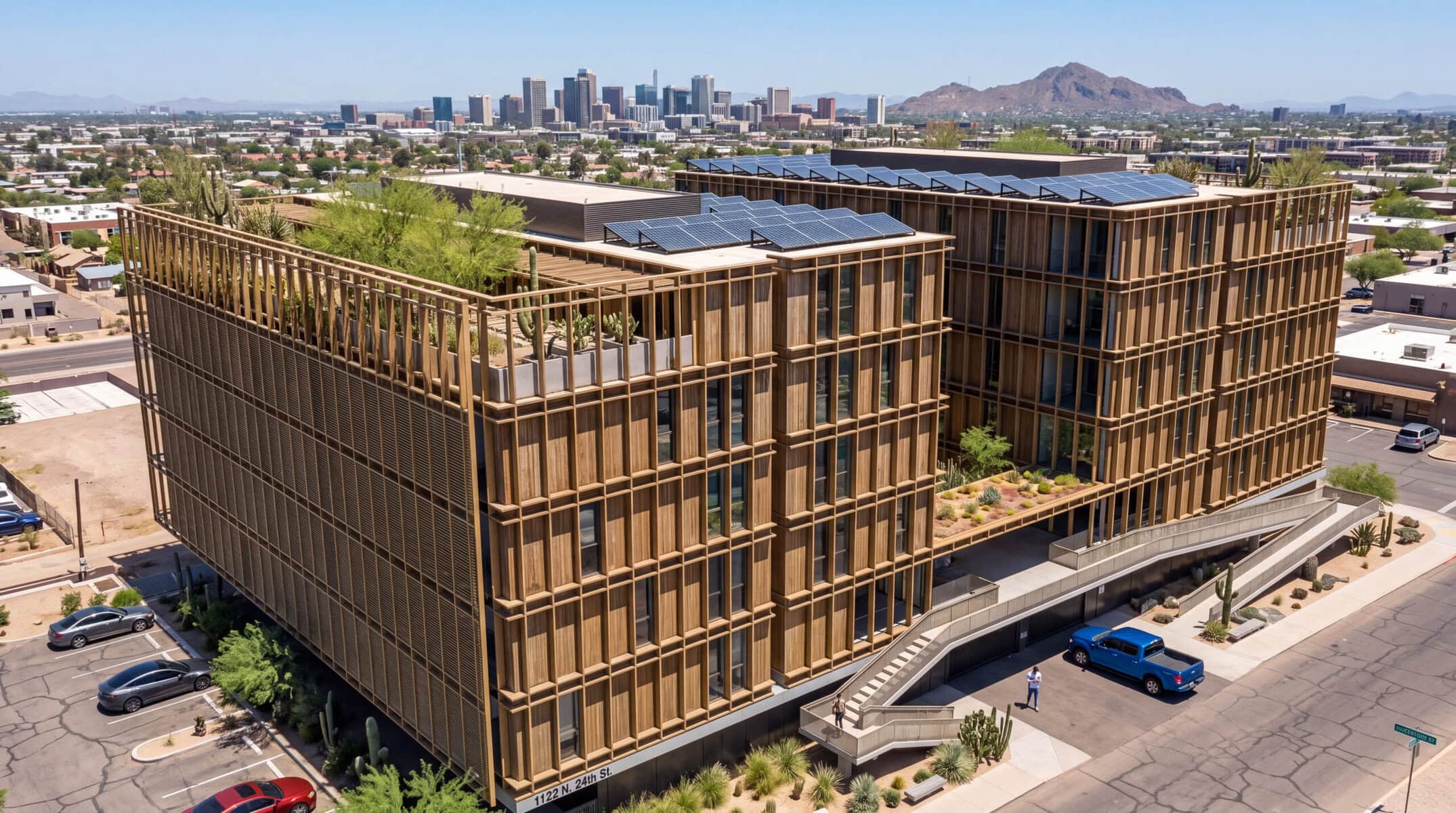
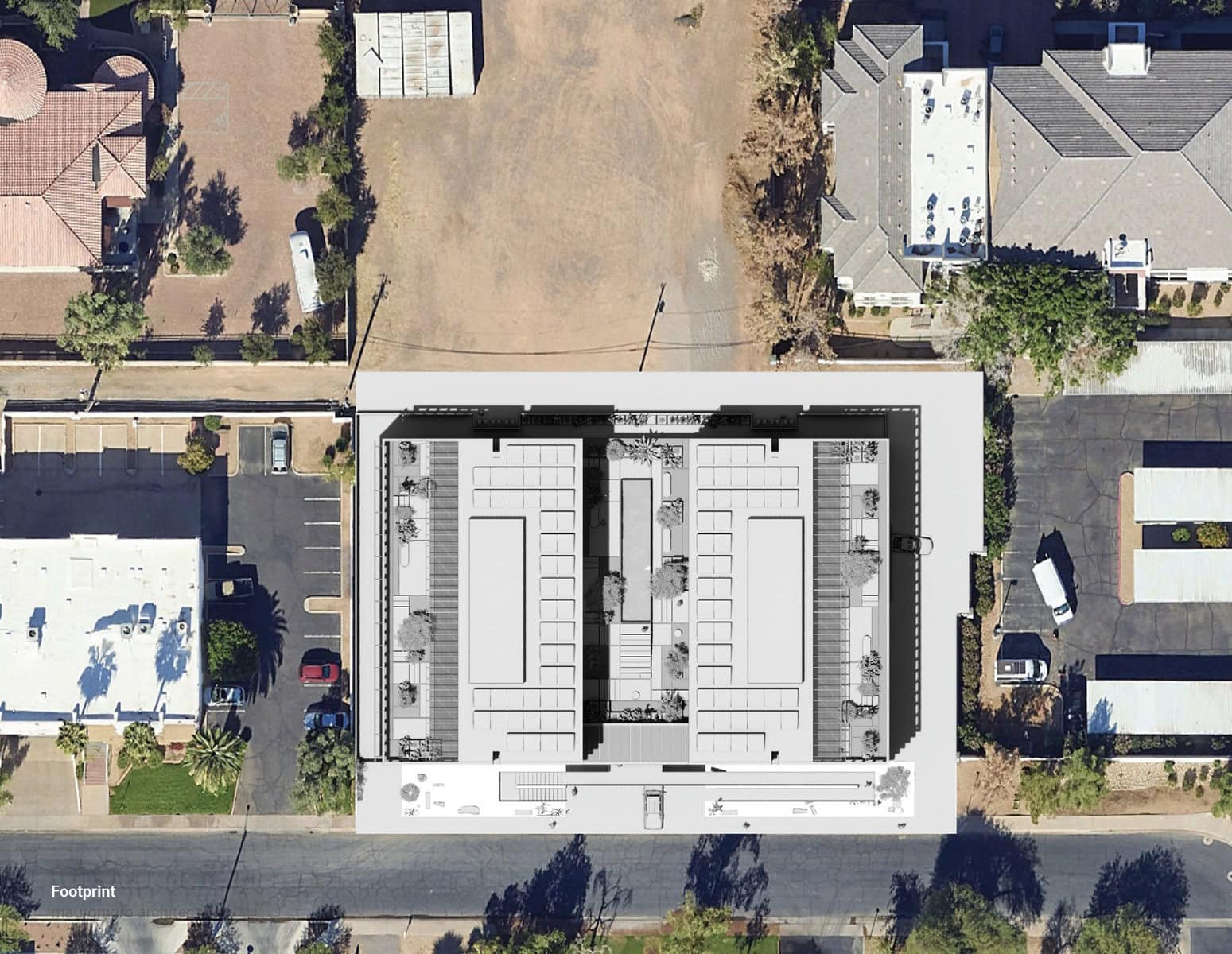
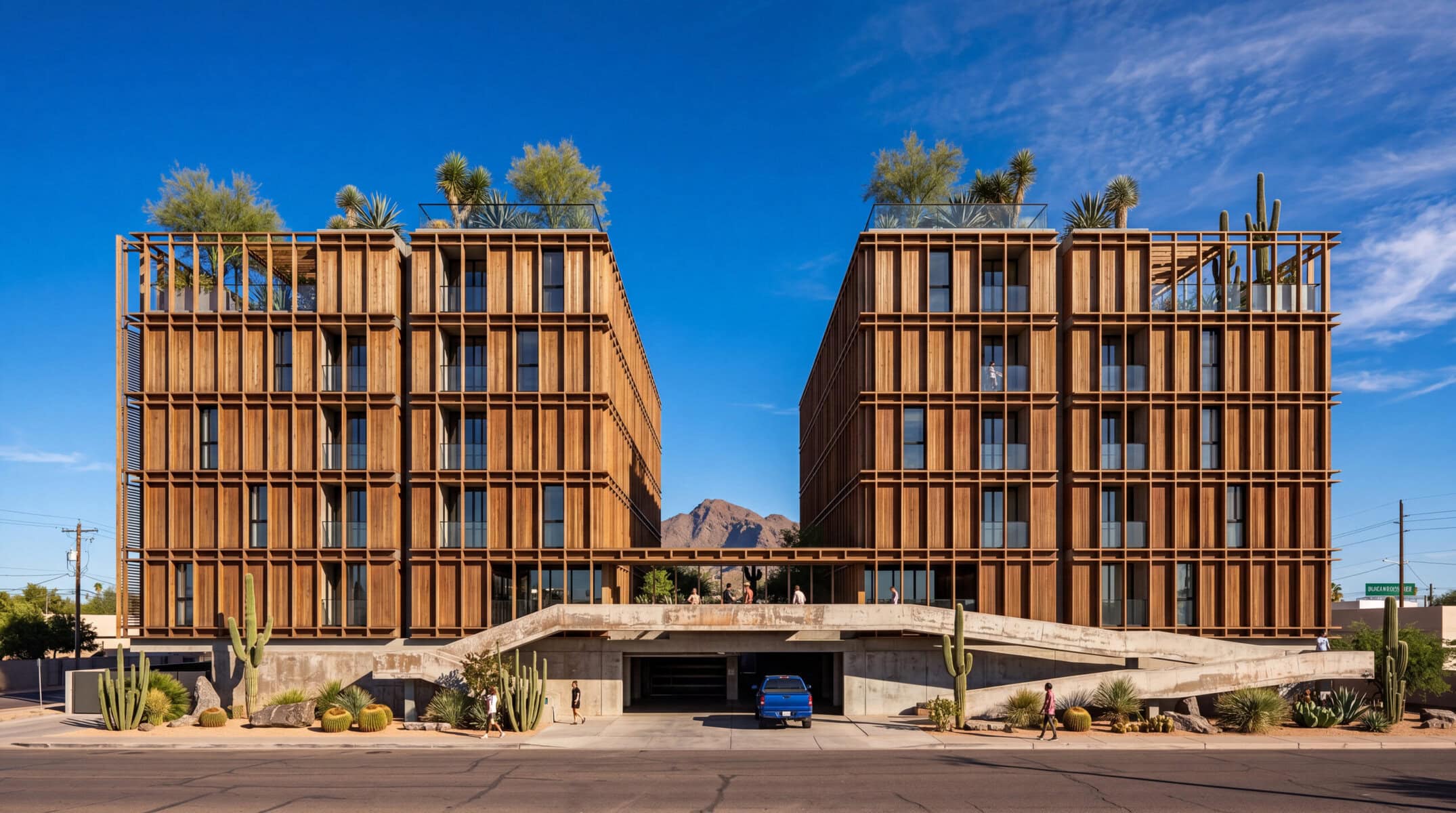
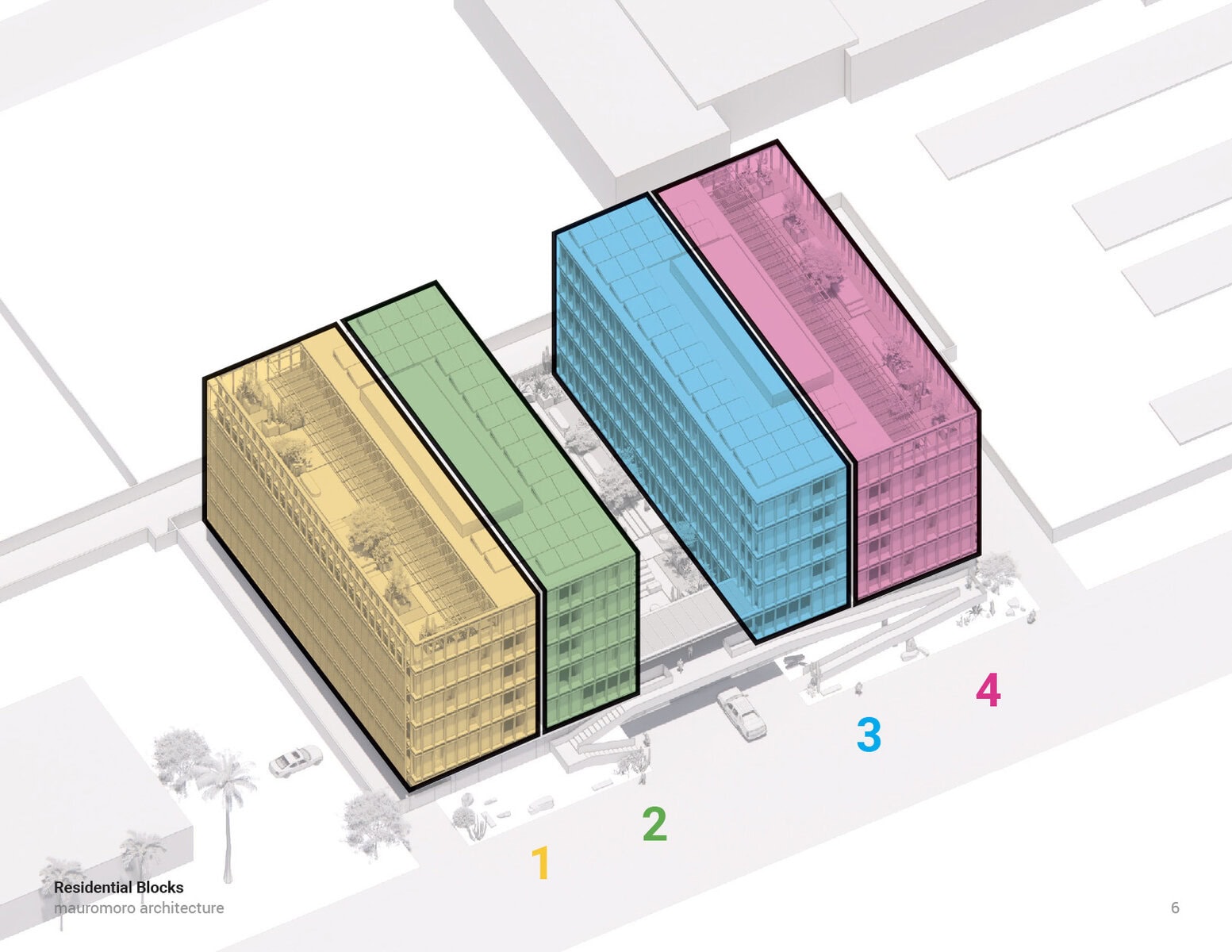
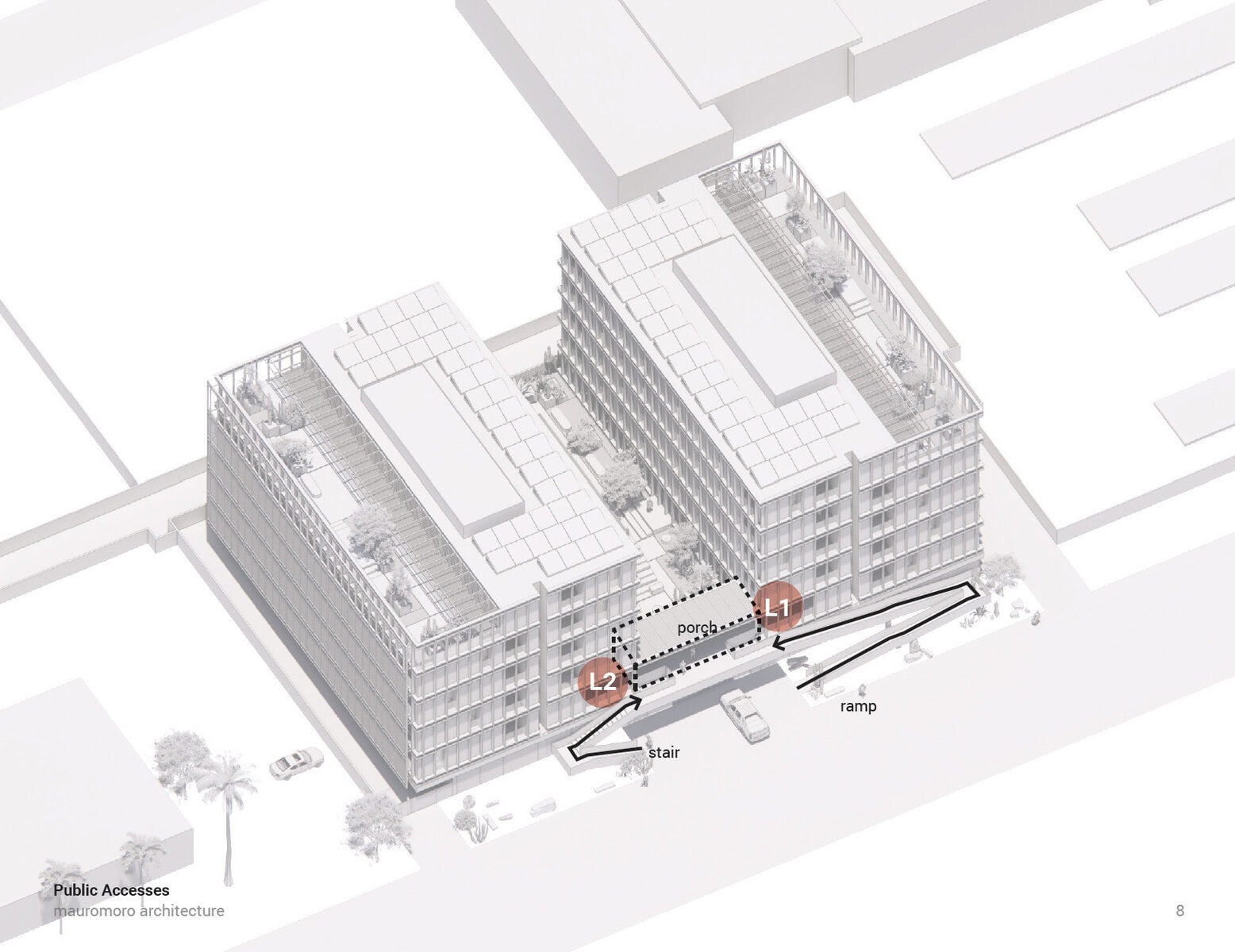
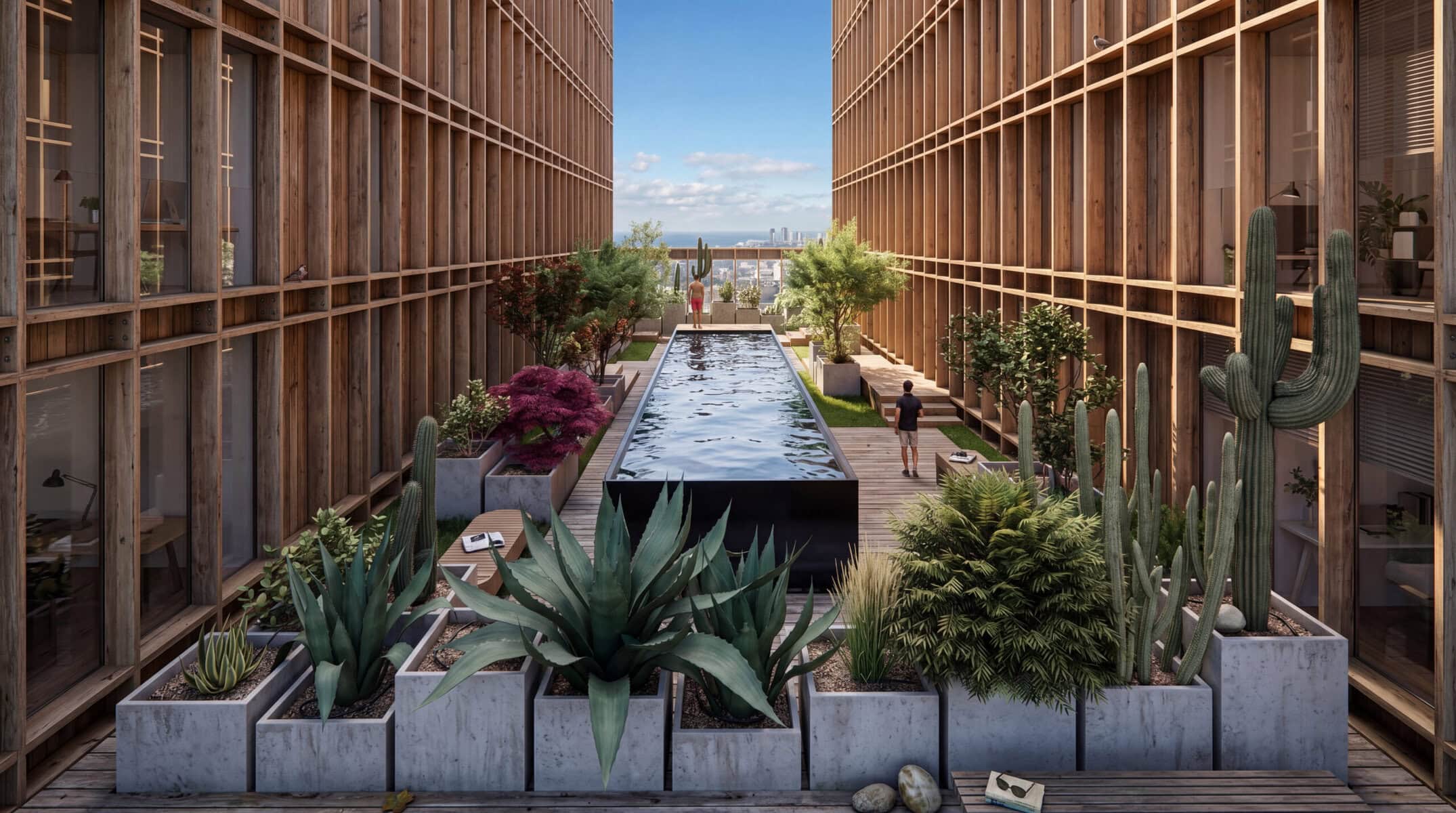
The lots are arranged in a two-by-two configuration, creating two residential blocks of four floors each, placed in parallel. The gap between them — inevitably small given the lot dimensions — is not treated as leftover space. Instead, it is activated as the social heart of the project: a shared courtyard containing community amenities, a green terrace, and a compact loop pool. The void between the buildings becomes the most valuable space on the site.
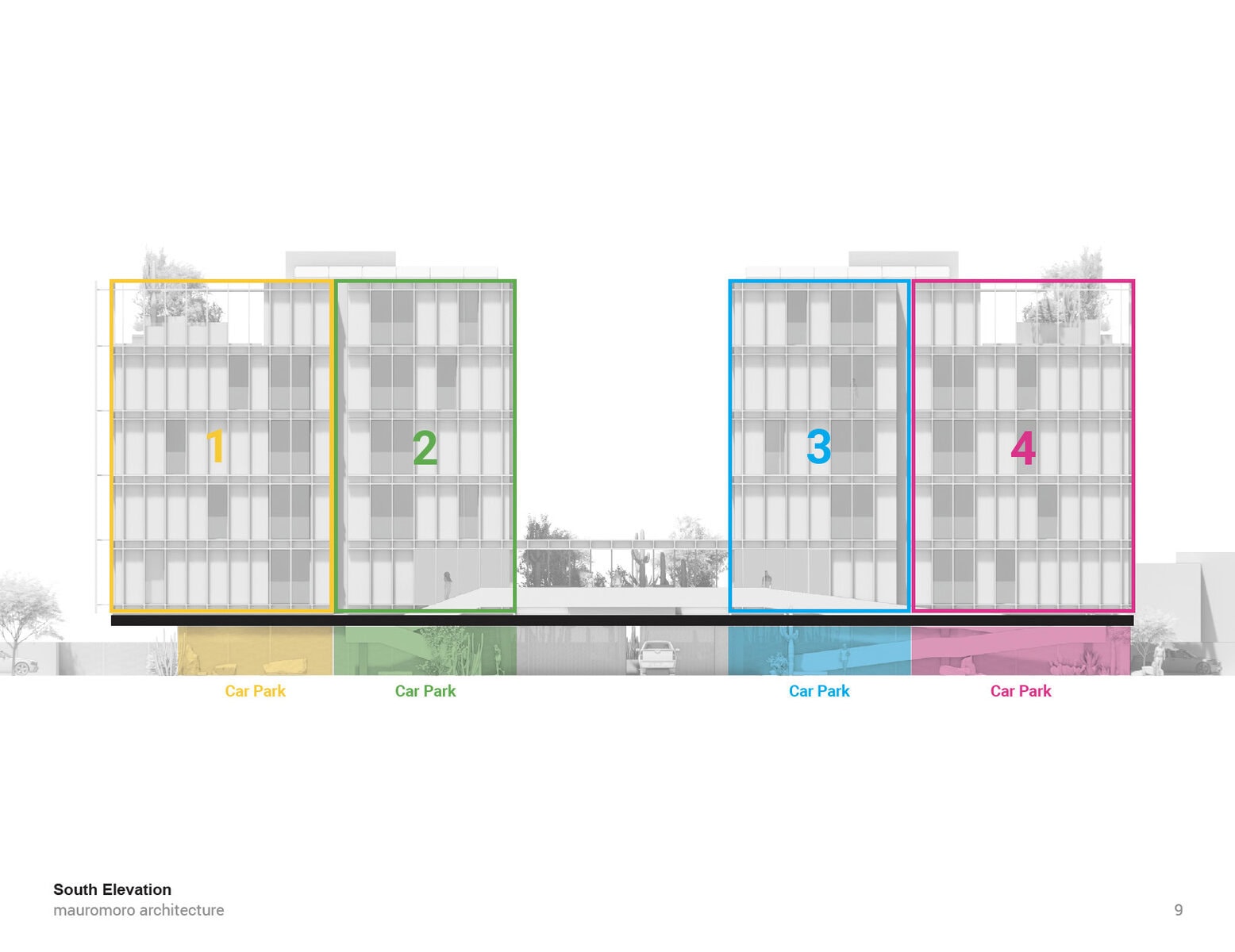
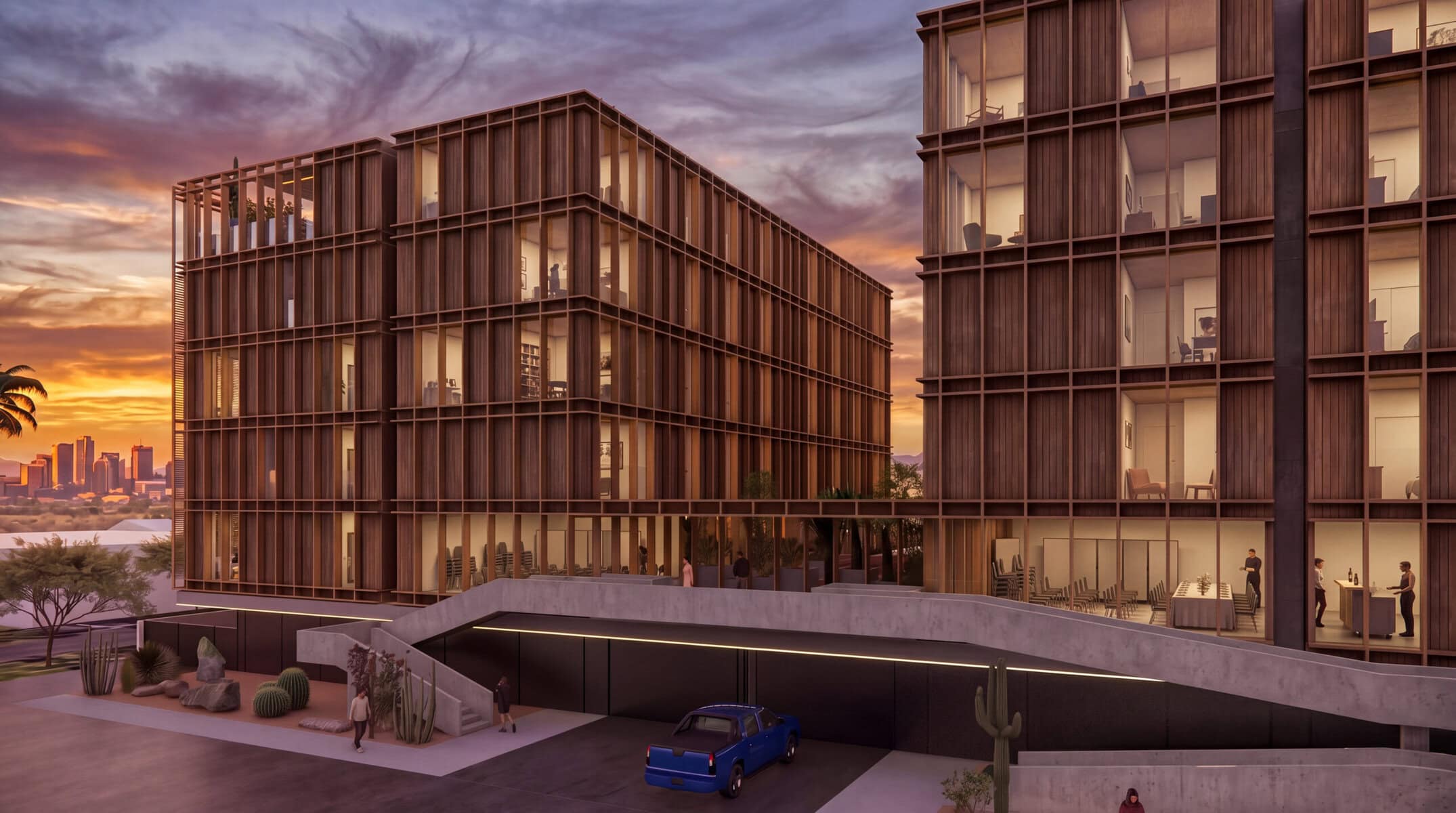
A shared podium base resolves the parking requirement for both blocks efficiently, keeping ground-level activity above grade and maintaining separate, independent entrances for each building — preserving the distinct ownership identity of each original lot even within the unified development.
THE APPROACH
The design translates the concept through three decisions that run consistently from urban strategy to building detail.
First, the massing maximises floor area within the site’s constraints while keeping the building’s scale contextual. Four floors on a narrow lot avoids the need for a lift in many jurisdictions, reduces structural complexity, and keeps construction cost within a range viable for a consortium development of this scale.
Second, the shared amenity programme — pool, green terrace, communal areas — is positioned between the blocks rather than distributed across rooftops or internal corridors. This concentrates social value in one identifiable place, making the shared space genuinely usable rather than symbolically present.
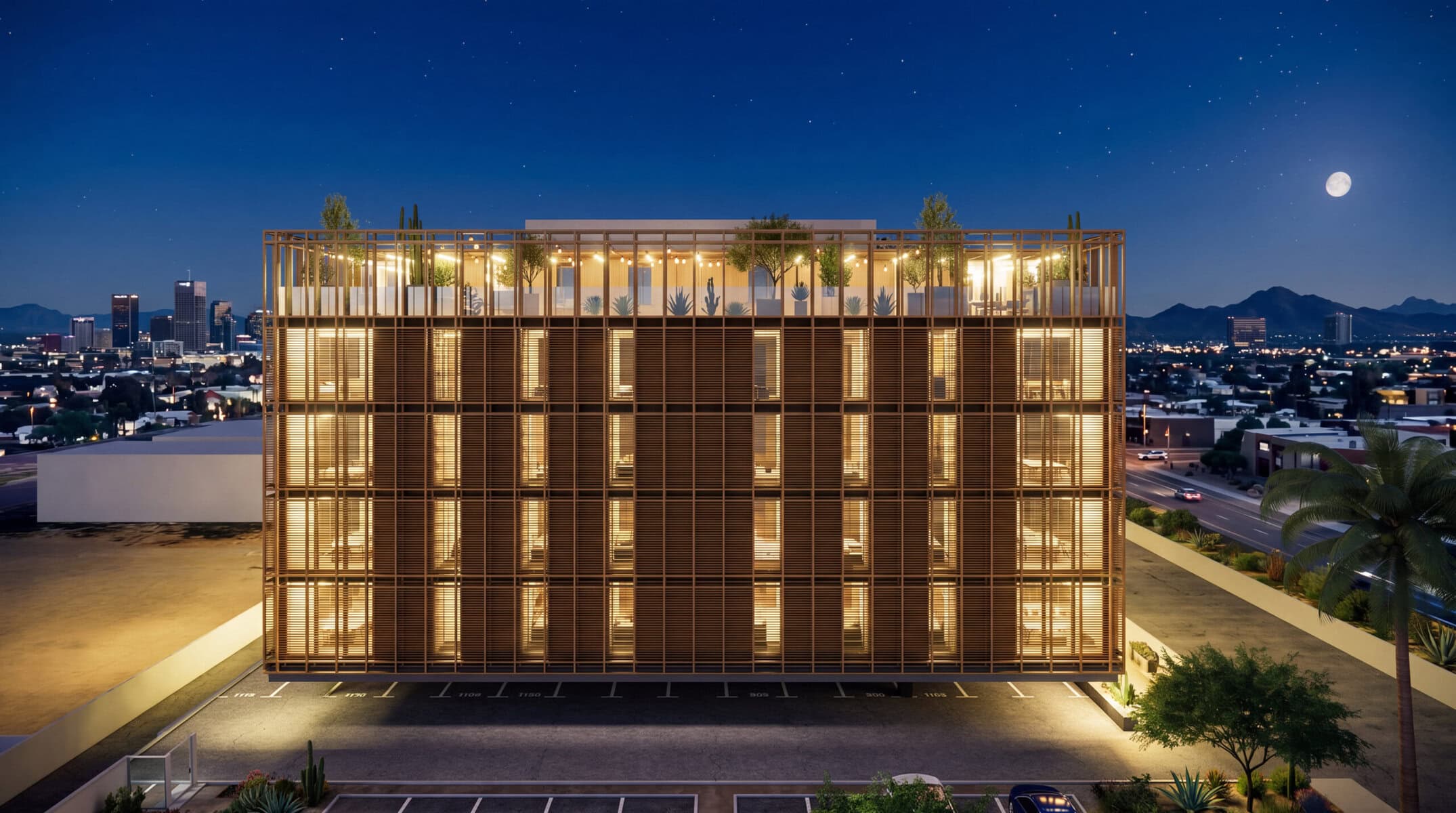
Third, the facade system is designed around modularity and repetition. A uniform geometric grid standardises components across both blocks, reducing fabrication and installation costs while creating the visual coherence needed to read the two buildings as a single composition. The grid also provides shade — a critical performance consideration in the Phoenix climate — without requiring a separate solar shading strategy.
KEY DESIGN DECISIONS
The decision to treat the central gap as shared amenity rather than service space was the defining move. In a project where the lots are narrow and every square metre counts, placing the pool and terrace at the centre was a deliberate choice to prioritise liveability over additional unit area.
The modular facade was equally strategic. On a consortium development with shared construction costs, standardisation is not a compromise — it is a financial necessity. The geometric grid delivers aesthetic consistency and climate performance within a budget-conscious framework.
WHY THIS PROJECT MATTERS
Urban infill residential development in fast-growing American cities faces a consistent tension: how to deliver density, quality, and financial viability on constrained urban lots. This project demonstrates how concept design and early-stage feasibility thinking can turn four separate, sub-optimal parcels into a coherent, liveable, and commercially sound residential development.