Elementary School Northern Italy – Concept Design in Vivaro, Friuli
This elementary school northern Italy concept explores how a new-build primary school can serve a small, traditional community in Vivaro, Friuli while delivering the spatial quality and flexibility that contemporary education requires. The project is a concept design for an educational and civic building: a school that belongs to its place as much as it serves its function.
The Brief
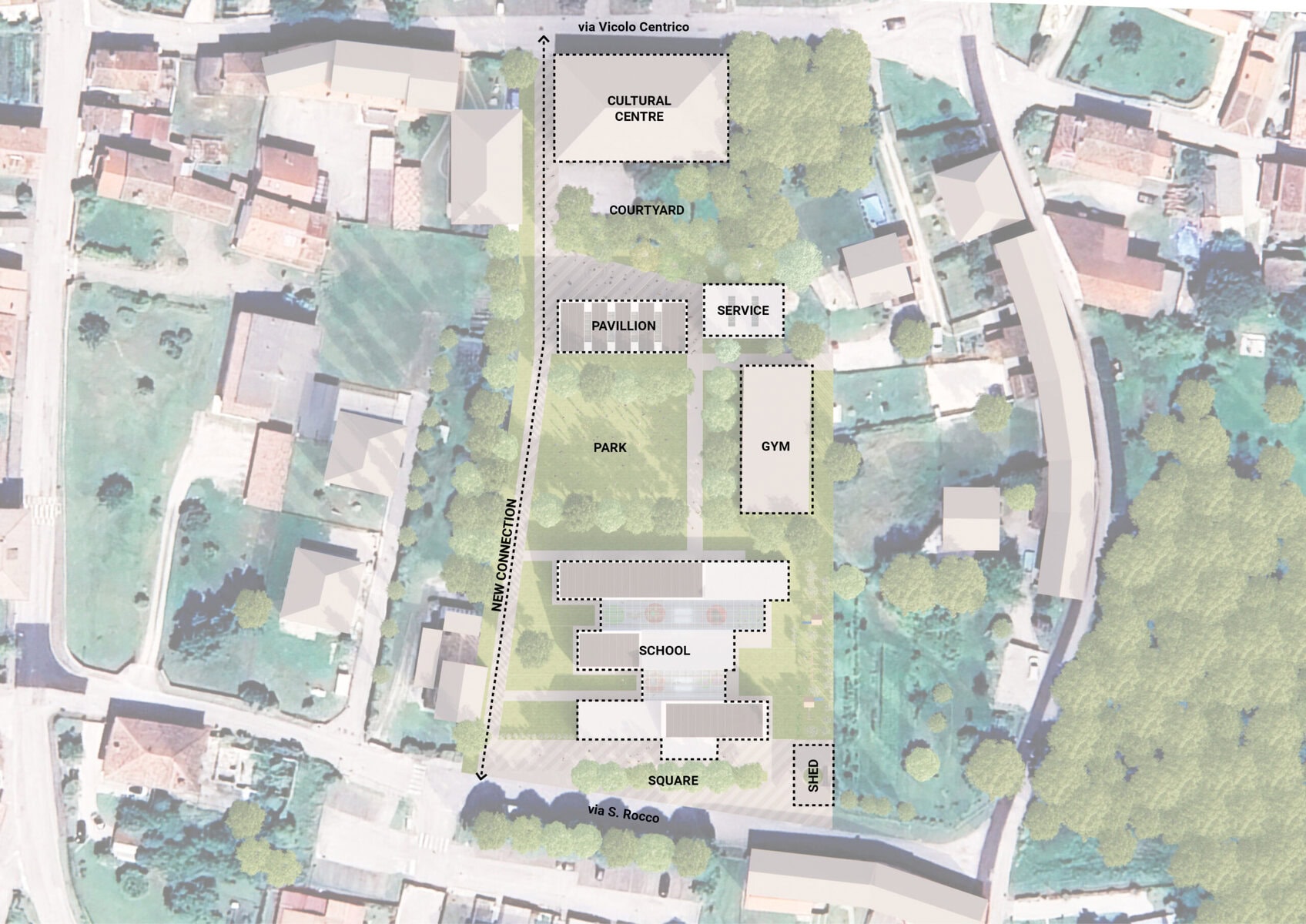
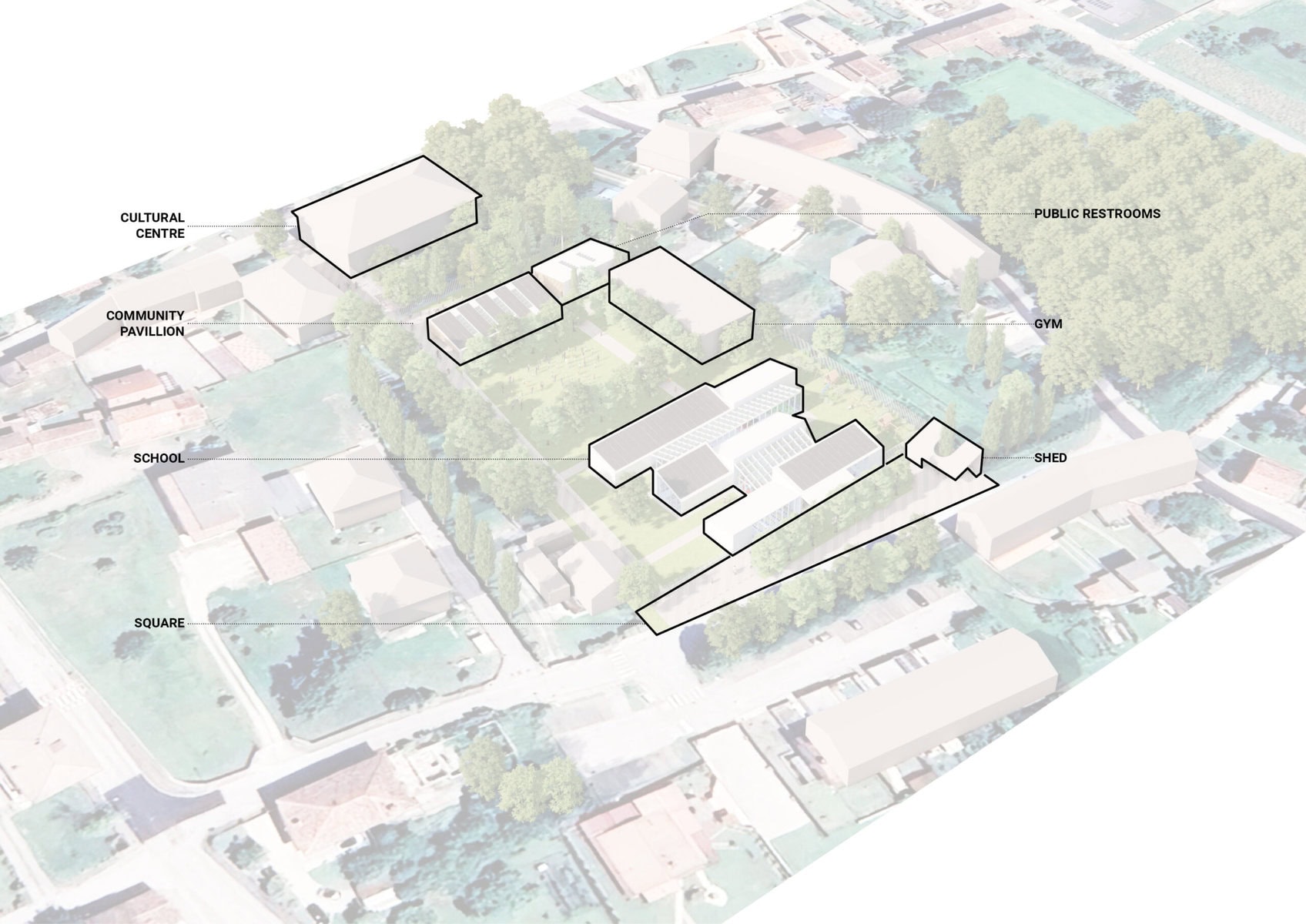
The brief called for a new elementary school within a small, traditional urban context in northern Italy. The school needed to serve its immediate community, students, parents, teachers, and local residents, while fitting into a neighbourhood defined by modest scale, historic street patterns, and a strong sense of local identity. The core challenge was not simply to design a functional school building. It was to design a building that could genuinely belong to the place, that felt like a natural part of the community rather than an institutional imposition, while delivering the spatial quality and flexibility that contemporary education requires.
The Concept: Solid and Void
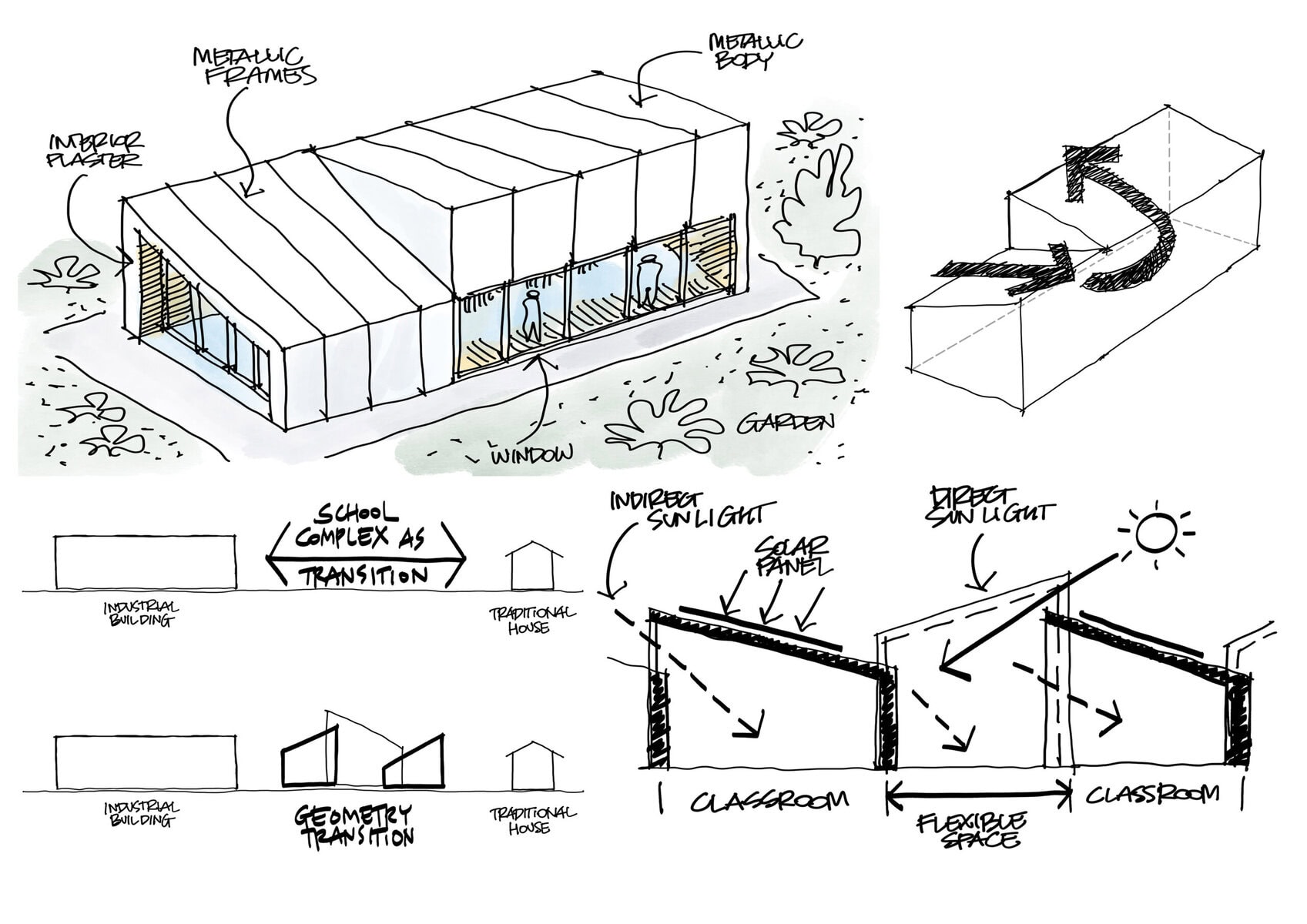
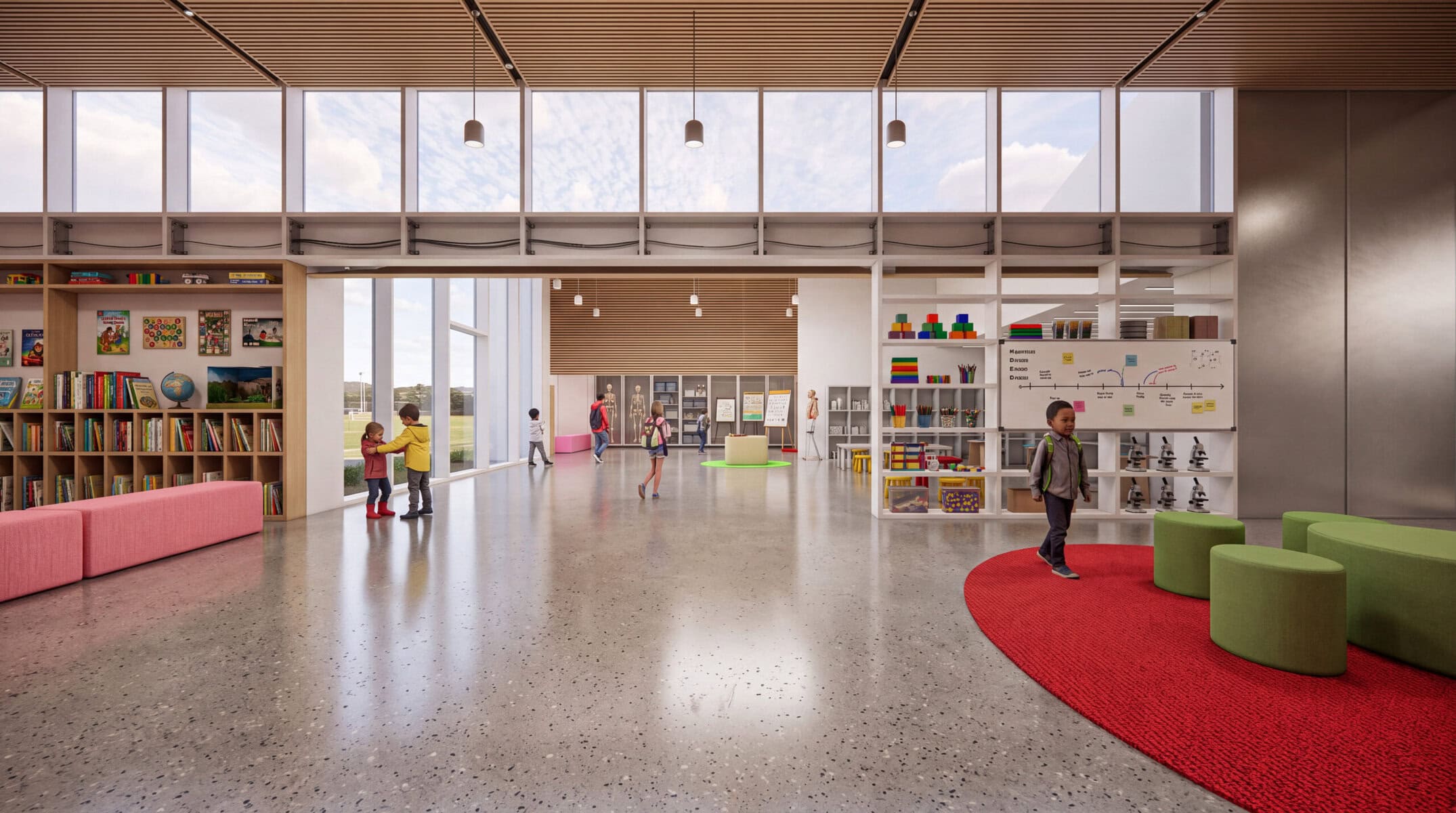
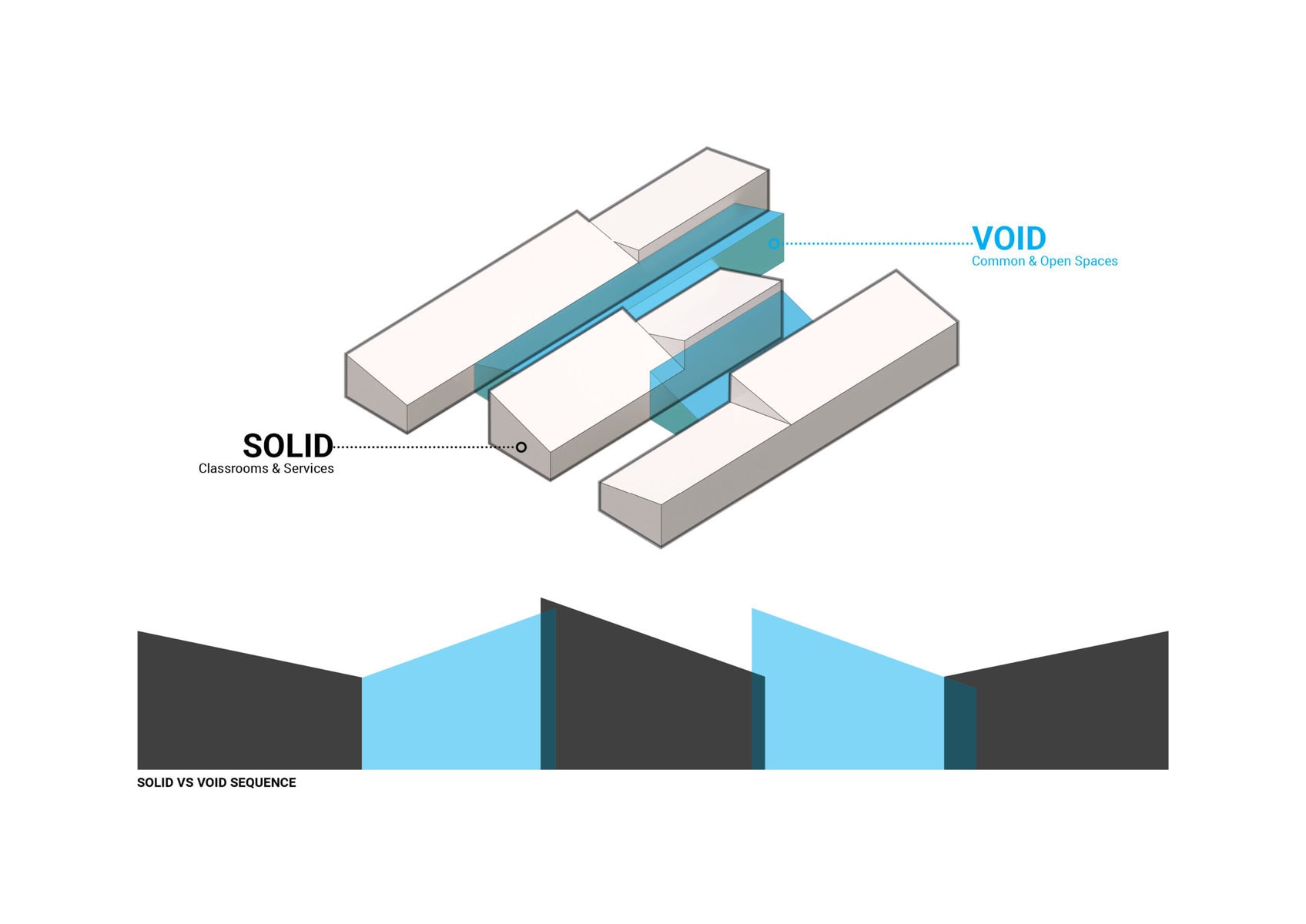
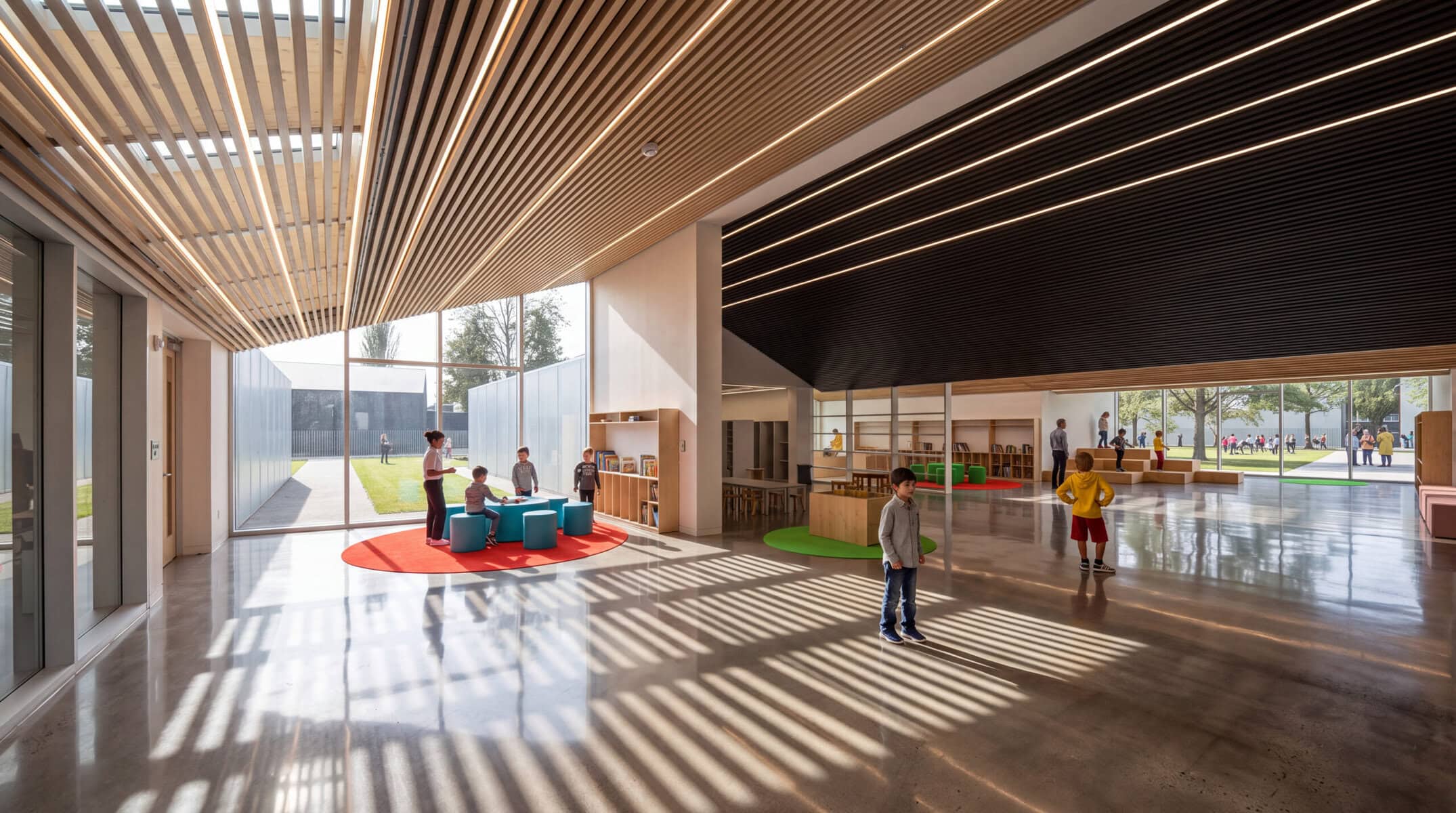
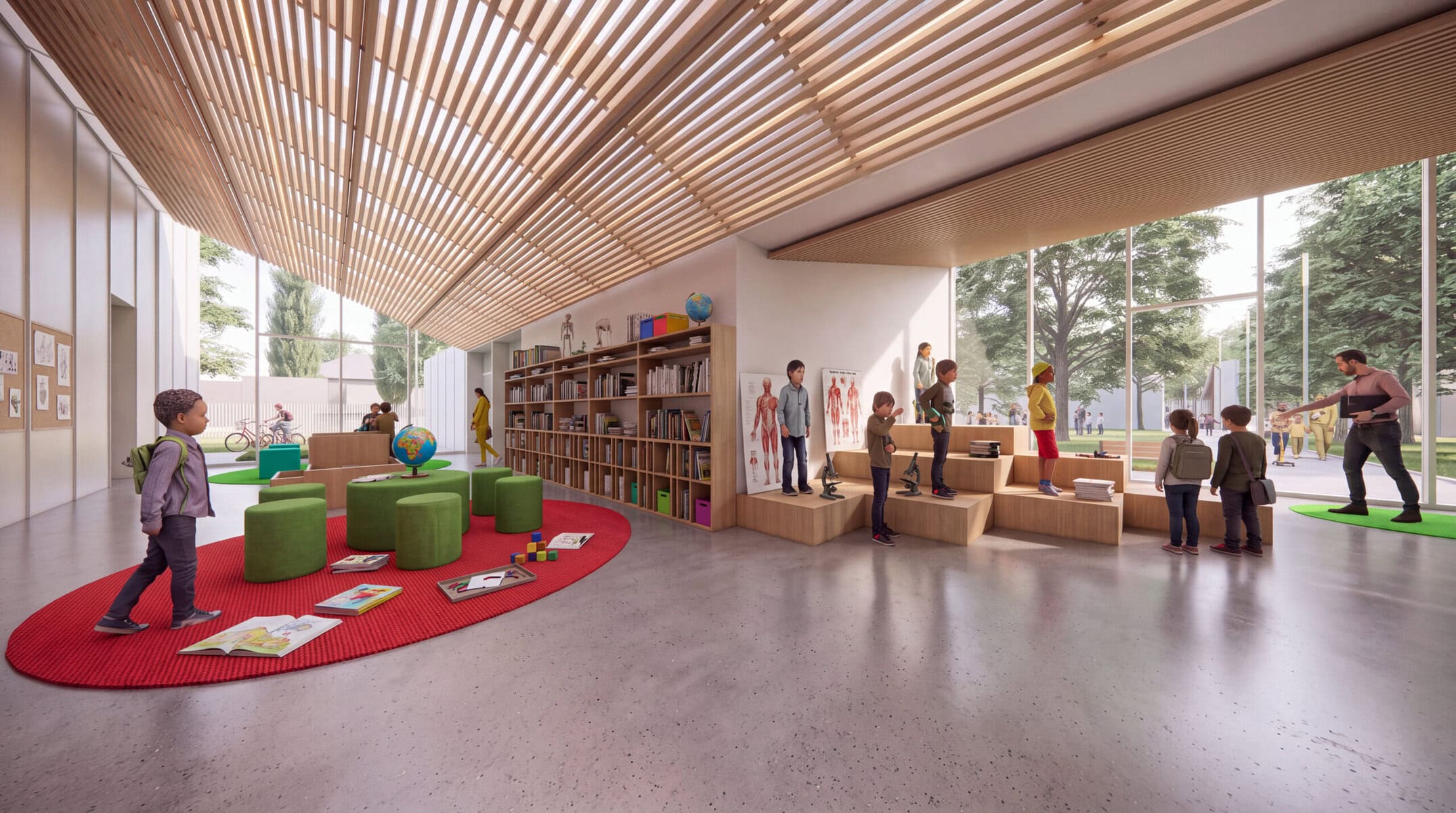
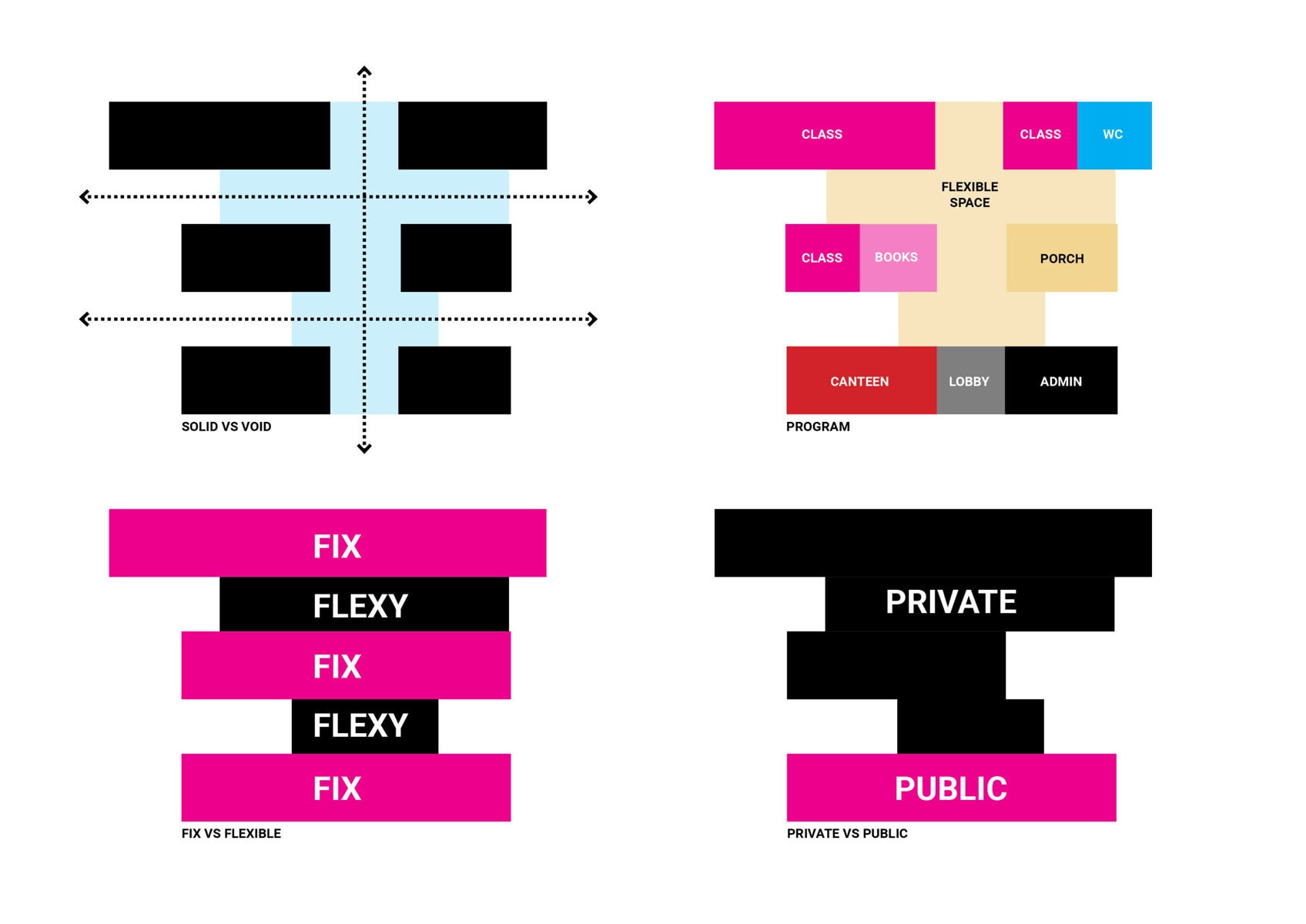
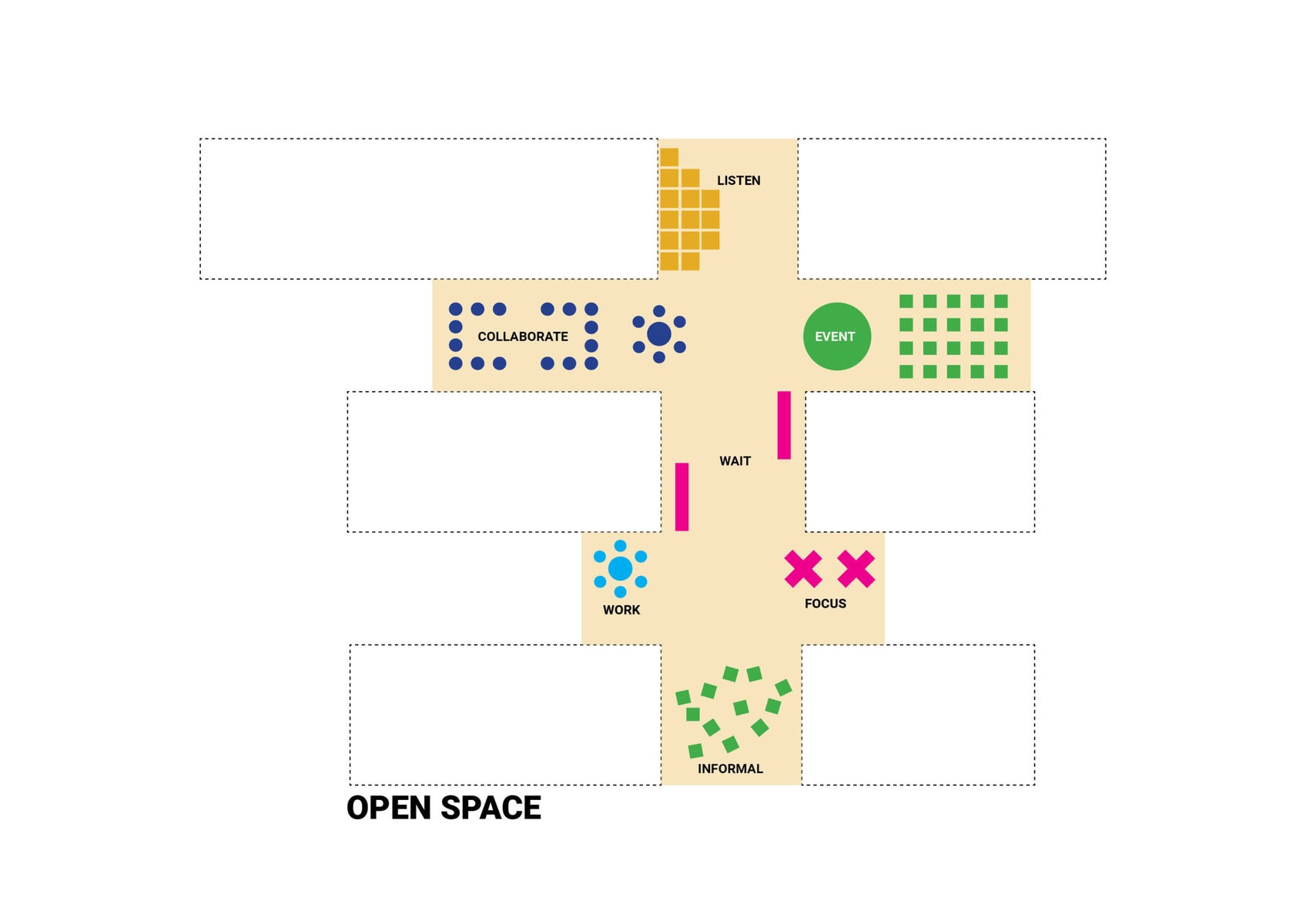
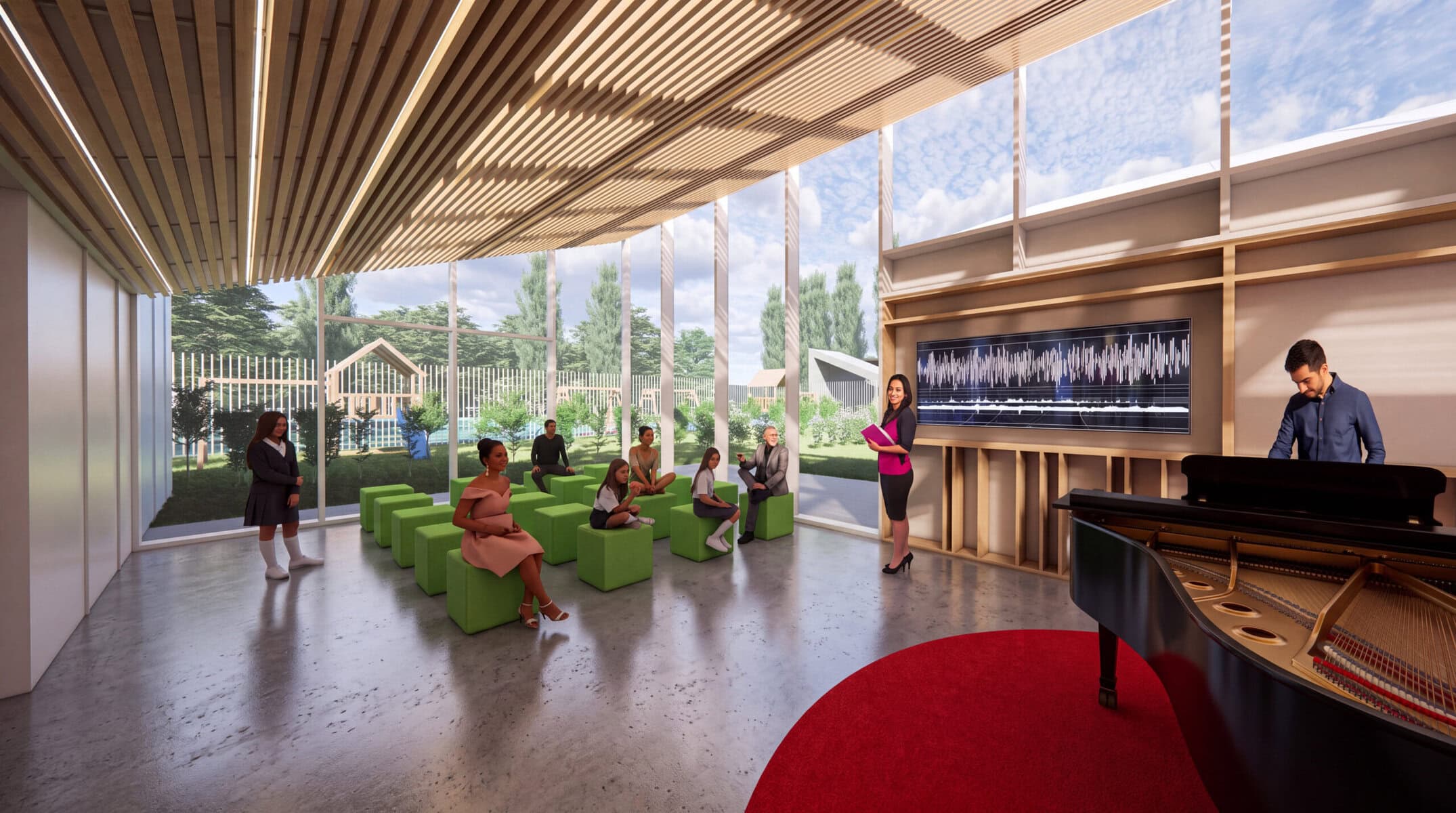
The concept is structured around the relationship between solid and void. The solid represents the stability of structured learning: traditional classrooms, defined spaces, clear programme. The void represents the freedom of discovery: open, flexible areas where children can move, create, collaborate, and engage with each other and with the building in unscripted ways. Rather than treating these two conditions as opposites, the design brings them into a productive dialogue. Classrooms and flexible spaces are placed in deliberate spatial relationship: close enough to flow between, distinct enough to feel different. The building teaches through its organisation as much as through what happens inside it.
The Approach
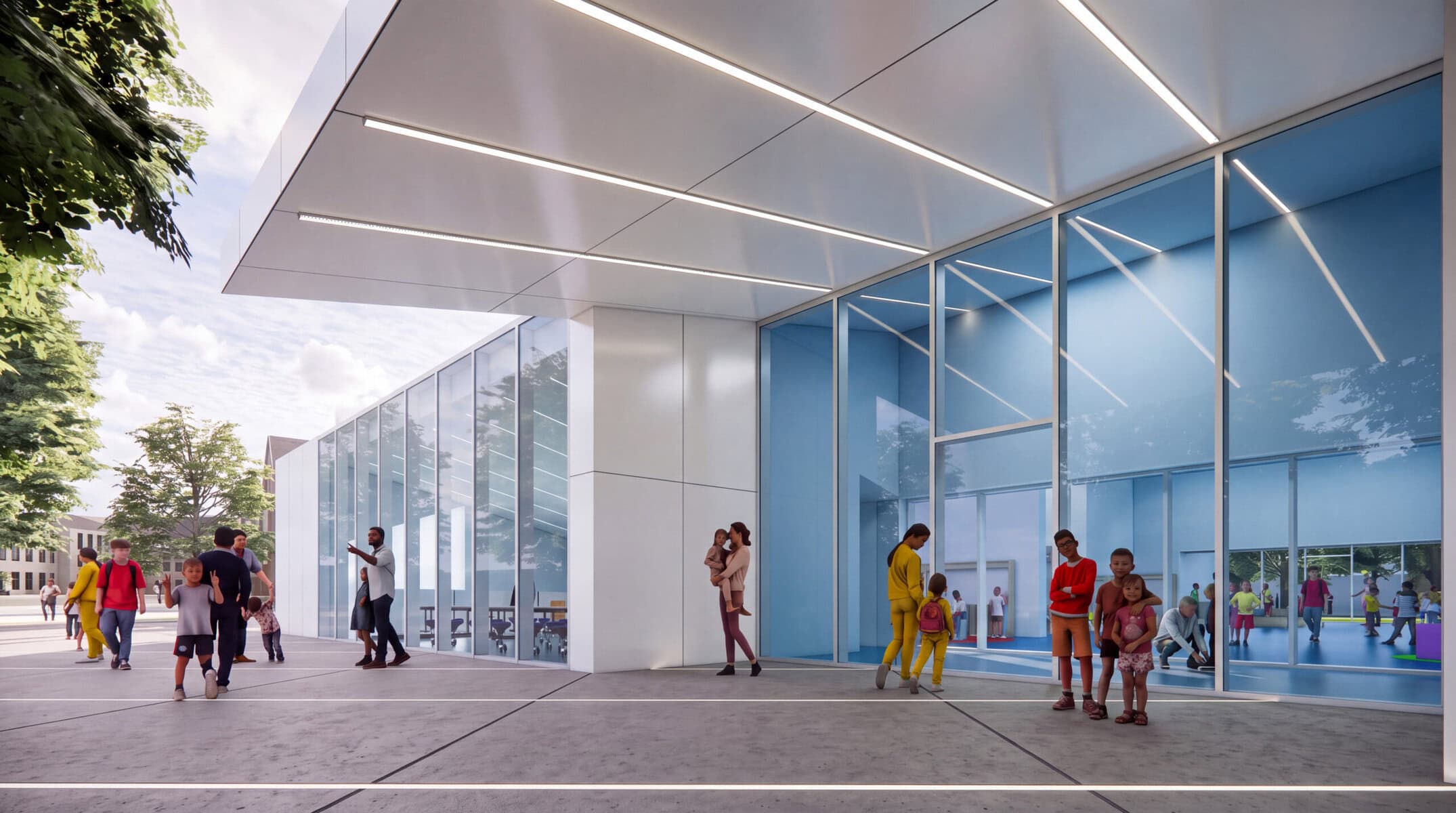
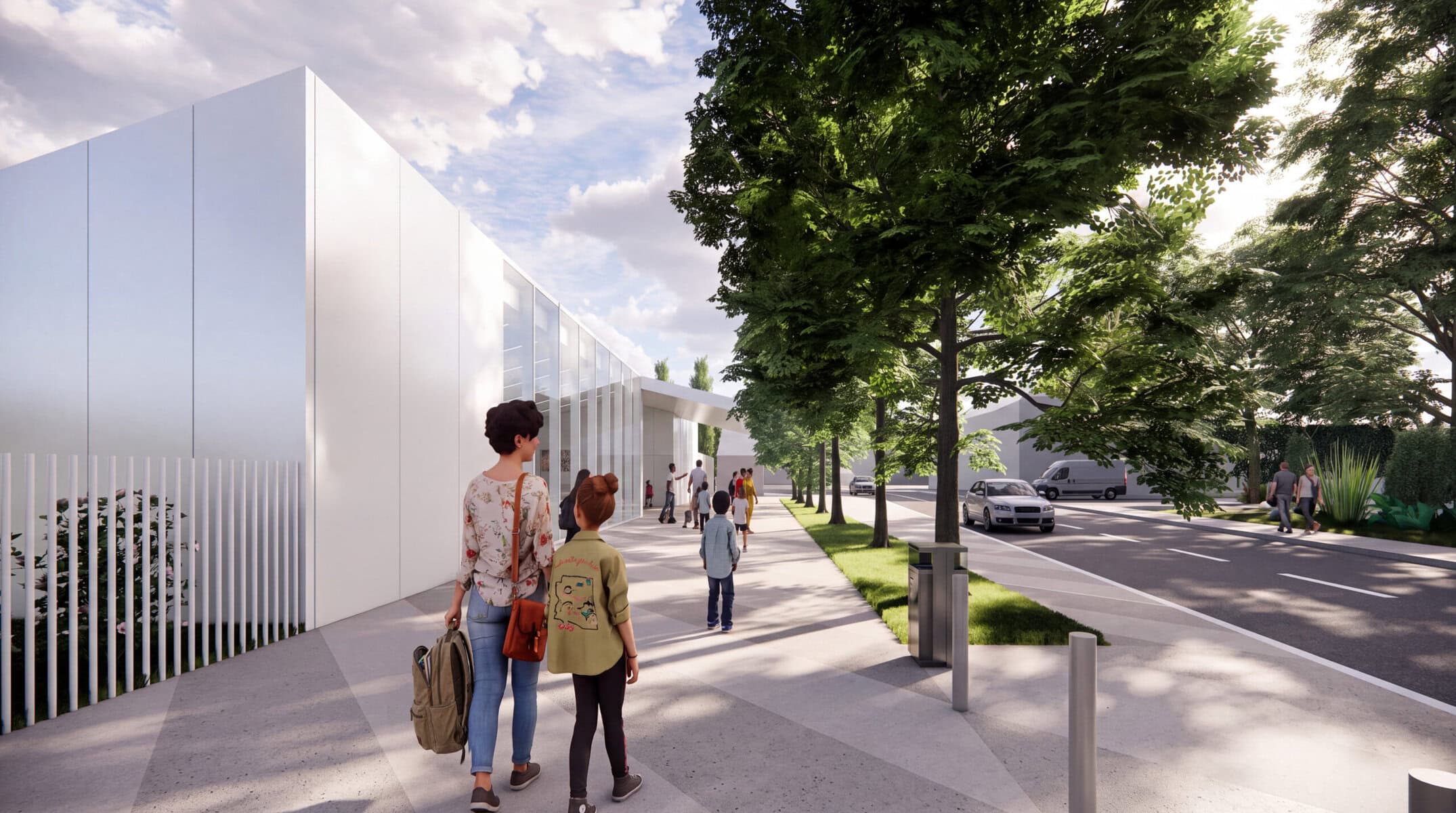
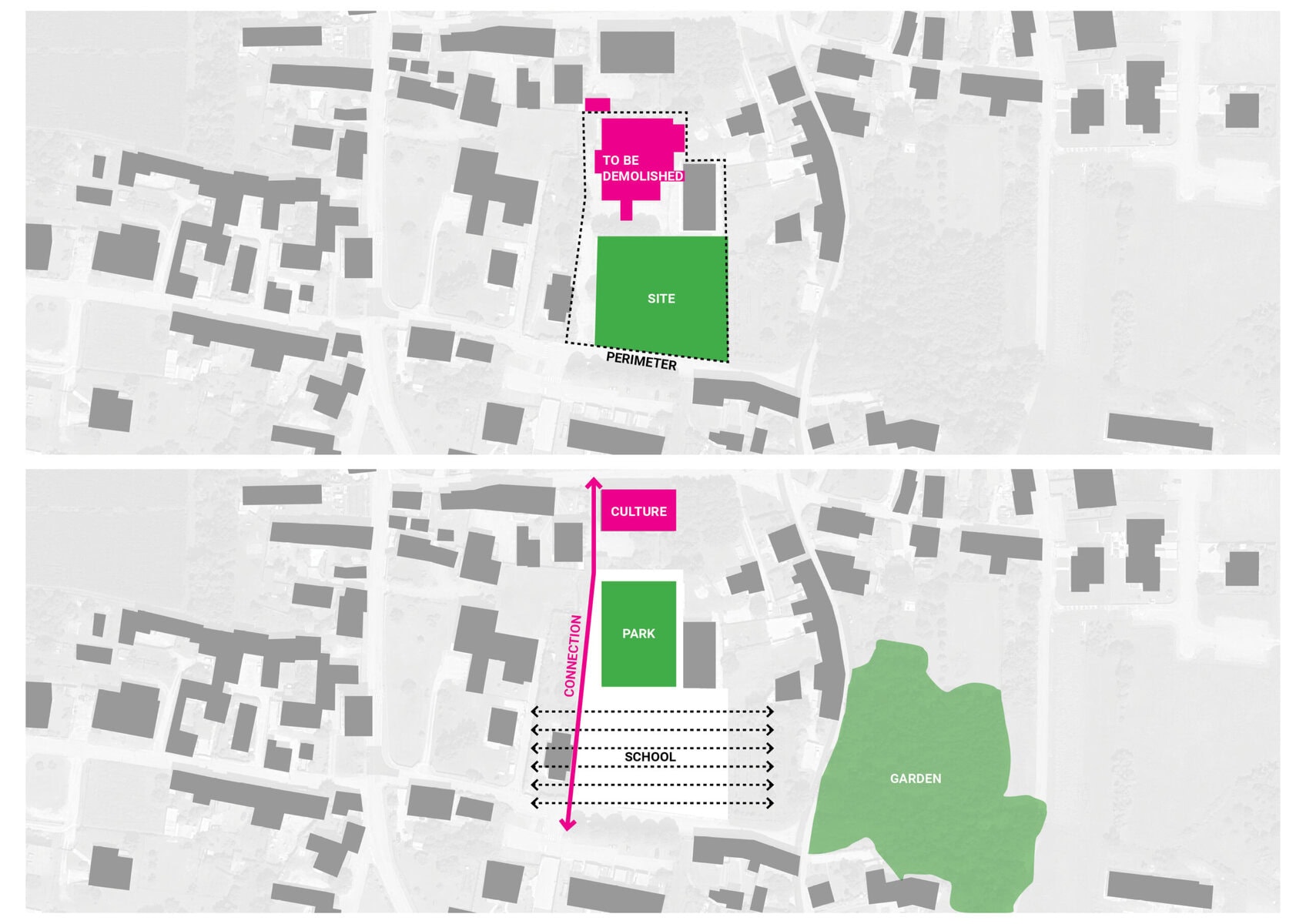
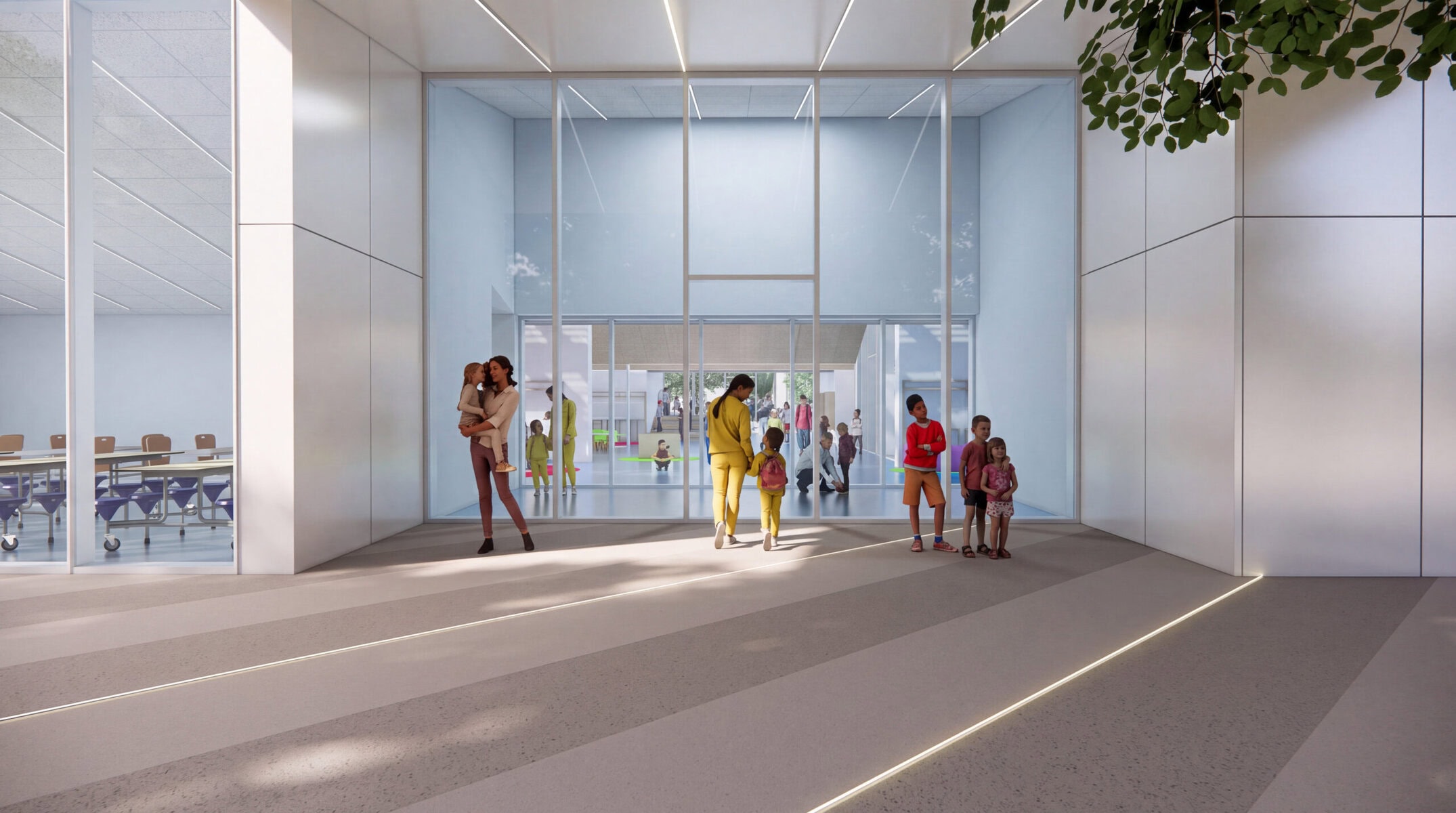
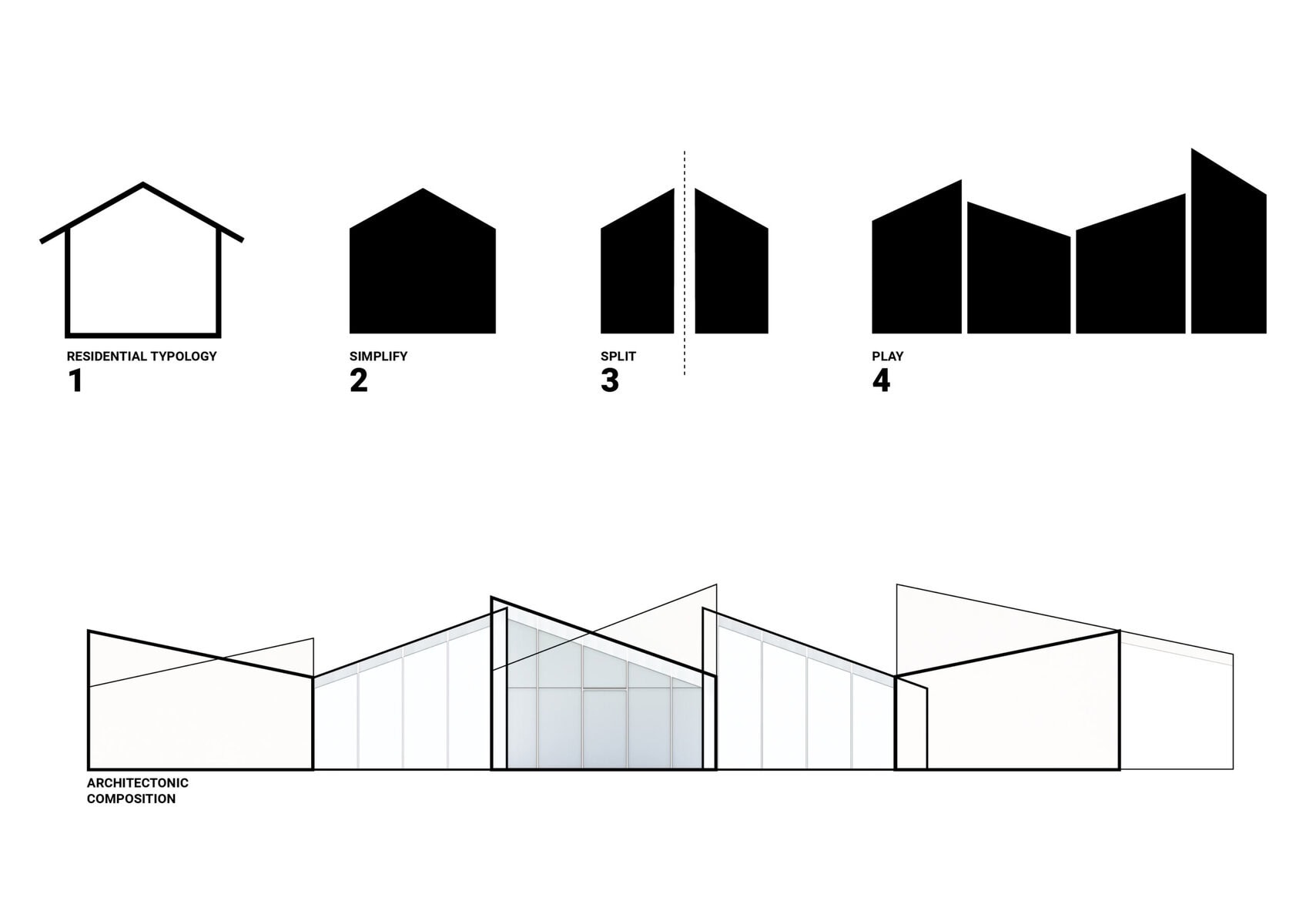
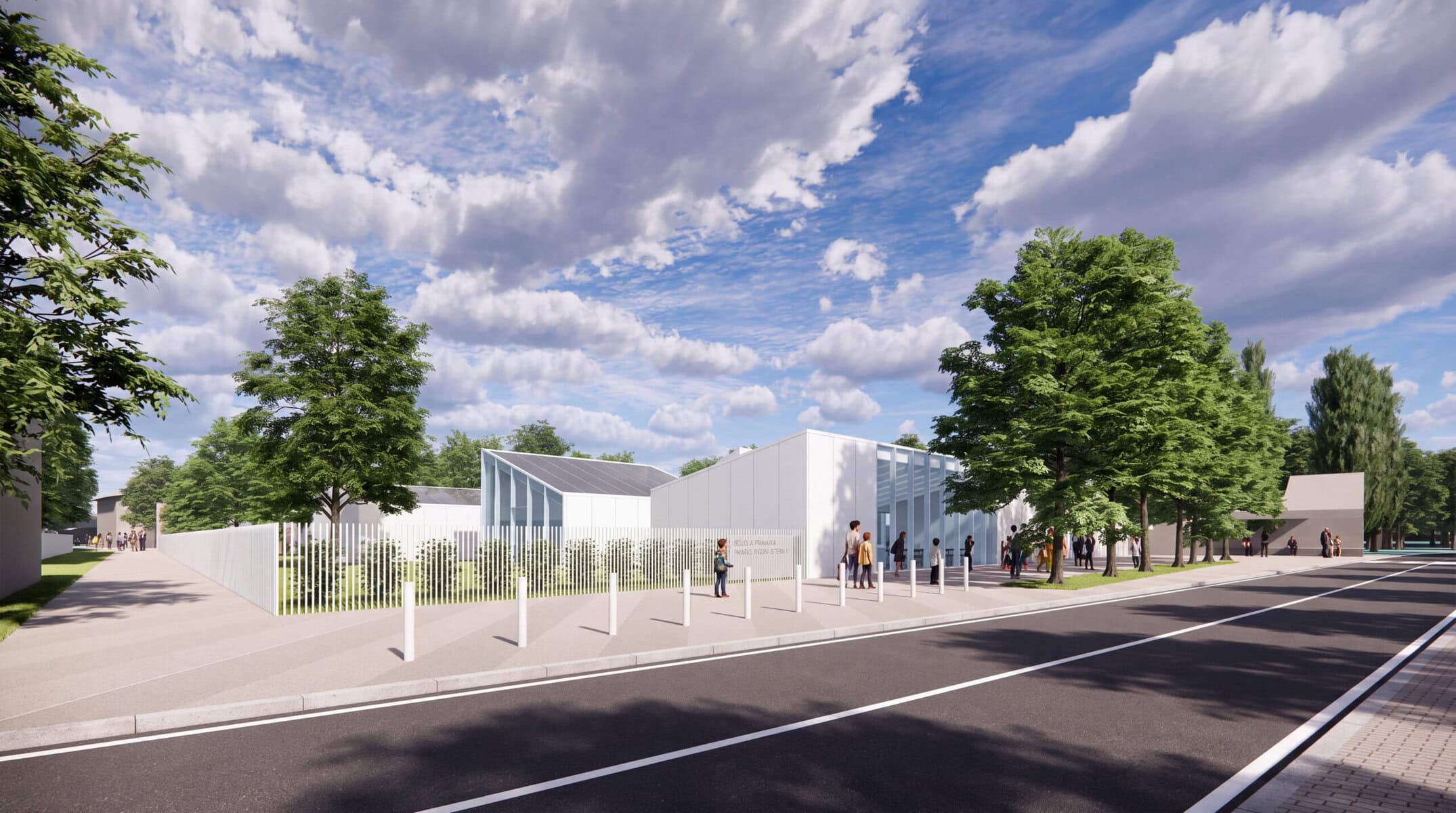
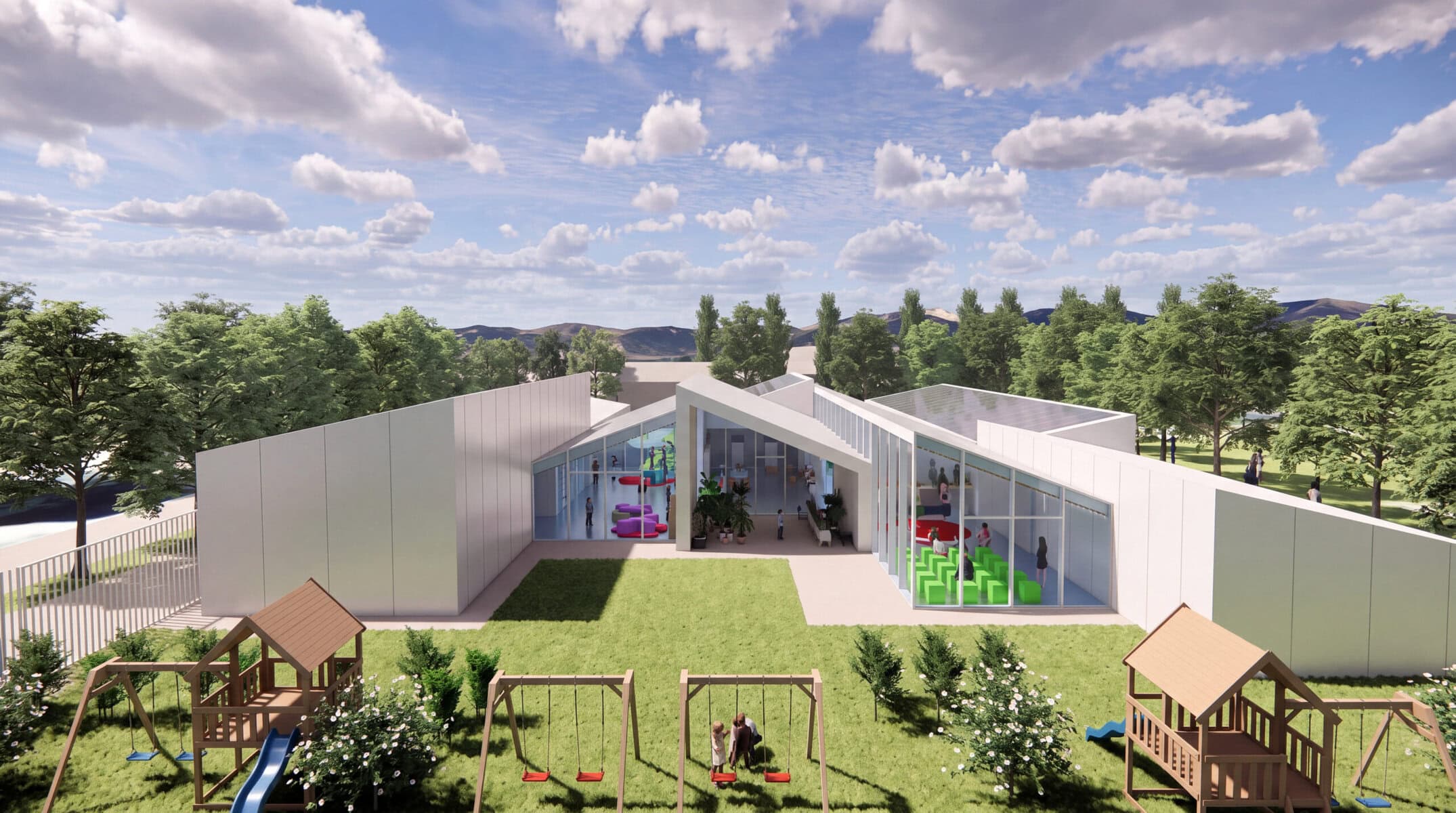
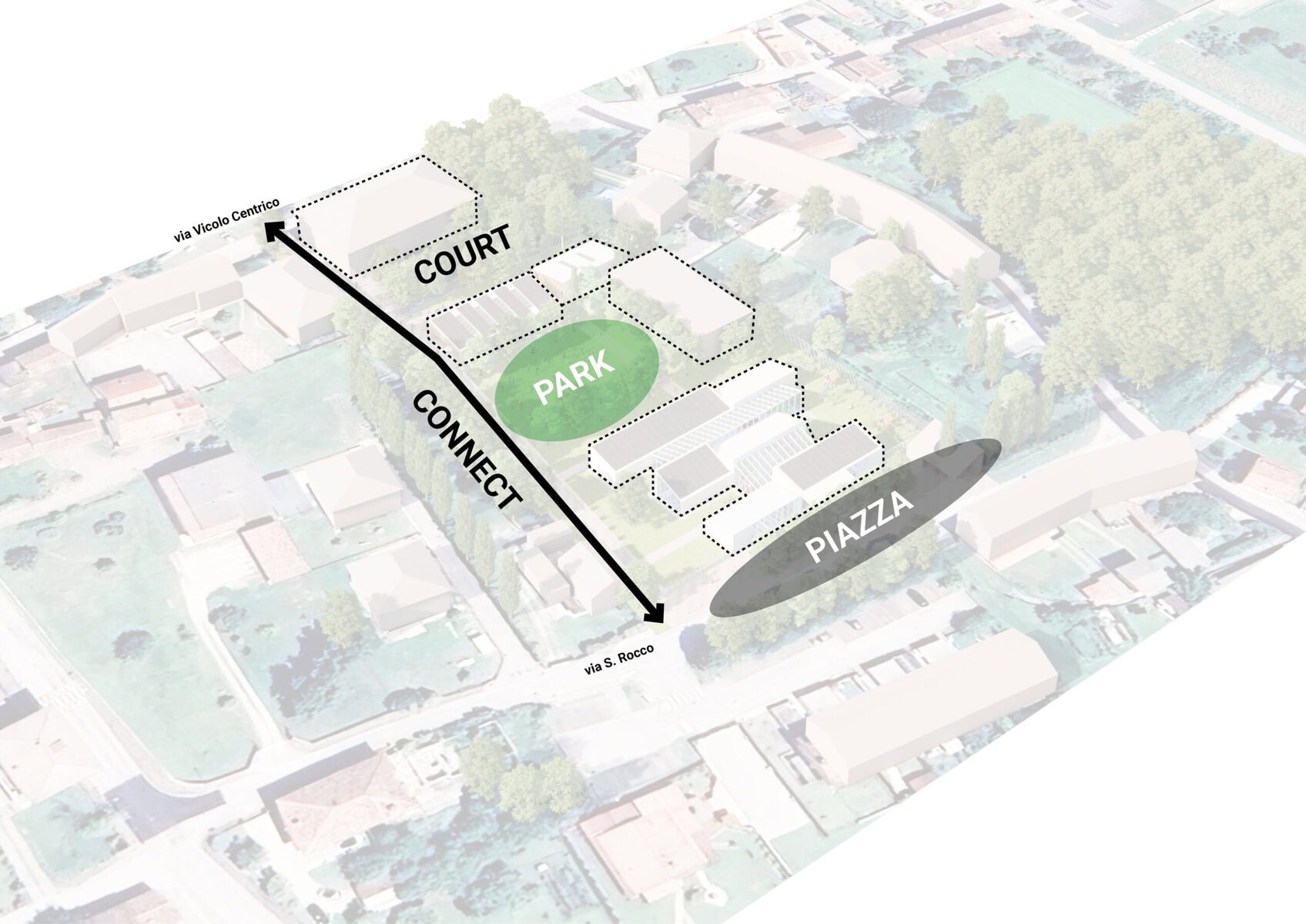
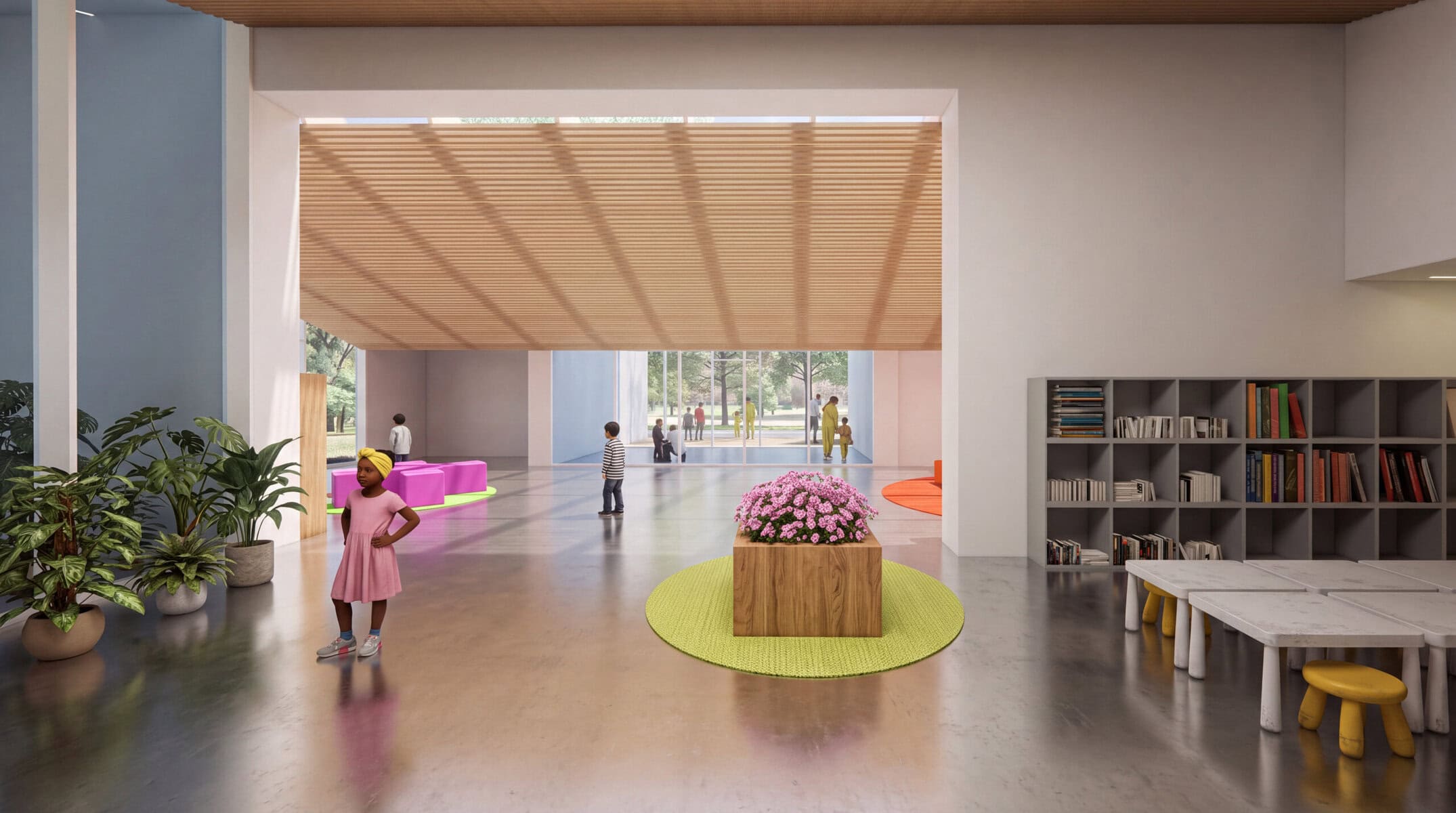
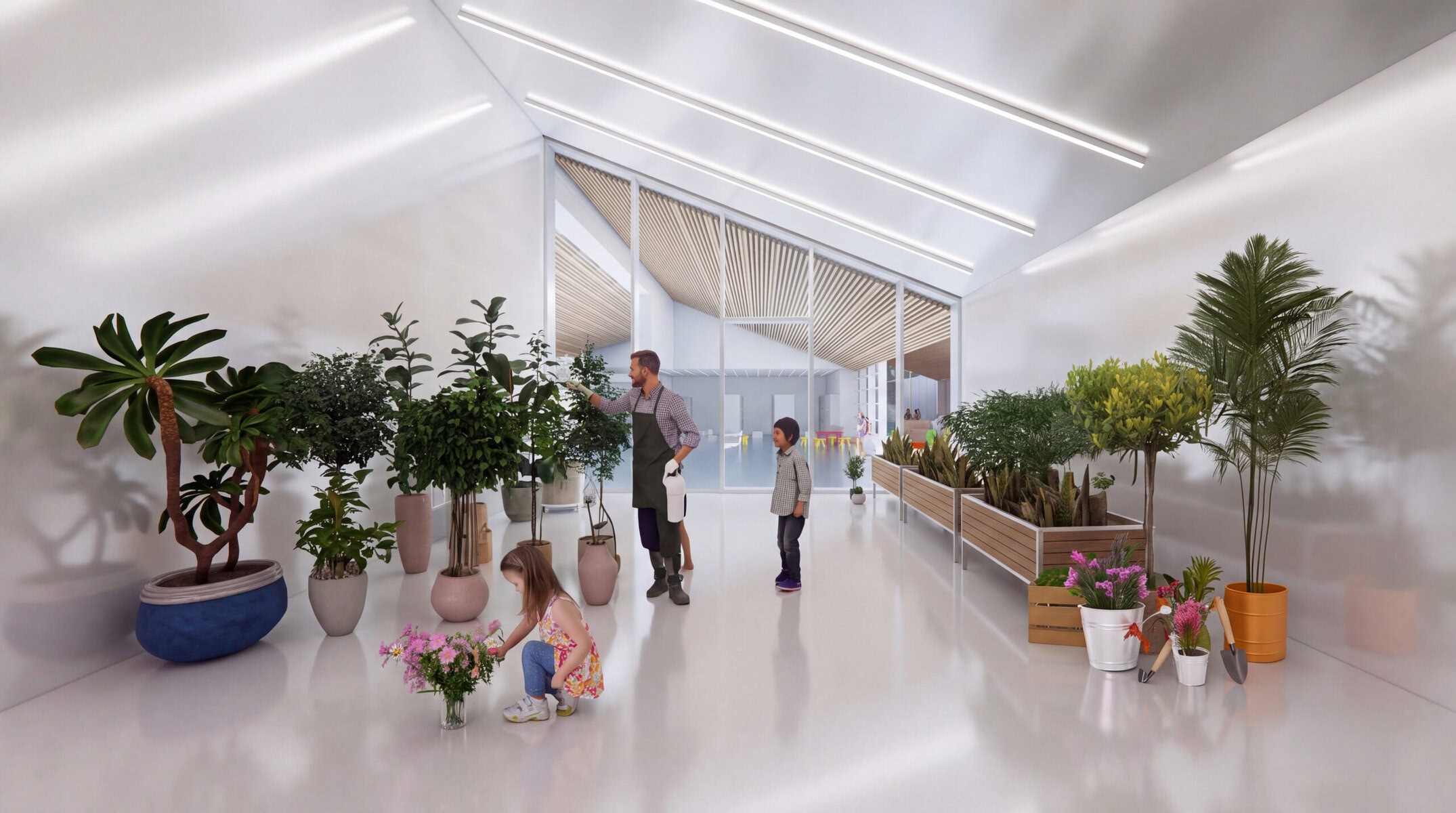
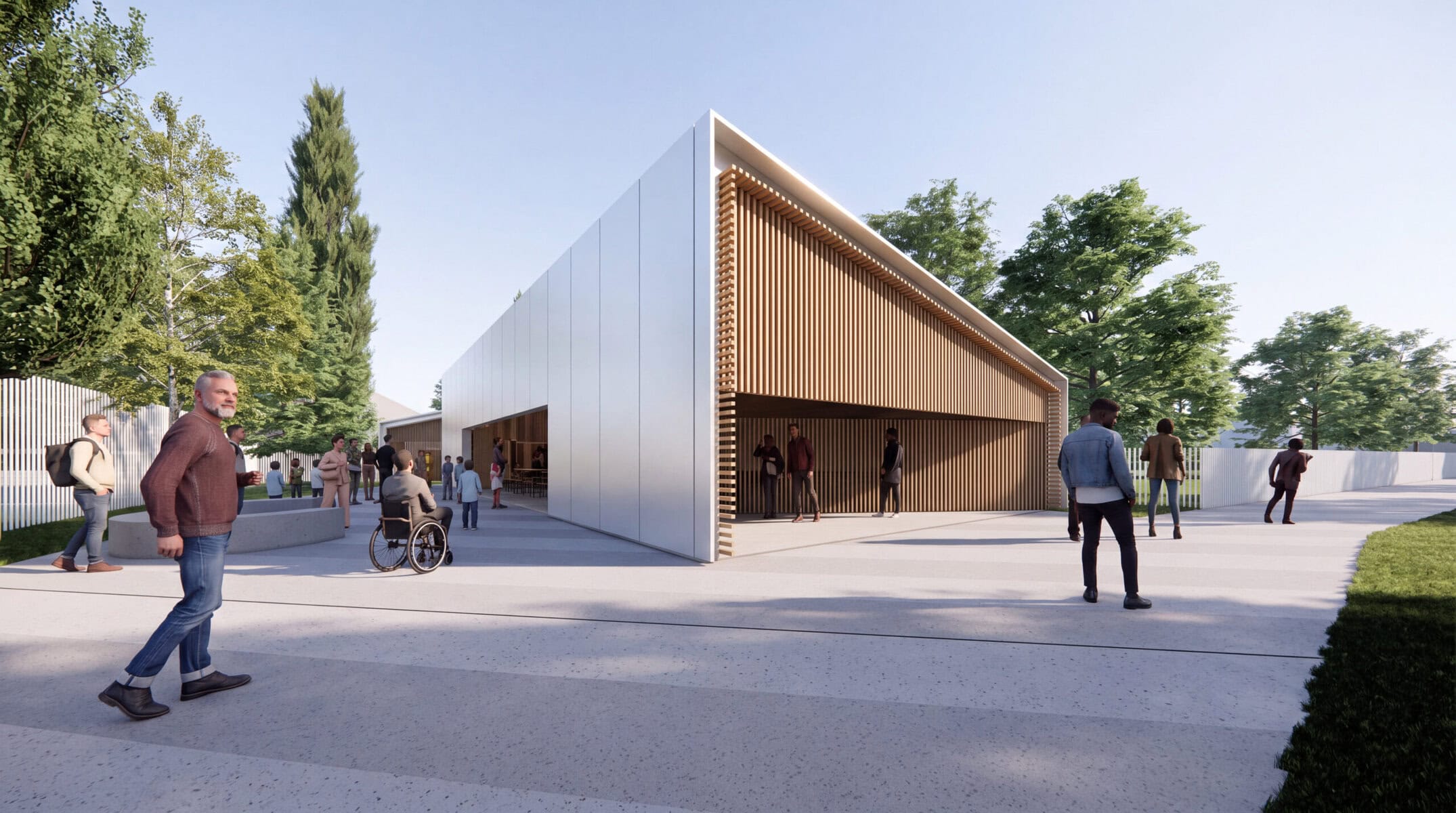
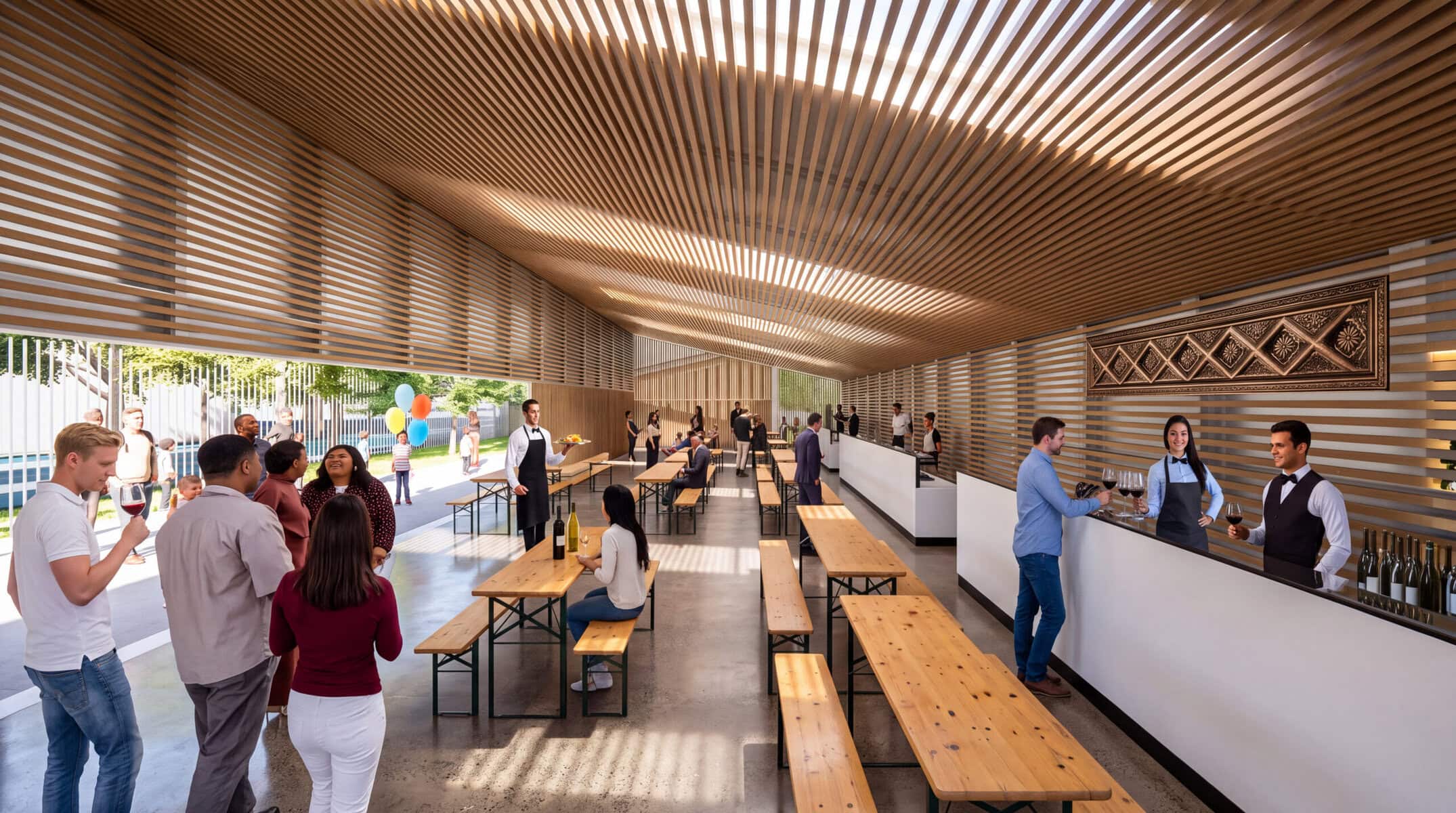
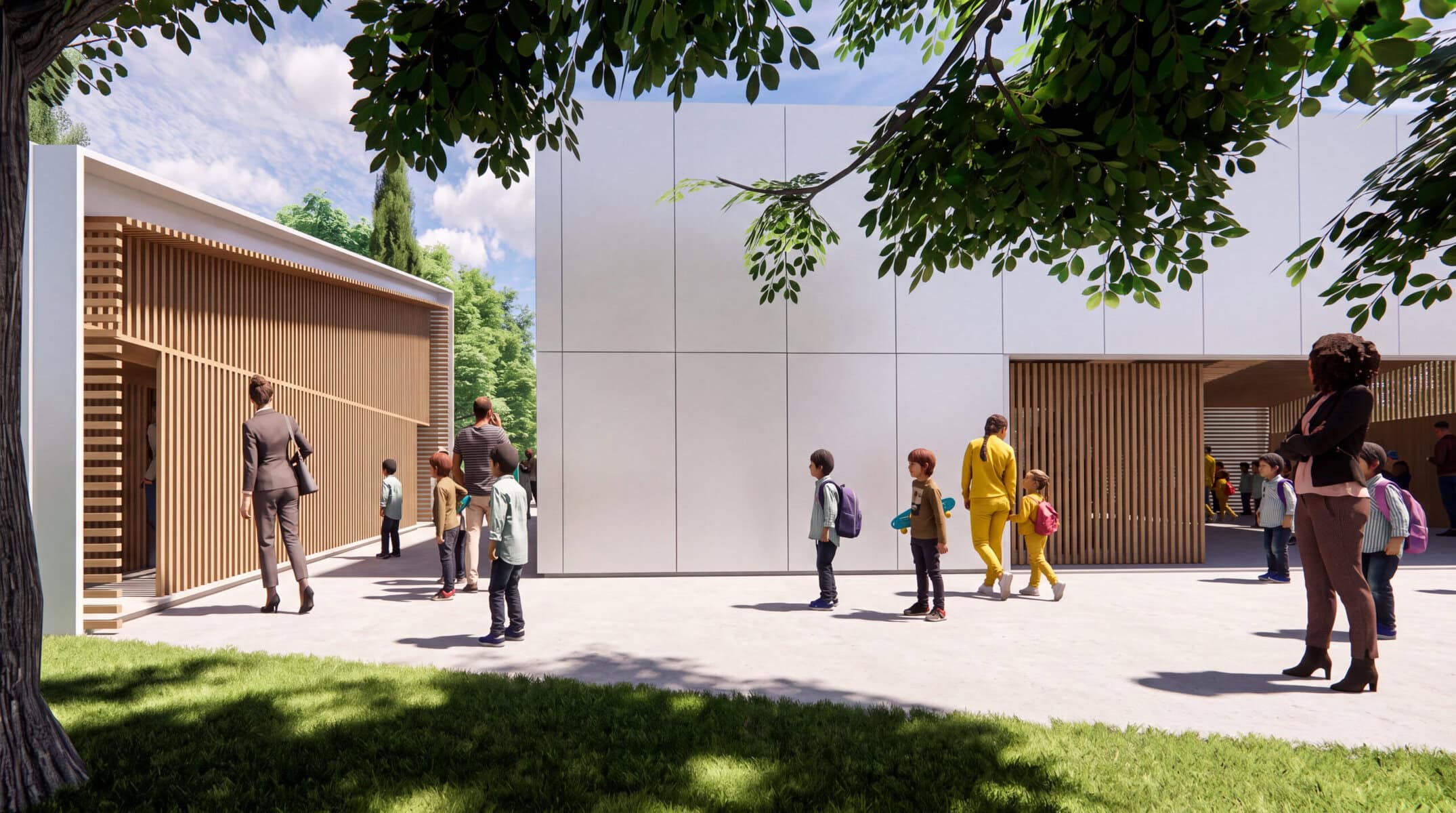
The design translates the concept through four consistent spatial and material decisions. First, the building layout responds to the existing urban morphology. This elementary school northern Italy project engages with the street, maintains the scale of the surrounding fabric, and creates clear thresholds between public, semi-public, and private areas. The entrance is legible and welcoming. Second, natural light is the primary environmental driver. Large windows are positioned to maximise daylight in classrooms throughout the day. Skylights and light wells bring natural illumination into deeper parts of the plan. Third, the spatial programme balances fixed and flexible. Classrooms are functional and well-proportioned. Adjacent flexible spaces are equipped with movable furniture, allowing students and teachers to reconfigure their environment for group work, creative activities, or quiet study. Fourth, the material palette combines industrial durability with warmth. The exterior uses white-coated steel panelling, contemporary and weather-resistant. Interiors introduce warm timber surfaces alongside pops of colour through movable furniture.
Key Design Decisions
The decision to anchor the concept in solid versus void gave the project a clear organisational logic that runs from urban strategy through to interior detail. It is not a formal gesture, it is a spatial argument about how children learn, and how a school building can support that. The material strategy was equally deliberate. Industrial materials on the exterior ensure the building ages well in a northern Italian climate. Warm, colourful interiors create the sense of belonging and safety that young children need.
Why This Project Matters
Designing schools for small communities in traditional Italian urban contexts requires navigating between the demands of contemporary education and the constraints of local scale, heritage sensitivity, and limited budgets. This project demonstrates how a clear concept, rigorously applied from spatial organisation to material selection, can produce a school that serves its community well both functionally and architecturally.