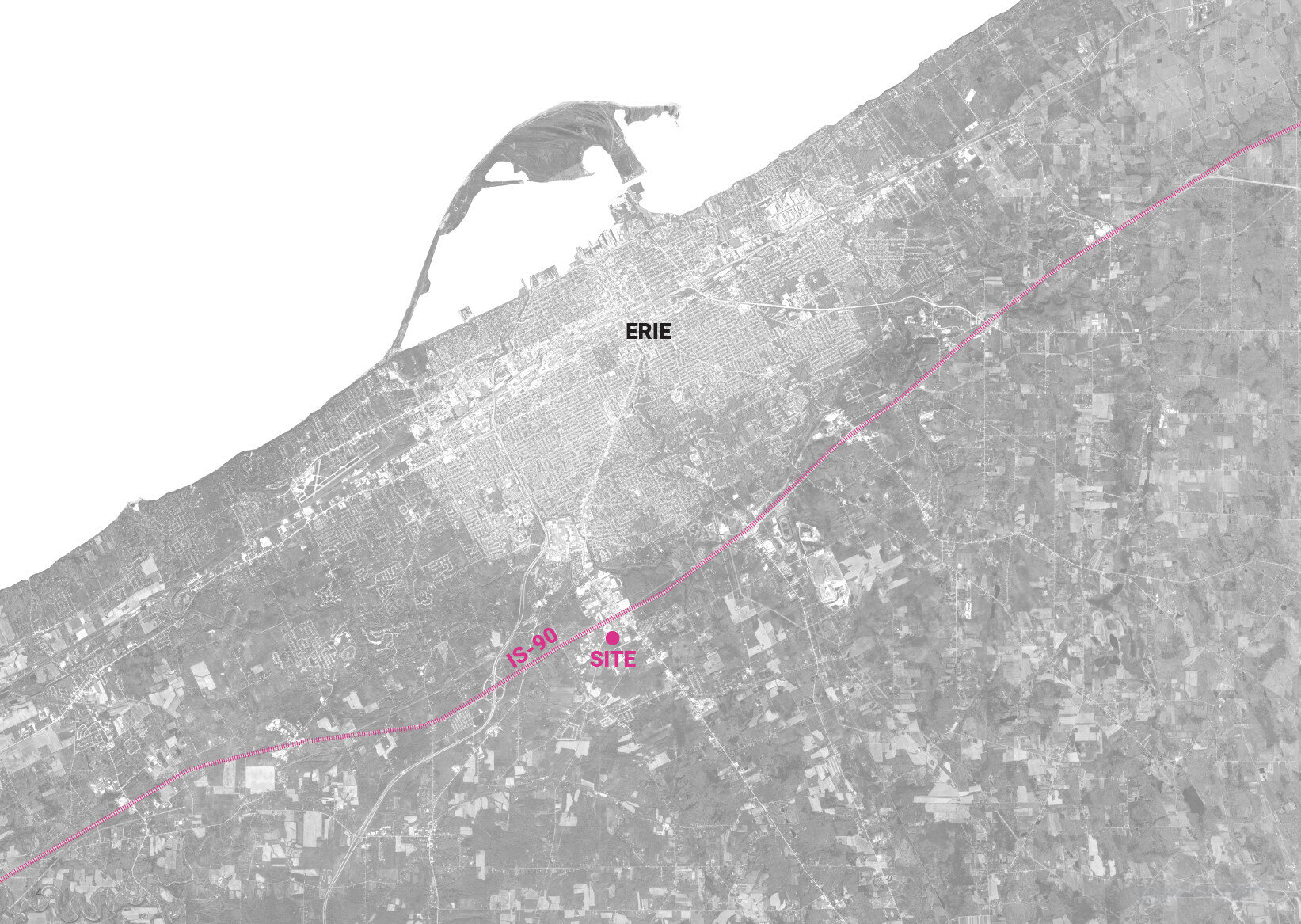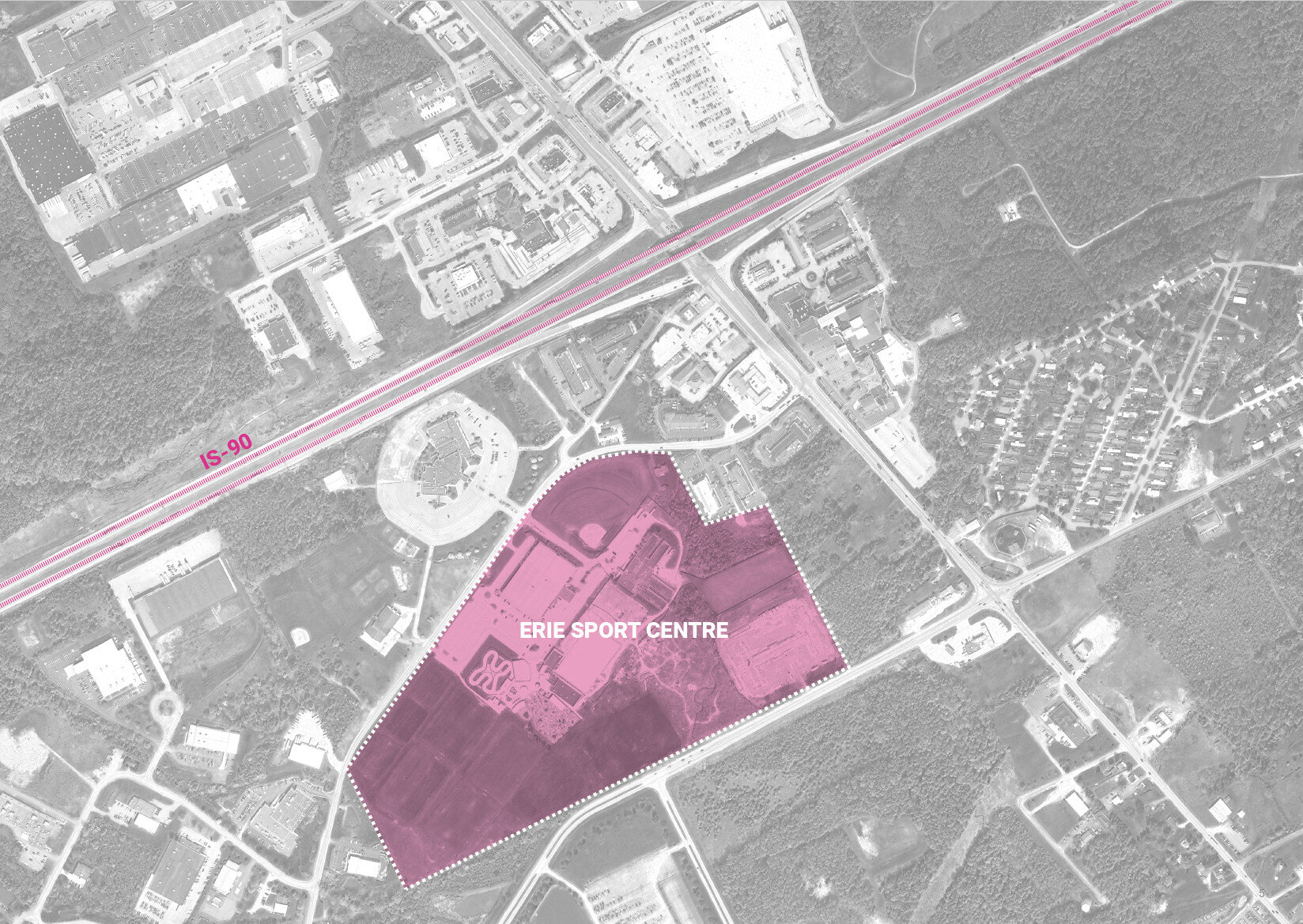
Erie, Pennsylvania, USA
Land Area: 25.00 ha
Canopy Area: 5.70 ha
Canopy Perimeter: 1,200 m
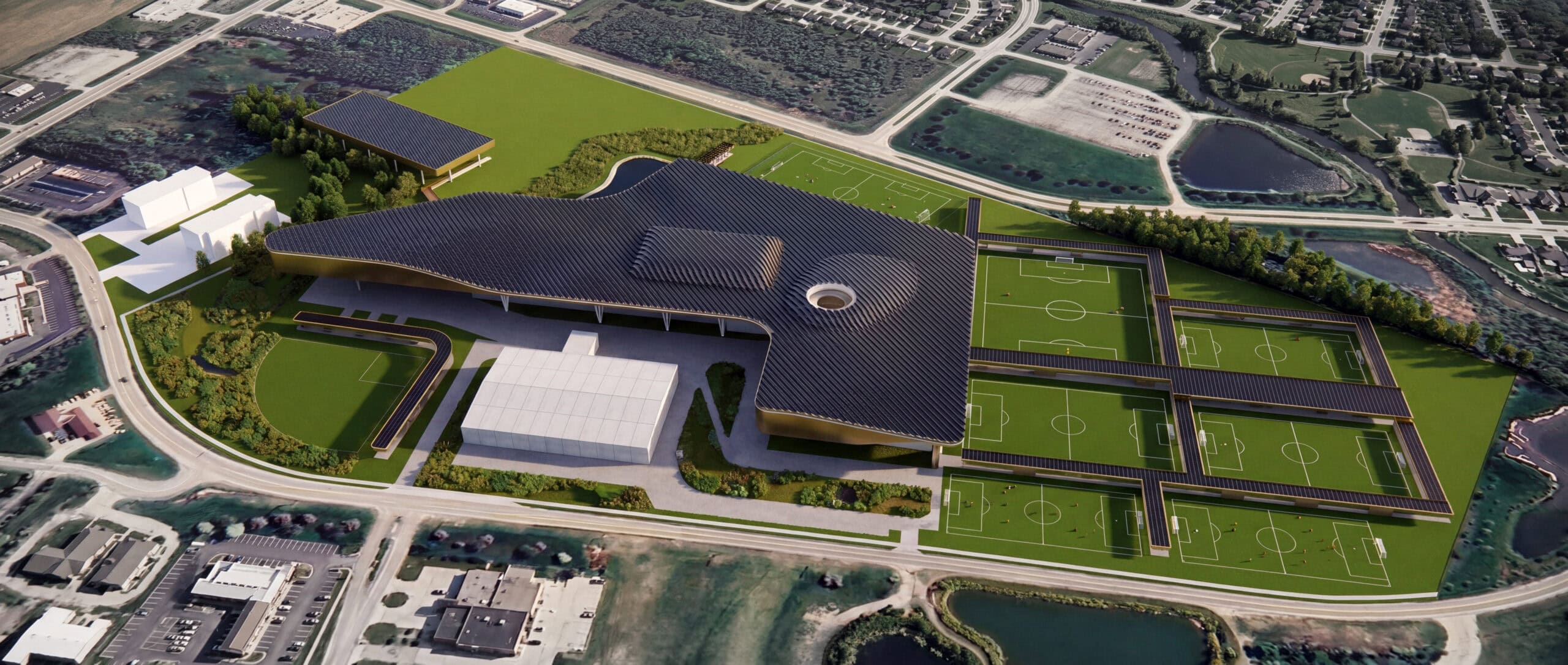
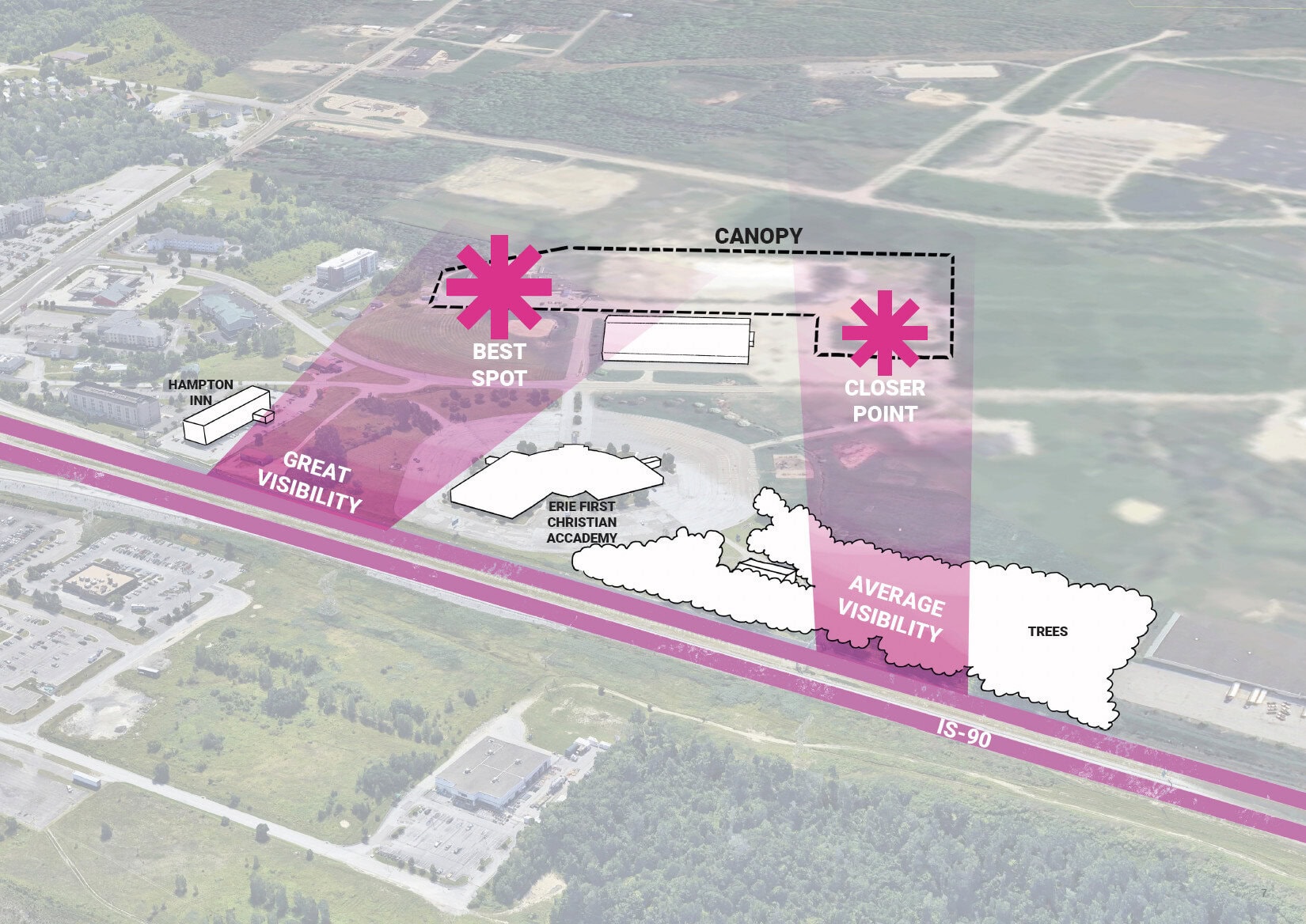
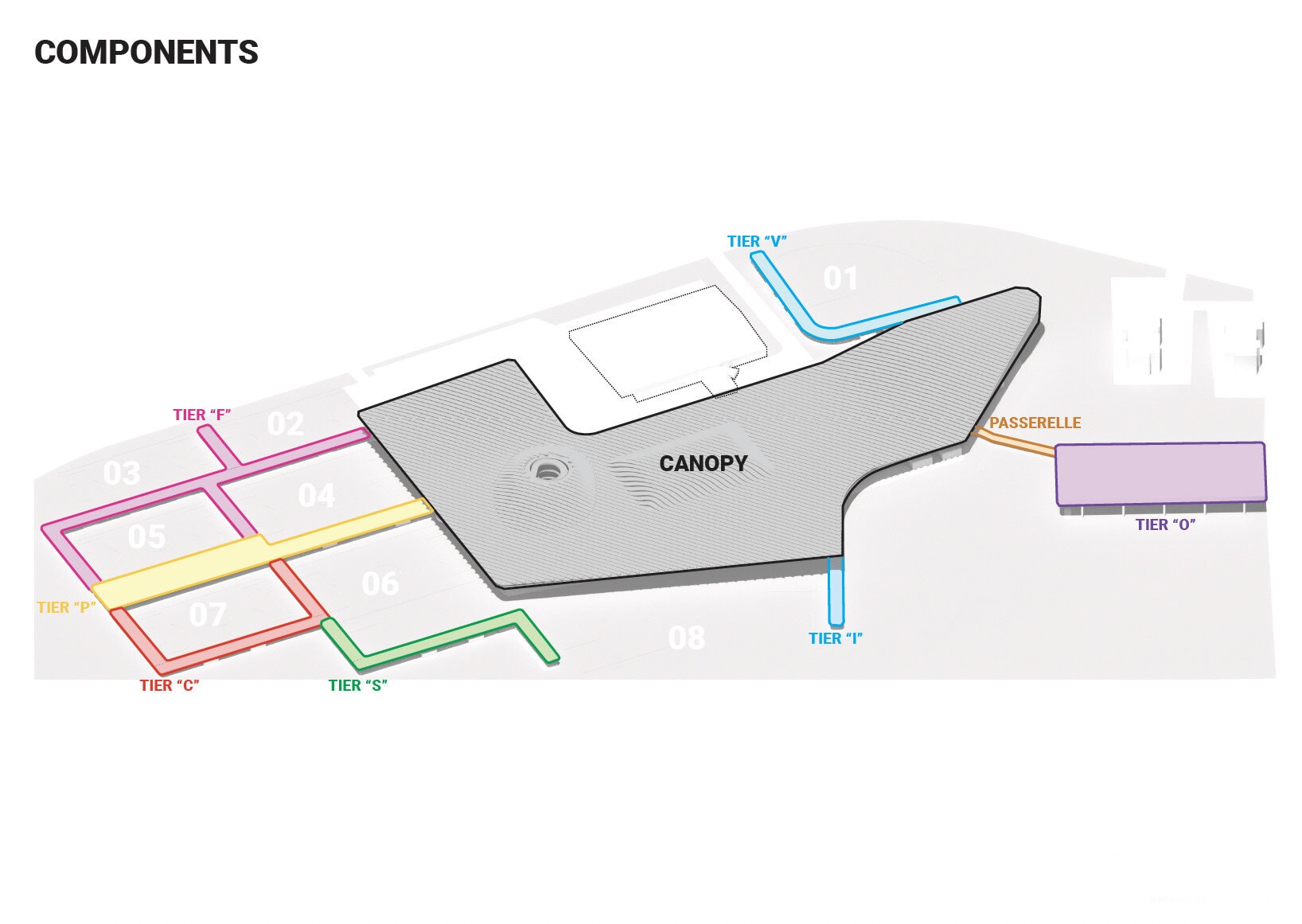
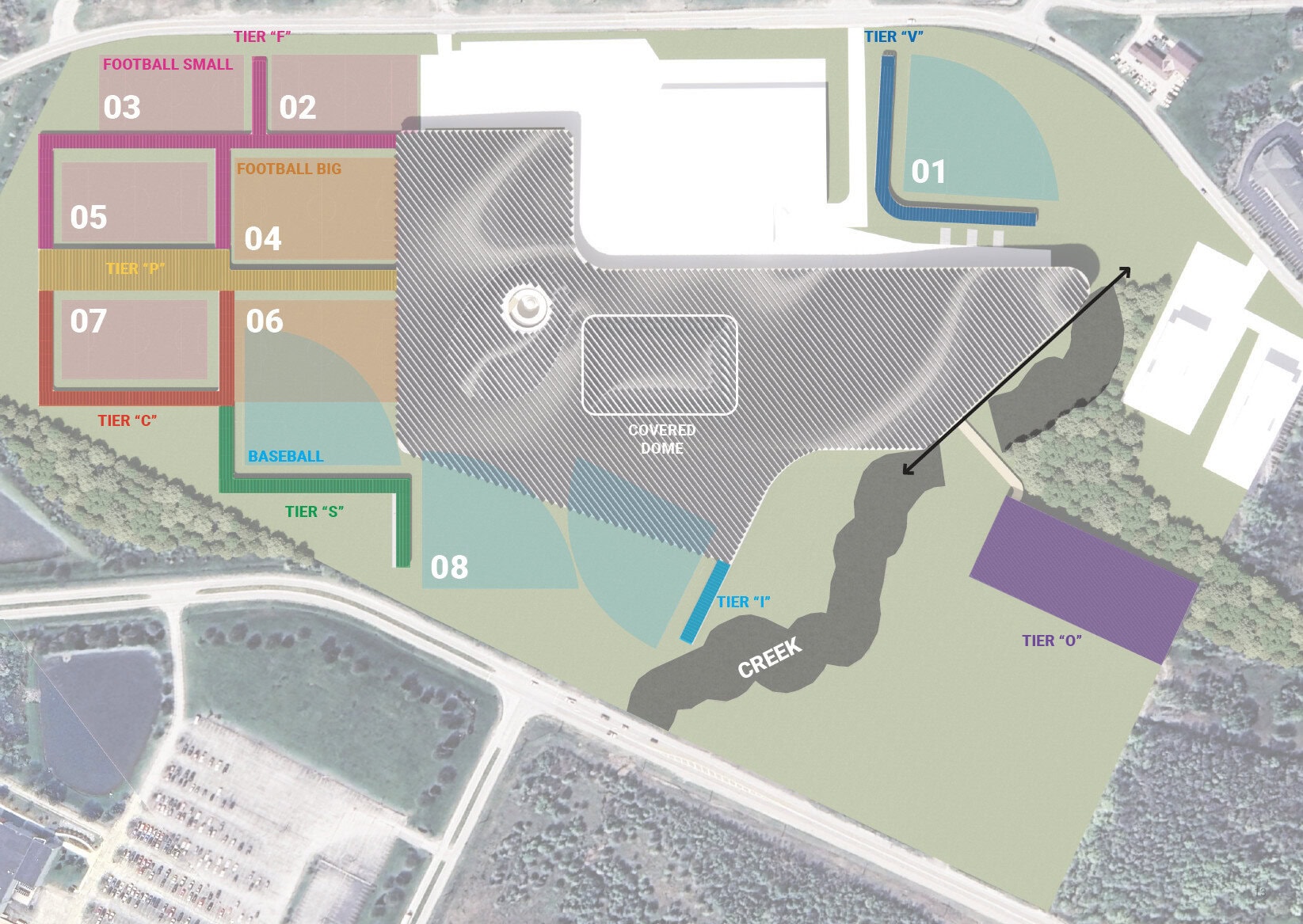
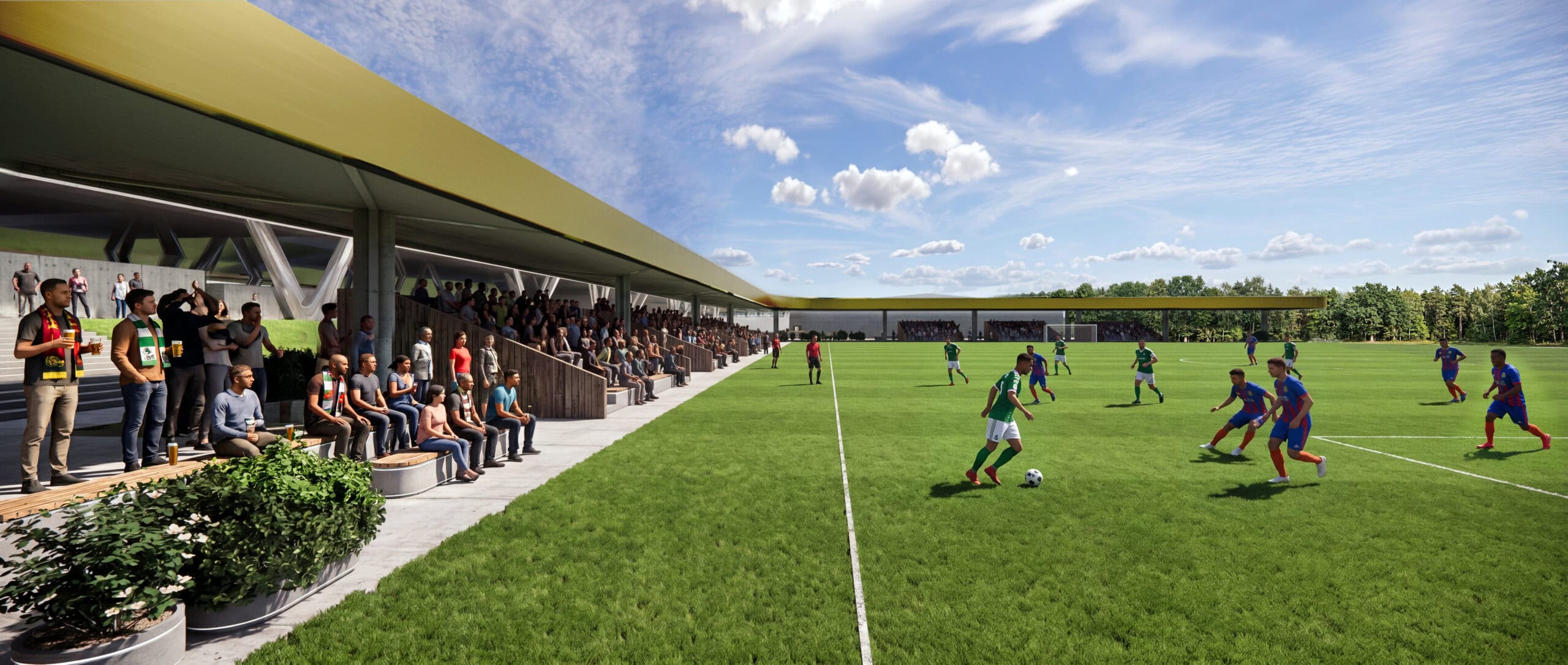
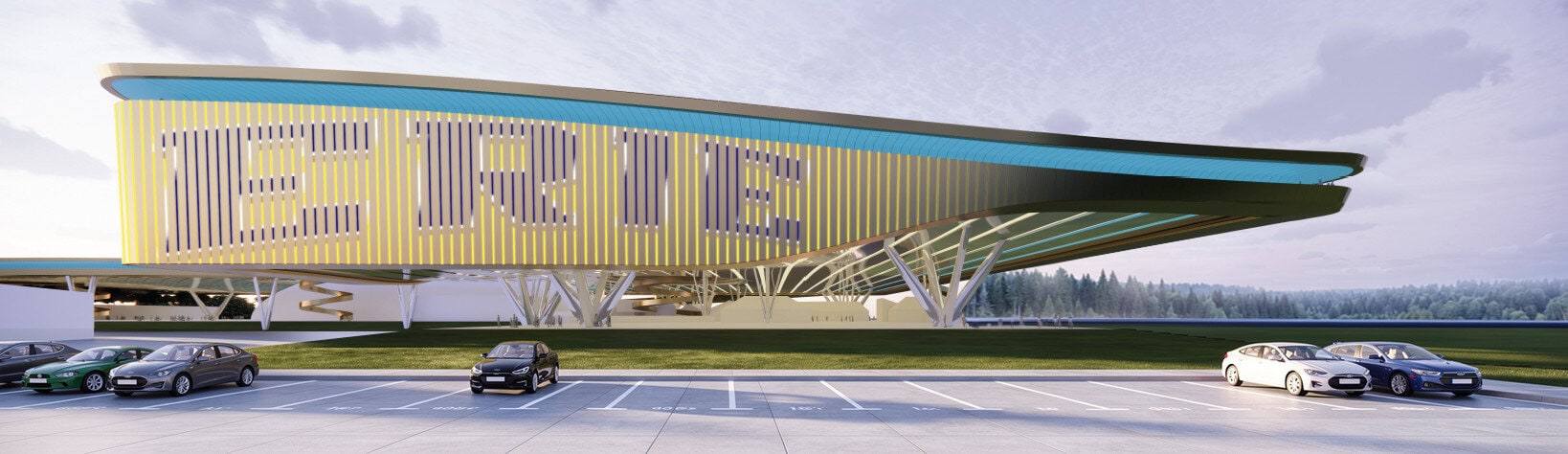
The defining gesture of Erie Sports Center is its solar canopy: a 5.7-hectare structure that unifies a 25-hectare sports campus under a single roof. Rather than designing isolated pavilions for each sport, the canopy becomes the project itself, one continuous surface that shelters American football, baseball, and soccer fields, a perimeter running track; and viewing galleries, while generating the energy needed to run the entire facility.
The site presented a common challenge for large sports campuses: a collection of distinct, often disconnected programs, separate fields for different sports, separate stands, separate support buildings, each competing for identity, each requiring its own roof, structure, and servicing. The typical response is a scattered campus of individual buildings, efficient in plan but fragmented in experience and wasteful in construction and energy terms. Erie Sports Center takes the opposite approach: instead of multiplying structures, it consolidates them into one.
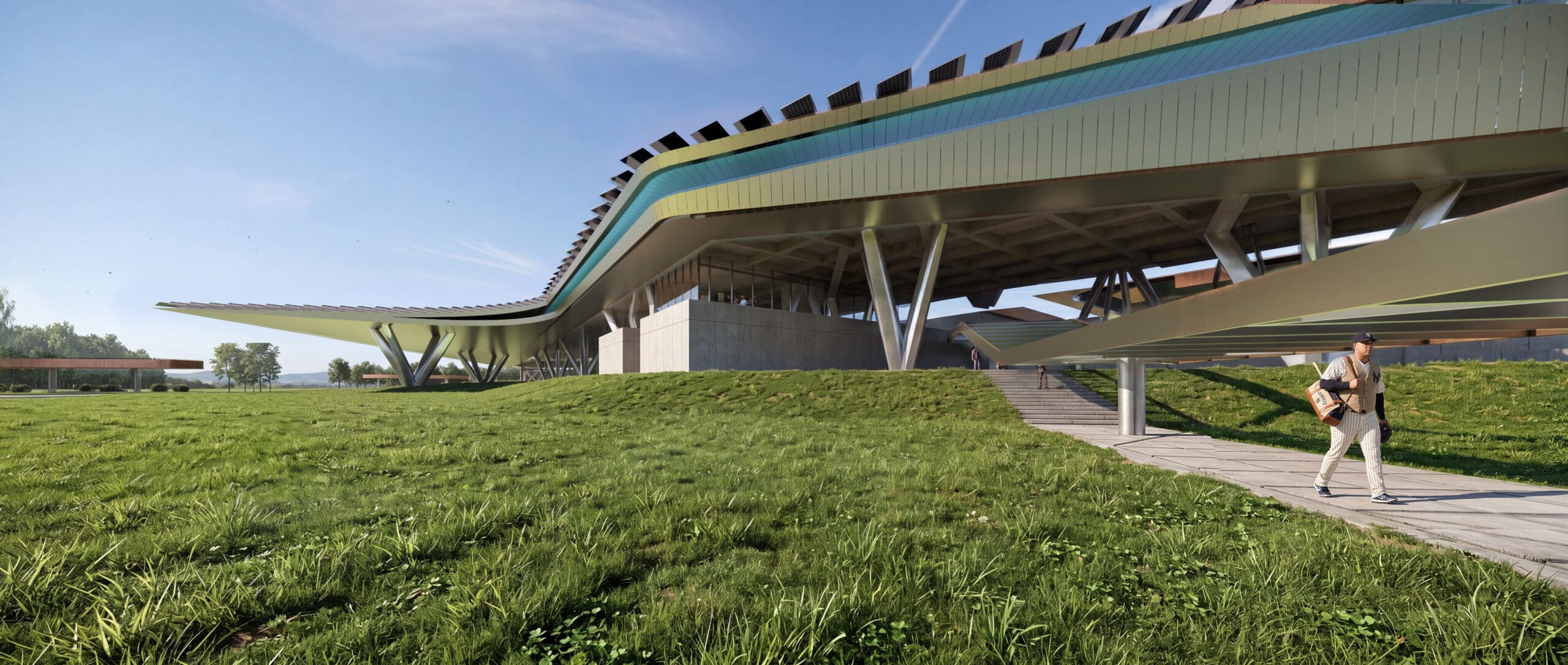
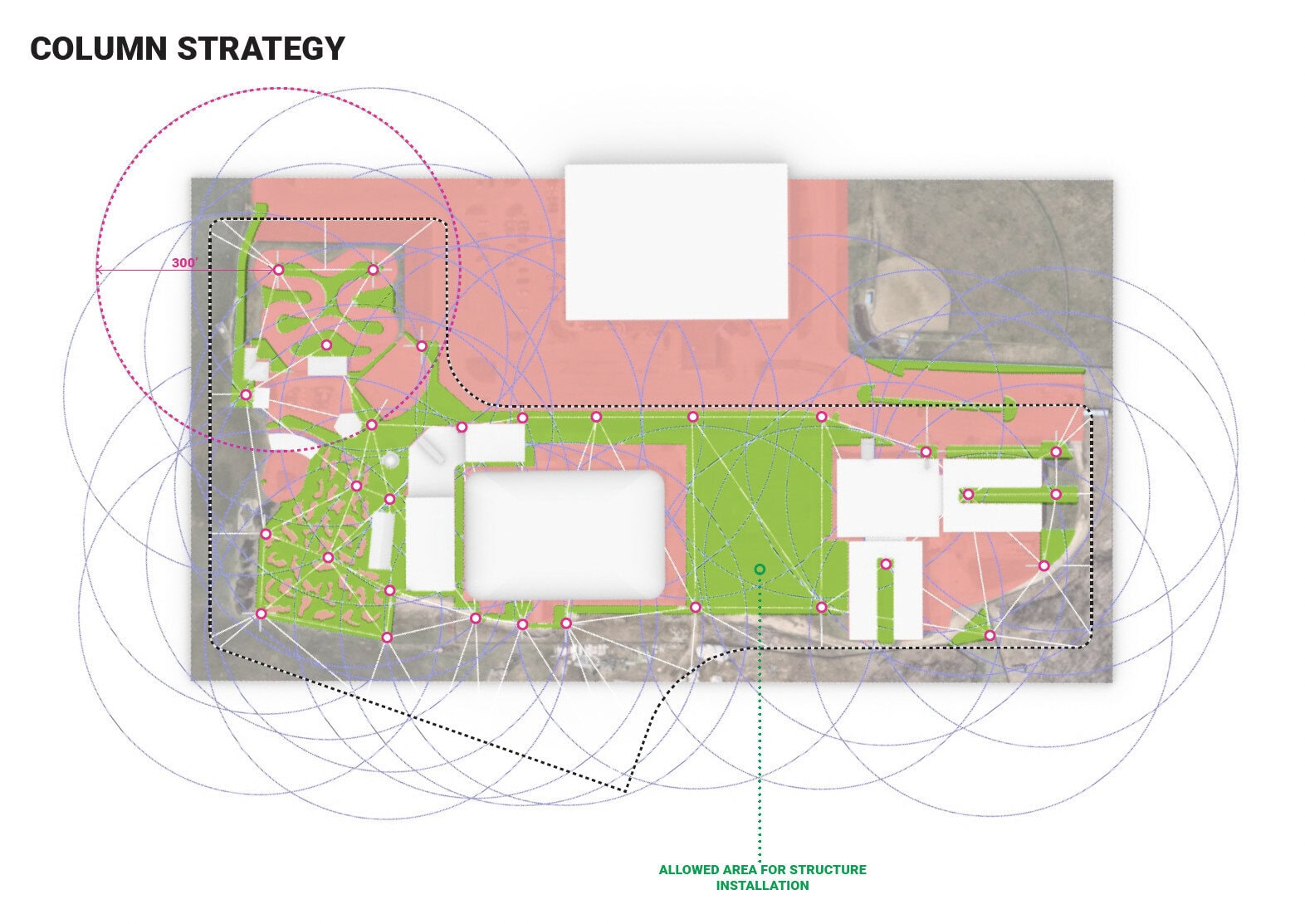
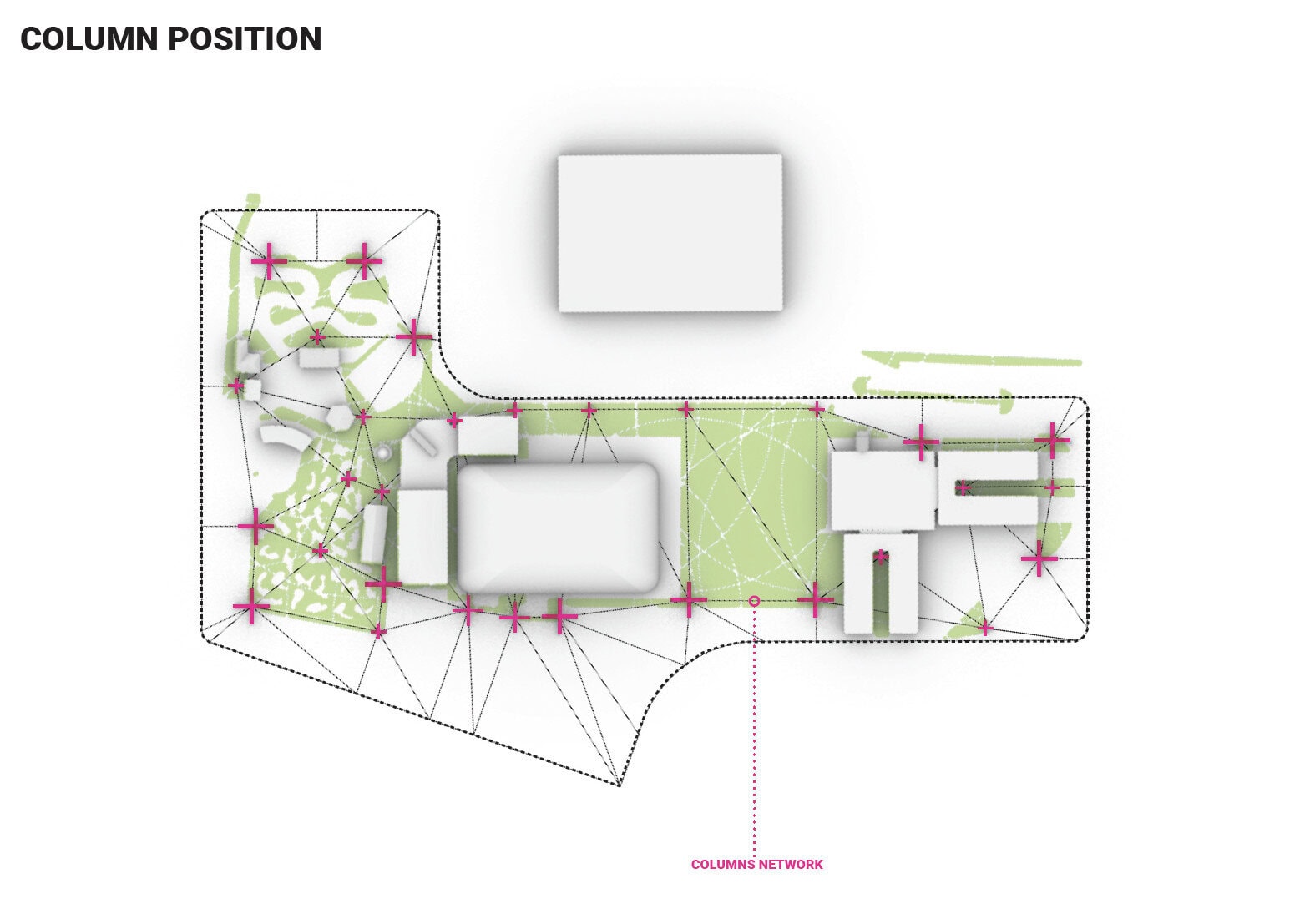
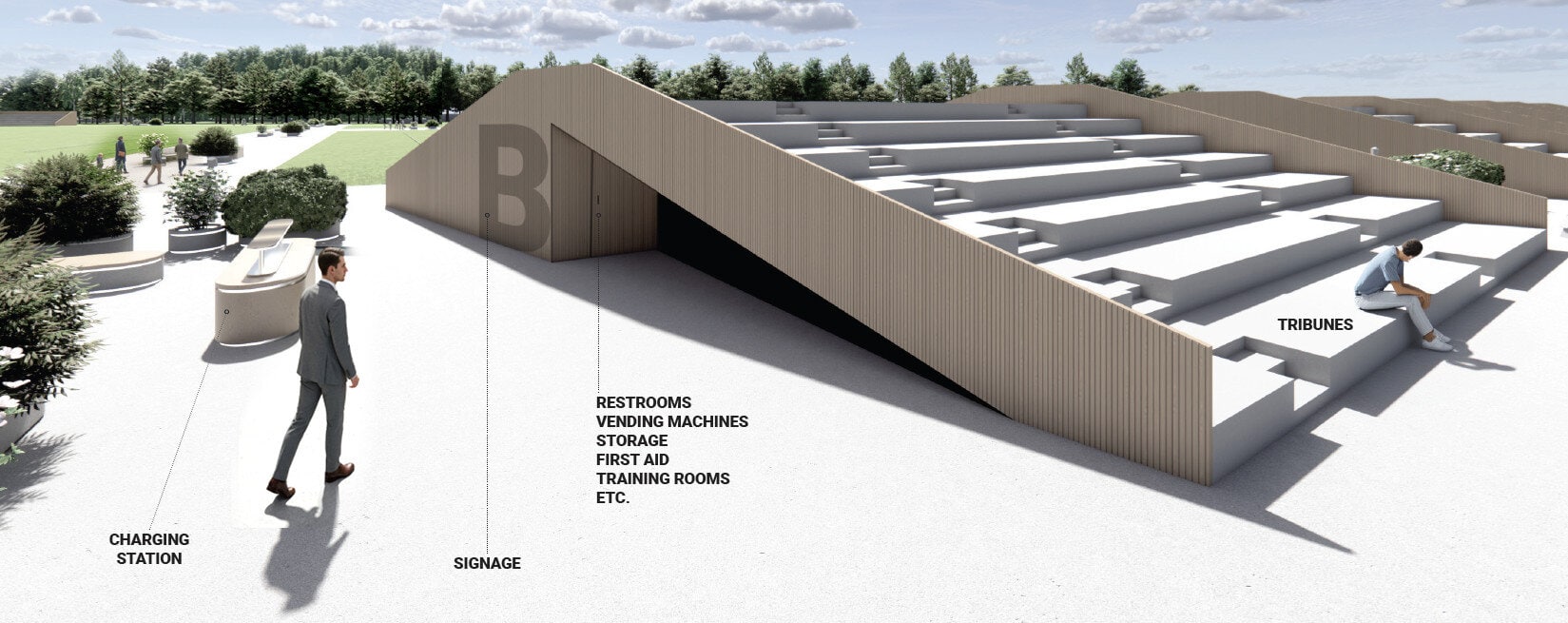
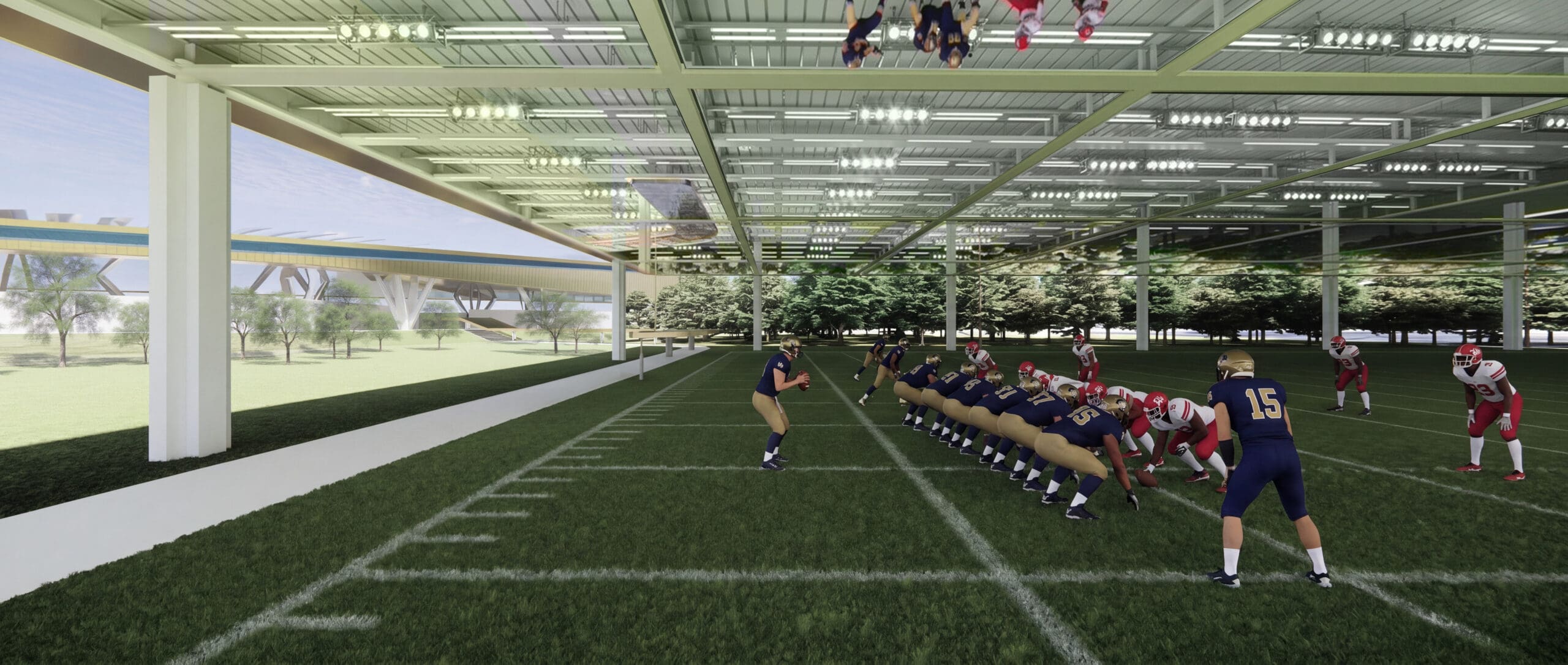
The canopy spans the entire complex, its perimeter stretching over 1,200 meters as it wraps around football, baseball, and soccer fields, connecting them into a single continuous campus. Structurally, it is supported on a slender grid of columns, allowing the ground plane beneath to remain largely open, fields, concourses, and gathering spaces flow into one another without the interruptions that separate buildings would normally impose. The canopy’s underside becomes a vast, shaded, weather-protected zone: a place where games continue regardless of sun or rain, where spectators gather in shelter, and where the architecture quietly disappears into infrastructure.
Above, the canopy’s upper surface is dedicated almost entirely to solar panels. This is the project’s core proposition: a structure whose primary function is shelter, but whose primary purpose is energy generation. The 5.7-hectare solar surface is sized to meet a substantial share of the campus’s operational needs, lighting the fields, powering the viewing galleries, running the support facilities, and turning what would normally be a passive roof into the site’s main piece of infrastructure. The canopy is not an addition to the sports center; it is the sports center’s energy plant, hidden in plain sight as architecture.
This dual identity, shelter below and power generation above, shapes the building’s form. Where the canopy needs to span longer distances over playing fields, it lifts and thins, supported on widely spaced columns that keep sightlines open for play and spectating. Where it meets the ground, near entrances, viewing galleries, and the perimeter running track, it folds, dips, and gains depth, creating more enclosed, human-scaled spaces. The result is a single continuous surface that performs differently depending on what it covers: open and expansive over the fields, more intimate and tactile where people gather.
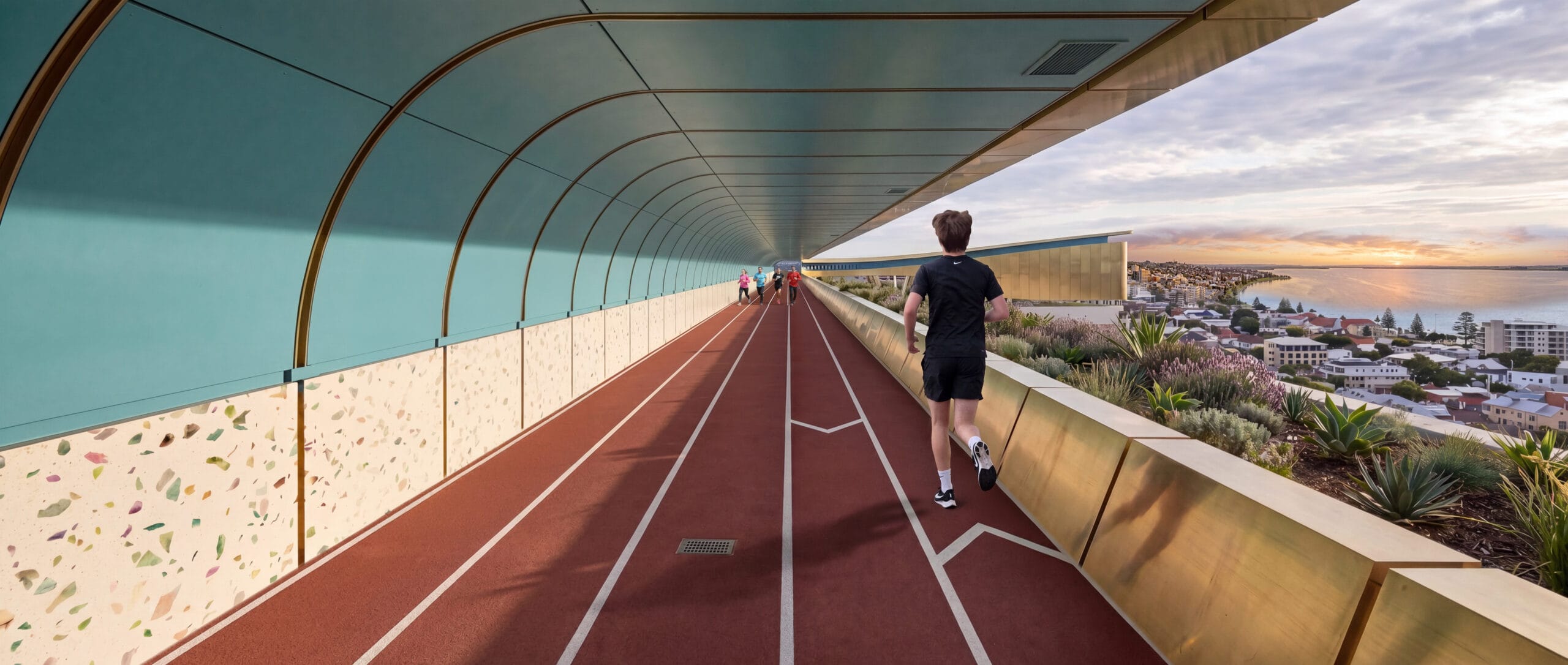
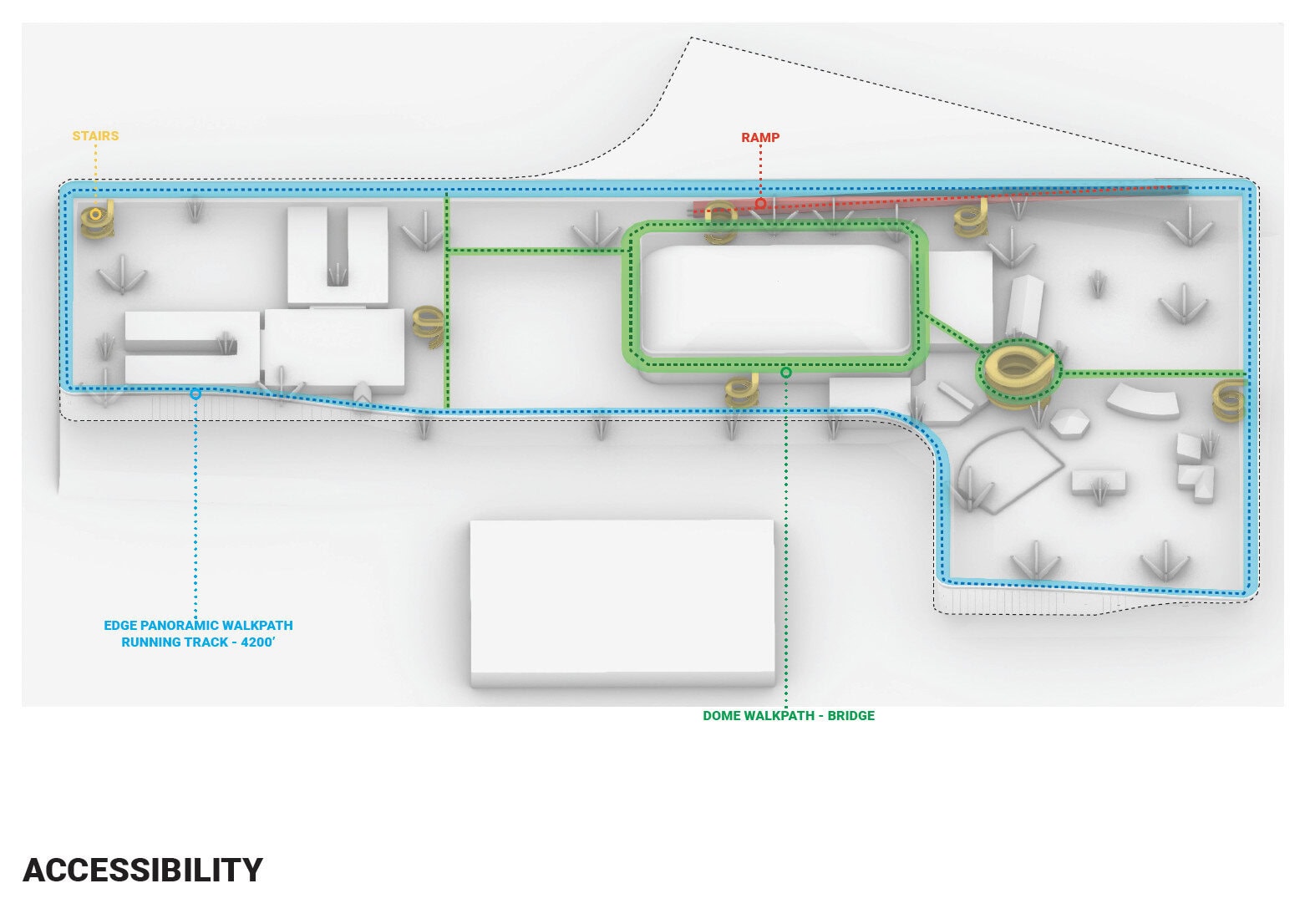
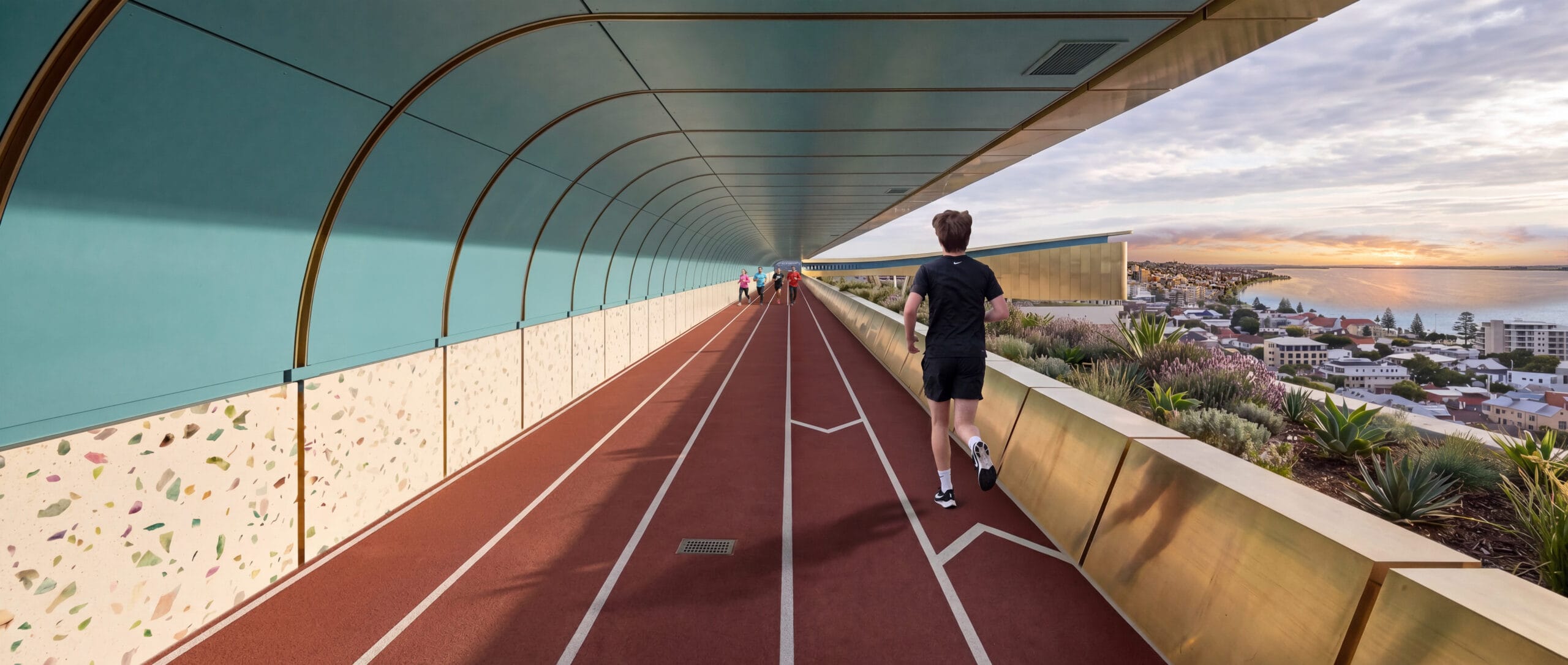
The perimeter running track, threading along the edge of the canopy, makes this dual nature legible at a human scale. Runners move beneath the same surface that, just above their heads, is quietly generating the electricity for the lights they’re running under and the fields they’re circling. Sport and sustainability are not presented as separate values requiring separate gestures; they share the same structure, the same surface, and the same architectural move.
Seen from above, the canopy reads as a unifying datum across the 25-hectare site, a single roofline that ties together football, baseball, and soccer into one legible campus, where previously there might have been a scatter of unrelated buildings. Seen from below or from the field, it reads as shelter, shade, and structure. Seen up close, along the running track, it reads as energy infrastructure made visible and walkable.
Erie Sports Center proposes that a sports facility’s most important architectural element doesn’t have to be a stadium, a stand, or a signature building; it can be the roof that covers everything, doing double duty as both shelter and power source and, in doing so, becoming the project’s true identity.