Again a redirect, and the destination has only ~120 words. Edit /blog/project/forest-surf-wave-pool-sydney/ with this:
PROJECT OVERVIEW Type: Leisure and Entertainment Concept Design Location: Sydney, Australia Programme: Wave Pool / Surf Park / Outdoor Leisure Destination Scale: Large urban leisure complex with wave pool, food court, lawns, and cabanas
THE BRIEF
The brief called for a surf park and wave pool destination in Sydney — a city with a deeply embedded surf culture but limited access to quality surf for much of the urban population. The concept needed to bring the experience of beach and surf culture inland, creating an outdoor leisure destination that could serve families, groups, and serious surfers simultaneously.
The challenge was both experiential and spatial: how do you translate the open, informal vitality of Sydney’s beach culture into a designed environment without losing the spontaneity that makes that culture appealing? And how do you organise a complex programme — wave pool, food and beverage, lawn space, private cabanas, parking, and commercial areas — into a coherent and enjoyable spatial experience?
THE CONCEPT
The concept is built around a single cultural reference point: the spirit of beach and street life.
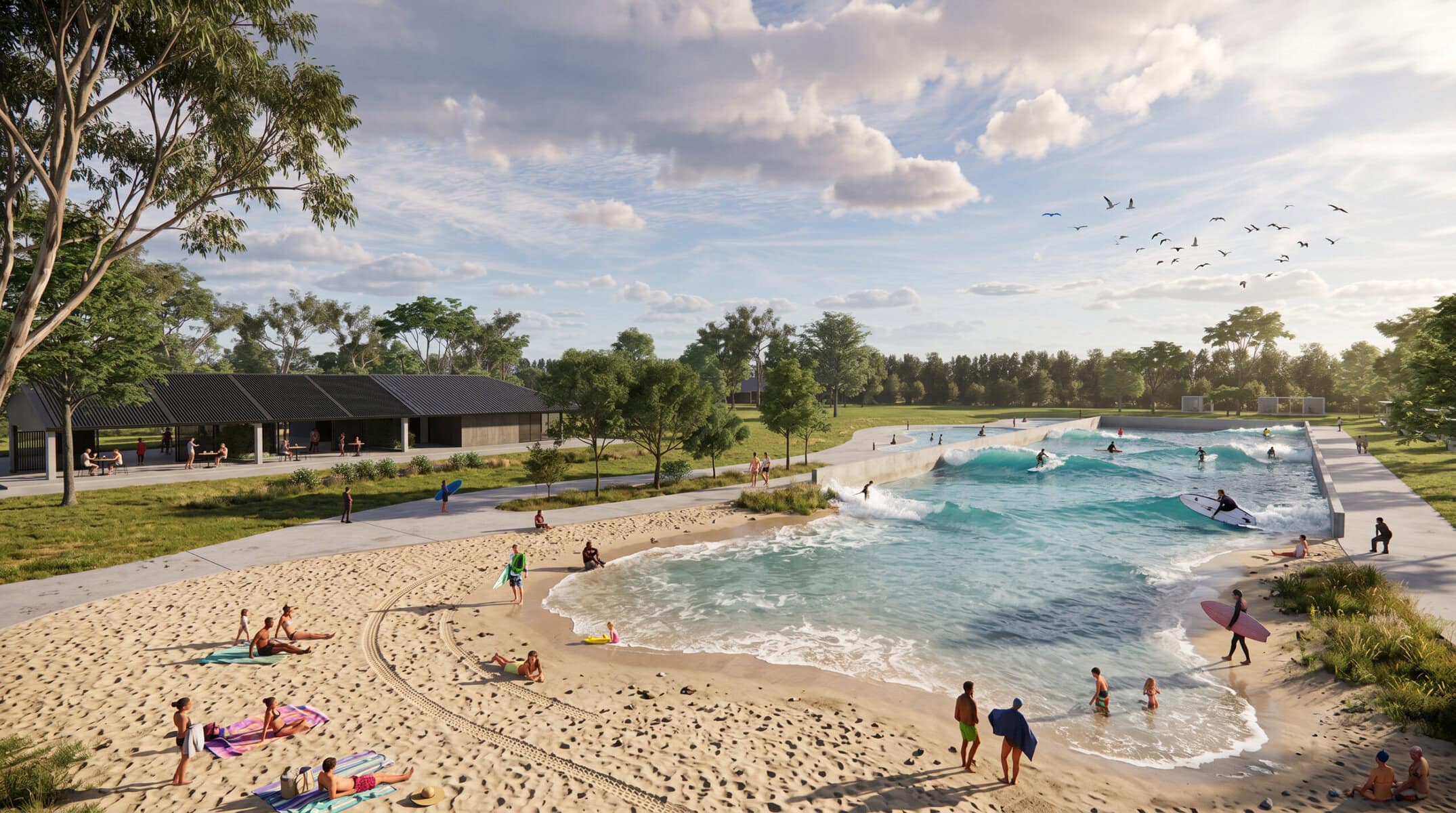
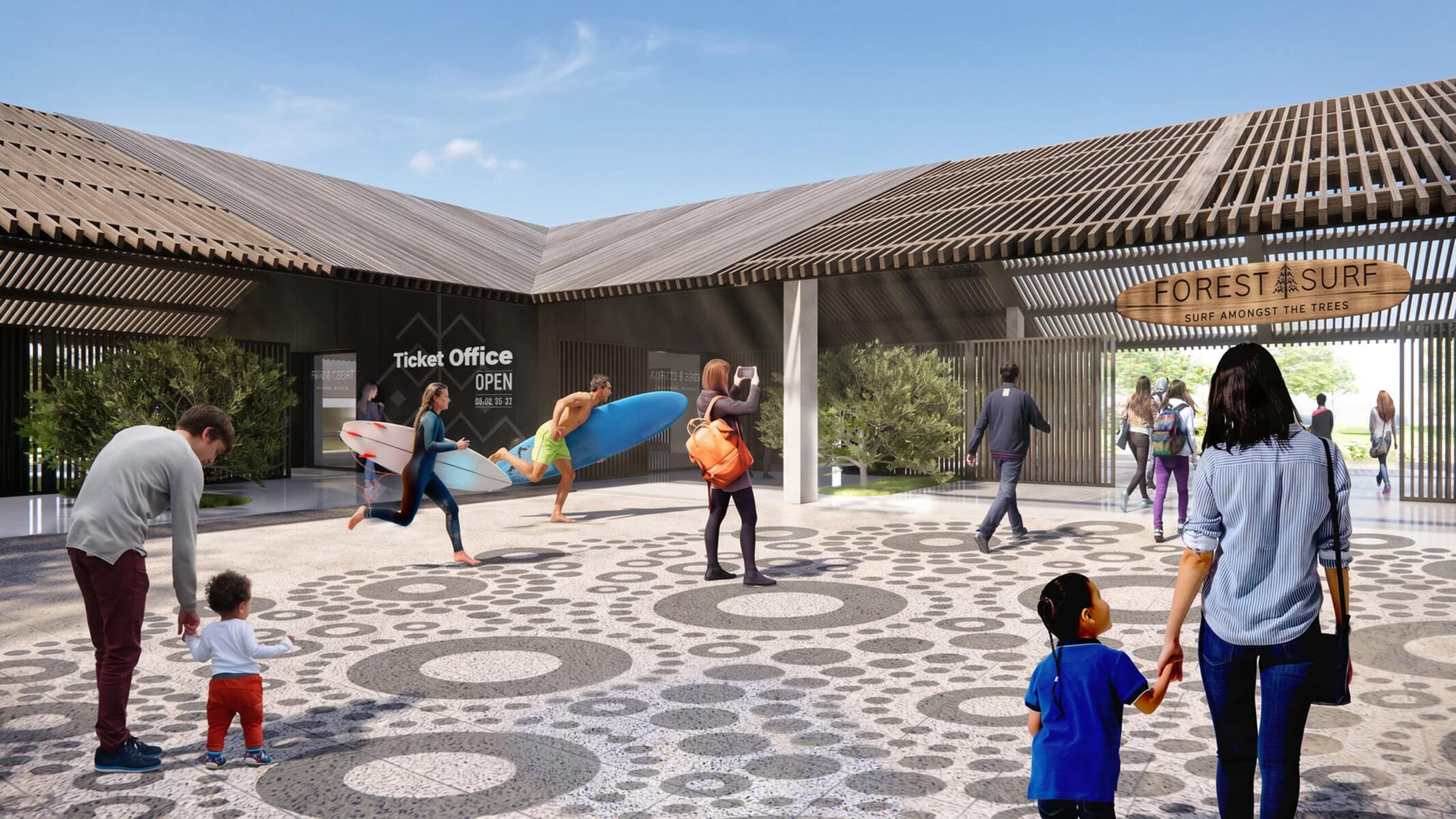
Forest Surf interprets the open, fresh, playful vitality of Sydney’s coastal culture and brings it into an urban park setting. The project is not a theme park version of the beach — it is an environment that absorbs the informal social energy of beach life and gives it a spatial home away from the coast. Surf culture, street food, outdoor gathering, and the pleasure of being in a generous green landscape become the organising forces of the design.
The name itself sets the tone. Forest Surf brings two natural environments — woodland and ocean — into dialogue in the middle of the city.
THE APPROACH
The design translates the concept through a clear spatial hierarchy that moves from public to private, from active to relaxed, from open to enclosed.
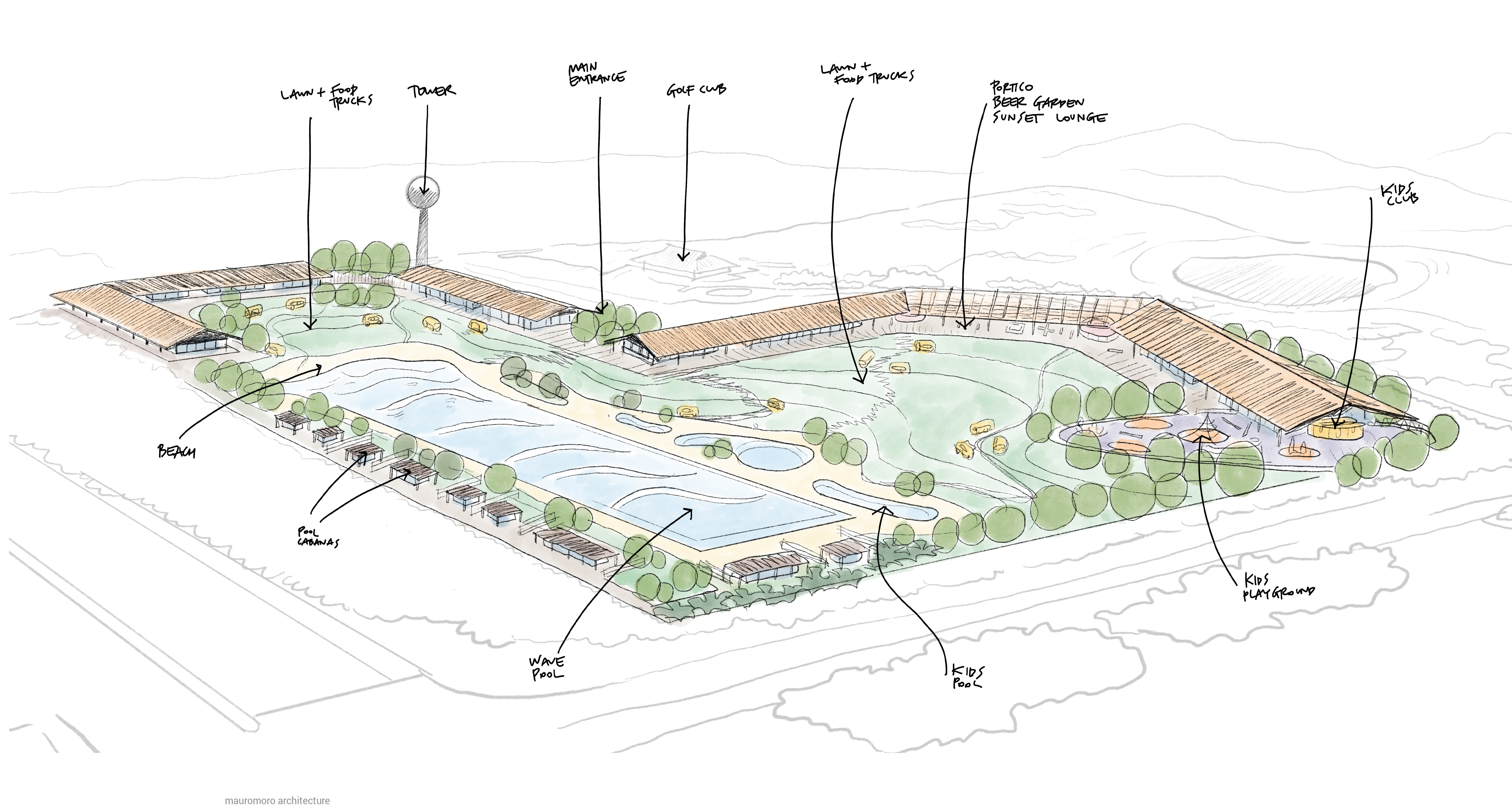
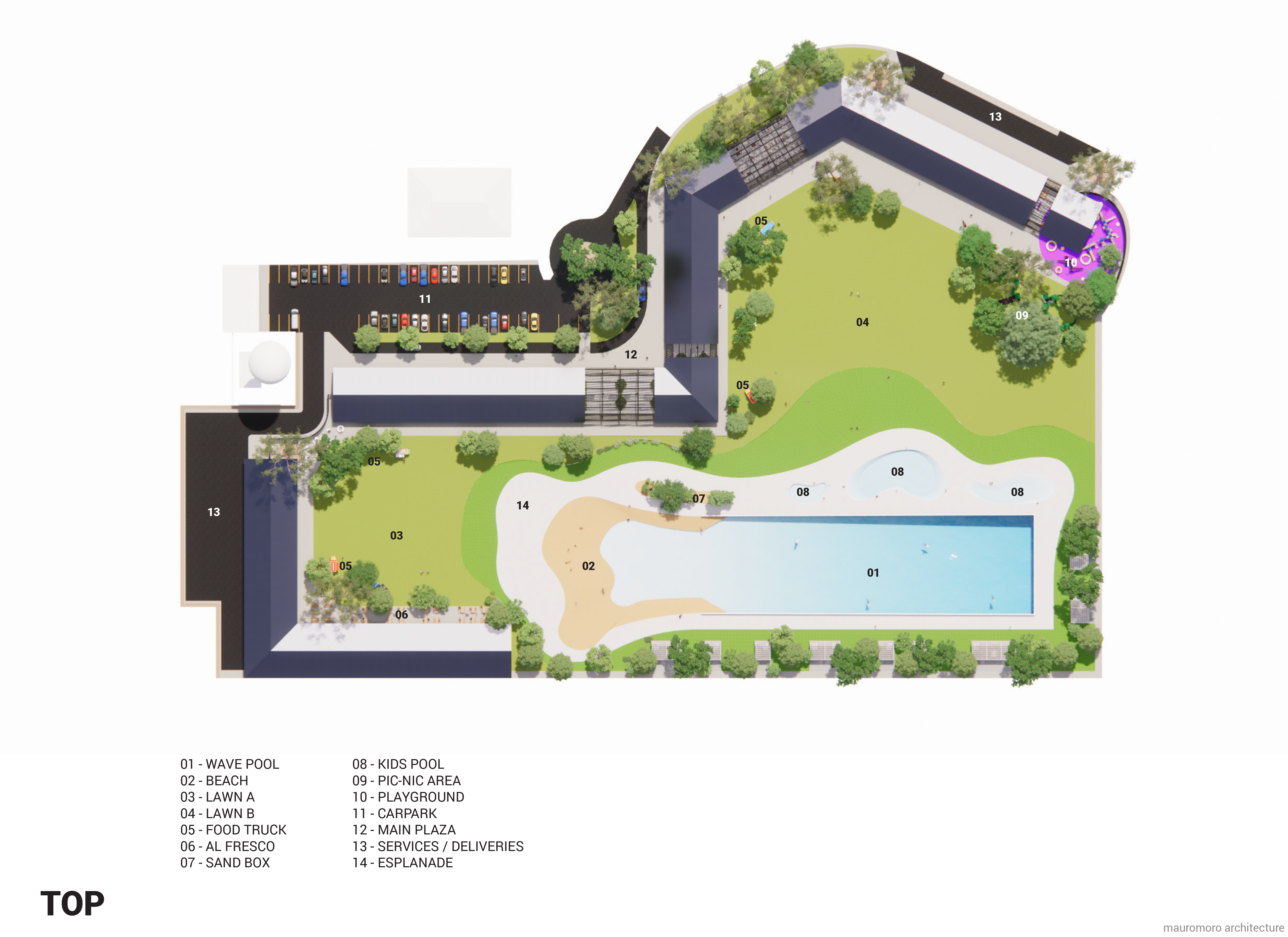
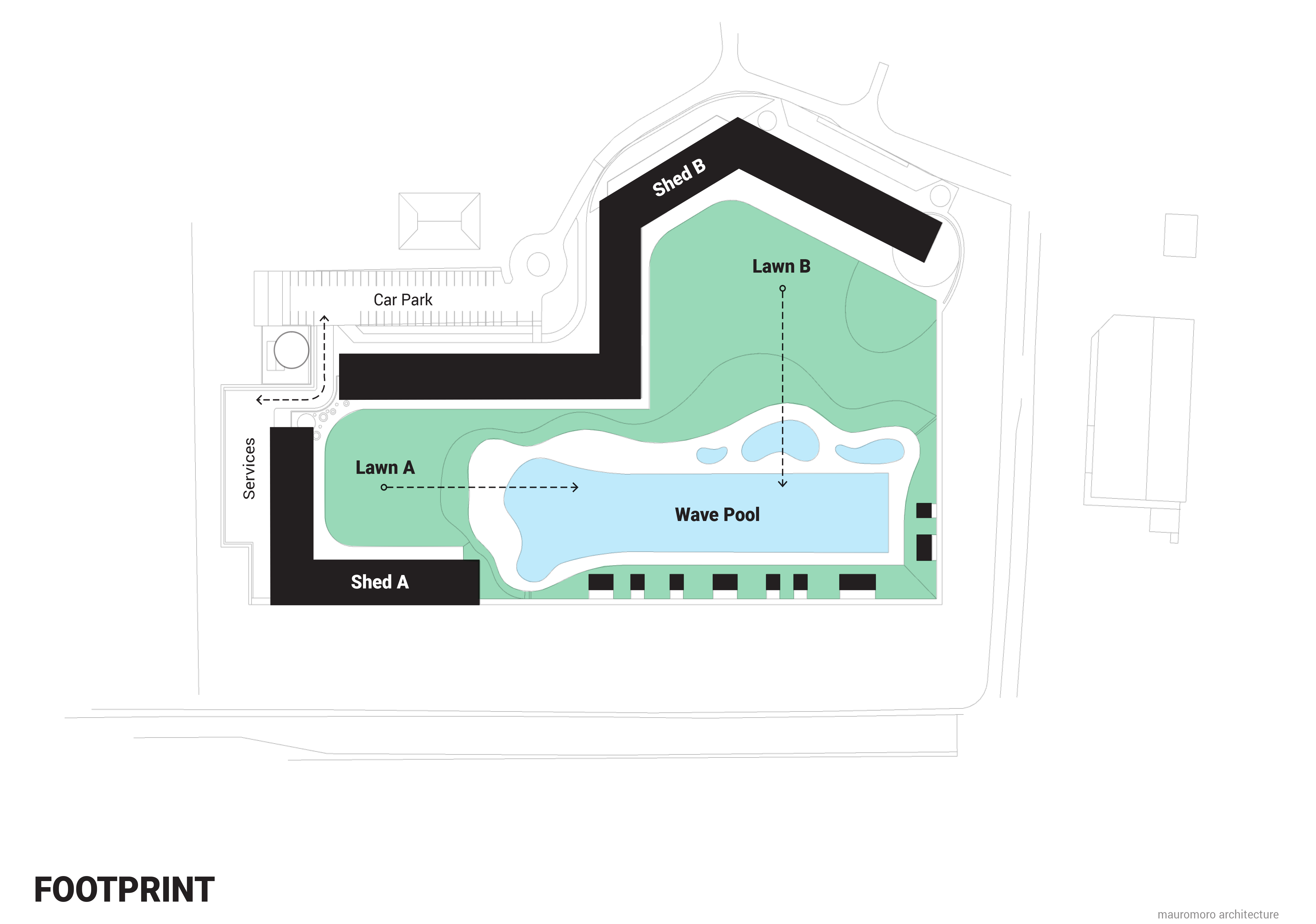
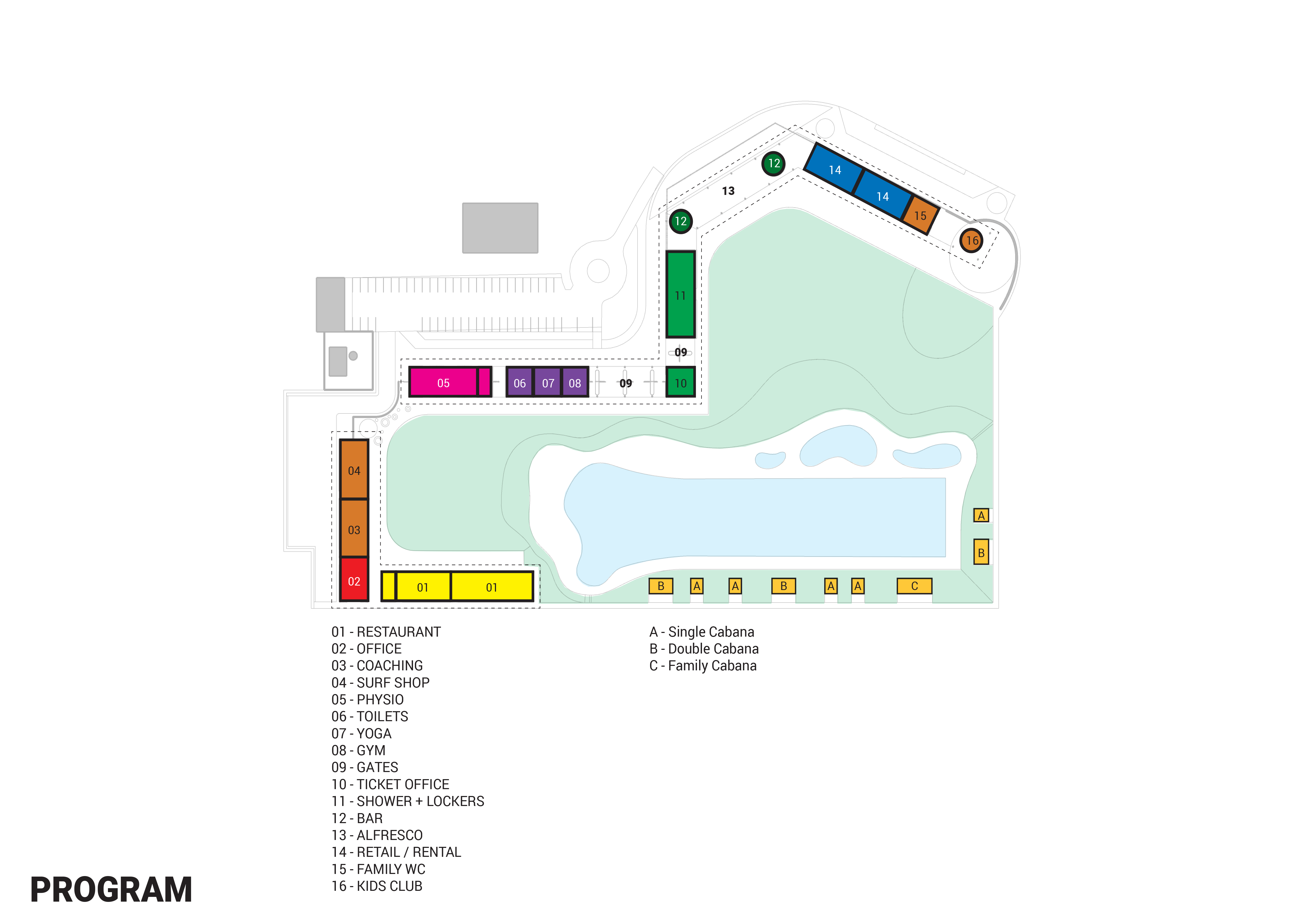
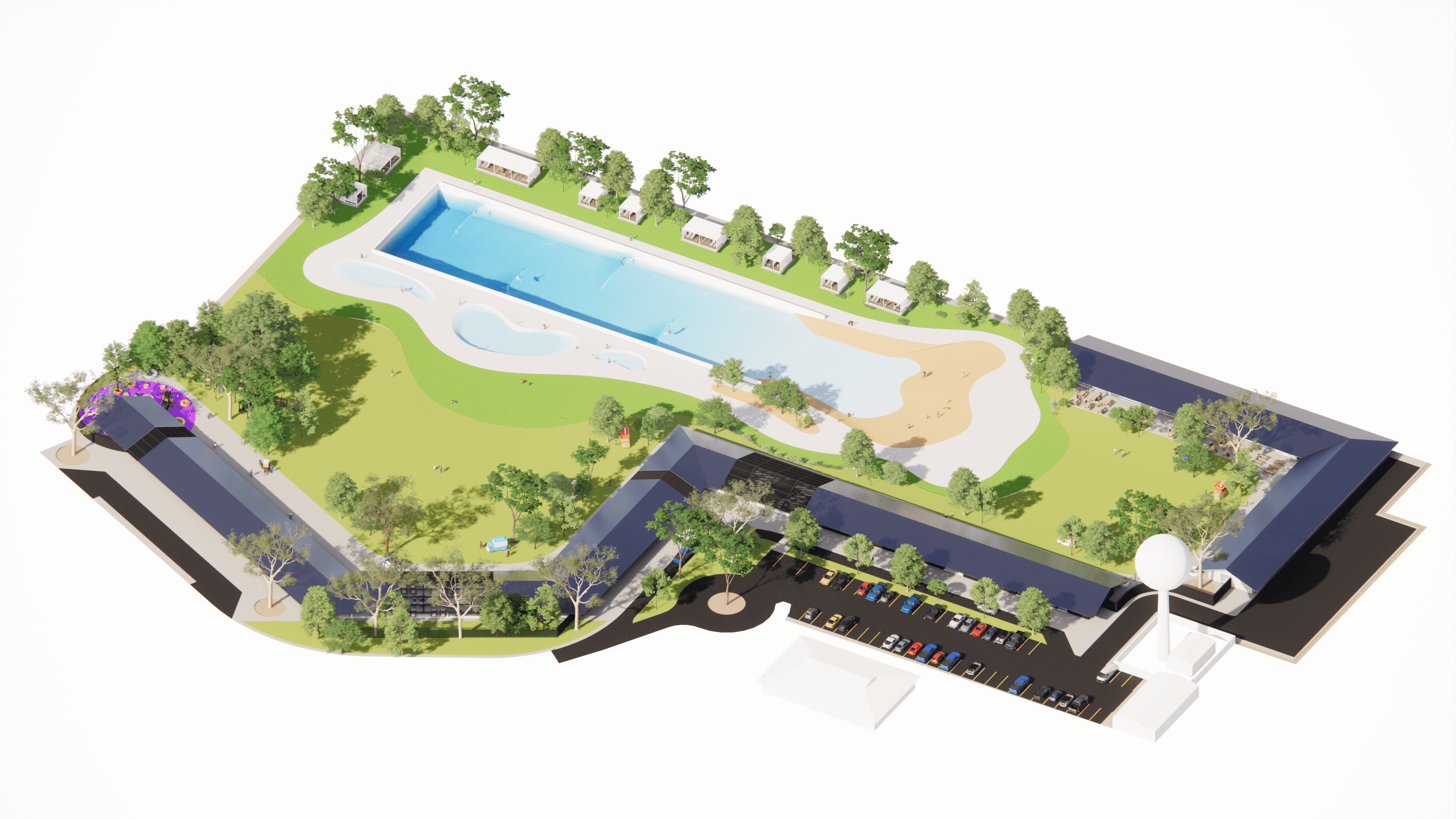
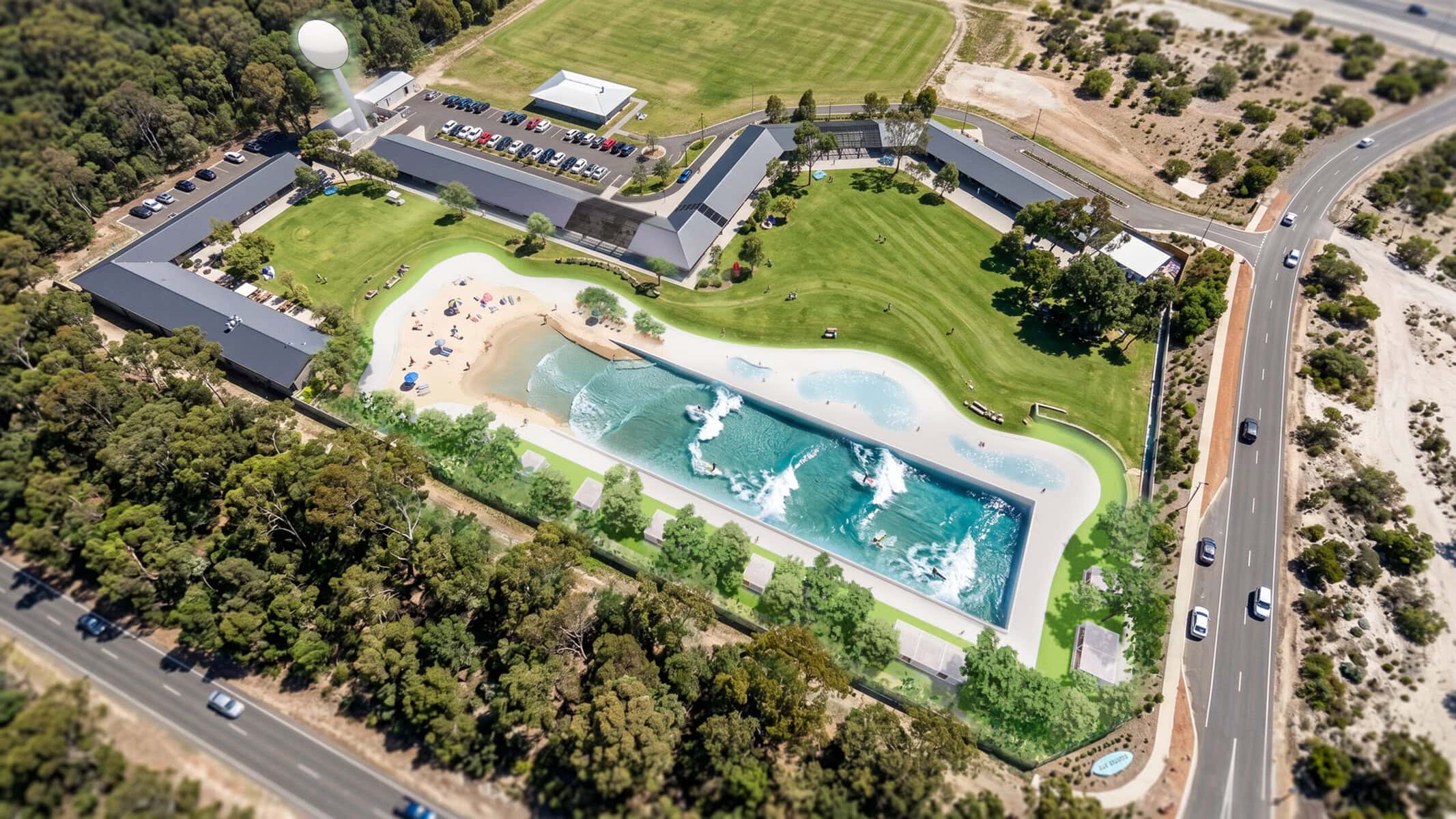
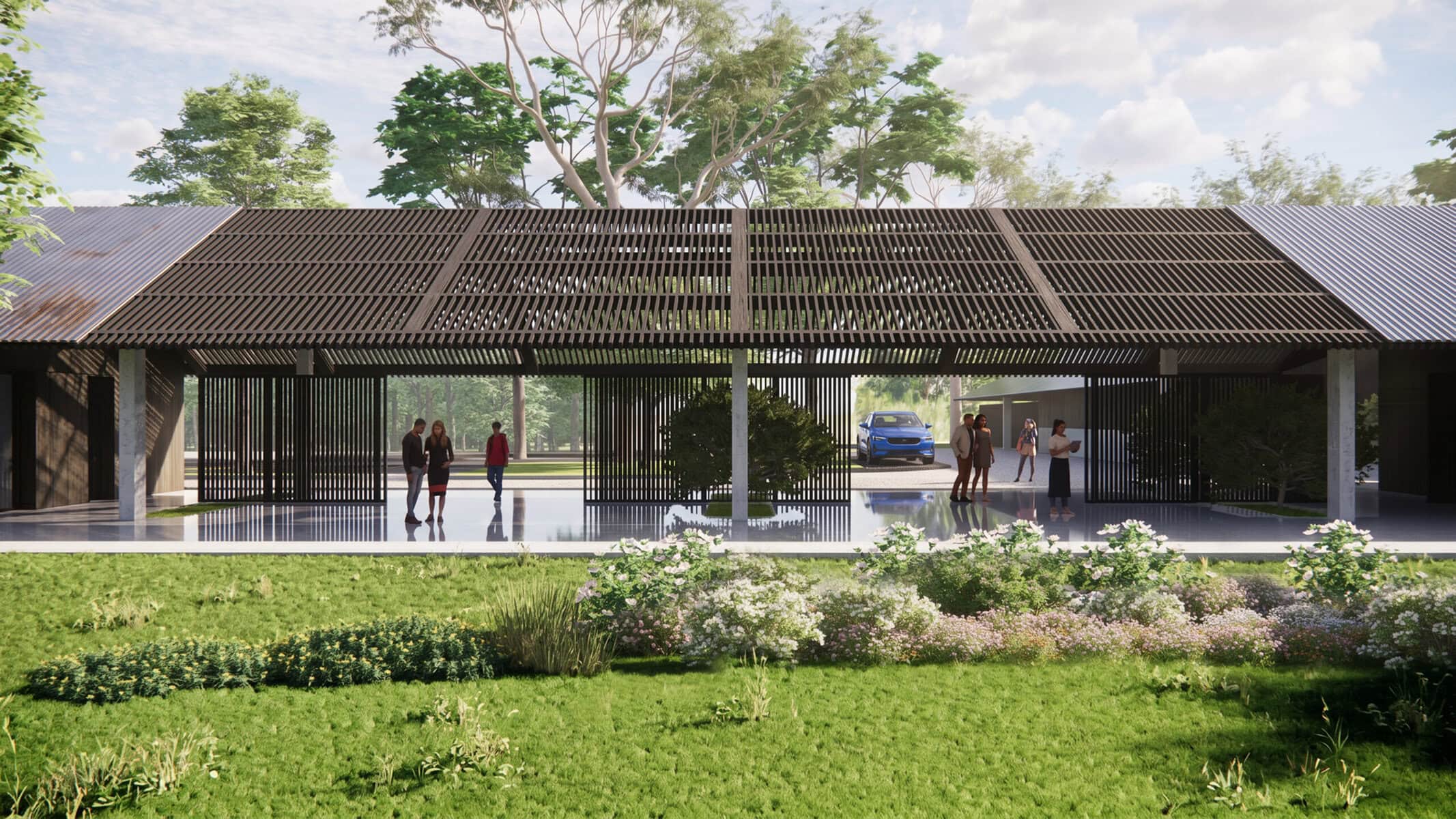
The perimeter buildings define and enclose the site, providing services, back-of-house infrastructure, and a filter between the public street and the interior park environment. Rather than treating the building edges as generic service elements, they are designed as active frontages — commercial spaces, changing facilities, and entry points that animate the perimeter and draw visitors into the site.
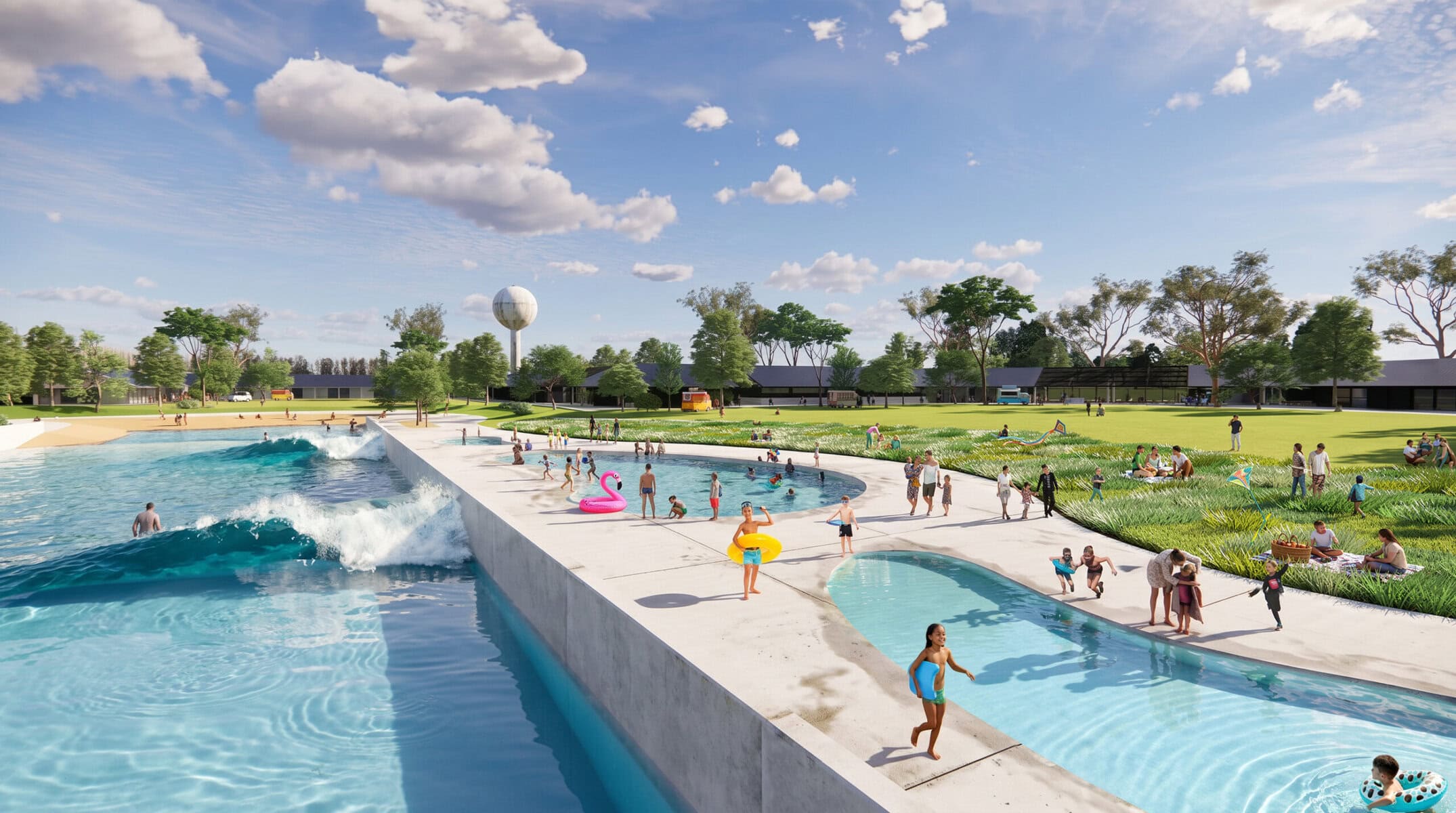
The wave pool is positioned at the site’s lowest natural point, a decision driven by both engineering logic and spatial experience. Siting the pool at the lowest level optimises water management, maximises views of the surf from surrounding areas, and creates a natural sense of arrival — guests descend toward the water, building anticipation as they approach.
Along the pool edge, cabanas of varying sizes are arranged in a continuous sequence — scaled for couples, small groups, and families. This gradient of privacy gives the wave pool zone the social flexibility of a real beach, where different groups can find the level of seclusion they want without feeling excluded from the activity.
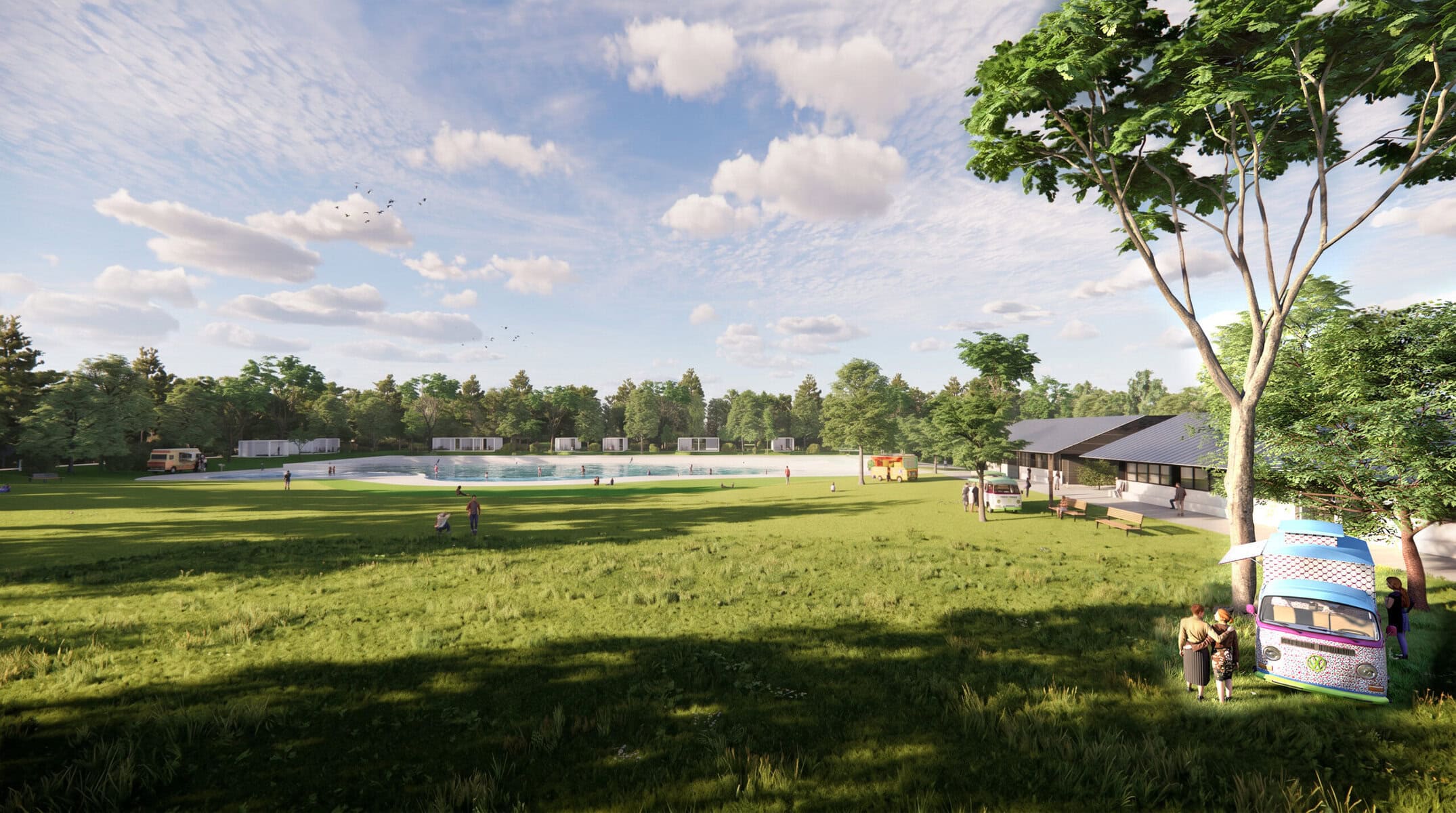
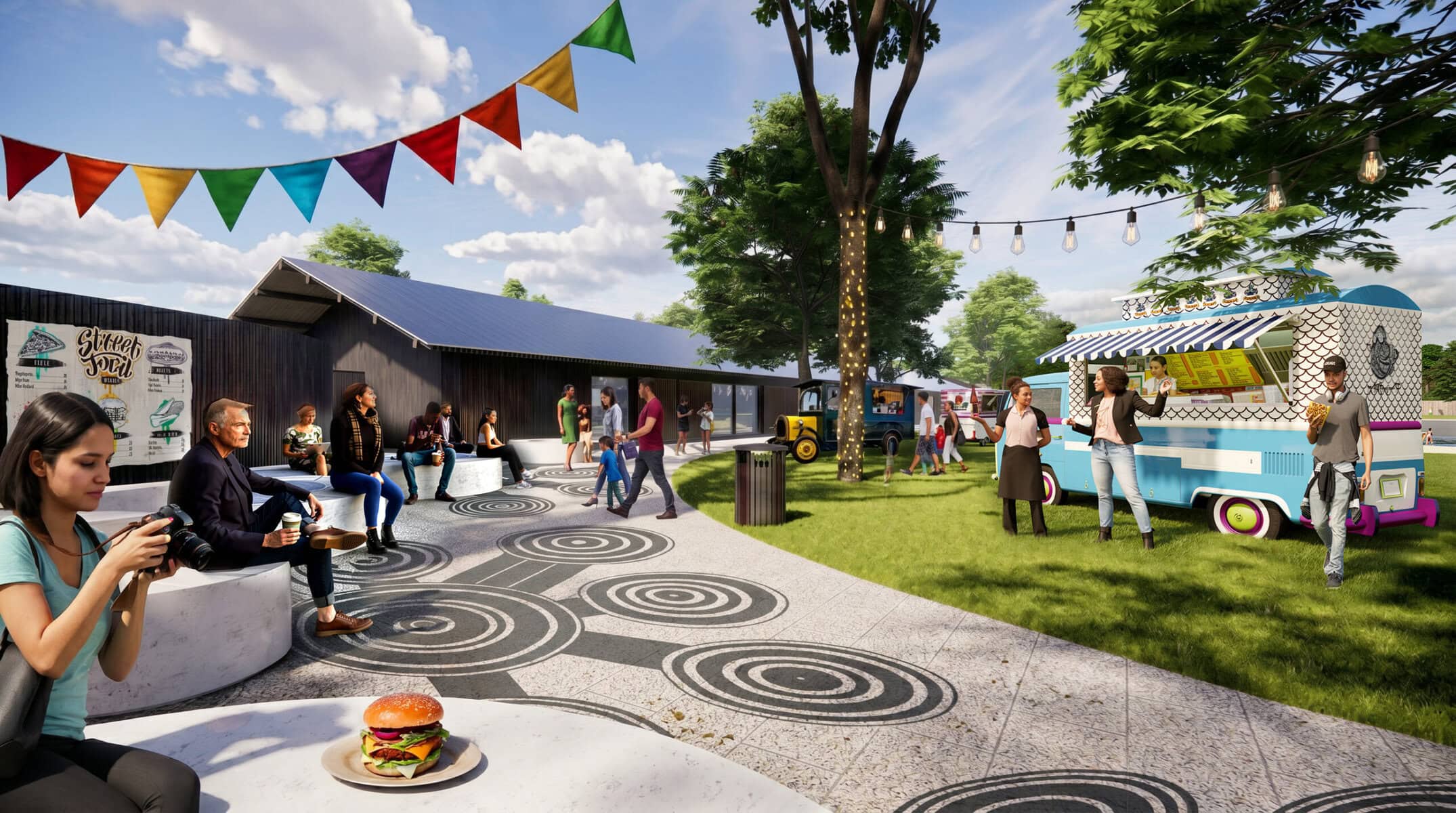
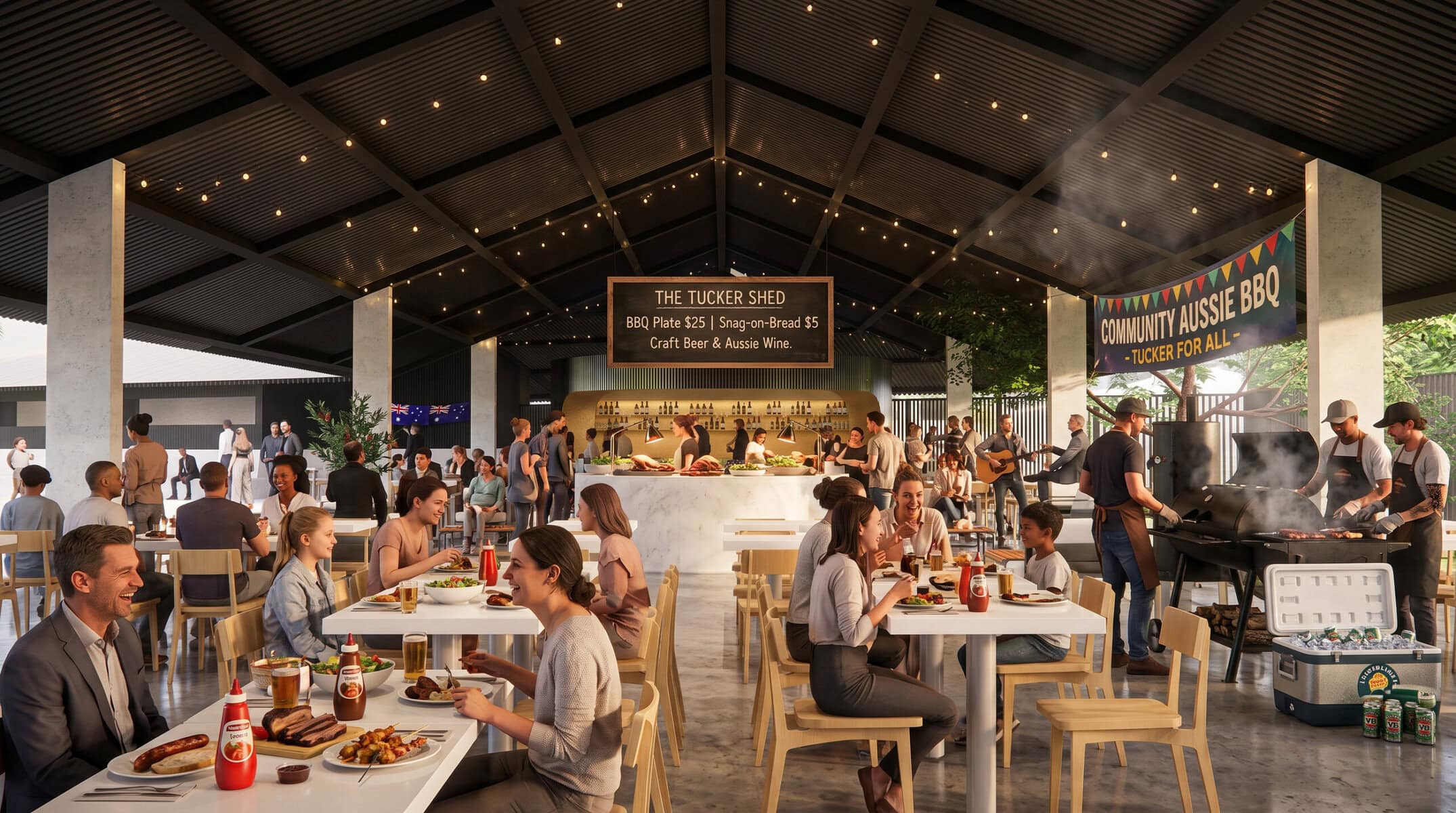
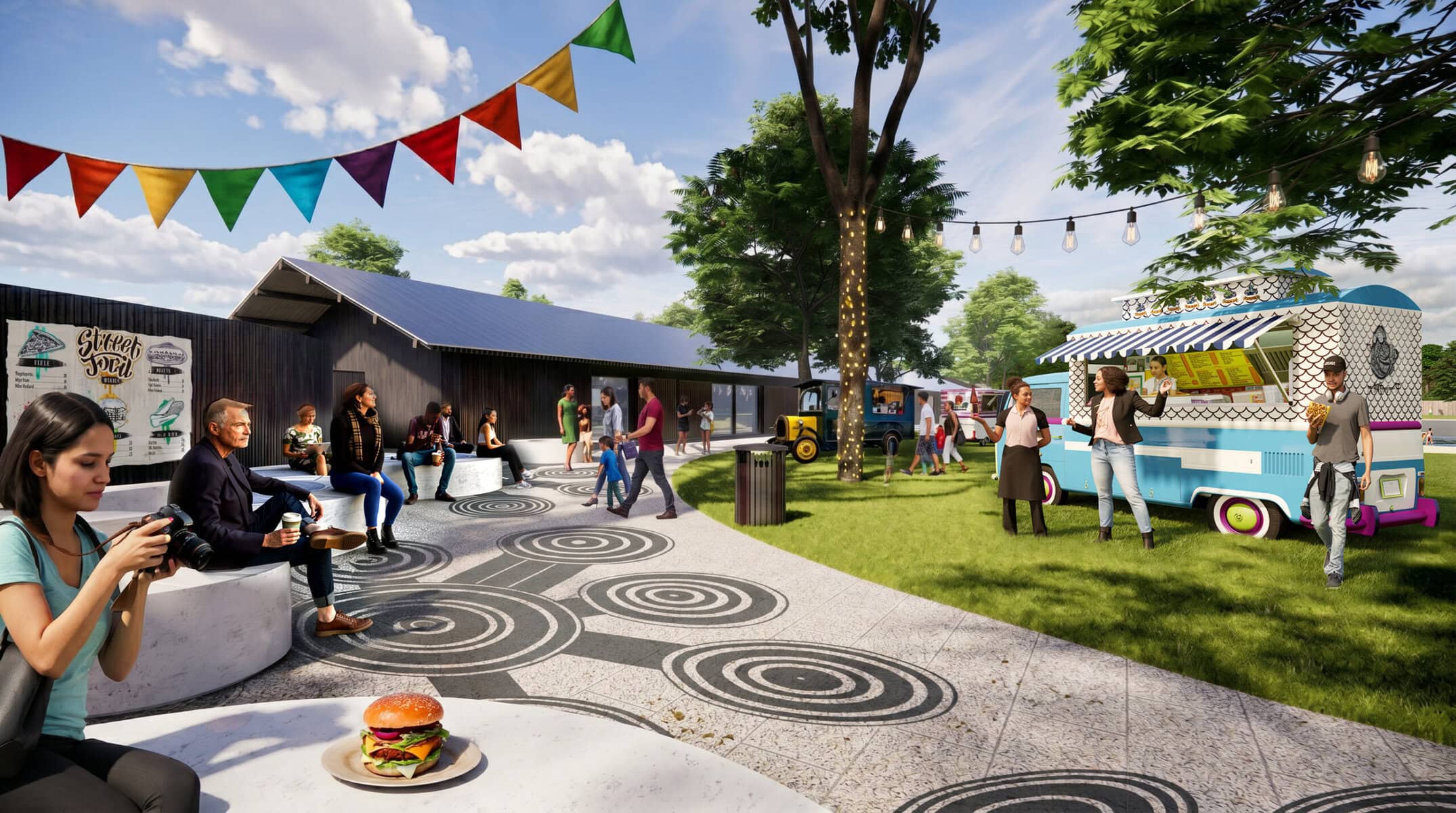
A generous food court occupies the edge of the artificial beach — positioned to serve both wave pool users and visitors to the central lawn, maximising dwell time and commercial activation. Street food vans distributed through the green space reinforce the informal, sociable atmosphere of the concept.
The large central lawn anchors the entire composition. Framed by the commercial and public buildings on two sides and open to the sky, it is the park’s social heart — a place for picnics, events, informal play, and simple outdoor relaxation. It performs the same role as the beach itself in Sydney’s coastal parks: a generous, unprogrammed space where people can be together without a specific activity.
KEY DESIGN DECISIONS
Positioning the wave pool at the lowest point of the site was the defining technical and experiential decision. It resolved the engineering challenge of water containment and drainage while creating a spatial drama — the pool reveals itself progressively as visitors move through the site.
The decision to frame the central lawn with active commercial frontages rather than service buildings was equally important. In a leisure destination, the quality of the in-between spaces — the food, the shade, the places to sit and watch — determines the experience as much as the primary attraction. Forest Surf treats the lawn and its edges as a programme in themselves, not as leftover space between the wave pool and the car park.
WHY THIS PROJECT MATTERS
Urban leisure destinations that successfully translate the experience of natural environments — beach, forest, river — into city settings are among the most complex briefs in experience-led concept design. They require a precise understanding of how people actually use public space, how commercial and recreational programmes can coexist without undermining each other, and how spatial design can create atmosphere rather than simply organise function. Forest Surf demonstrates how concept design rooted in cultural identity and spatial clarity can produce a leisure destination with genuine character.