This project begins with a precise question: what does it mean to design architecture for automation?
The program required an industrial facility for a fuel and engine production line for a space agency, based on robotic assembly platforms and highly restricted operational protocols. The production areas are therefore conceived as true “black boxes”: spaces where human presence is limited, controlled, and, in some areas, almost entirely absent.
For this reason, the automated production building is treated as an opaque, functional, technological volume, optimized for non-human production.
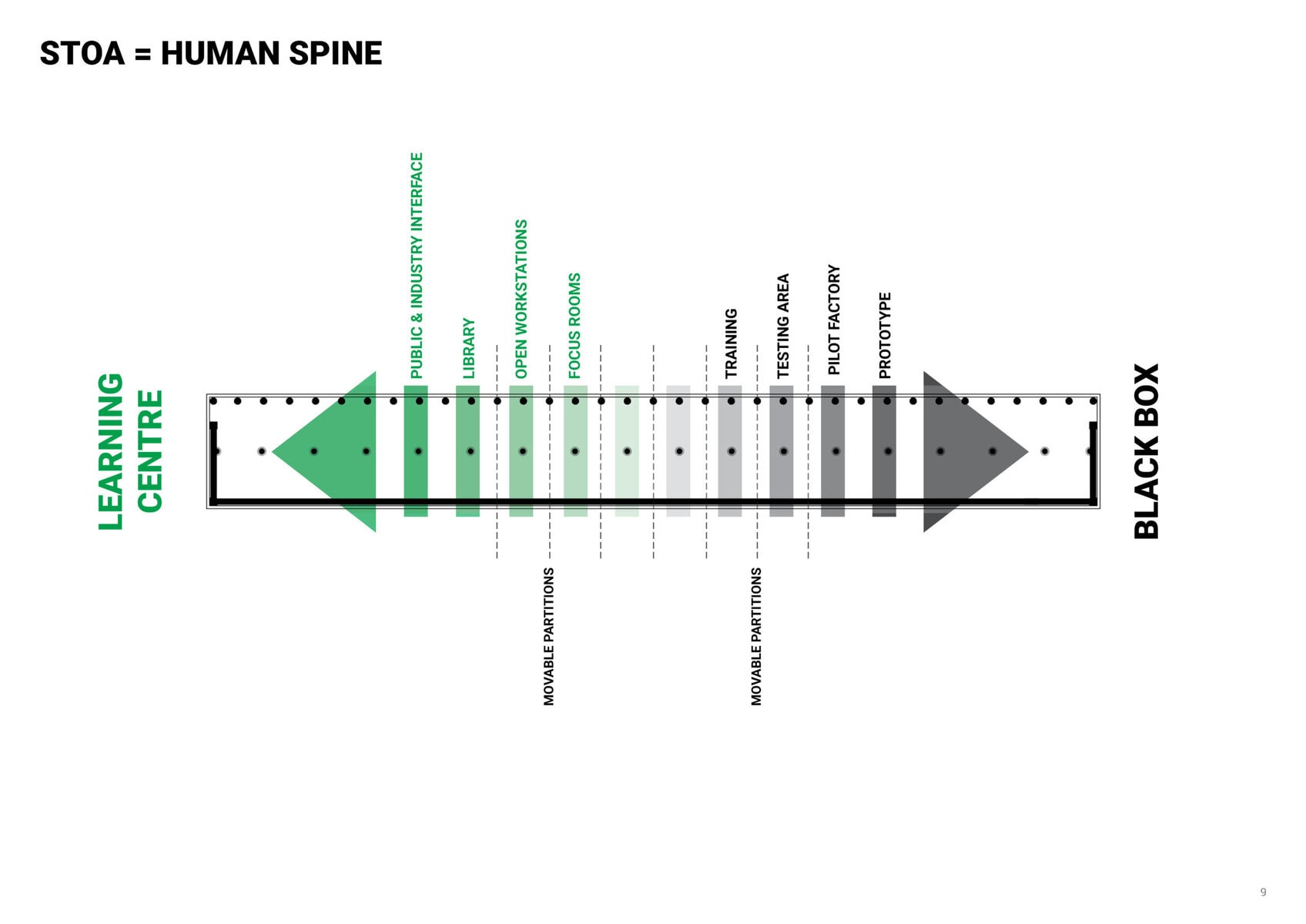
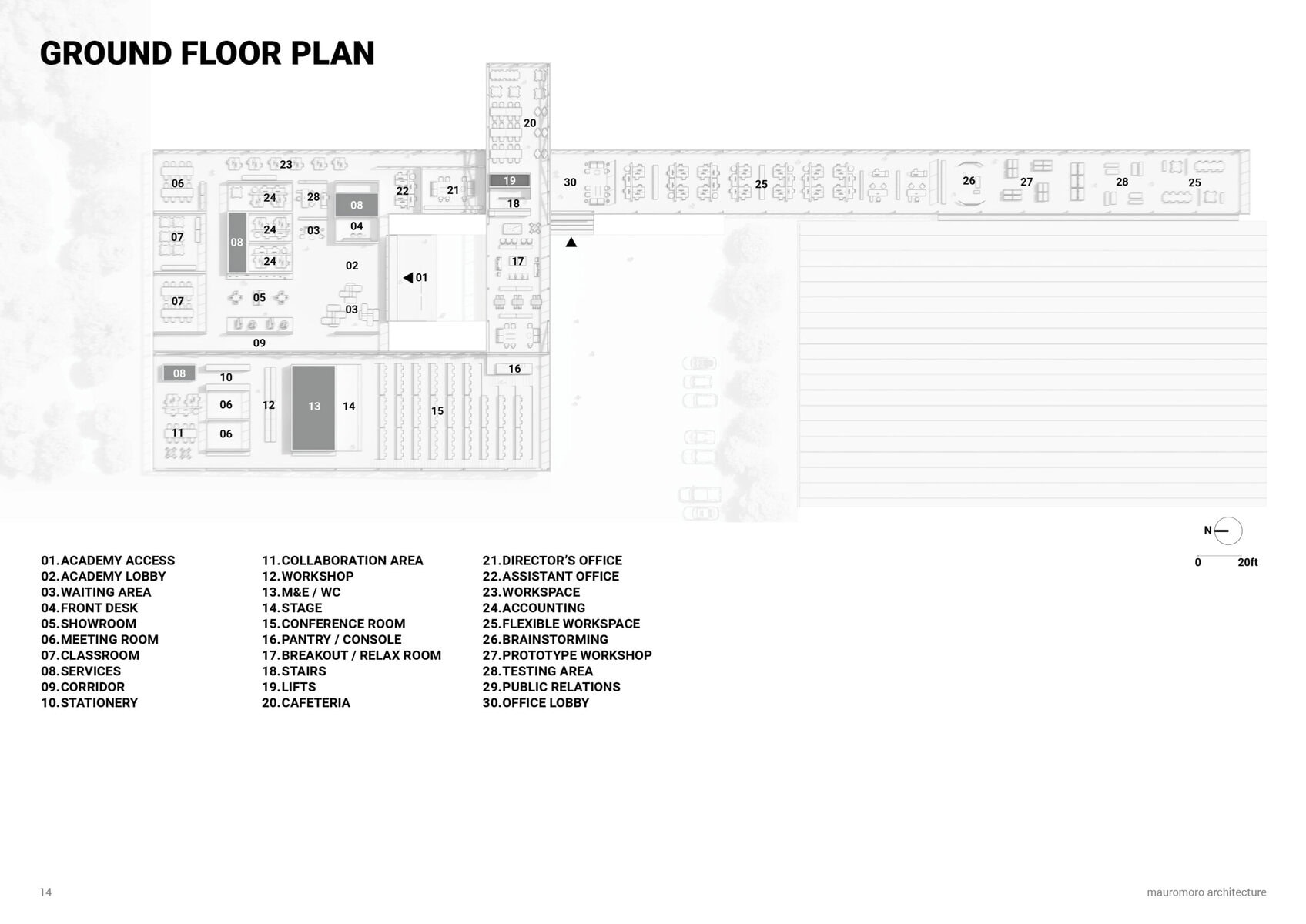
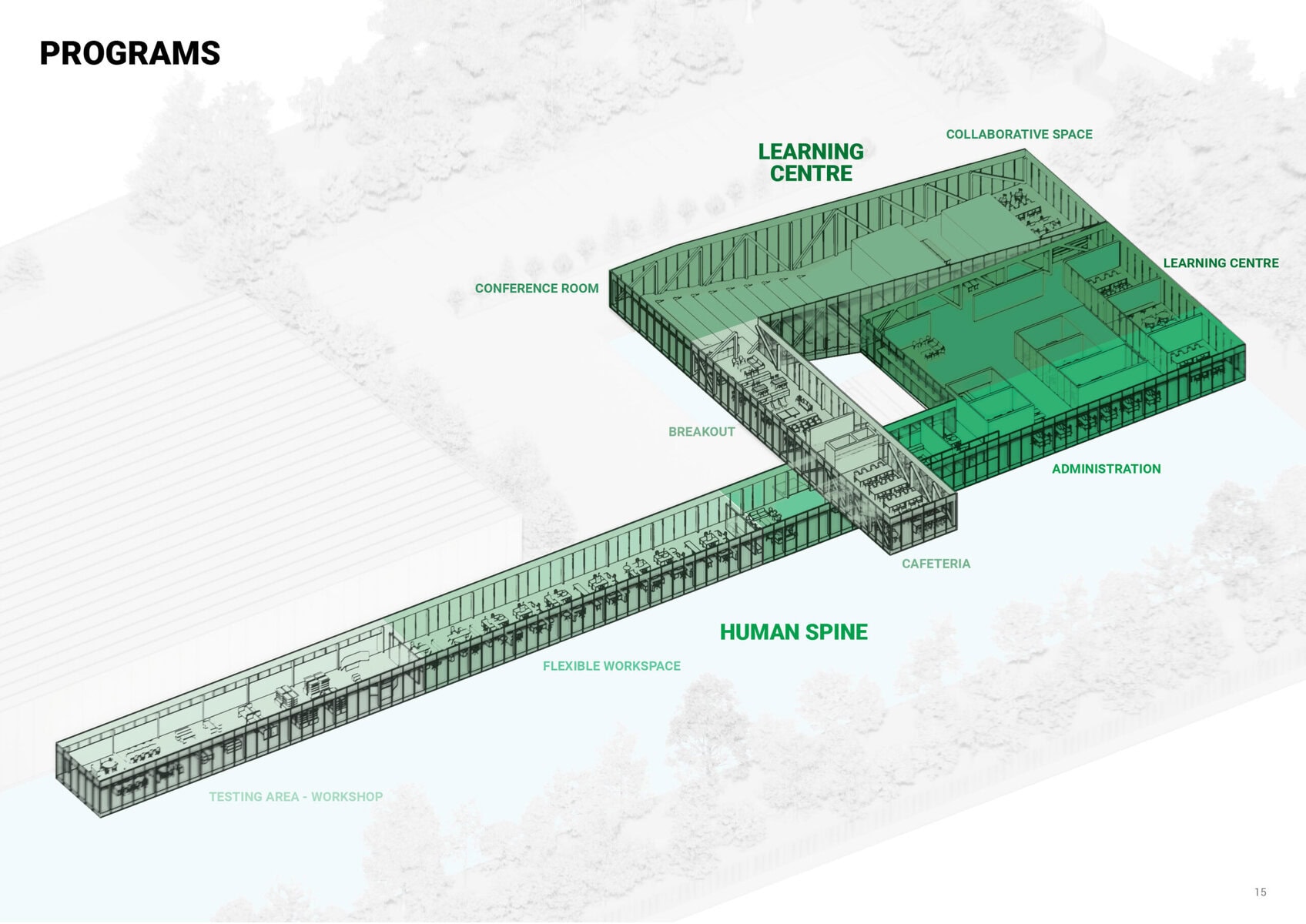
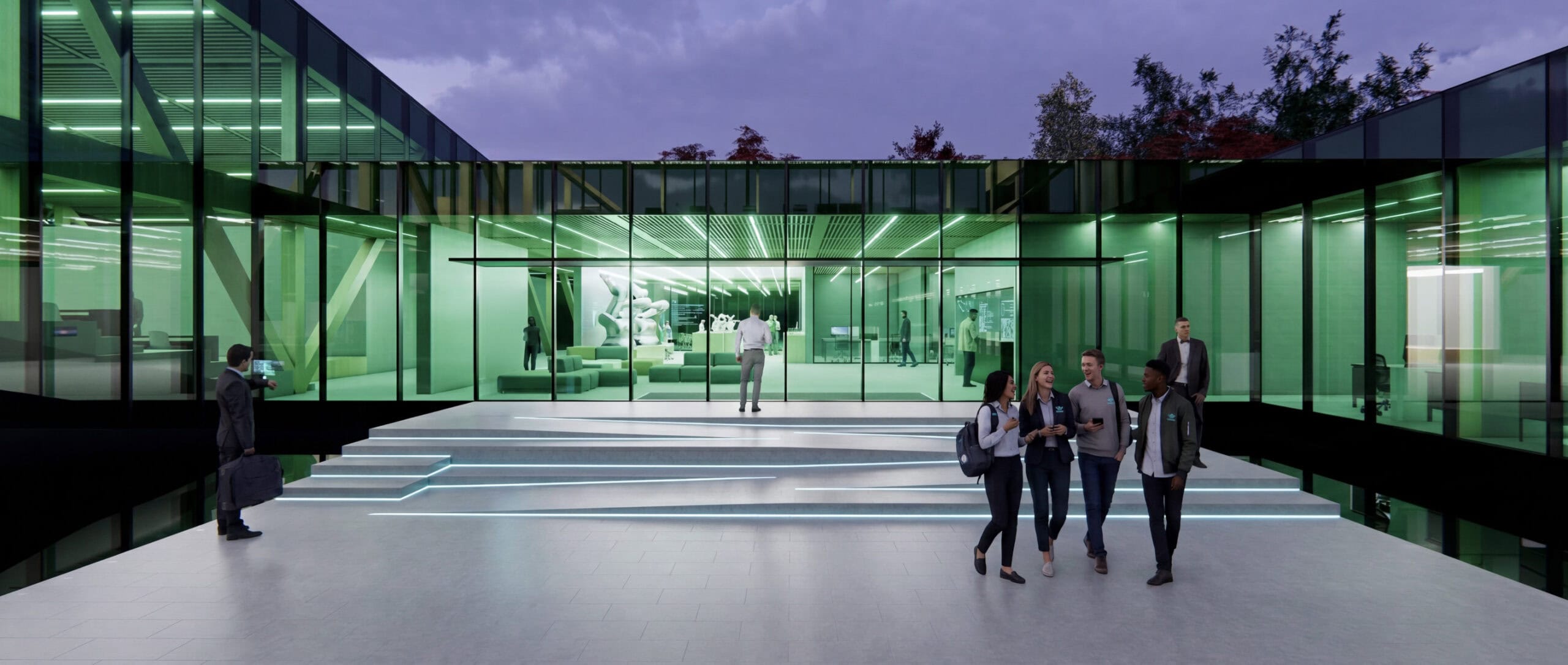
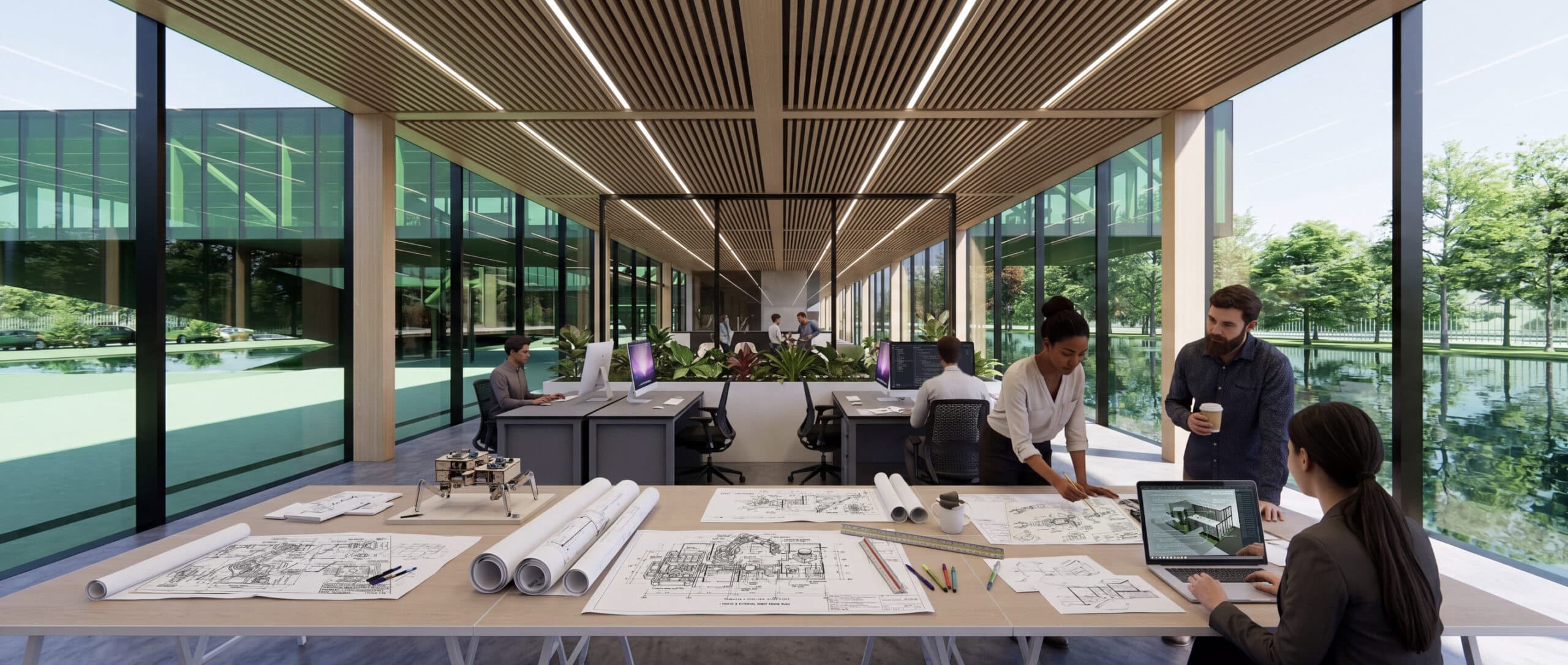
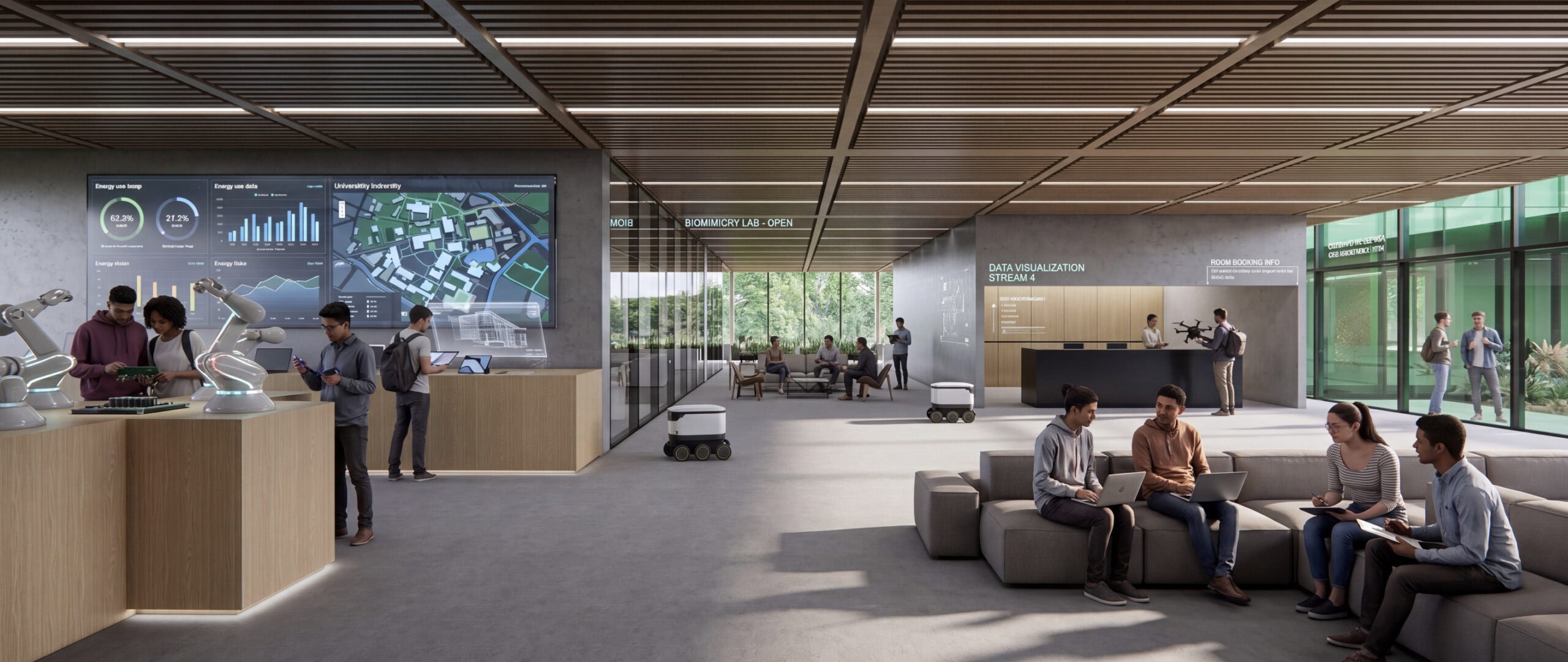
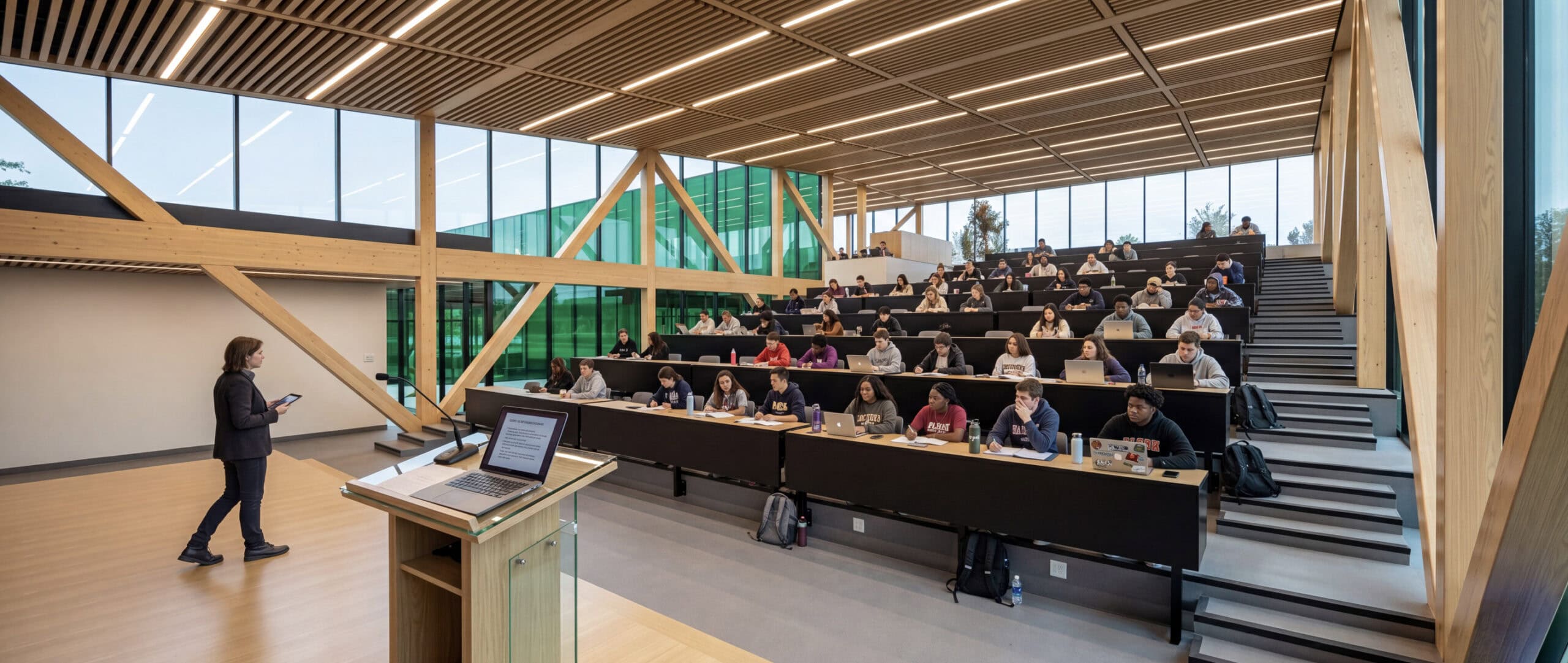
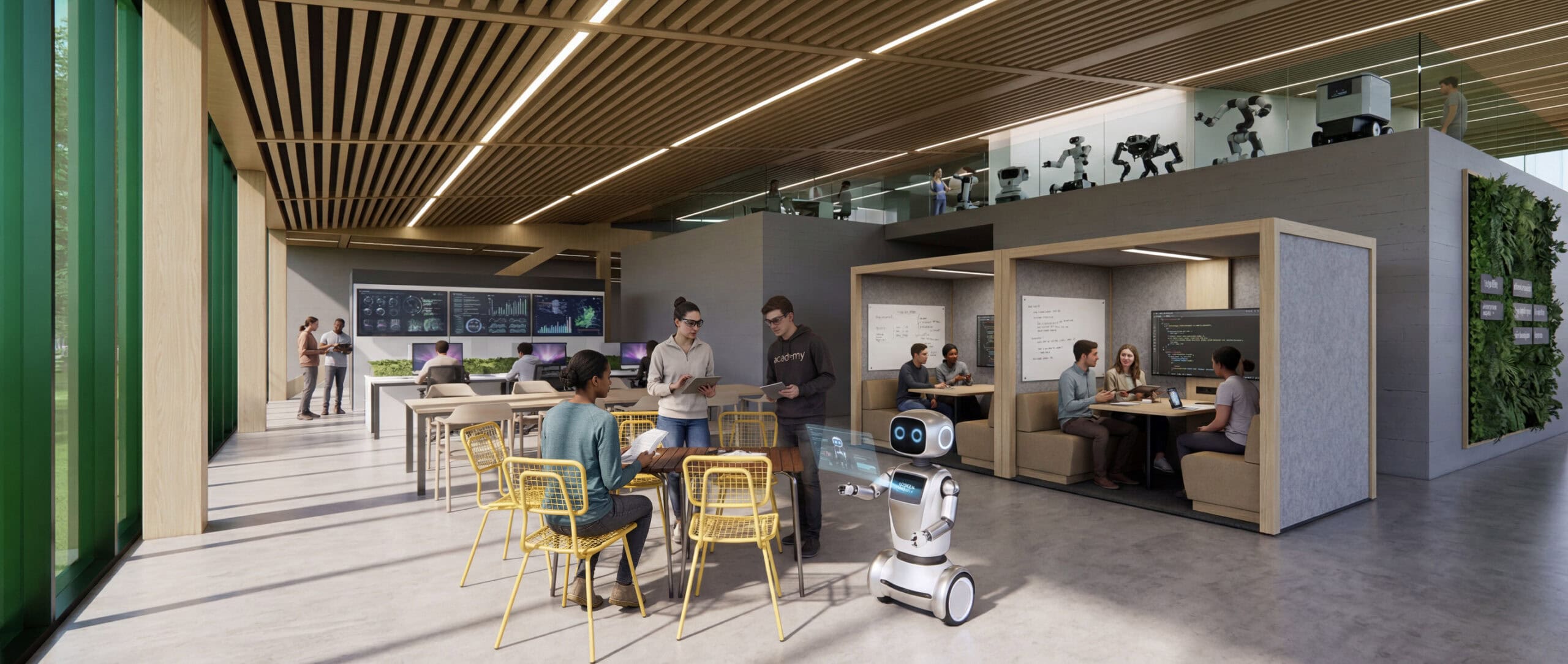
Against this closed robotic core, the human program is organized as a transparent and flexible system. In addition to a compact administration area, the project includes a knowledge centre dedicated to employee training, research exchange, and selected interaction with public or institutional visitors.
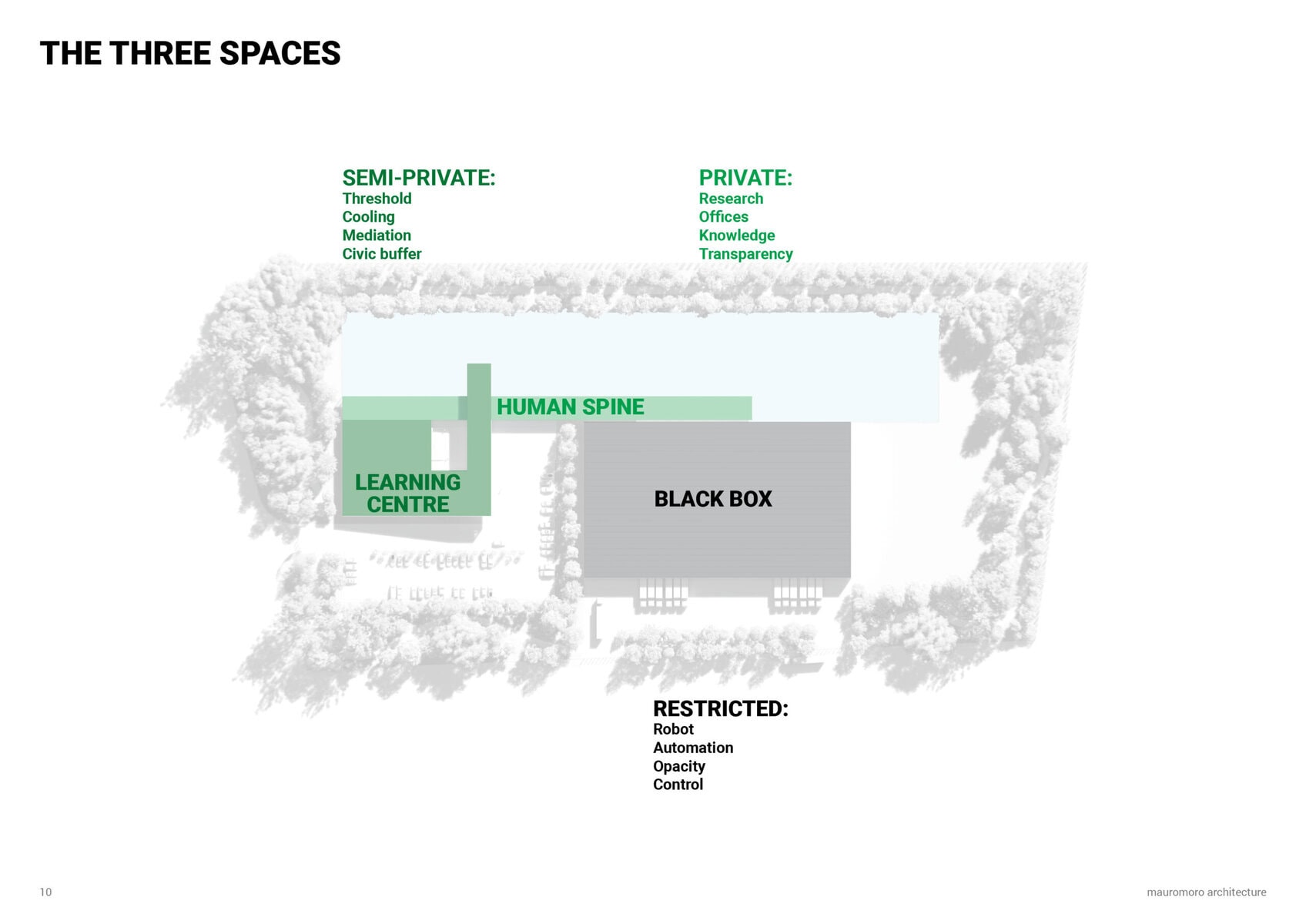
The project is structured around three main programmatic conditions: automated production, private work and research areas, and semi-private learning and academy spaces.
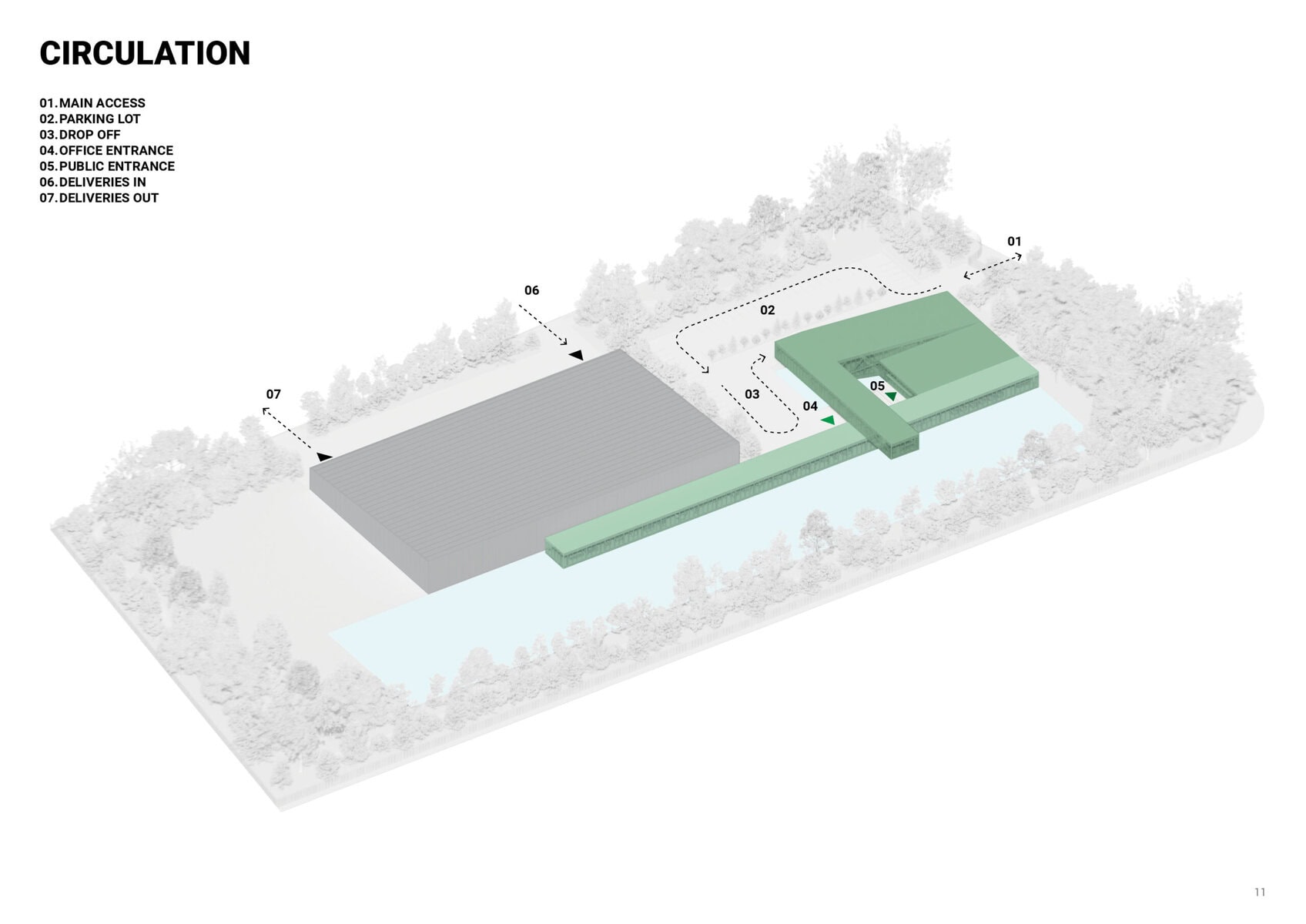
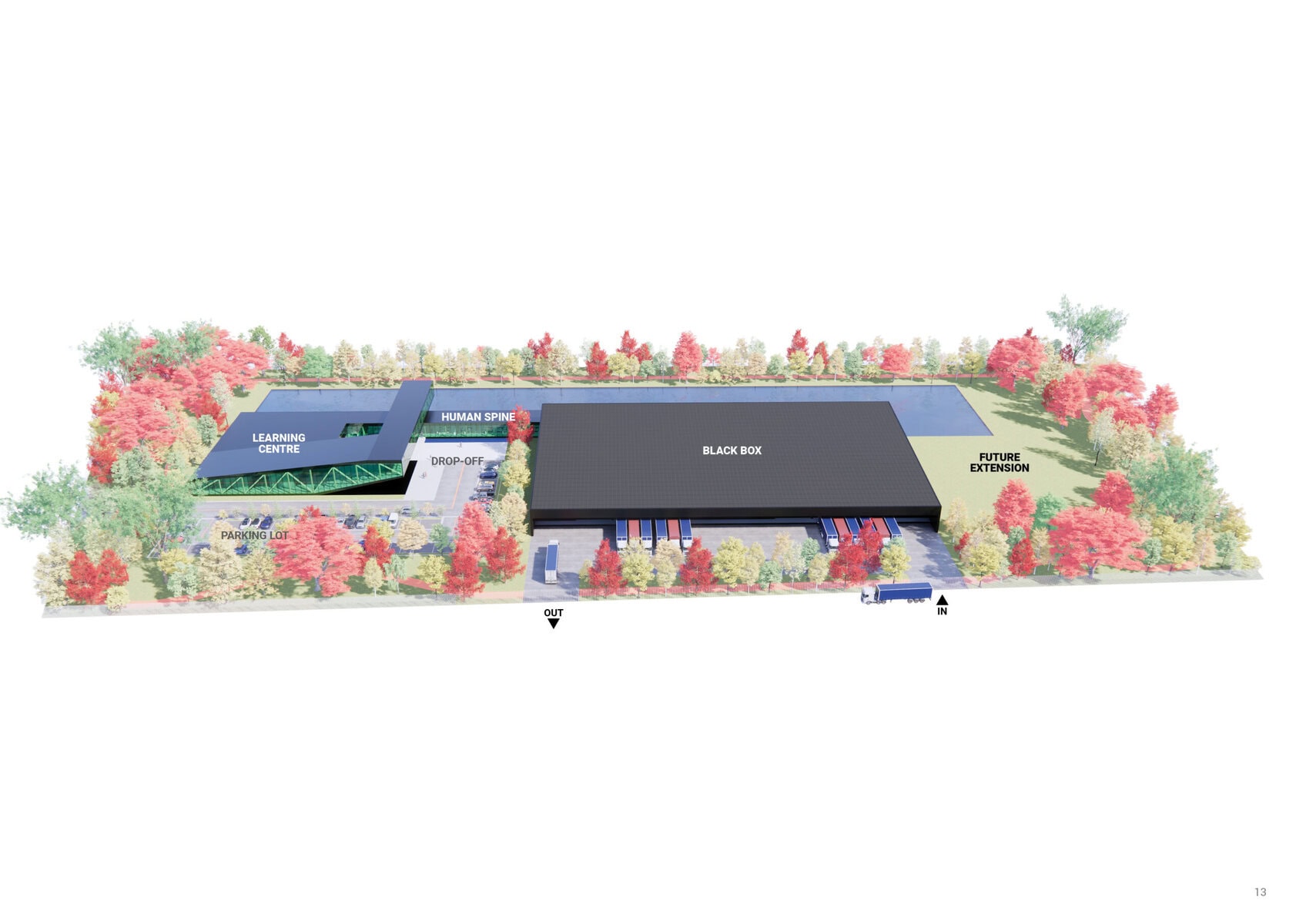
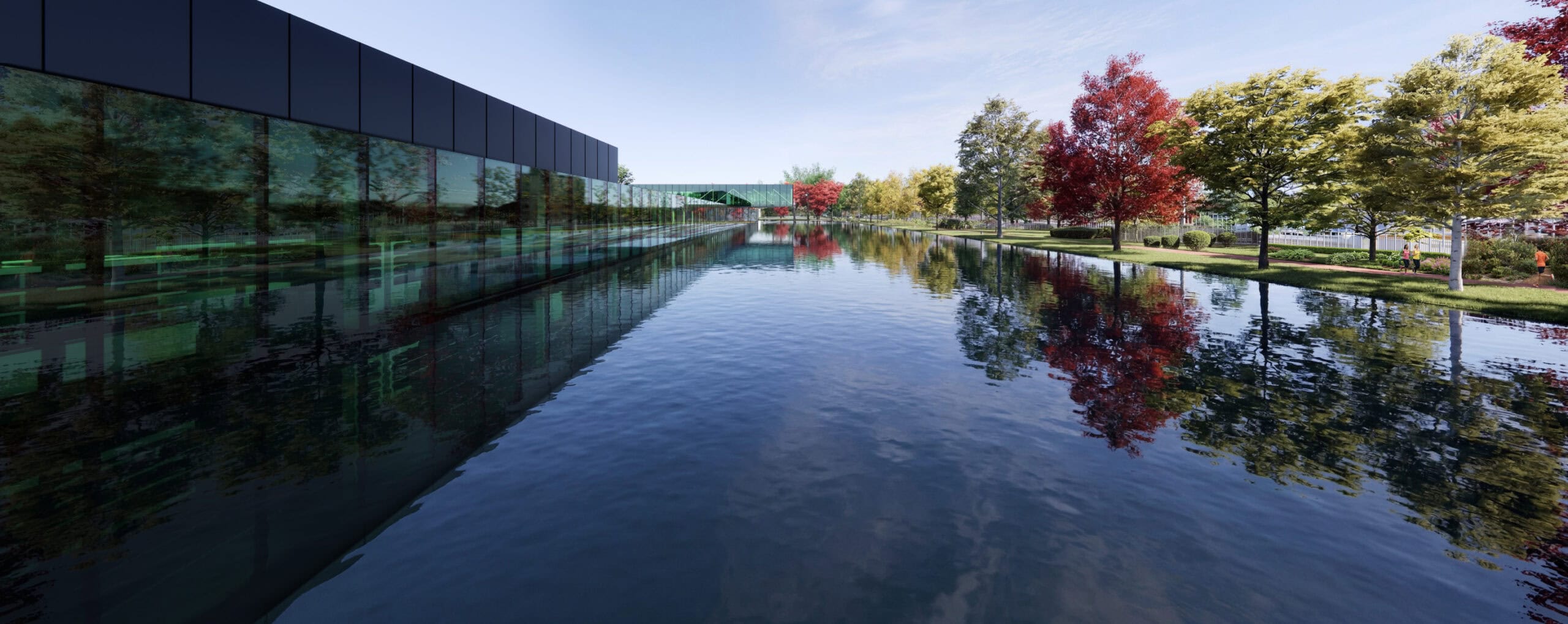
The site plays a decisive role in the concept. Located between an industrial area and a residential neighbourhood, it already contains a strong tree population that acts as a natural buffer. Rather than treating the industrial complex as an isolated object, the project preserves and intensifies this landscape condition, transforming the site into a productive campus with a park-like character.
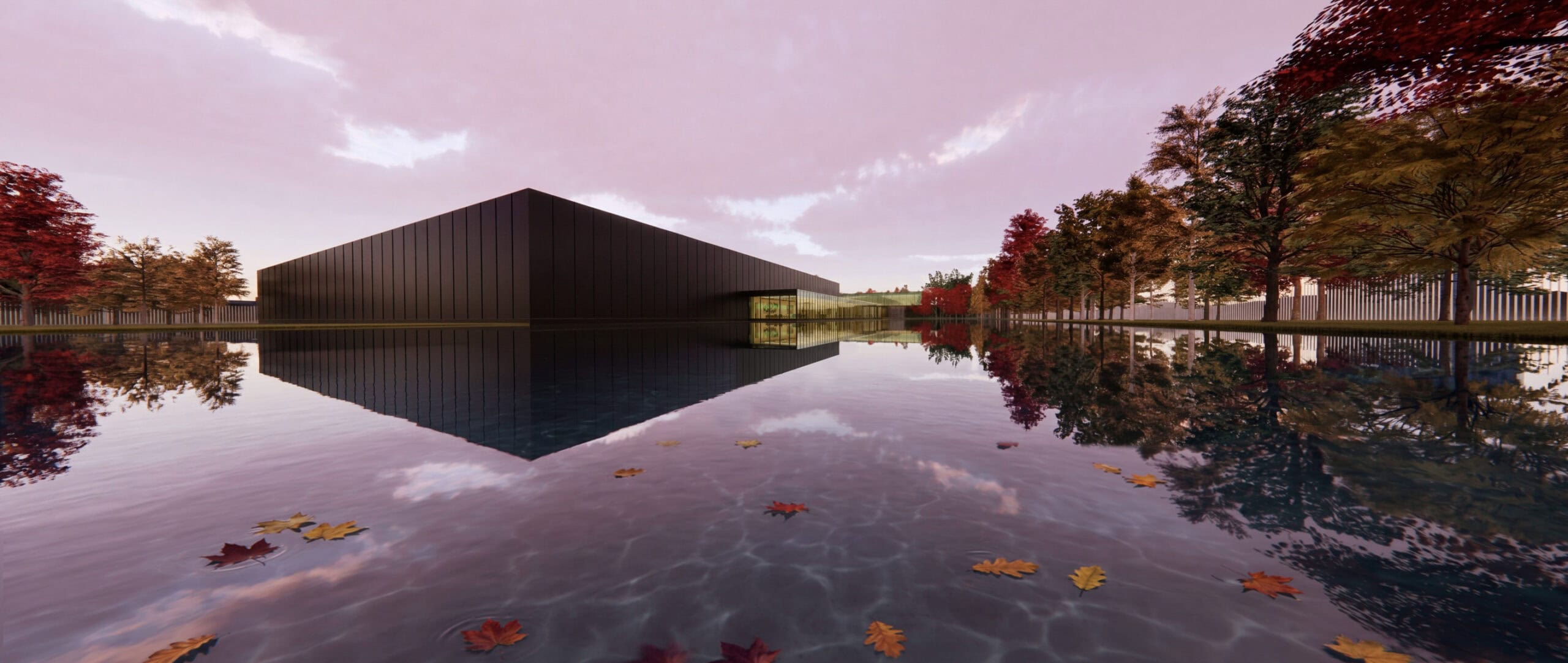
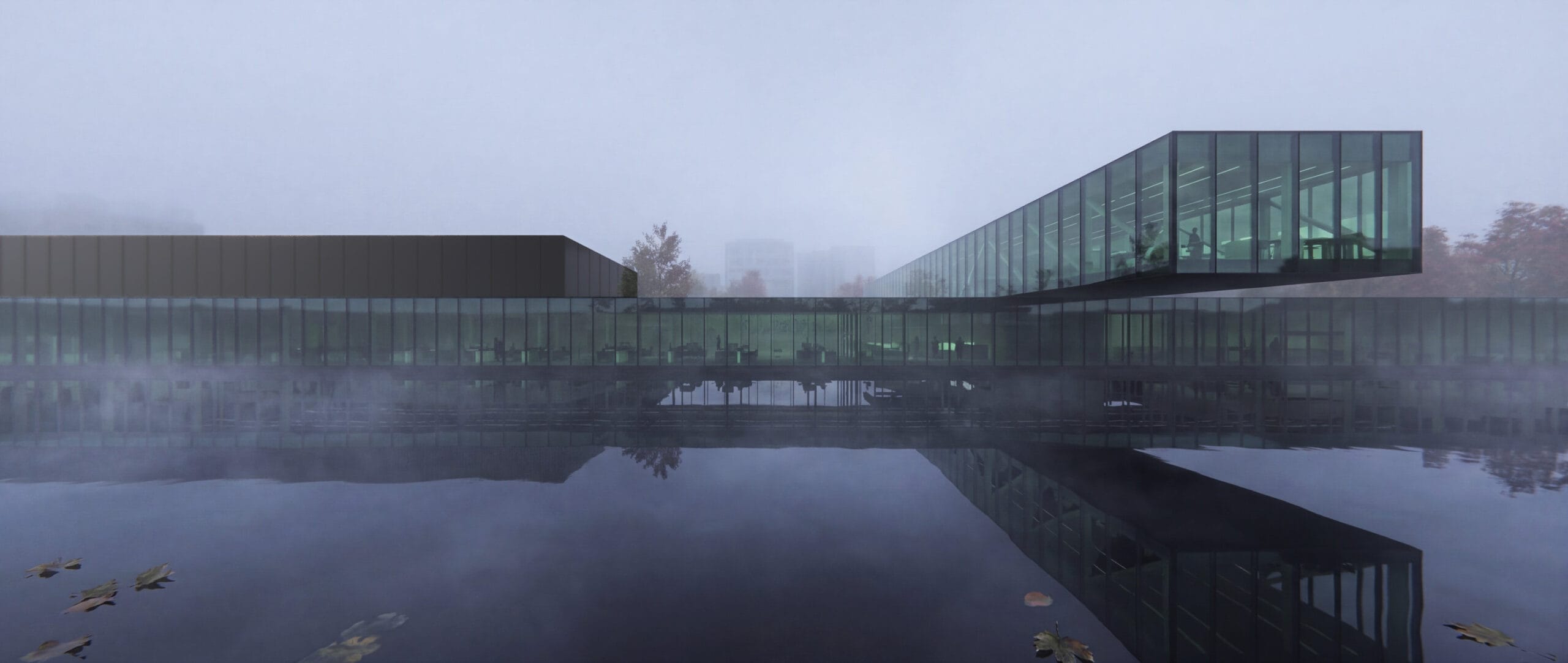
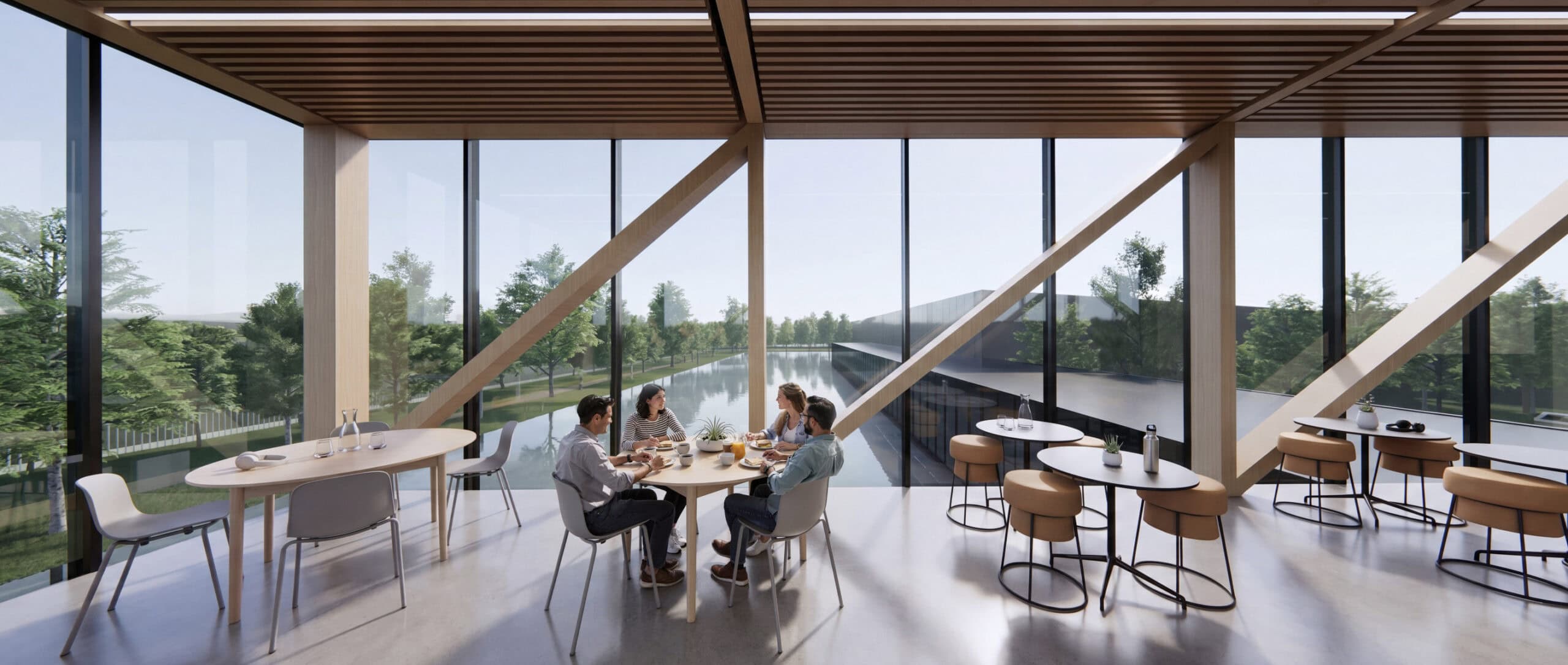
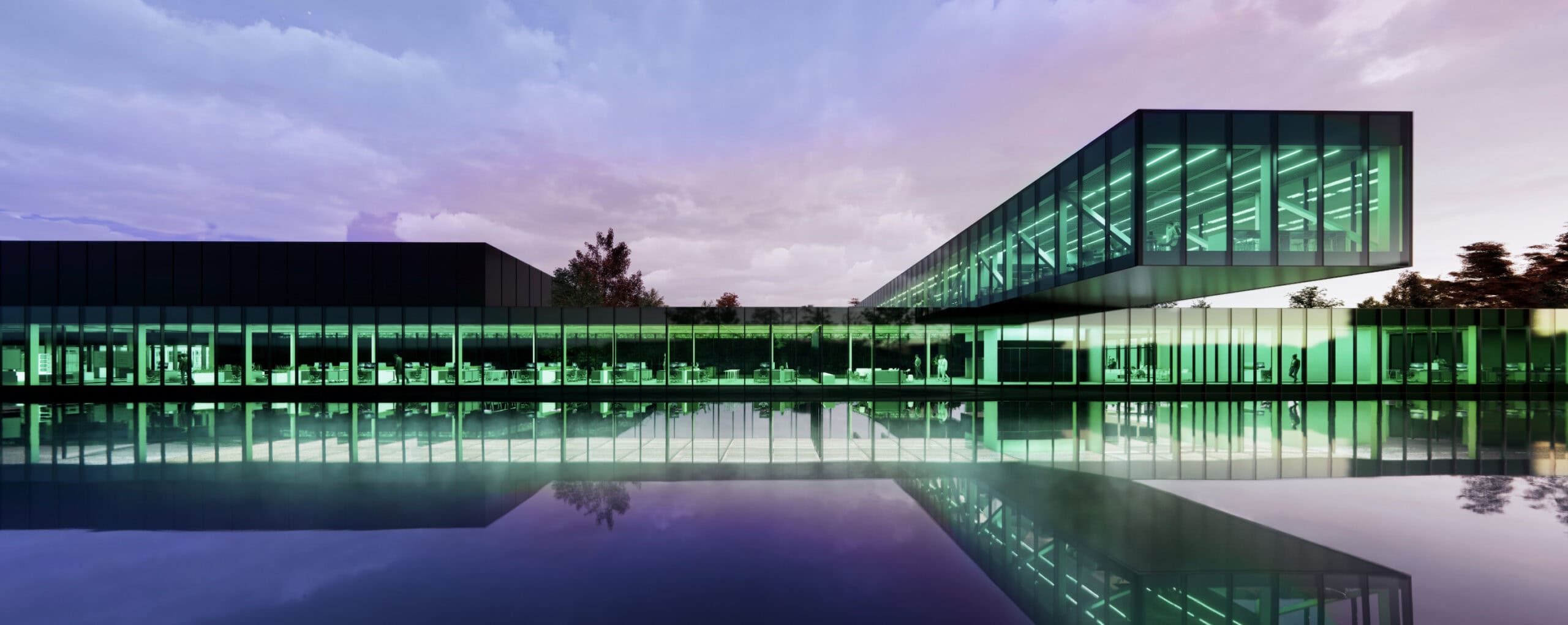
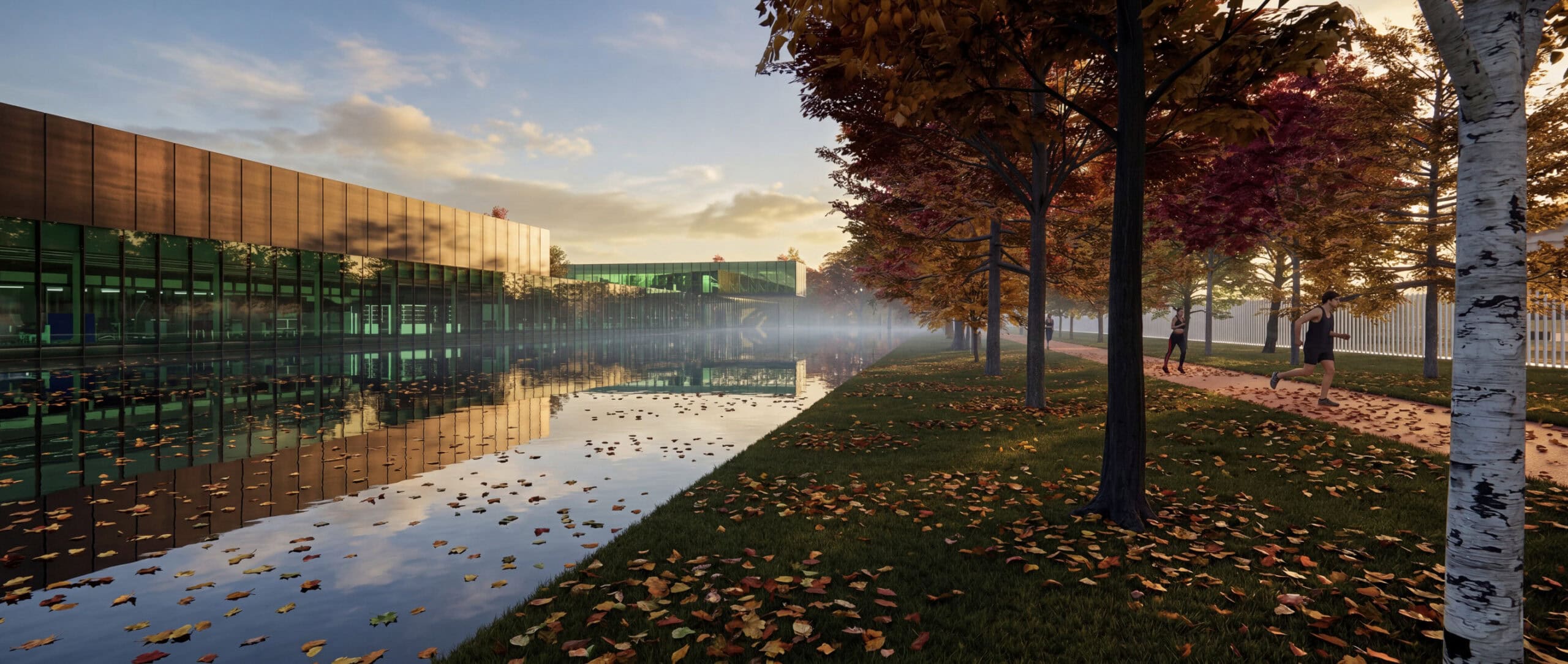
A generous body of water is introduced as both spatial threshold and climatic infrastructure. It creates distance between the different volumes, strengthens the reflective and atmospheric quality of the site, and operates as a potential thermal reservoir for the cooling systems of the complex. Water is therefore not only a scenic device, but part of the environmental logic of the project.
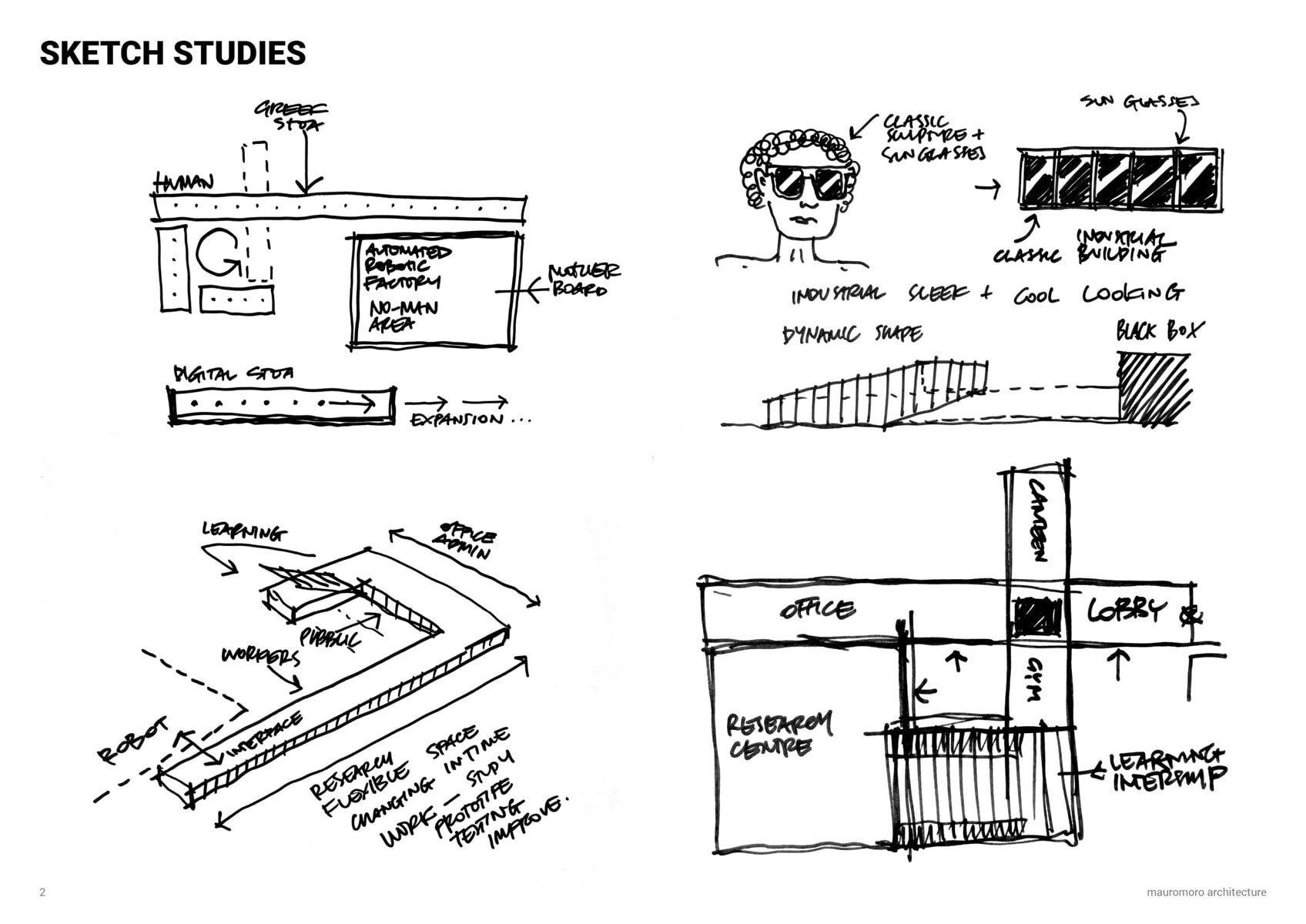
Given the marked linearity of the site, the human component is developed along the water. This decision generates two clearly distinct architectural bodies: the black box and the stoa.
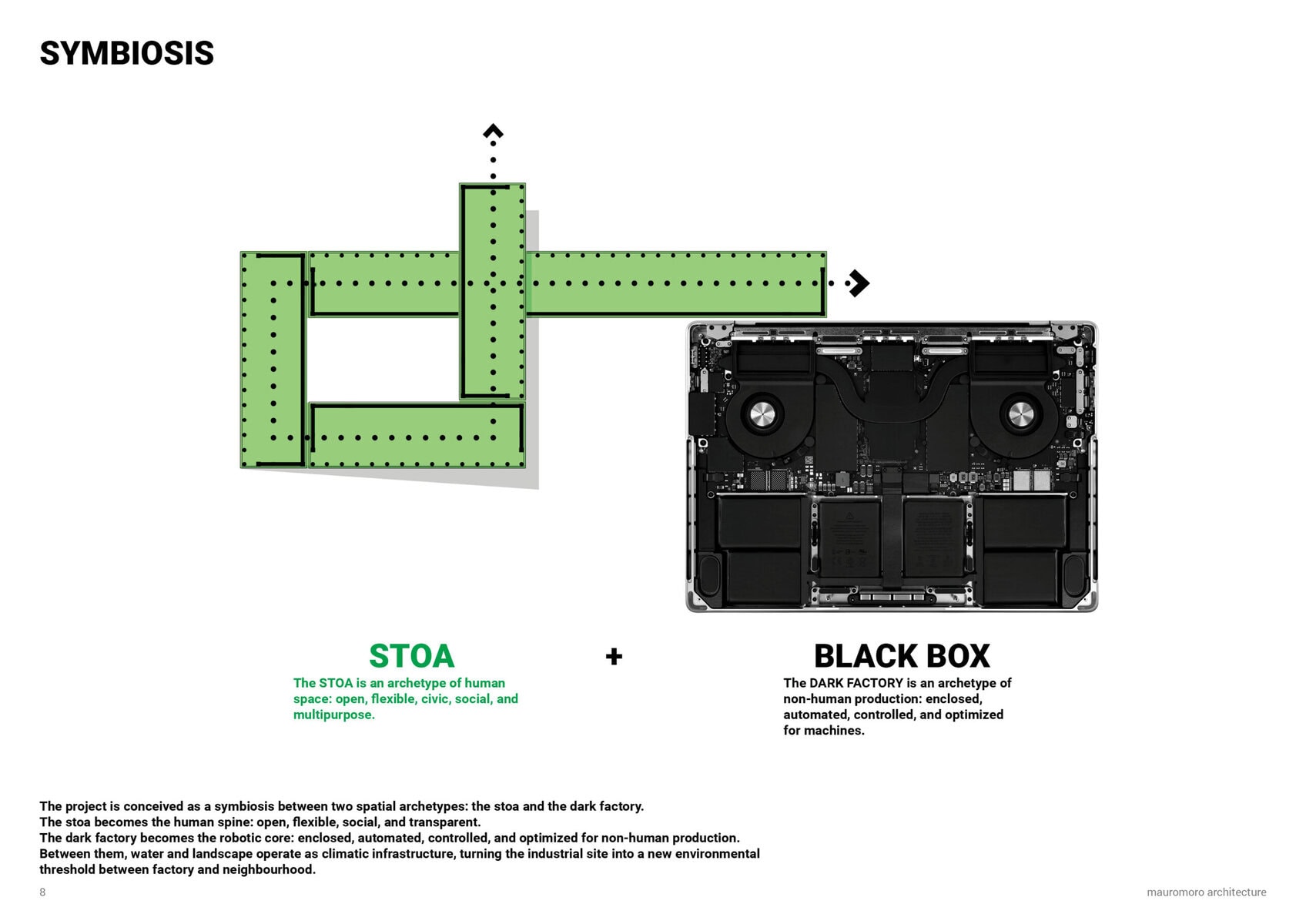
The stoa becomes the human spine of the project.
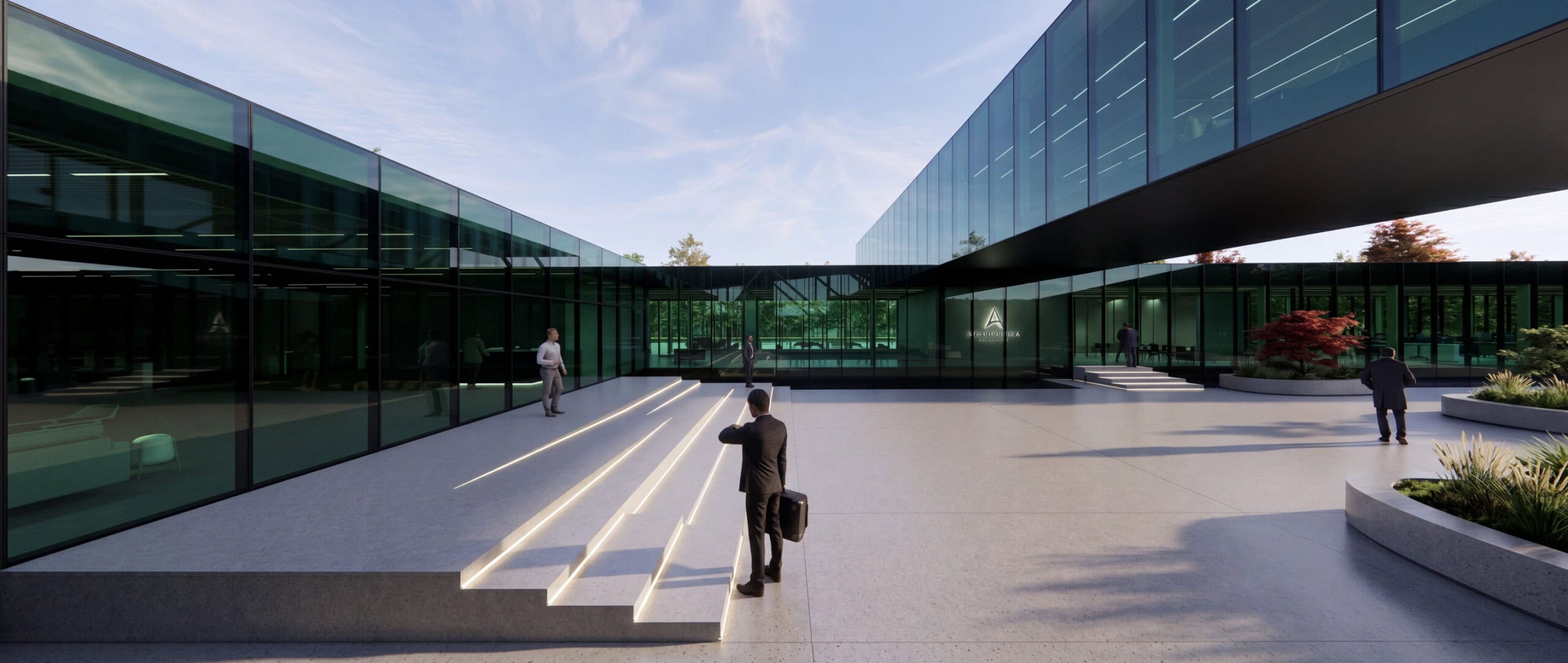
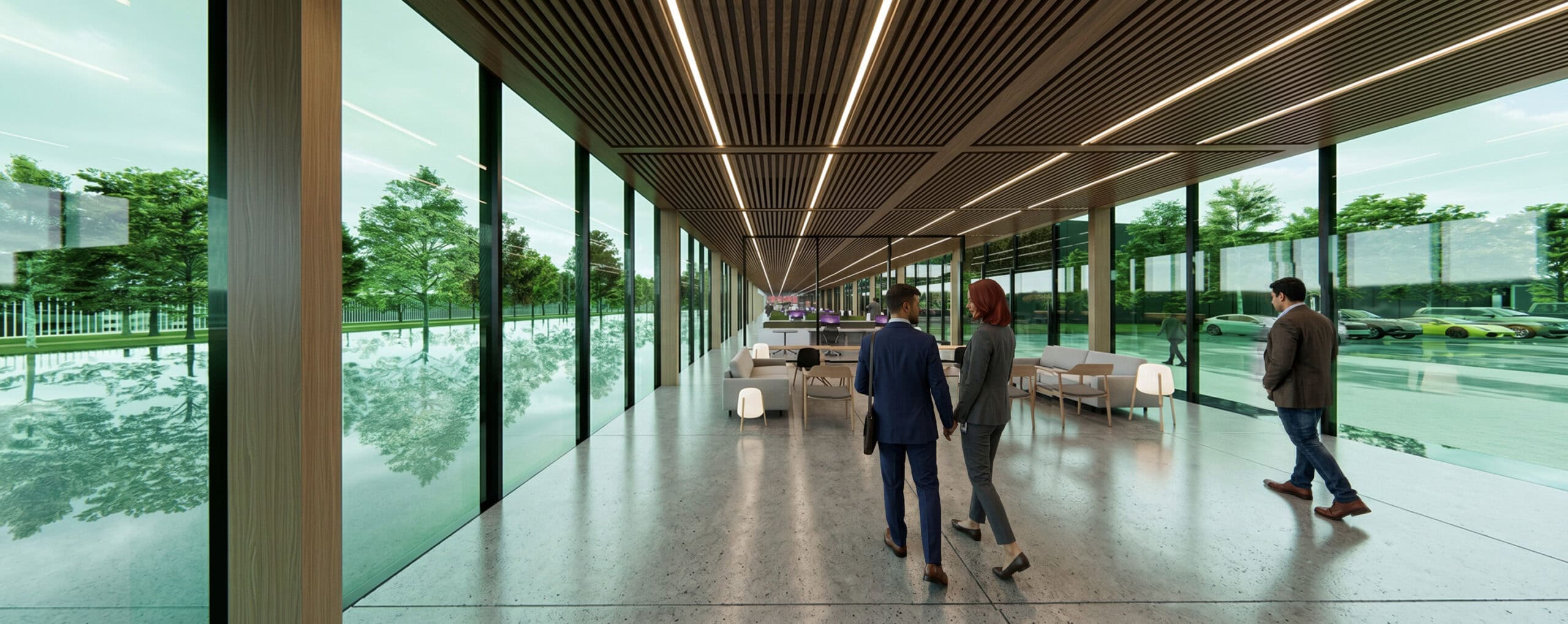
Inspired by the ancient Greek stoa as one of the earliest multifunctional civic structures, the modern stoa is conceived as an open, adaptable, and flexible space. It acts as a bridge between the robotic production core and the academy, allowing movement, learning, exchange, and informal interaction to unfold along a continuous transparent edge.
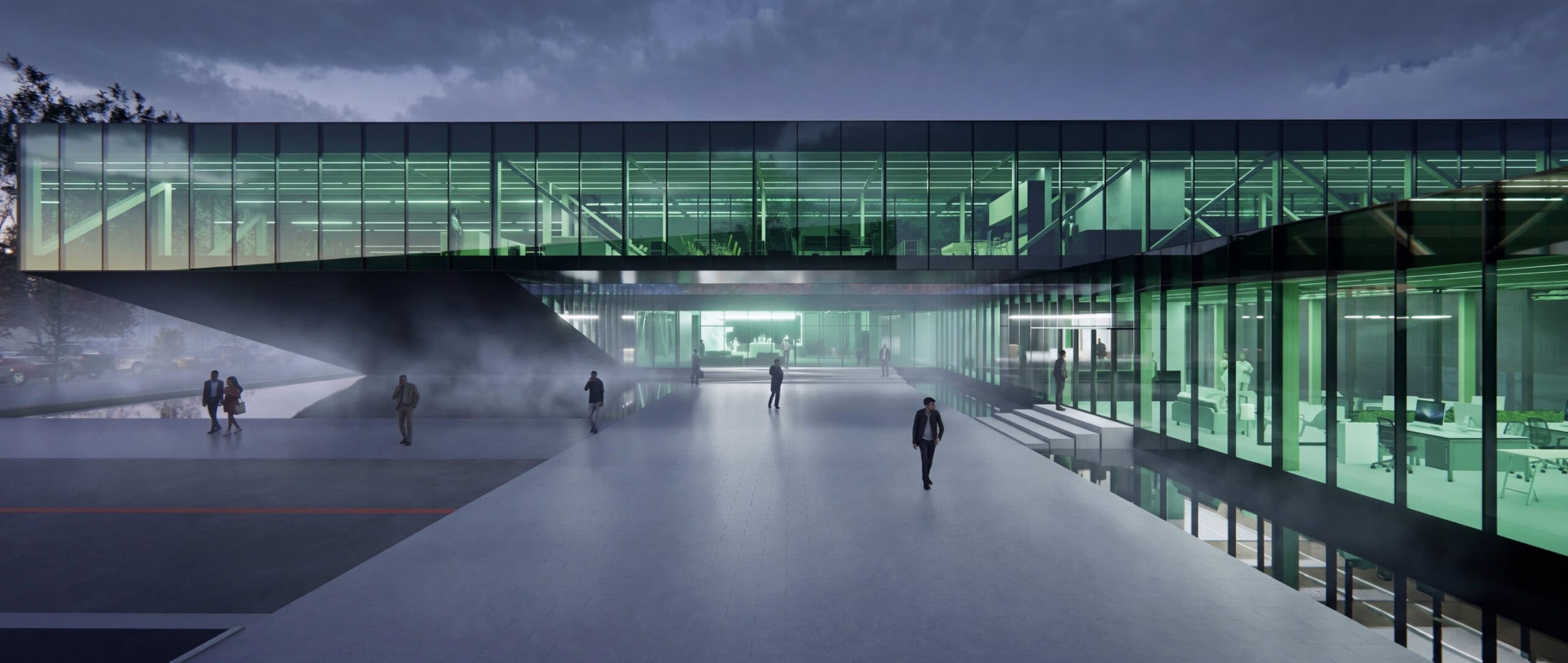
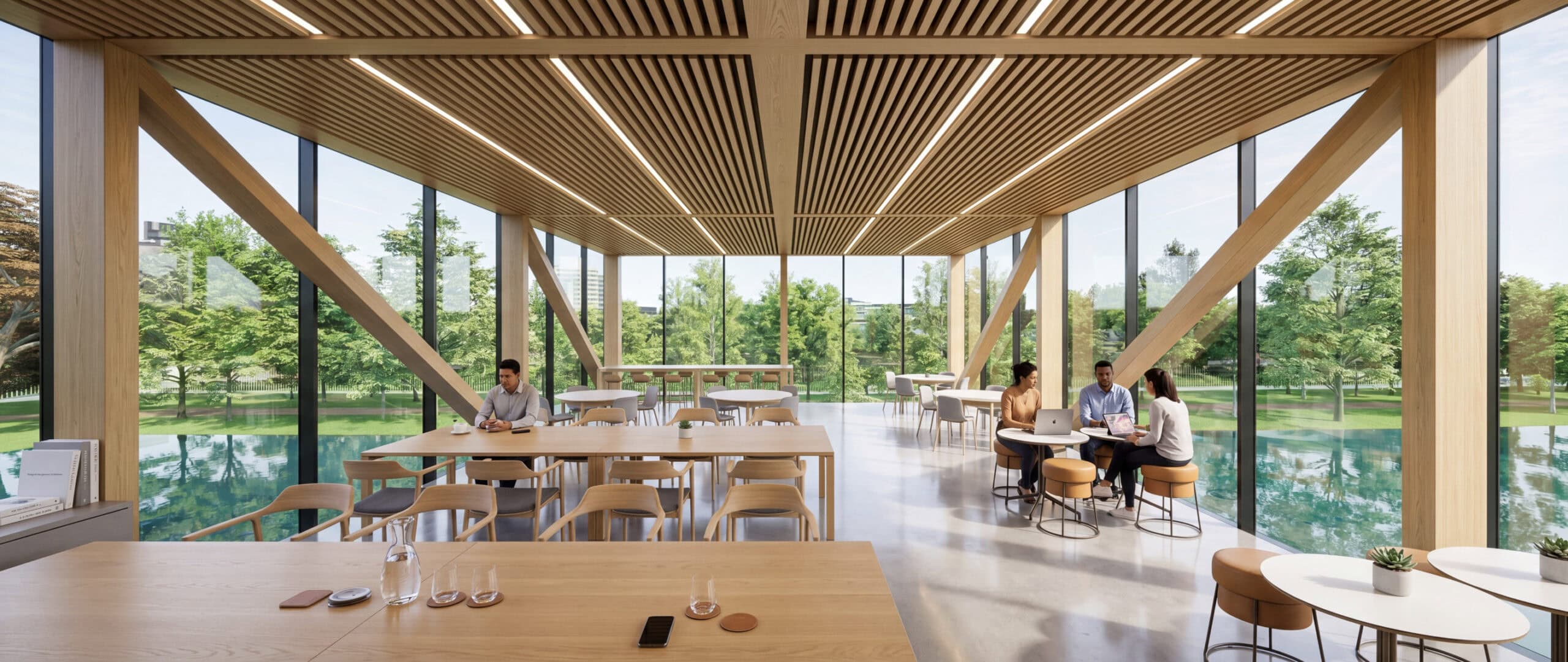
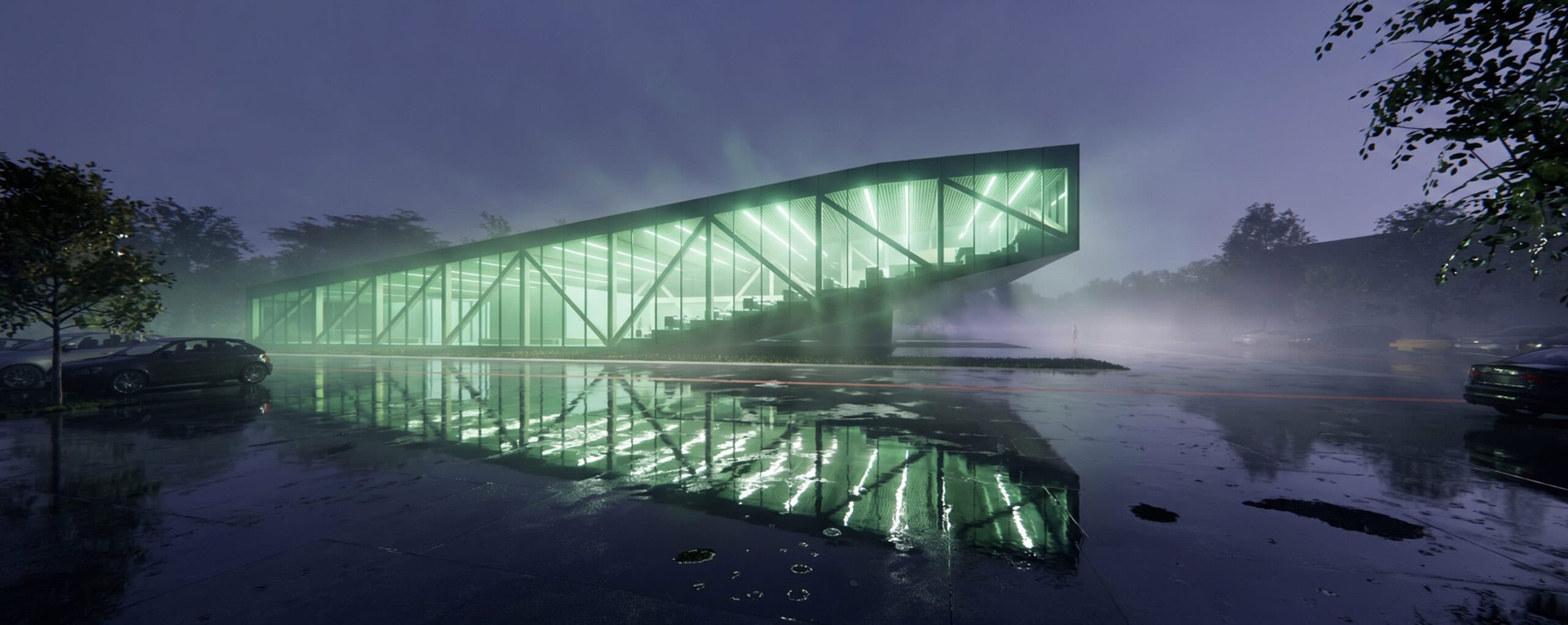
An internal circuit is created by overlapping an upper-level volume with the linear stoa. This upper floor intersects the main spine and projects outward over the water as a cantilever. It contains the café and shared relaxation areas, occupying the most privileged position on the site and offering the strongest views over the landscape and water.
Around the industrial complex, a jogging track is introduced within the tree buffer, reinforcing the idea of the site as a productive landscape rather than a closed industrial enclave. In the southern area, a large open lawn is kept free for outdoor activities and possible future expansion of the black box.
The contrast between the two architectural systems is deliberately direct.
The black box is opaque, solid, static, and controlled.
The stoa is transparent, ethereal, dynamic, and public-facing.
Unlike the black box, the human spaces are fully transparent. The stoa is defined by a Miesian simplicity: a continuous structural rhythm enclosed by a custom green glass envelope. The use of green glass is not merely aesthetic. It regulates light, mitigates solar exposure, softens the perception of volume, and gives the building a precise futuristic and ecological identity.
In this way, the relationship between human and robot becomes more than functional. It becomes spatial, visual, and symbolic.
The project avoids the temptation to represent the future through complex parametric forms. It does not rely on the seduction of high-tech expression. Instead, it builds its identity through simple architectural decisions: contrast, repetition, transparency, opacity, linearity, reflection, and landscape.
The result is a clear symbiosis between two opposite bodies.
One is closed, automated, and silent.
The other is open, social, and alive.
Together, they define a new threshold between industrial production, human knowledge, and landscape.