PROJECT OVERVIEW Type: Residential Townhouse Complex Concept Design Location: Phoenix, Arizona, USA Programme: Residential / Mixed-Use Community Scale: 15 townhouse units + sports block + co-working building
THE BRIEF
The site sits in a flat area southwest of Phoenix, at the foot of a rocky mountain formation. The brief called for a residential complex of townhouses that could serve a growing urban population in one of America’s fastest-expanding cities — providing quality housing, shared amenity, and a genuine sense of community on a suburban site defined by open desert landscape.
The challenge was to design a compact, high-quality residential environment that works with the extreme Phoenix climate rather than against it — managing solar exposure, natural ventilation, and outdoor comfort — while keeping construction logic simple, costs controlled, and the overall community experience genuinely liveable.
THE CONCEPT
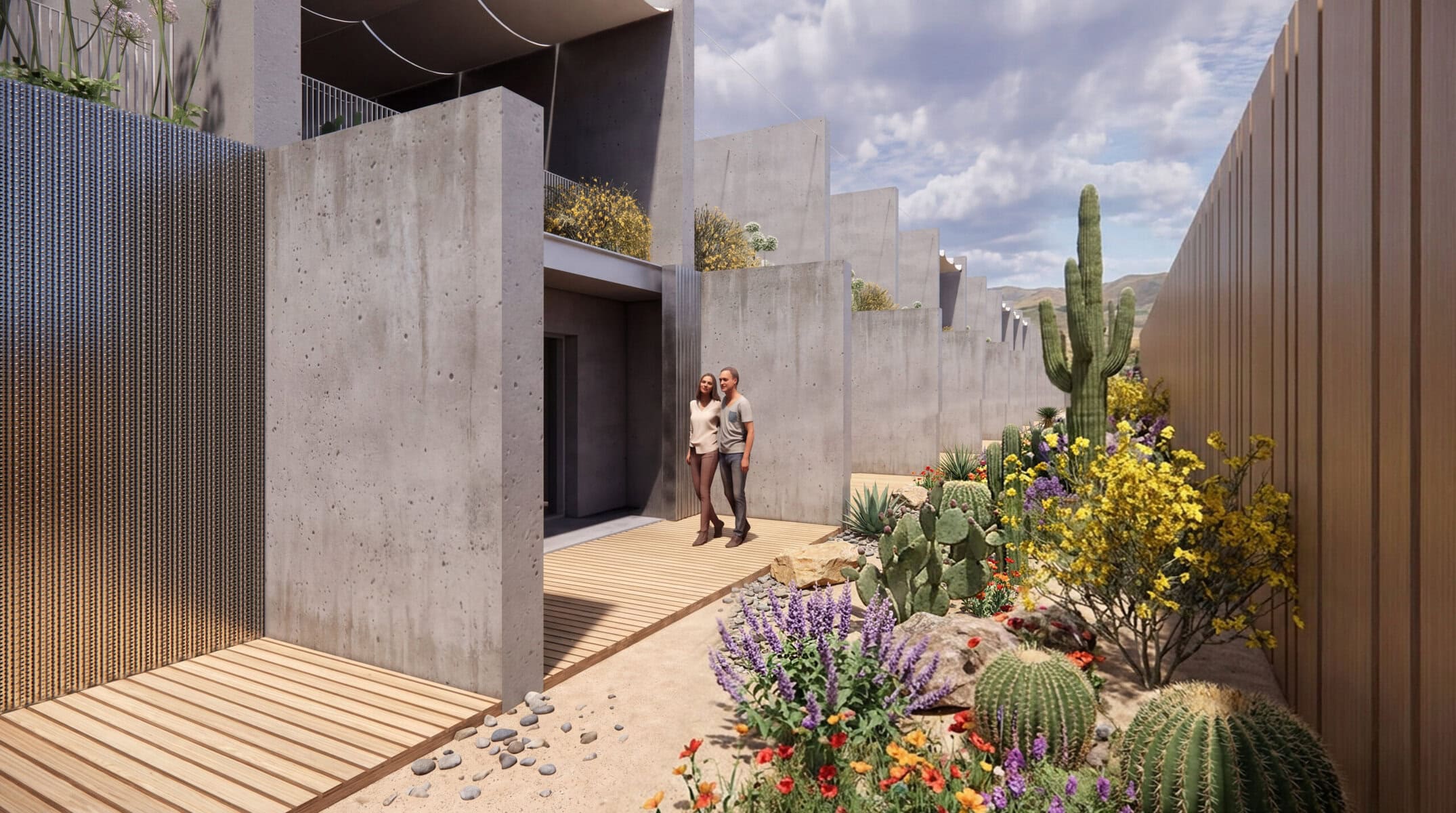
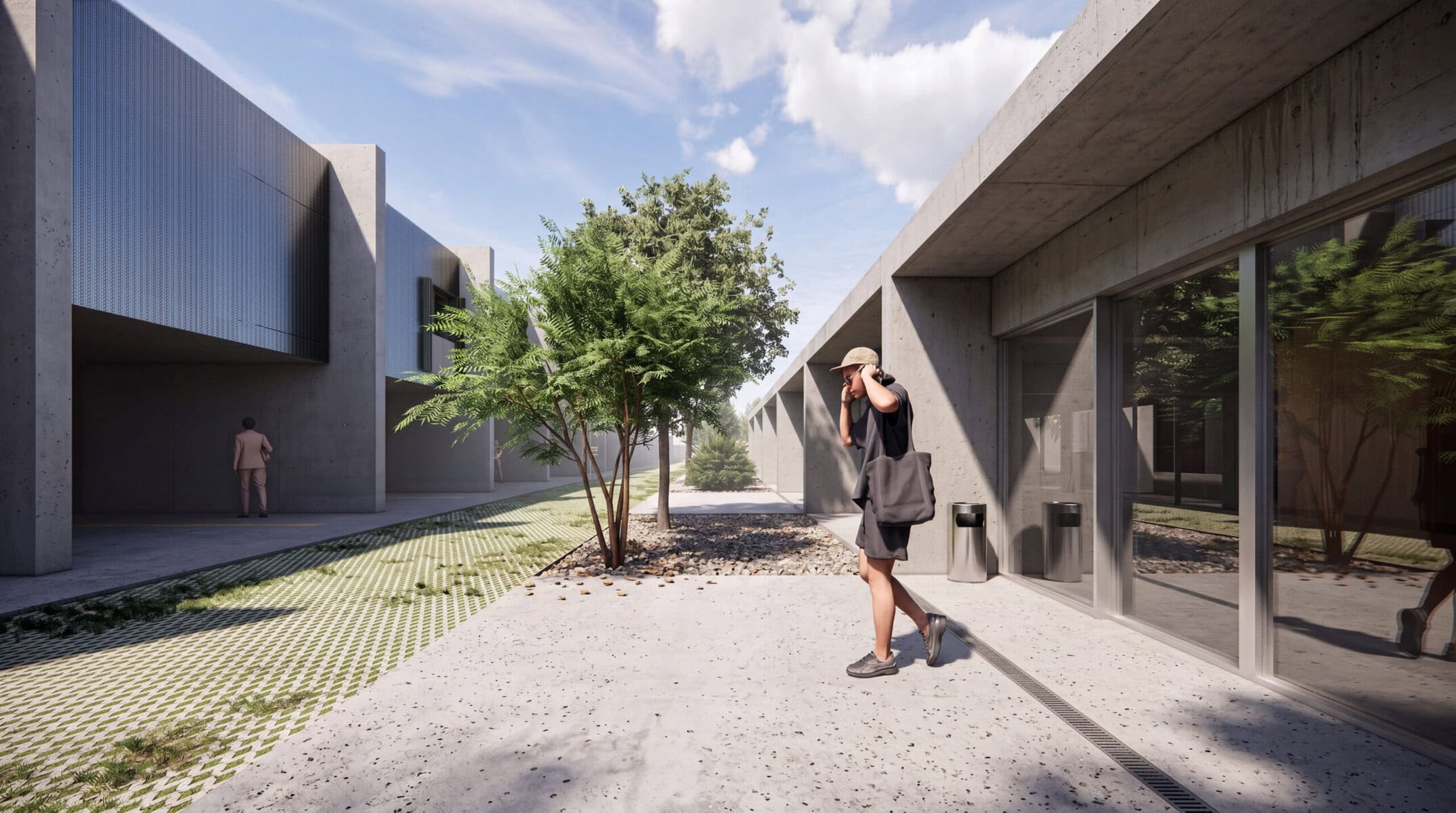
The concept is built around a bold and rational spatial order: a series of parallel walls that define, organise, and give identity to the entire development.
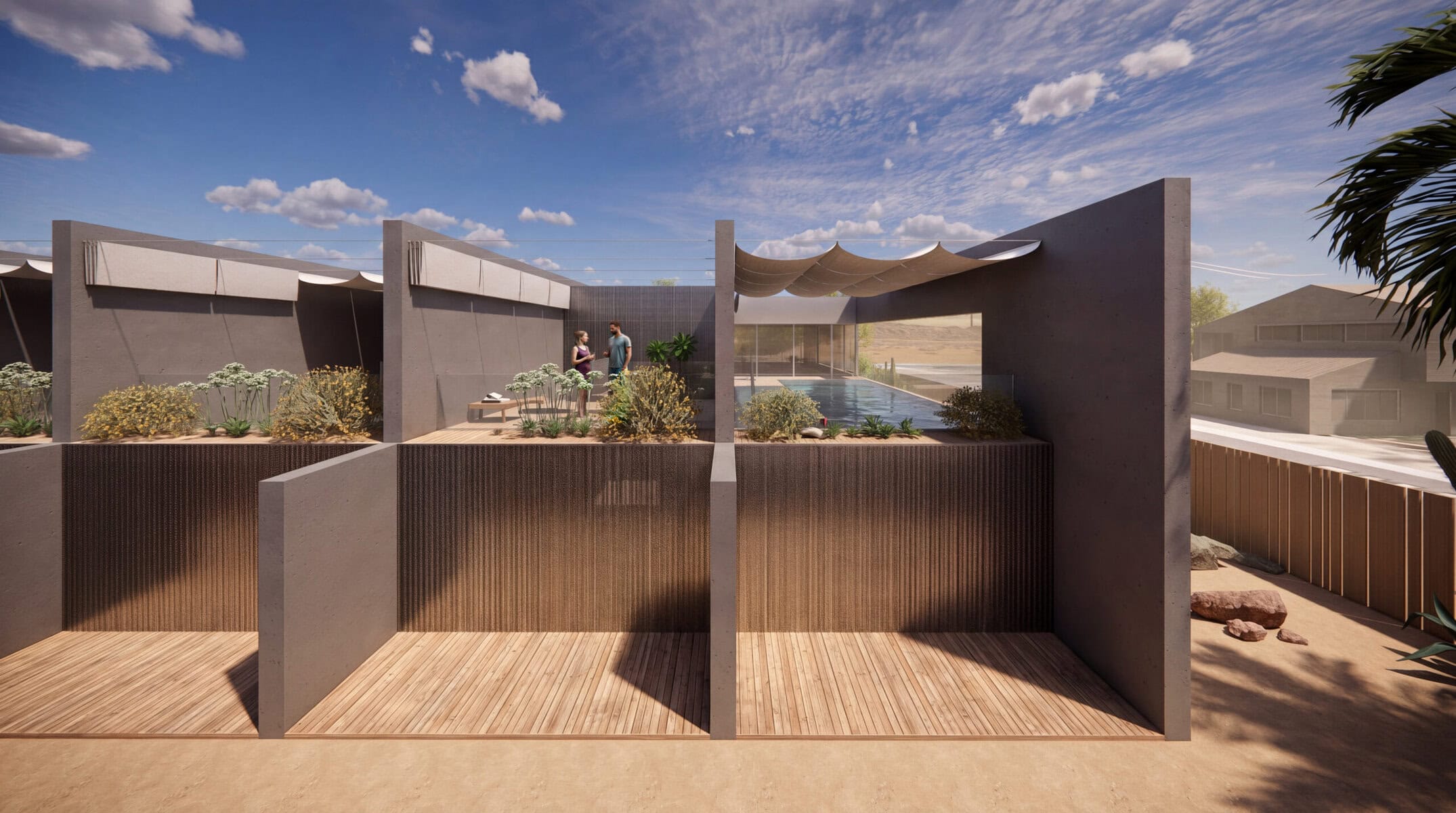
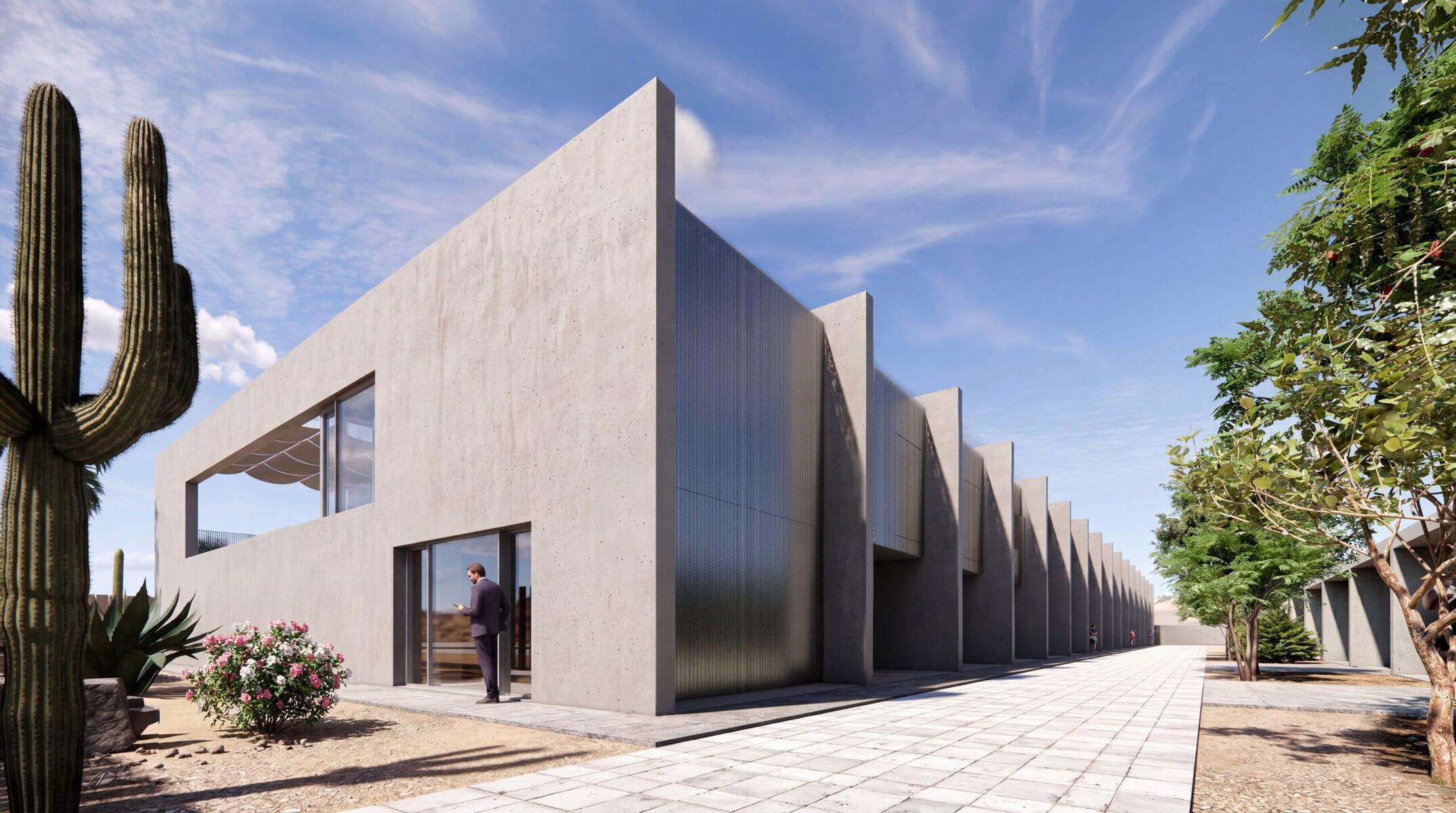
Fifteen residential units are arranged in a linear east-west sequence, delineated by parallel structural walls that run north-south across the site. This organisation is not arbitrary — it is a direct response to the climate. East-west orientation maximises the length of south-facing facades, capturing winter sun while allowing shading strategies to control summer heat gain. The parallel wall structure creates a rhythm that is both architecturally clear and spatially generous.
Within this order, each unit contains a central courtyard — an open-air space at the heart of the home that drives natural ventilation, brings daylight deep into the plan, and provides a private outdoor space insulated from the desert heat by the building mass around it.
THE APPROACH
The design translates the concept through four spatial and technical decisions that run consistently from site strategy to unit detail.
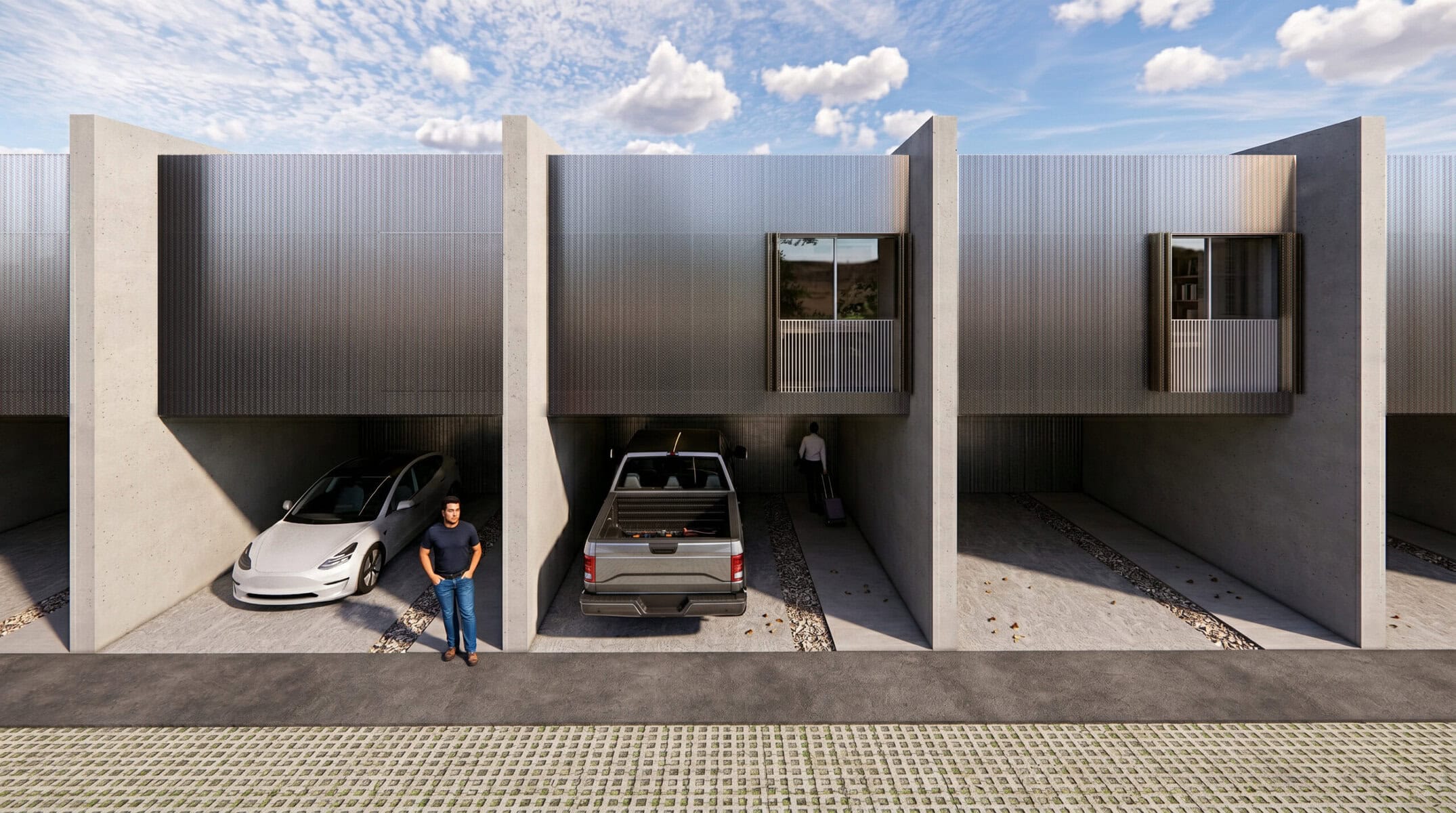
First, the facade strategy differentiates north and south. The north and south elevations use perforated mesh with openable folding panels at each window position, allowing residents to control their connection to the outside — open for cross-ventilation in cooler periods, closed for shade and privacy in peak summer. The perforation pattern provides solar filtration without eliminating natural light.
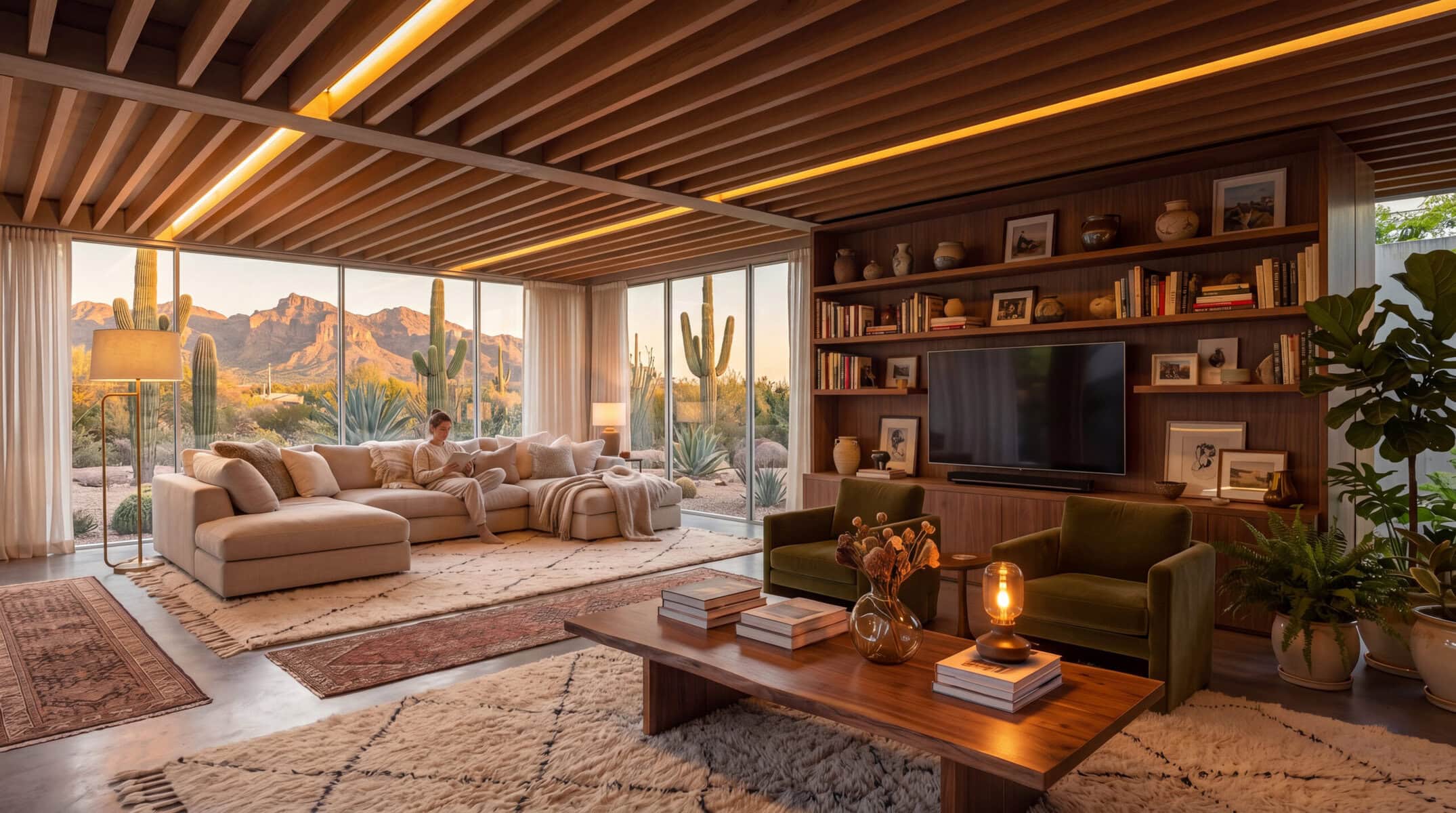
Second, each two-storey unit is organised around the central courtyard. Ground floor contains living areas and a covered car park accessed directly from the unit. Upper floor provides two bedrooms and a private south-facing terrace. The courtyard acts as a thermal buffer and a social space simultaneously — part of the home’s environmental logic and part of its daily life.
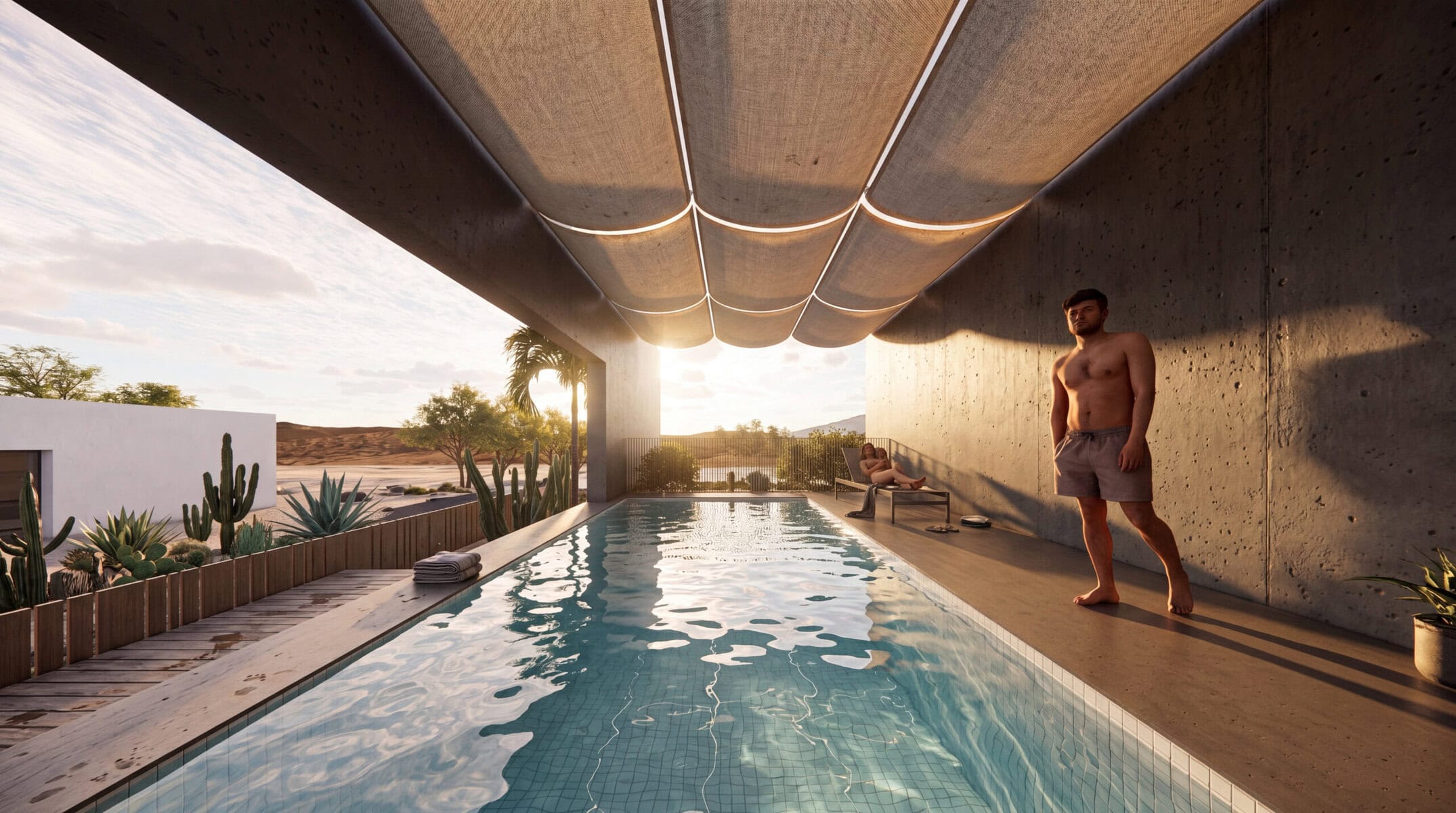
Third, the shared amenity programme is placed at the edges of the residential cluster rather than within it. A sports utility block to the south houses a gym and changing facilities at ground level, with a rooftop open-air pool positioned to catch the eastern morning light — the most comfortable outdoor exposure in the Phoenix climate. A foldable canvas cover provides shade protection during peak afternoon heat.
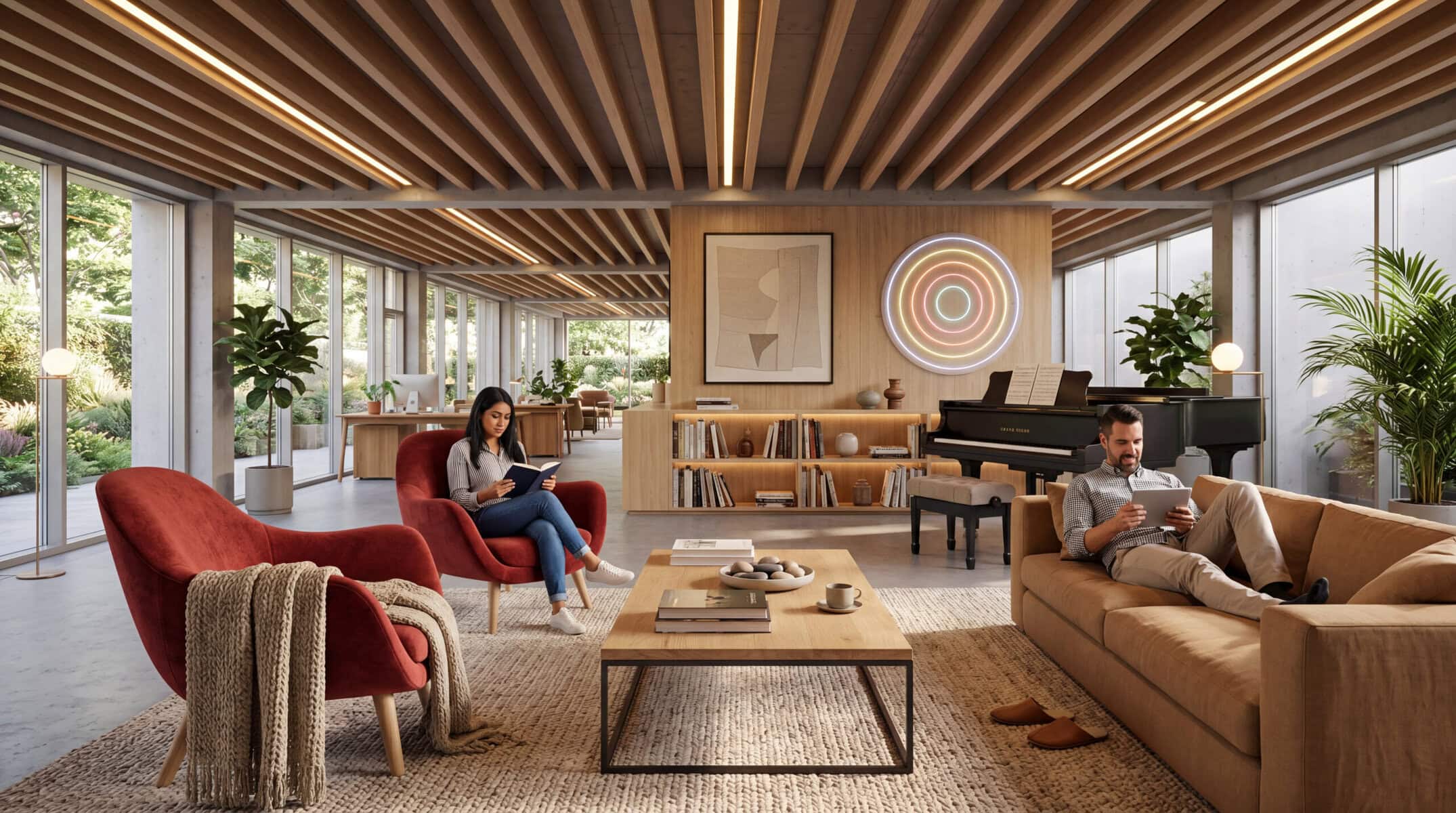
Fourth, a multipurpose co-working building to the north serves as the community’s social and productive infrastructure — co-working desks, relaxation areas, and function rooms for events and gatherings, with adjacent visitor parking for 15 vehicles.
KEY DESIGN DECISIONS
The parallel wall system was the foundational choice. It resolved climate, organisation, identity, and construction logic in a single move — a structural system that doubles as a spatial and aesthetic strategy.
The central courtyard in each unit was equally decisive. In the Phoenix climate, the quality of a home is determined largely by how well it manages heat, light, and outdoor space. A courtyard embedded within the unit’s mass performs better than any external shading system — it is cooler, more private, and more integral to daily life.
The desert landscape strategy completes the concept. Local flora, cacti, and rock installations replace conventional lawn and irrigation, minimising water consumption and maintenance while creating an environment that belongs to its landscape rather than contradicting it.
WHY THIS PROJECT MATTERS
Residential development in the American desert southwest requires a specific design intelligence: how to build density and community quality in a climate that penalises conventional approaches to outdoor space, facade design, and landscaping. This project demonstrates how concept design grounded in climate logic and spatial clarity can produce a residential complex that is genuinely comfortable, financially viable, and contextually coherent.