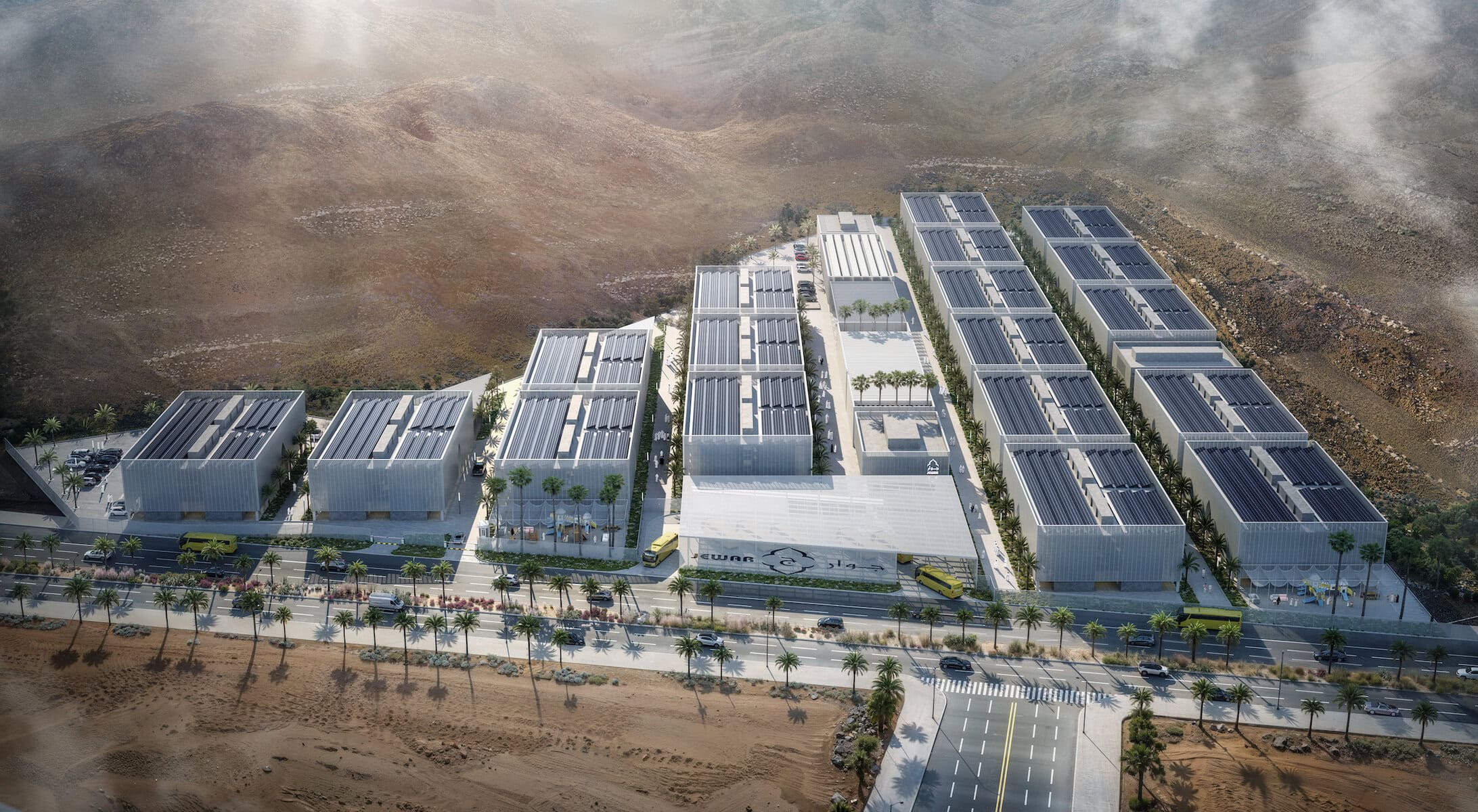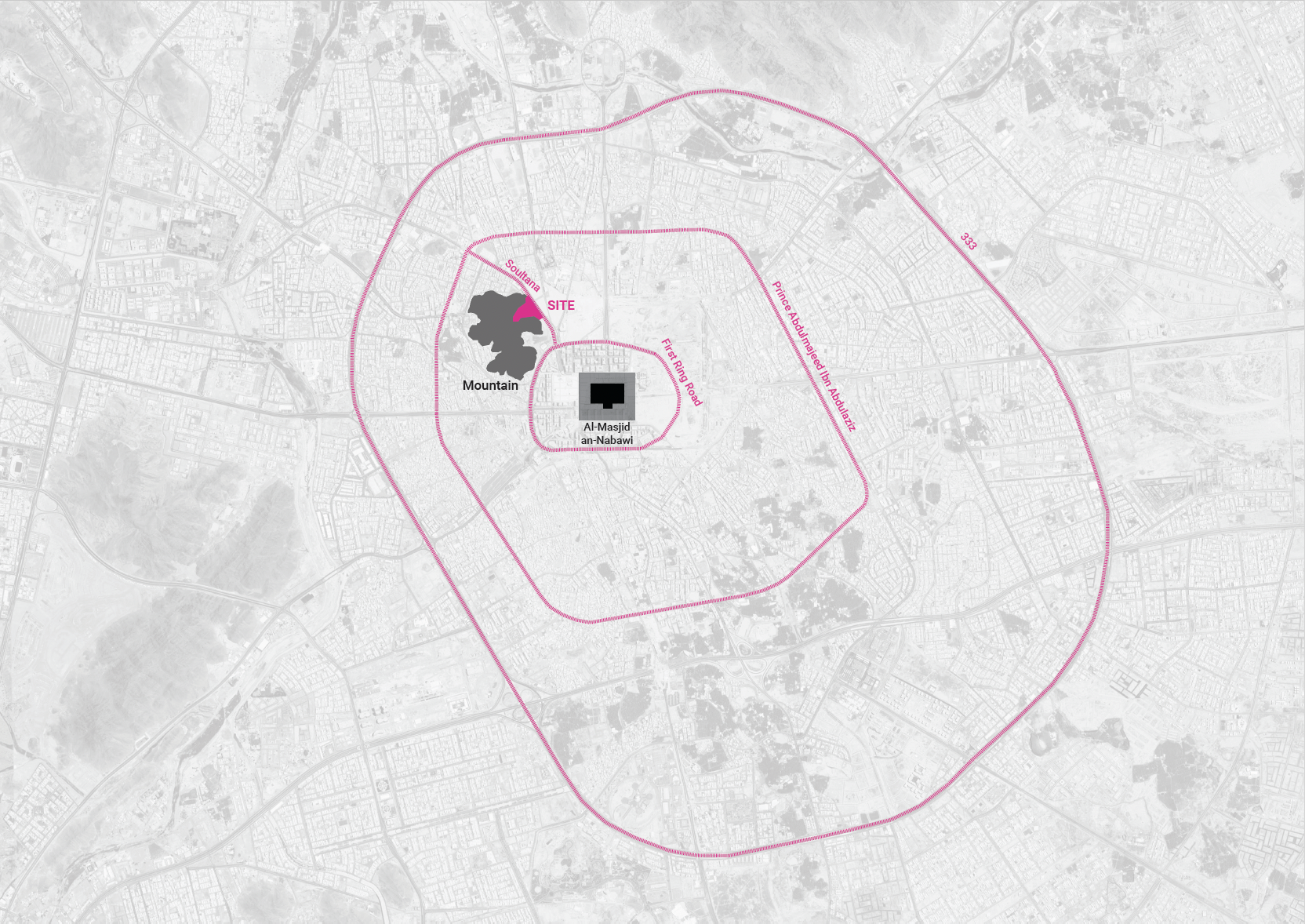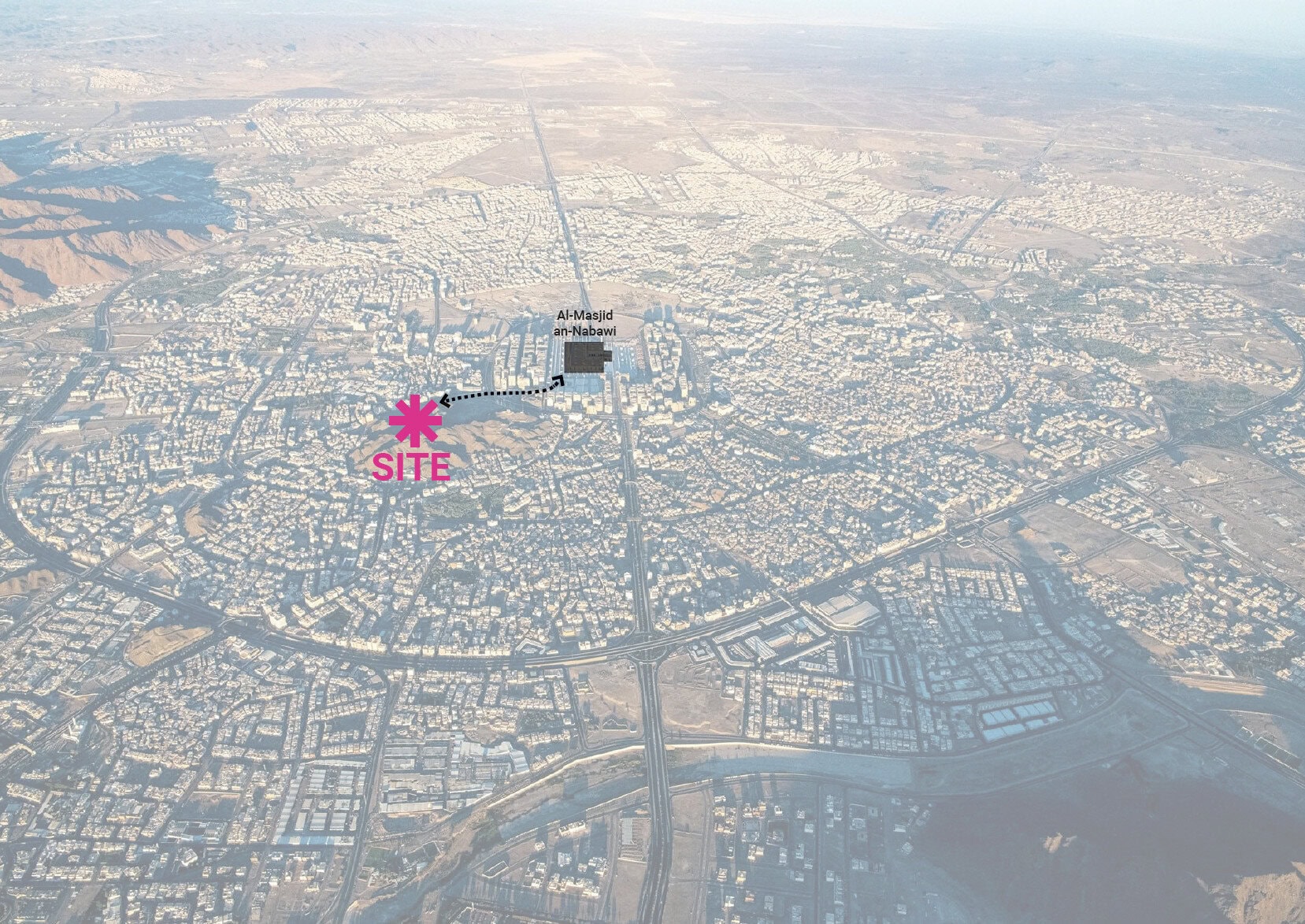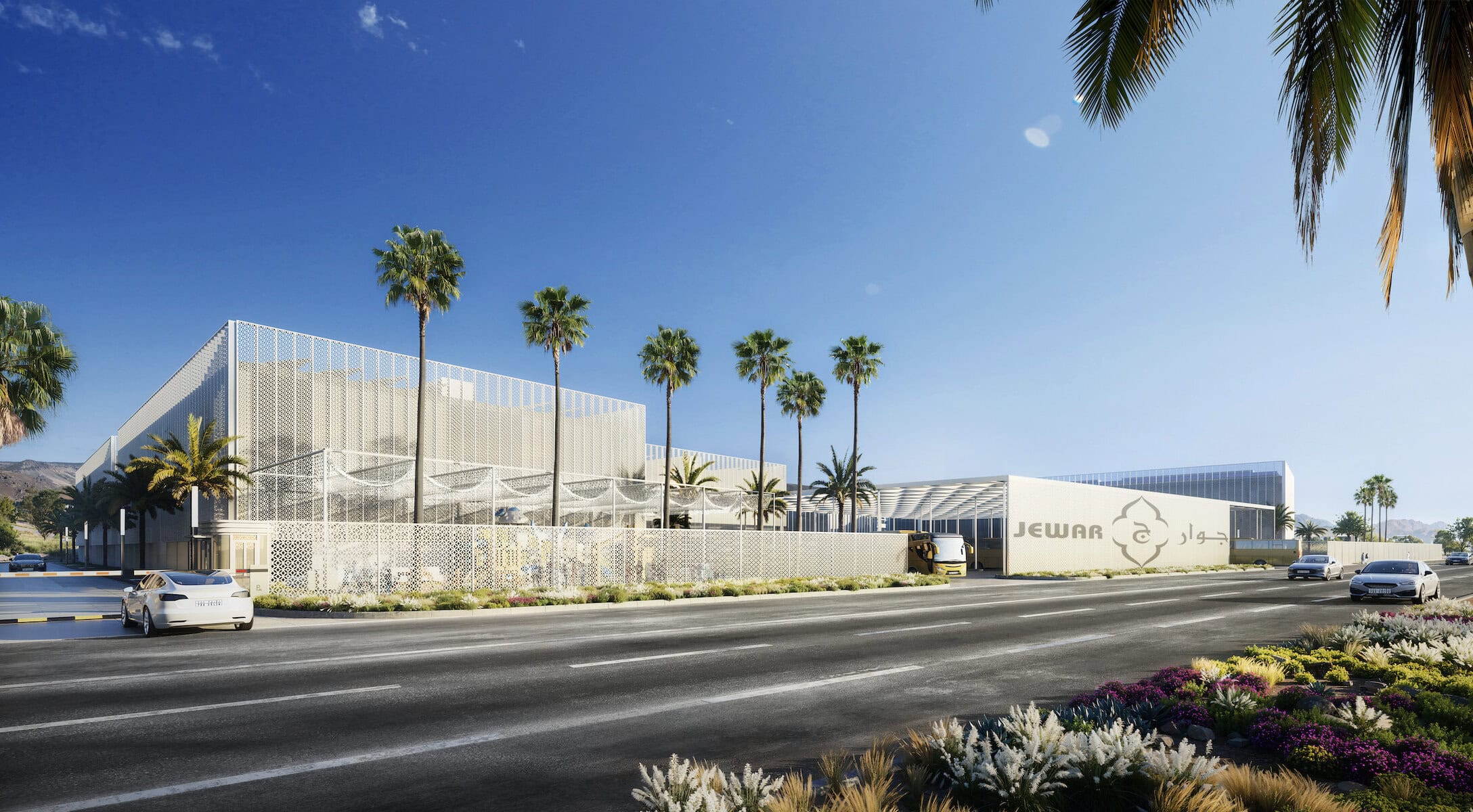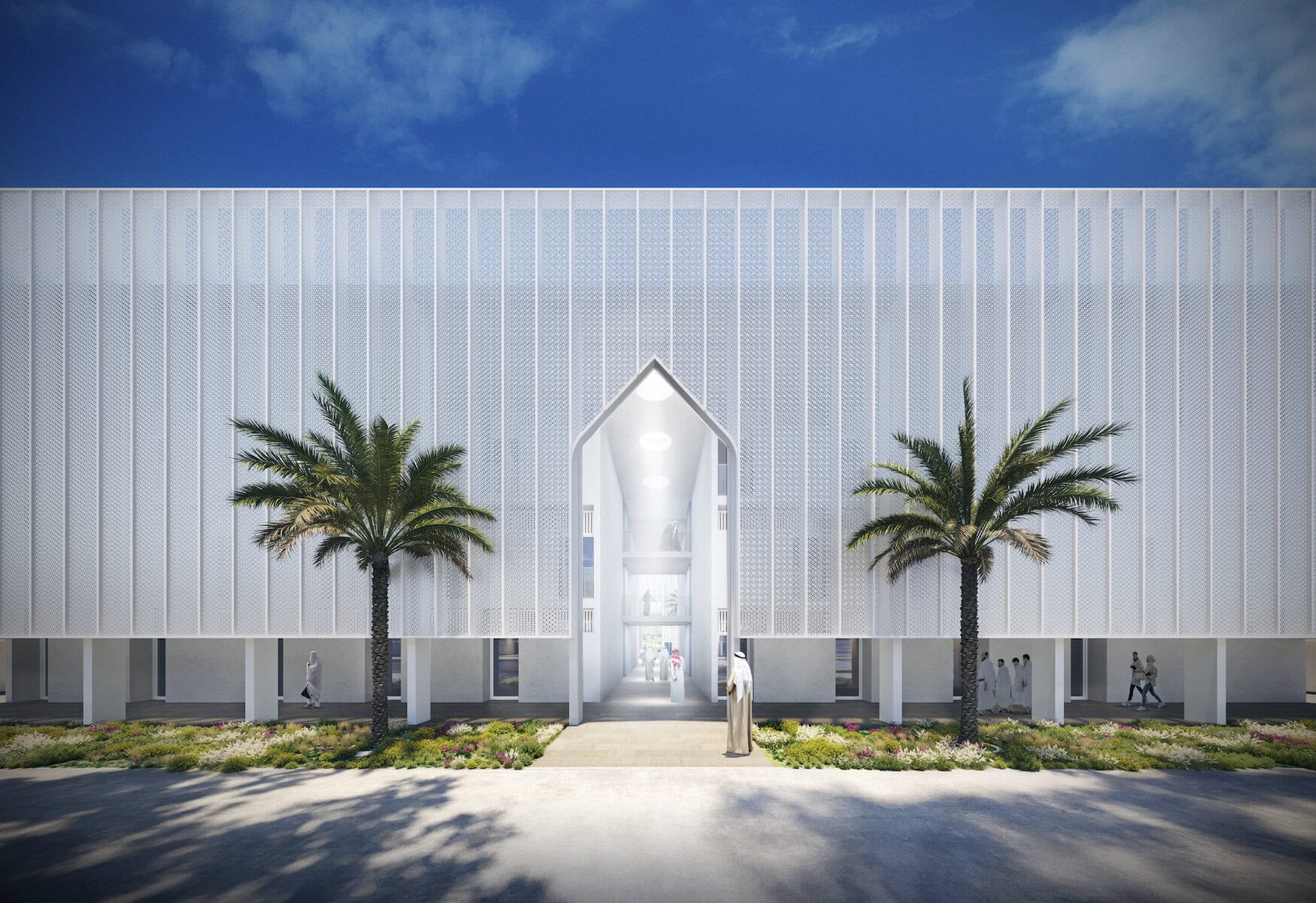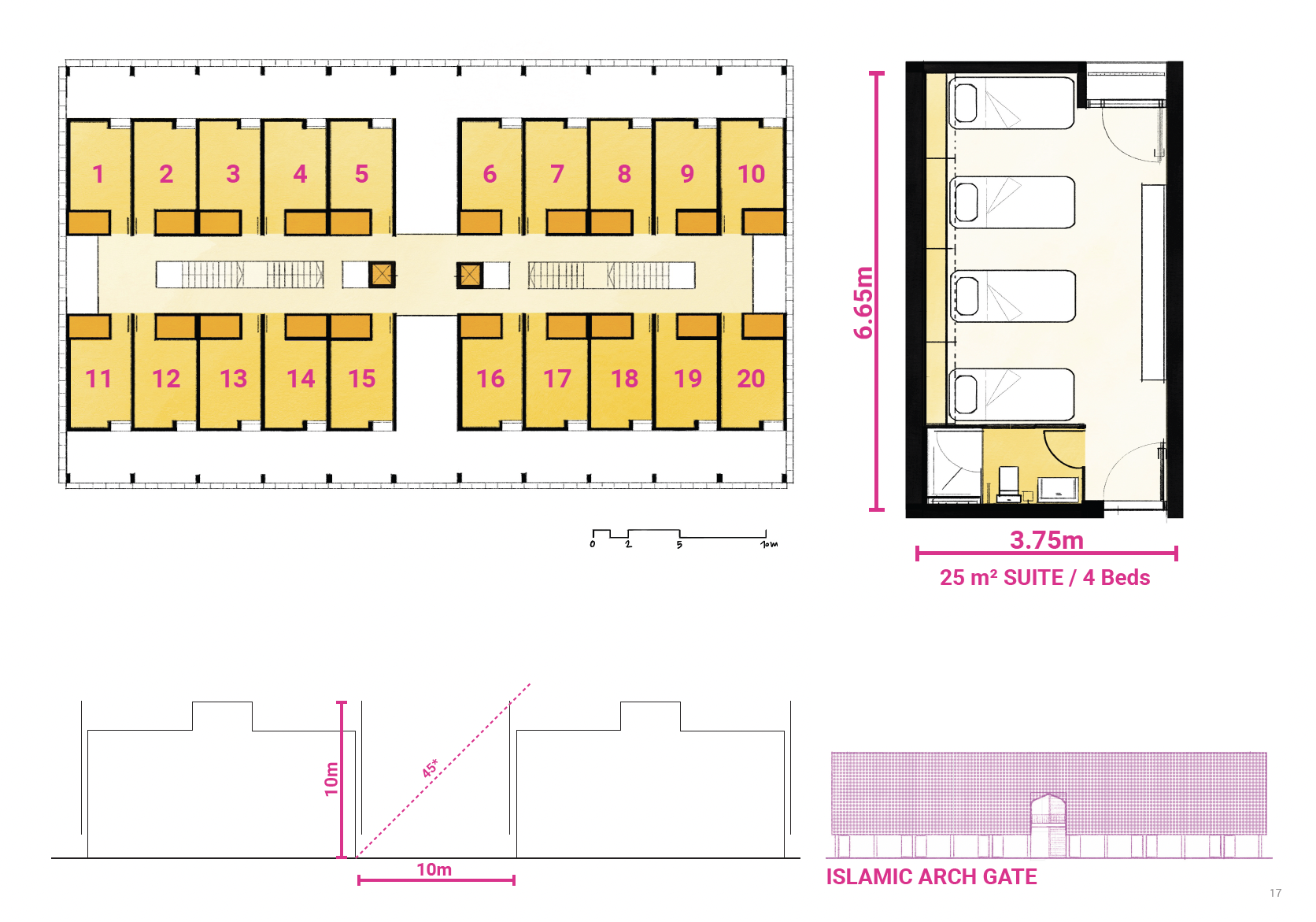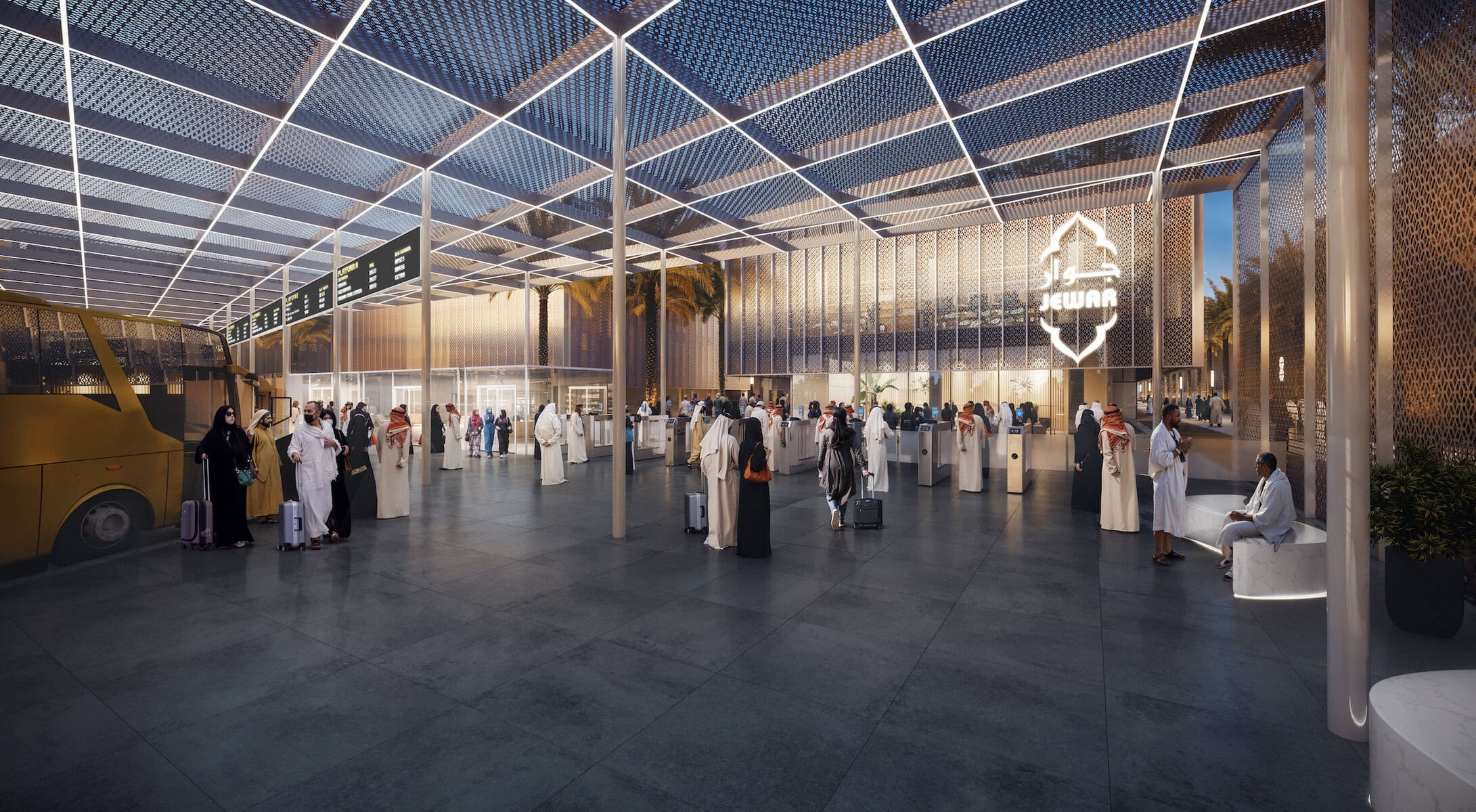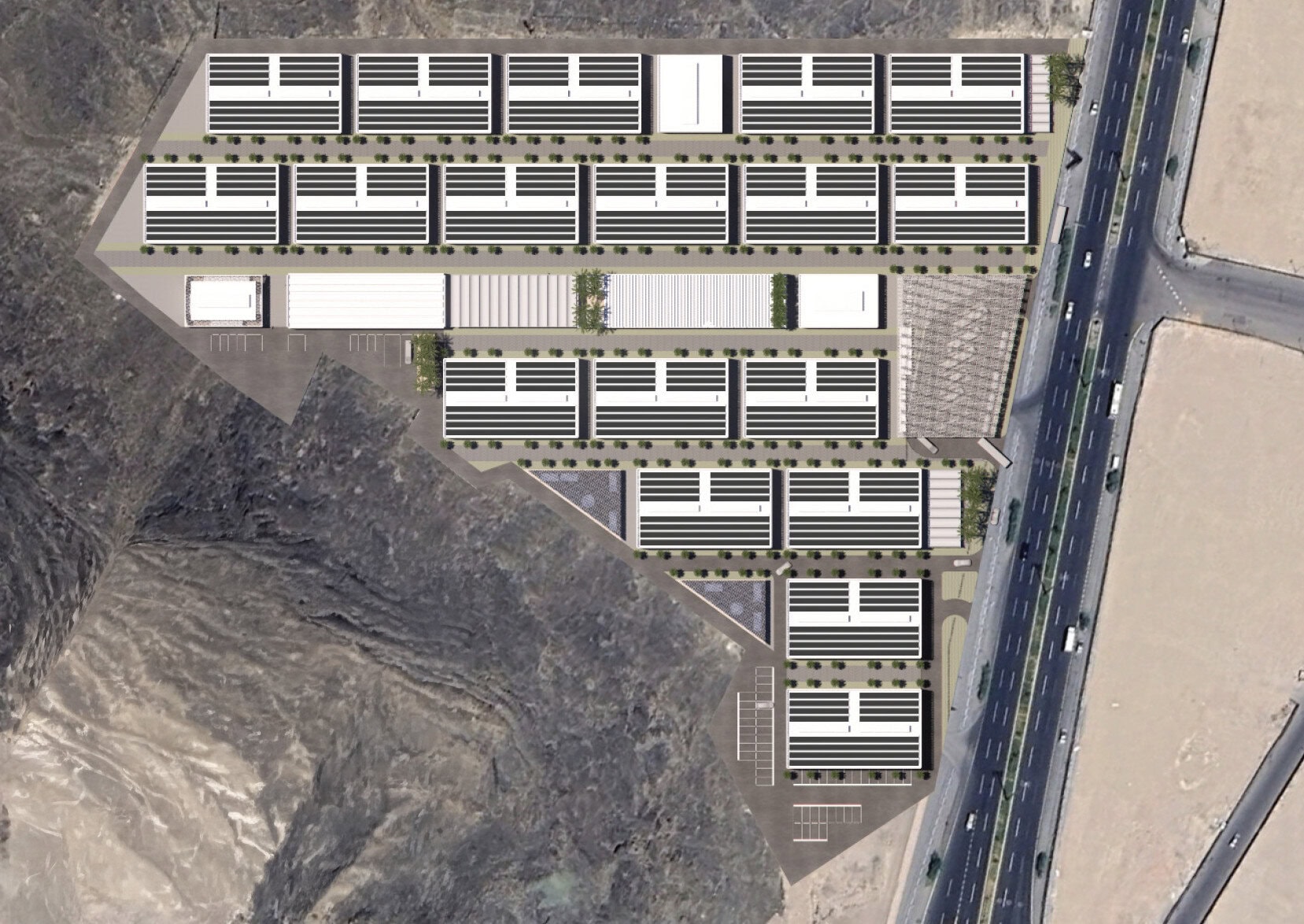
PROJECT OVERVIEW Type: Affordable Hotel Complex Location: Medinah, Saudi Arabia Programme: Pilgrimage Hospitality / Affordable Accommodation Site: 45,134 sqm | Footprint: 20,850 sqm | GFA: 59,490 sqm
THE BRIEF
Medinah is one of the most visited cities in the world. Each year, millions of Muslim pilgrims travel to the holy city — many of them on limited budgets, coming from dozens of different countries, staying for days or weeks during Hajj and Umrah seasons. The demand for dignified, affordable accommodation near the holy sites is enormous, and largely underserved by conventional hospitality design.
The brief called for a large-scale affordable hotel complex capable of accommodating this demand at scale, while delivering an experience that goes beyond pure functionality. The client needed a concept that could work financially, operate efficiently, and still offer guests something more than a bed and a corridor.
The challenge was architectural, programmatic, and strategic: how do you design hospitality at volume without losing the sense of welcome?
THE CONCEPT
The concept is built around a single organising idea: community through cultural difference.
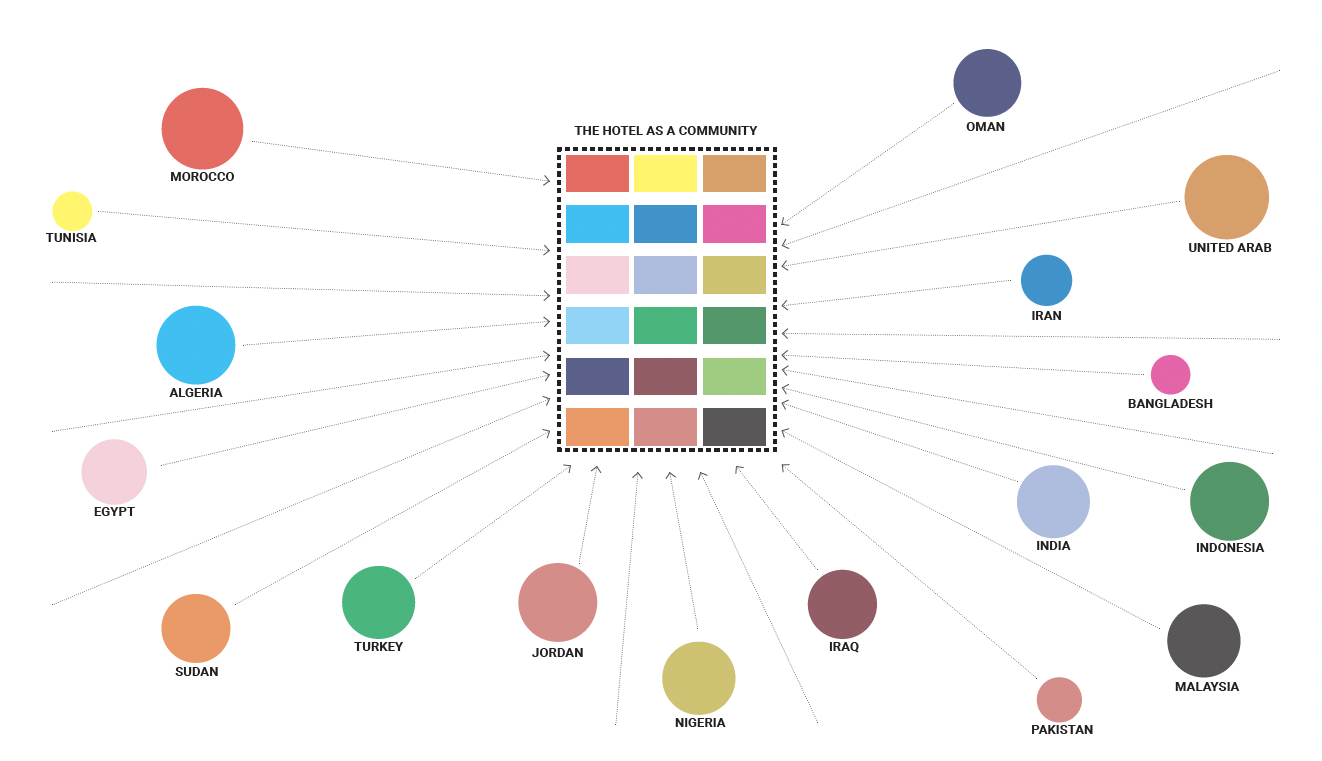
Rather than imposing a single aesthetic across the entire complex, the design organises its hospitality spaces into a series of culturally distinct zones — each drawing from the visual languages, colours, decorative traditions, and spatial sensibilities of the regions most represented among the pilgrim population. Guests arriving from Southeast Asia, the Middle East, North Africa, or West Africa encounter spaces that reflect something of their own cultural background.
This is not decoration for its own sake. It serves a precise function: cultural recognition transforms a generic accommodation block into a place where pilgrims feel genuinely welcomed rather than processed. It reduces the psychological distance between arrival and belonging — something that matters deeply in a context where the journey itself carries profound spiritual significance.
THE APPROACH
The design translates the concept into a clear spatial and programmatic framework structured around three principles.
First, cultural identity is expressed at the zone level — through colour, surface pattern, material selection, and decorative detail. The expression is legible enough to aid orientation and wayfinding, rich enough to create genuine atmosphere. Guests can navigate the complex intuitively, identifying different areas by their visual character.
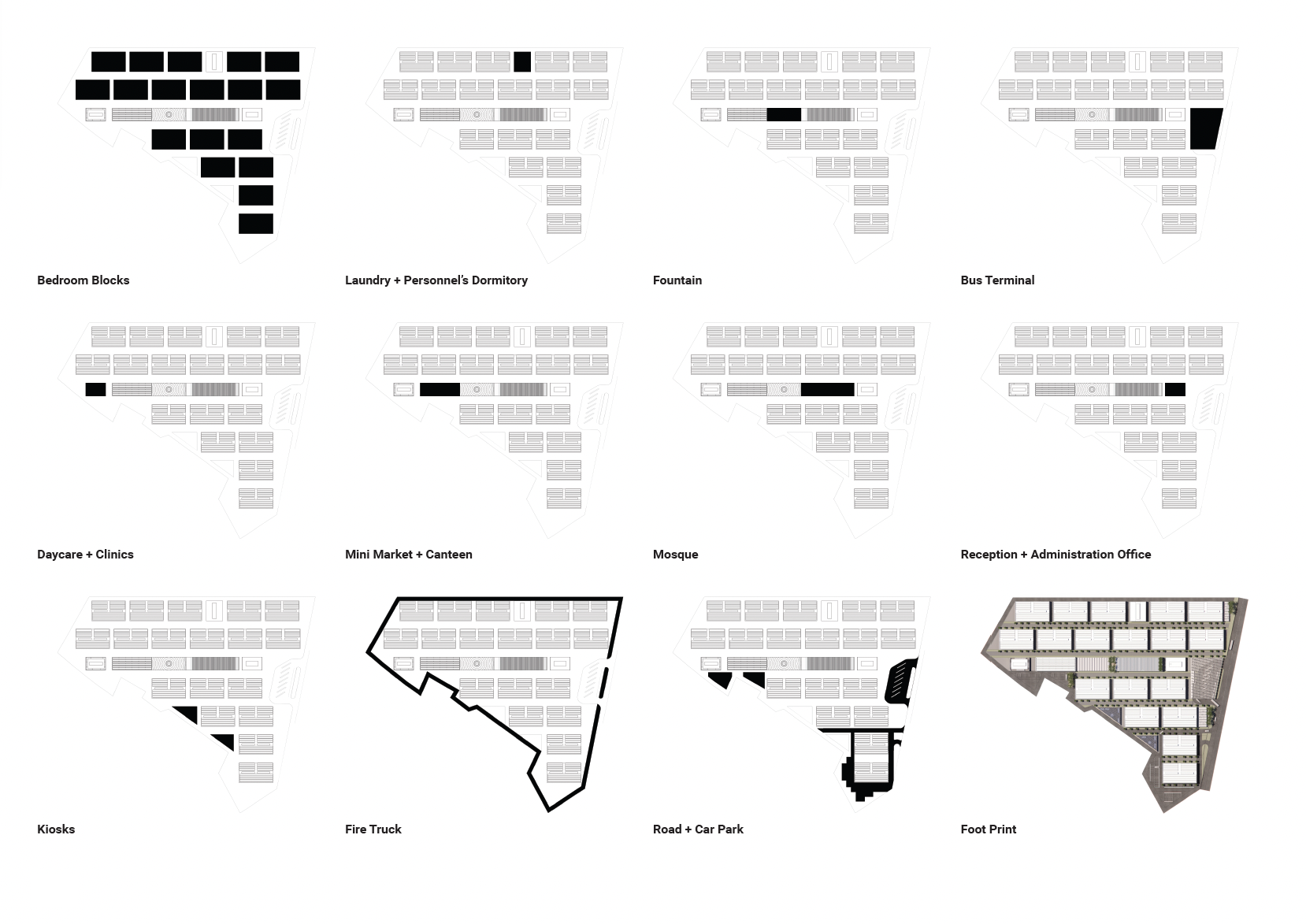
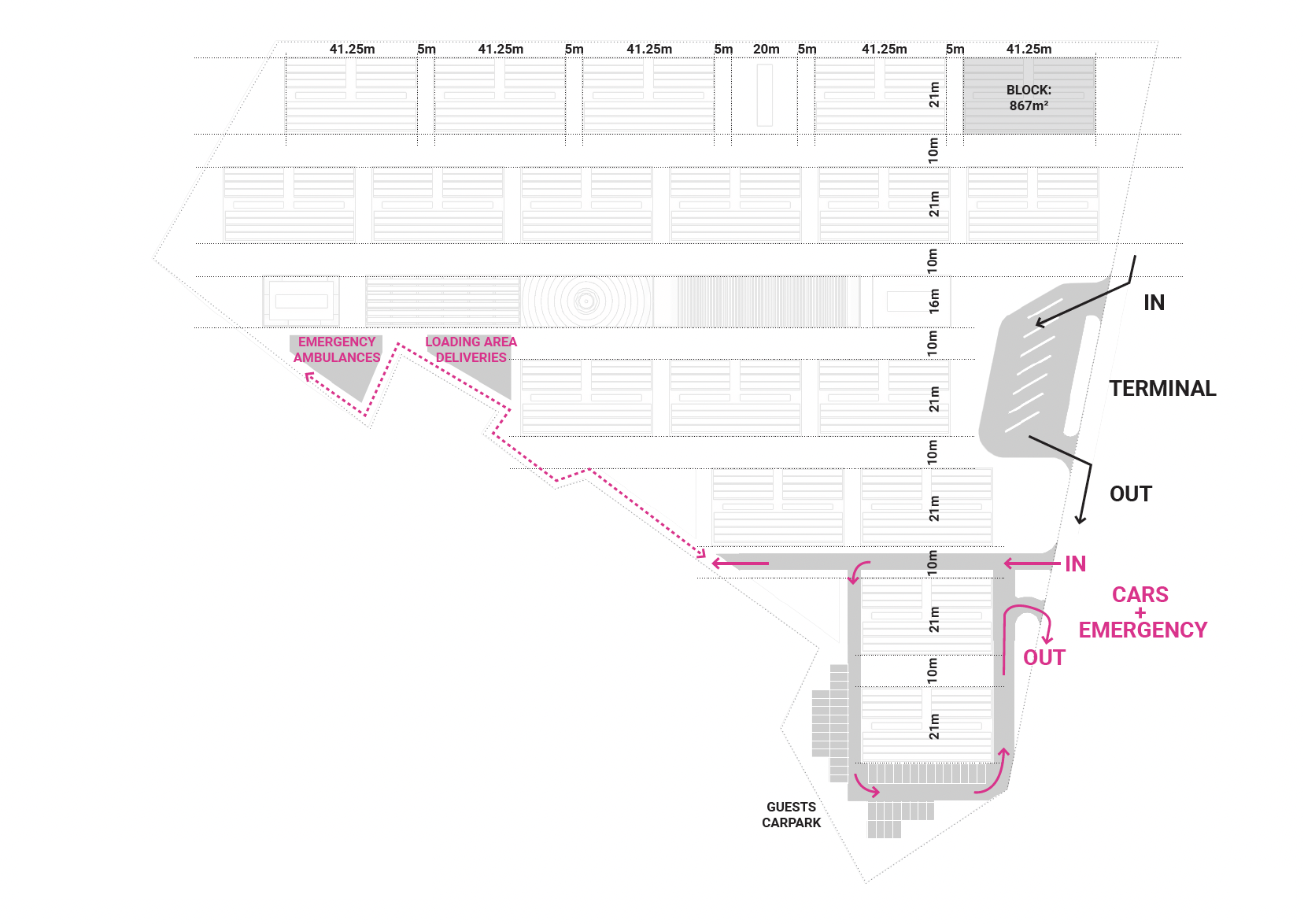
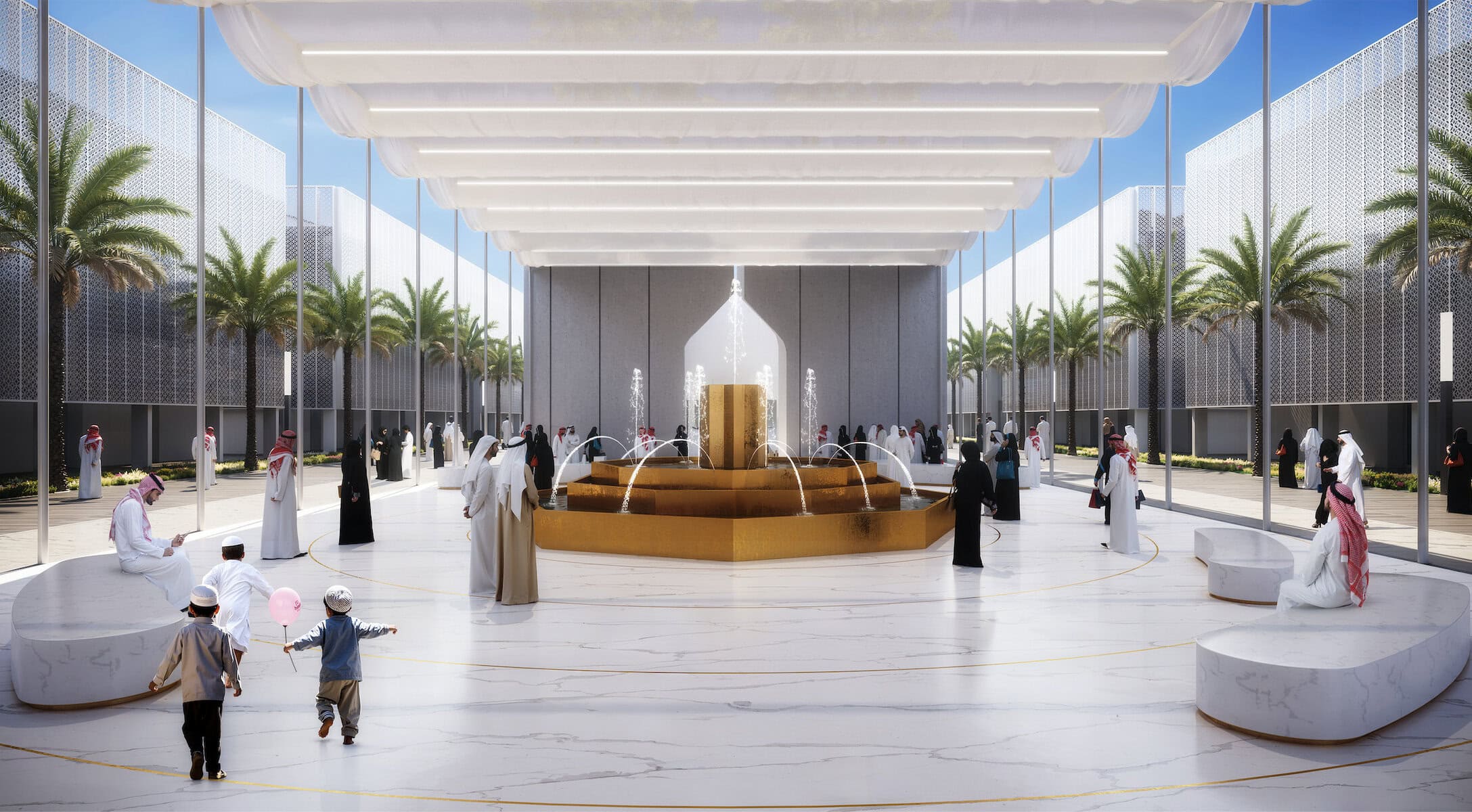
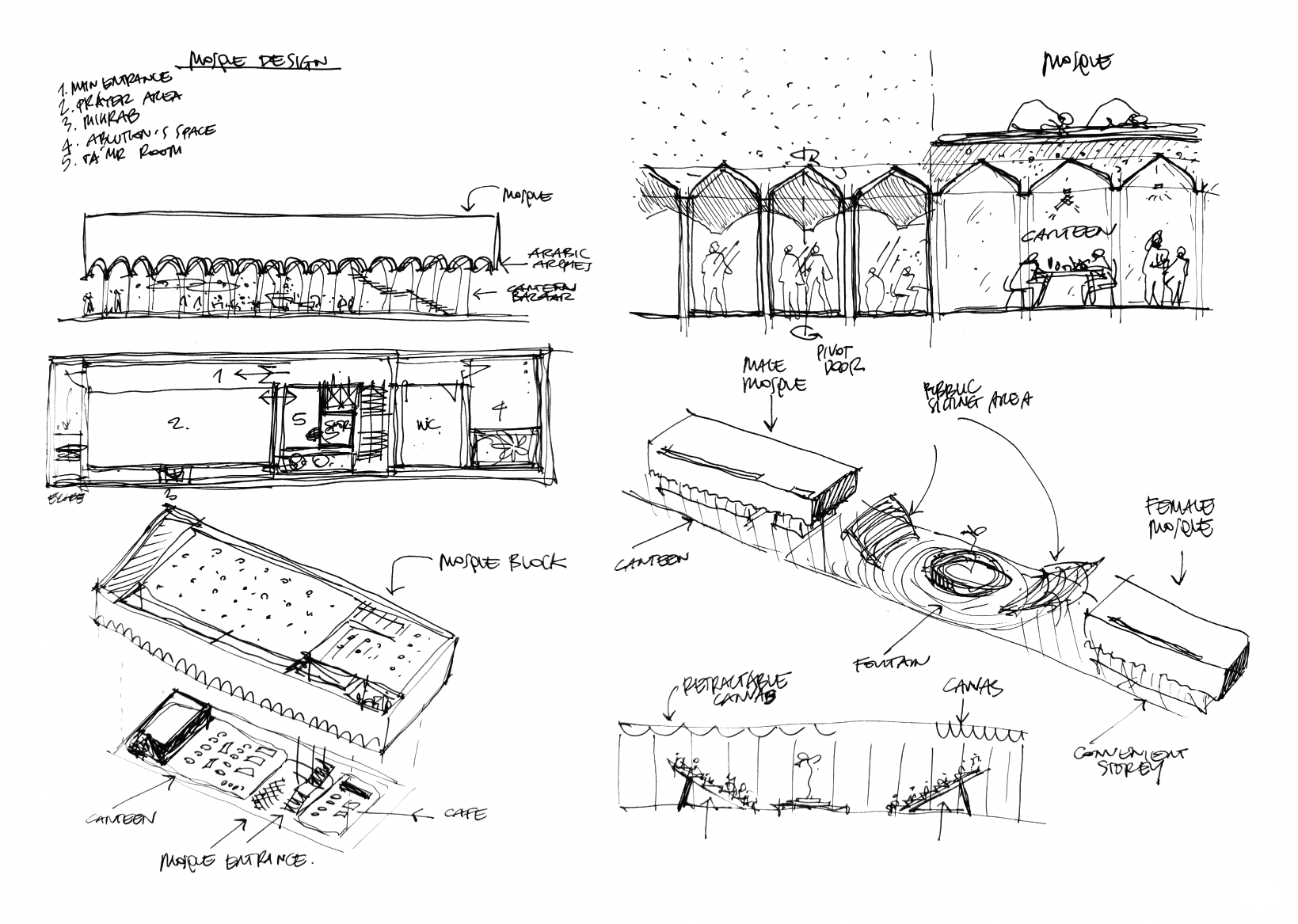
Second, the massing strategy maximises accommodation density within the site footprint while maintaining shared courtyard spaces between building volumes. These courtyards serve as the social infrastructure of the complex — places for rest, gathering, and informal interaction between pilgrims from different parts of the world. The spatial logic reinforces the concept: difference organised around a shared centre.
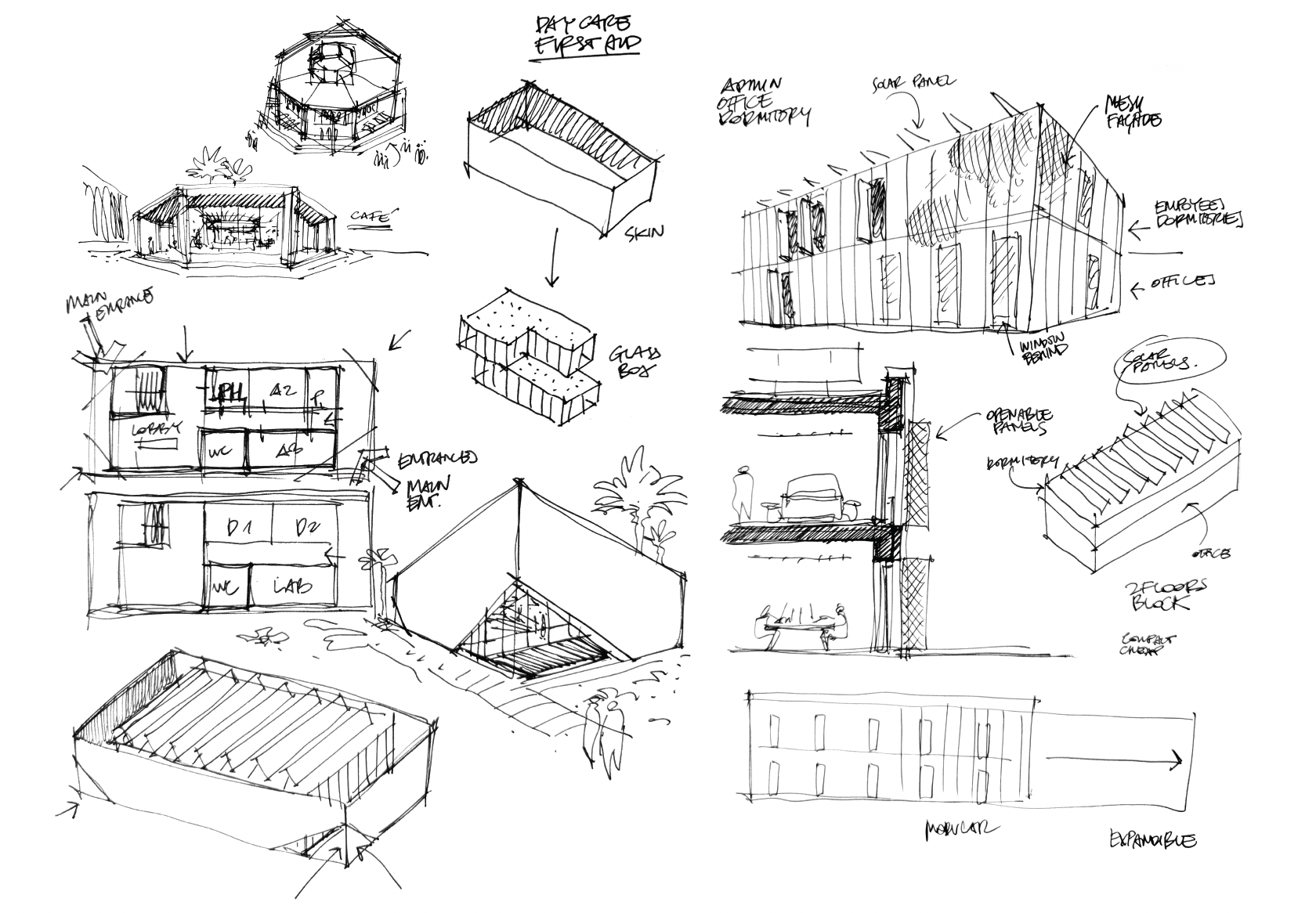
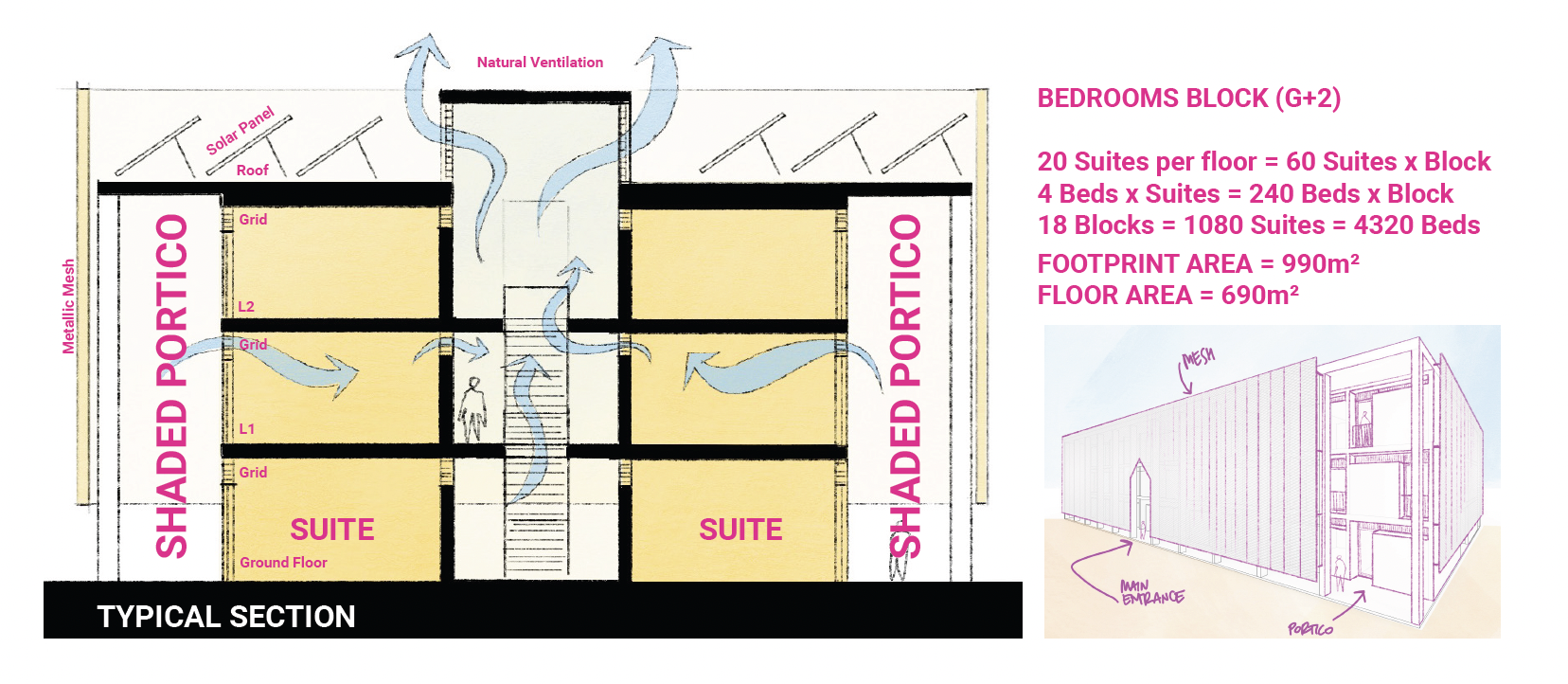
Third, the feasibility logic runs through every decision. Construction systems are standardised and repetitive where possible, reducing build cost without reducing spatial quality. Unit layouts are compact but carefully proportioned. Shared amenities are positioned to serve multiple zones efficiently. The result is a concept that is both architecturally coherent and commercially viable — a direction that can move confidently into technical development.
KEY DESIGN DECISIONS
The decision to organise around cultural zones rather than a unified aesthetic was the central strategic choice. It resolved the tension between scale and identity — making a large complex feel composed of distinct, human-scaled environments rather than one undifferentiated mass.
The courtyard strategy was equally important. In a complex designed for pilgrims who may spend extended periods at the site, outdoor shared space is not a luxury — it is a necessity for the quality of daily life and the social dimension of the pilgrimage experience.
WHY THIS PROJECT MATTERS
Large-scale pilgrimage hospitality is one of the most demanding briefs in the hospitality sector. Extreme seasonal demand, significant cultural heterogeneity, tight budget constraints, and the spiritual weight of the context all operate simultaneously. This project demonstrates how strategic concept design and early-stage feasibility thinking can resolve those tensions into a clear, buildable, and meaningful architectural direction.