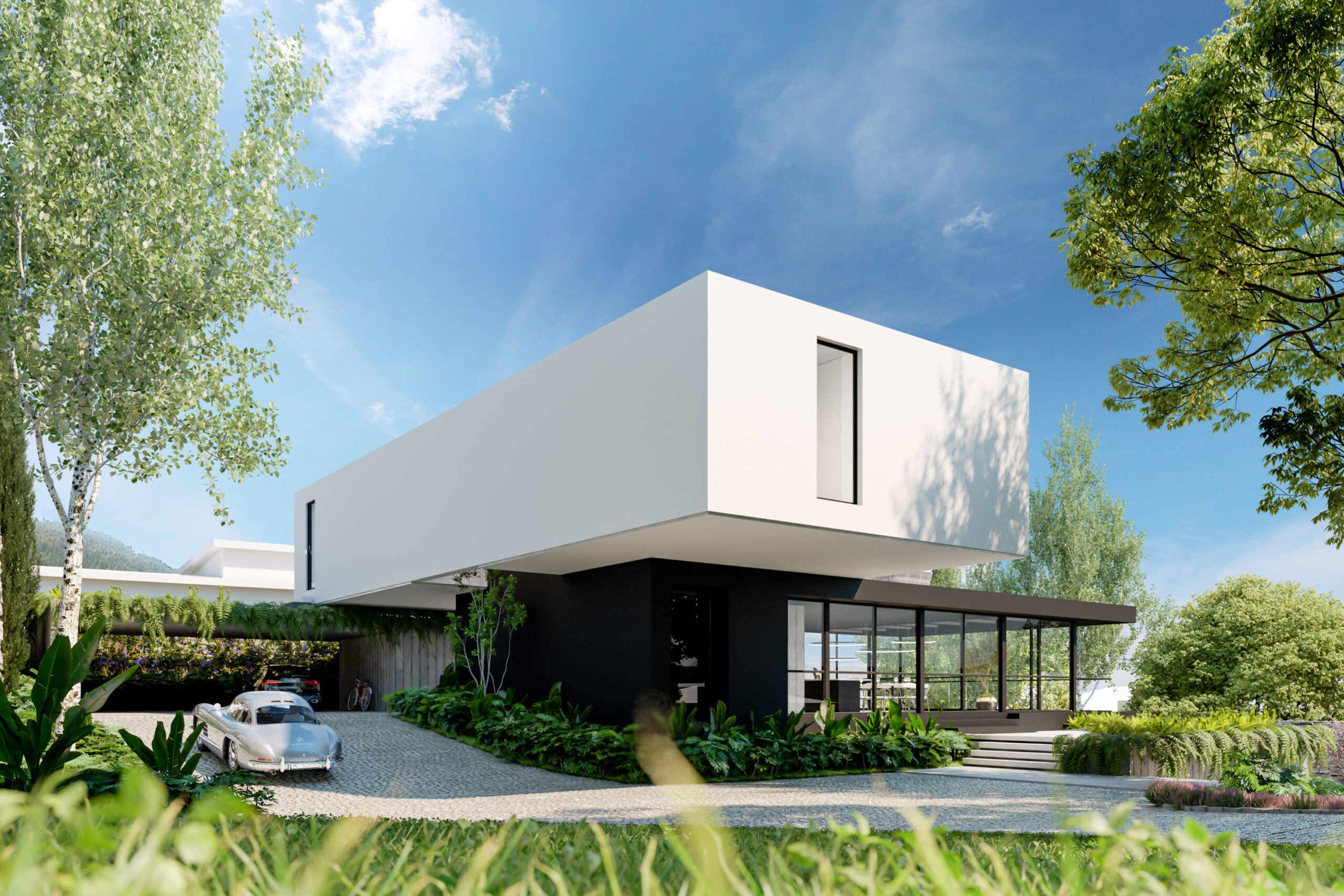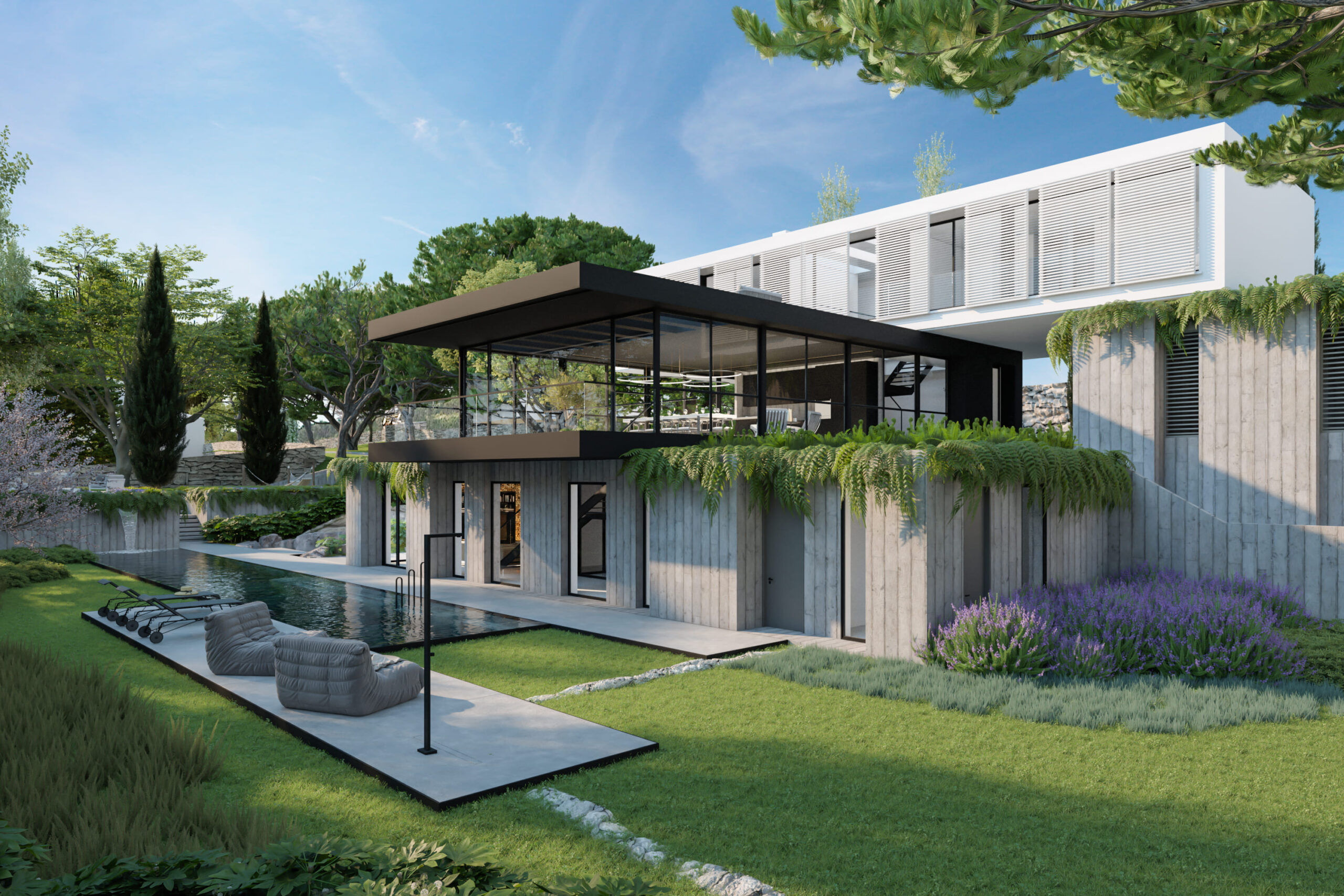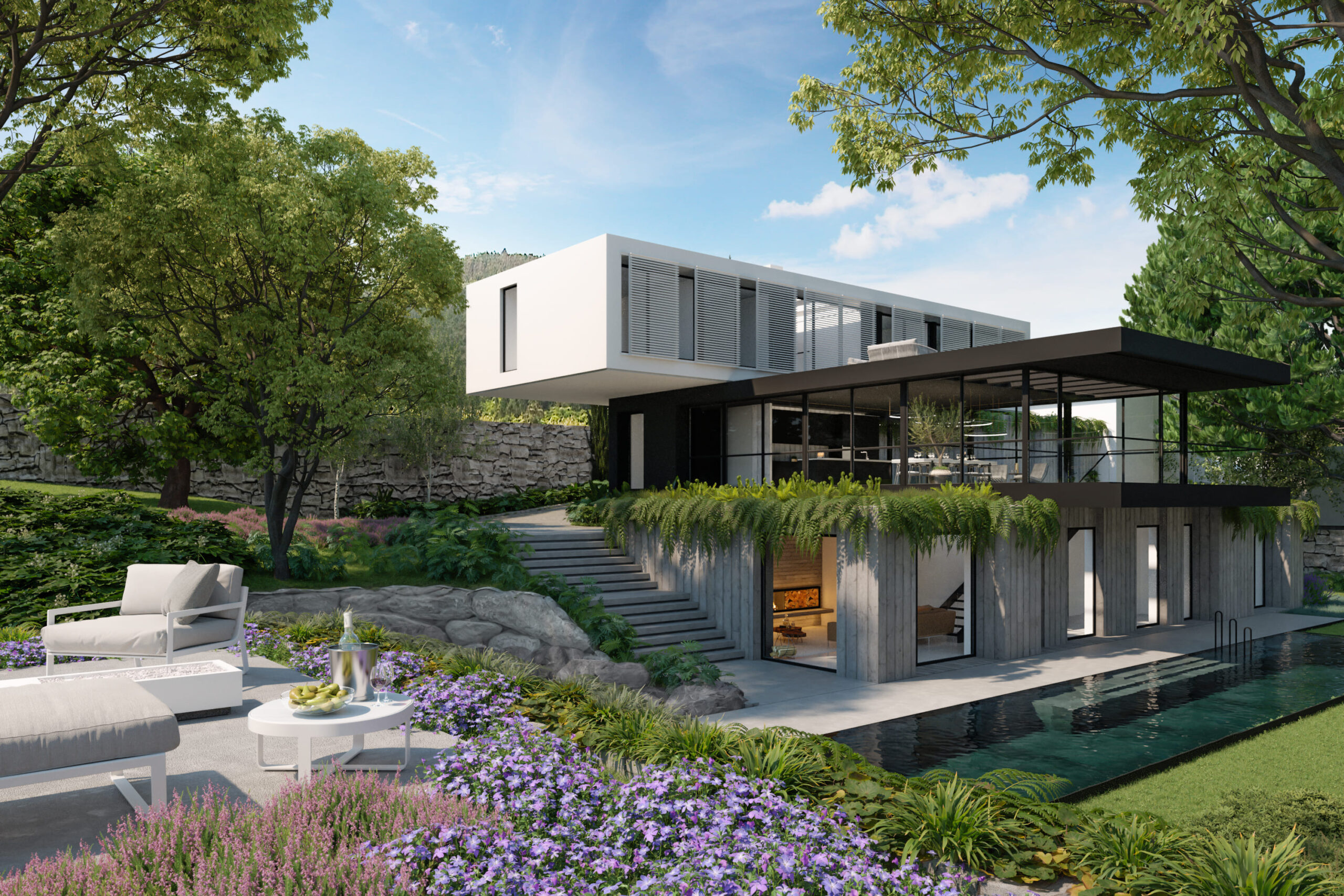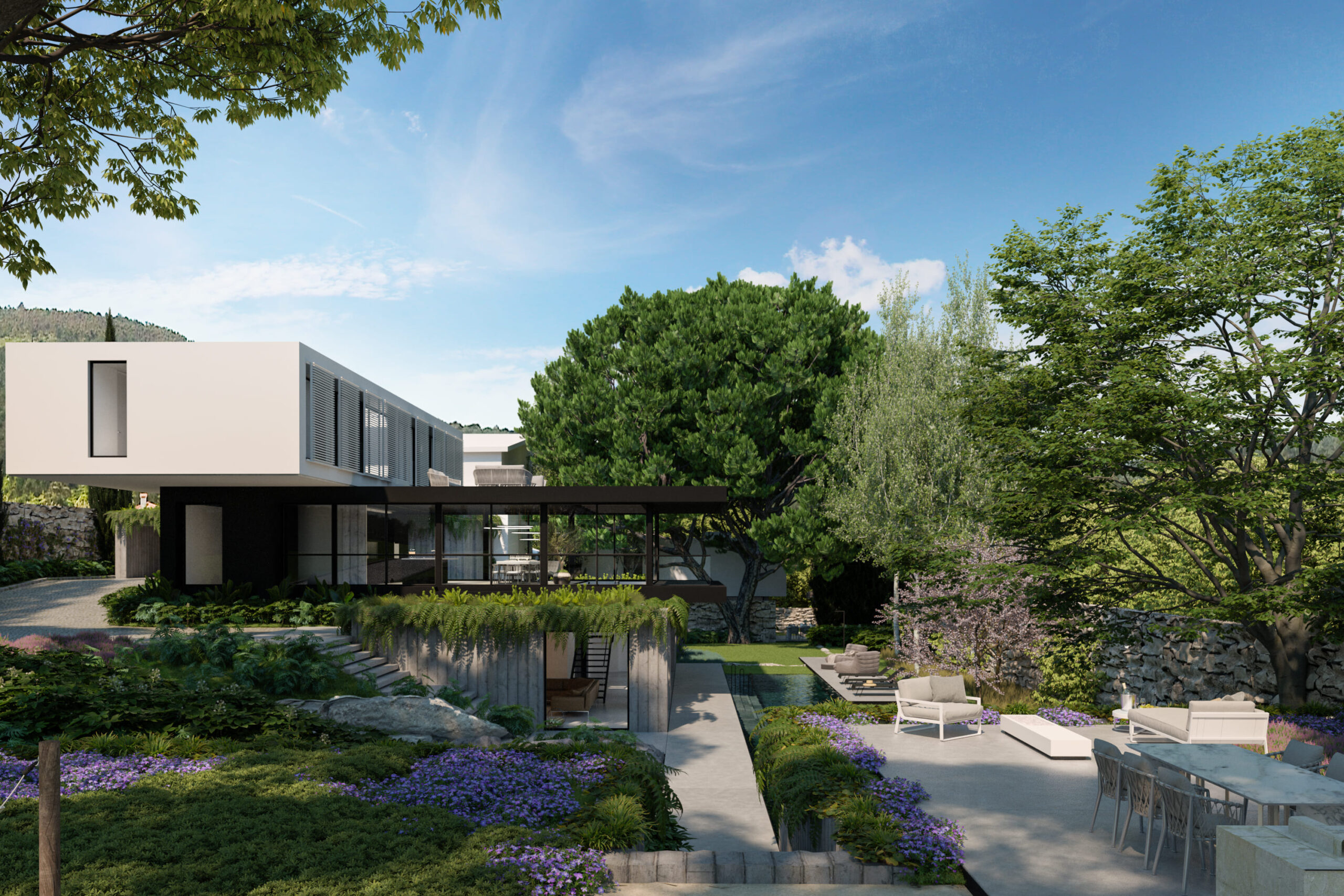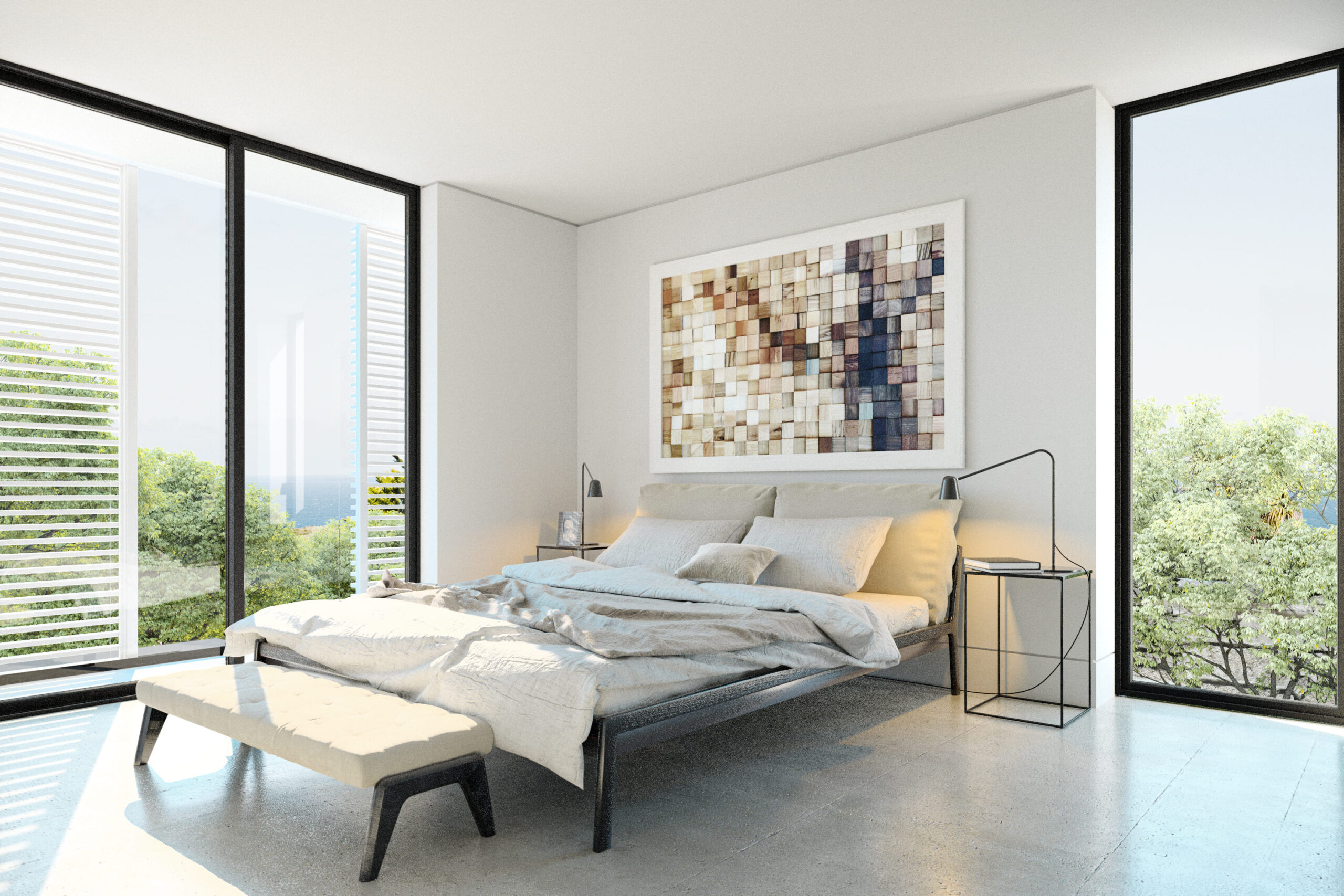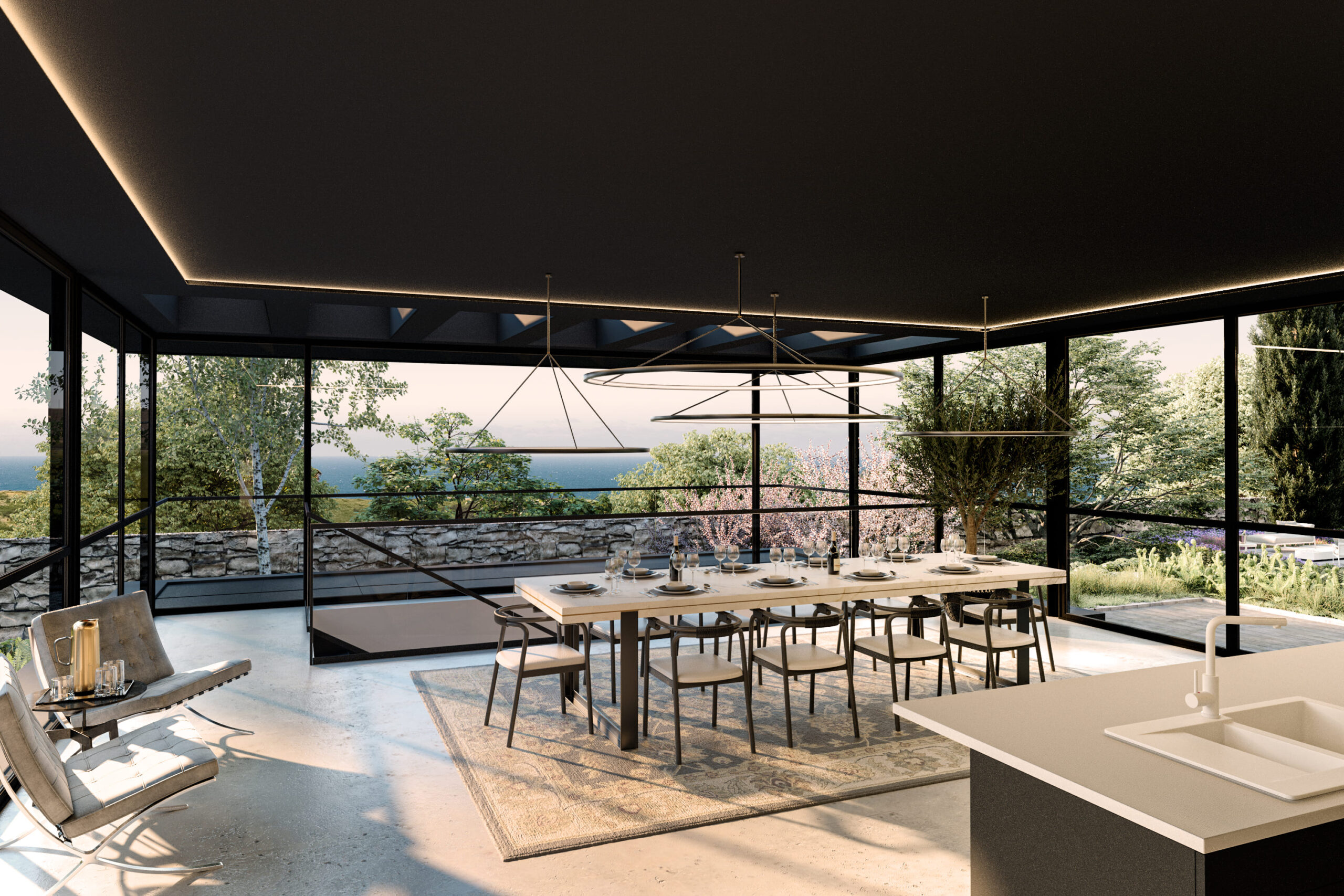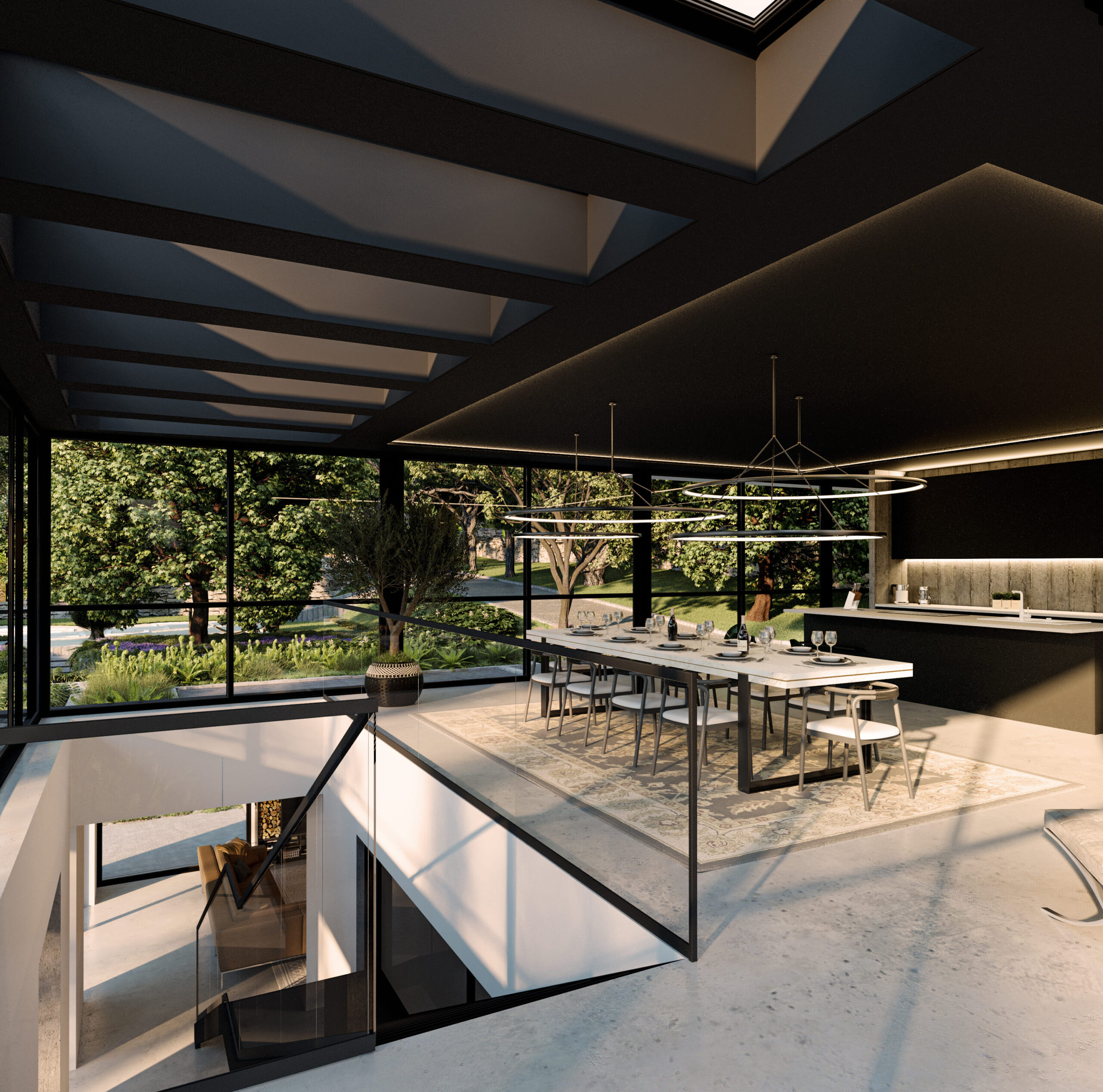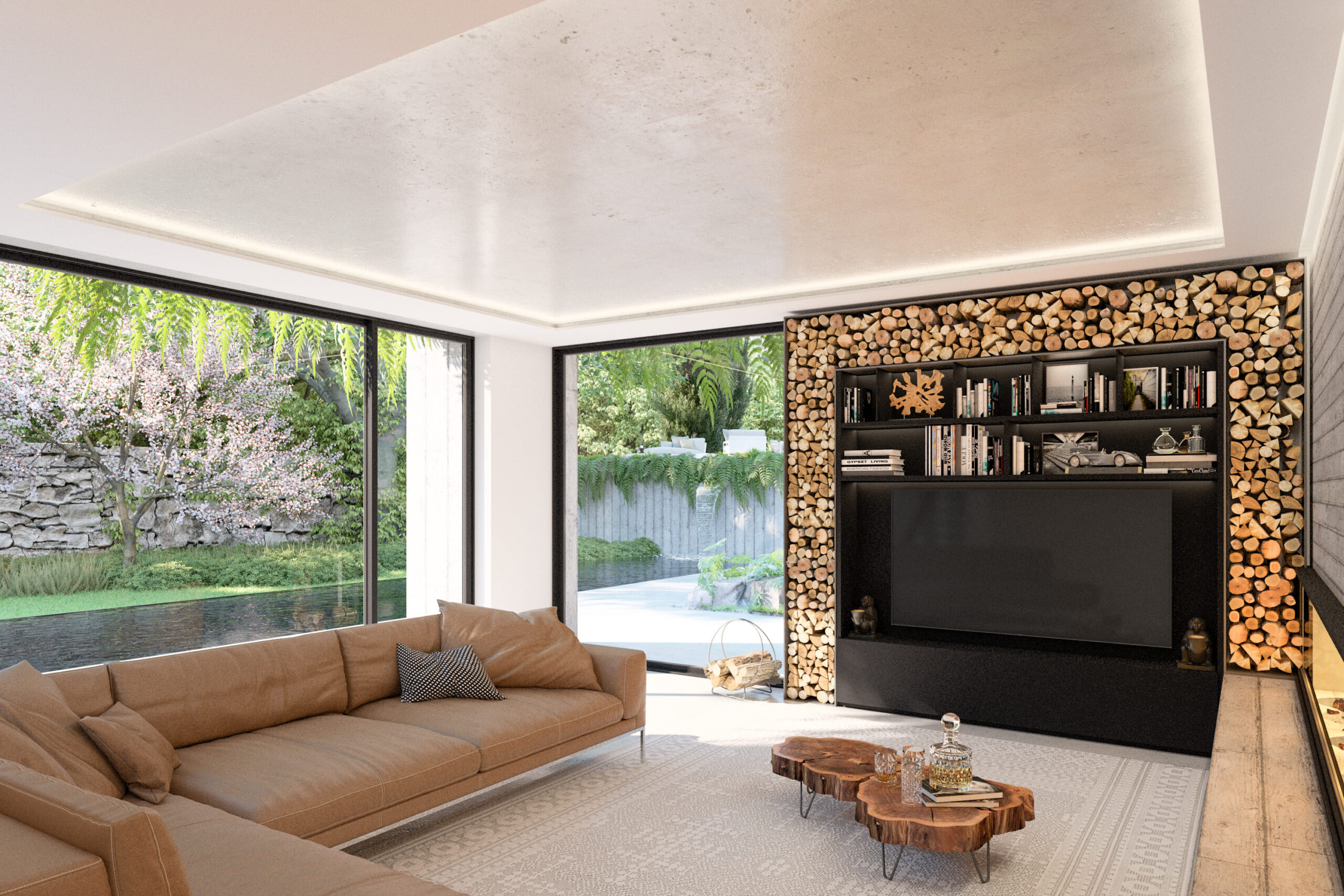
PROJECT OVERVIEW Type: Private Villa Concept Design Location: Almoçageme, Sintra, Portugal Program: Residential / Private Villa Delivered in collaboration with: CRIBS (2021)
THE BRIEF
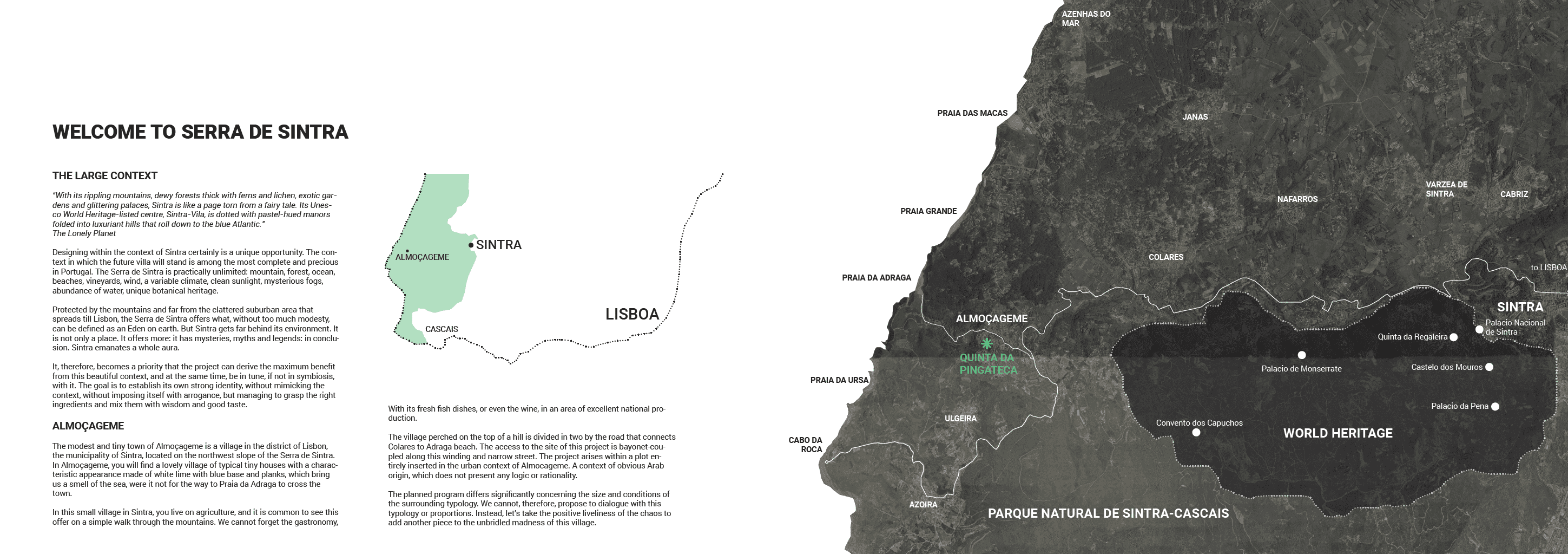
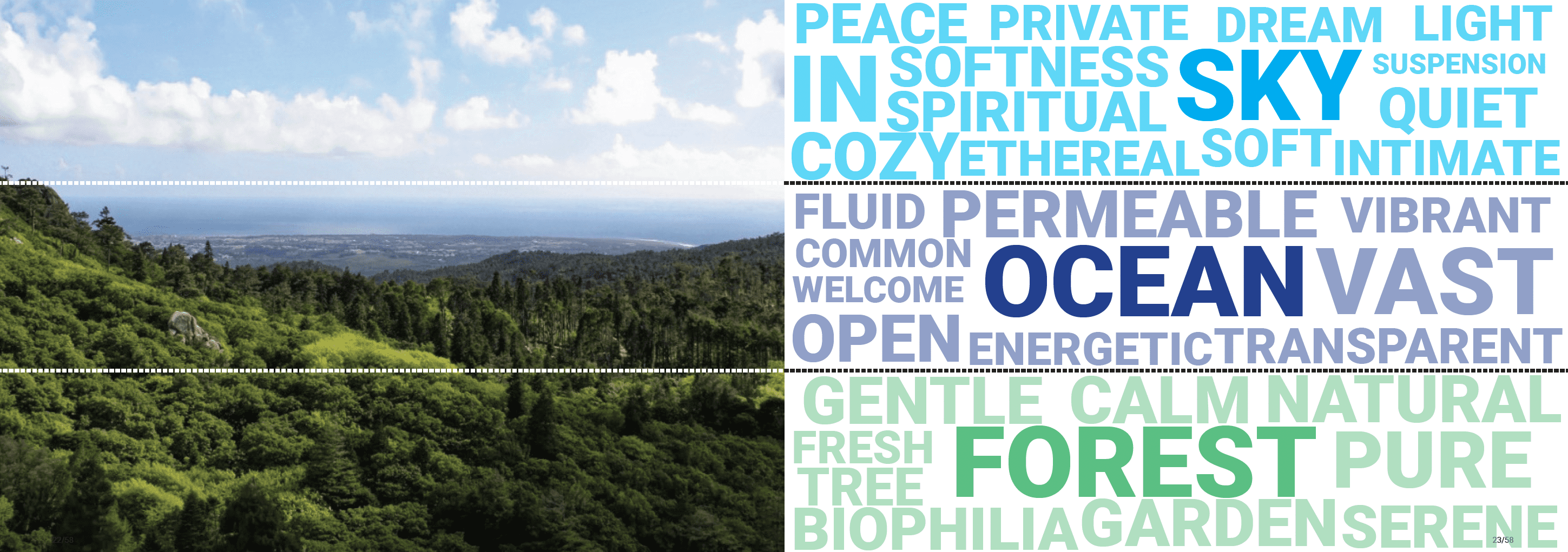
Quinta da Pingateca sits on the northwest slope of the Serra de Sintra, in the small village of Almoçagem, thirty minutes from Lisbon, overlooking the Atlantic Ocean. The site is exceptional: dense forest, ocean horizon, Atlantic light, and the layered natural and cultural landscape of the Sintra region.
The client’s brief was to design a private villa for this setting. But the real challenge was not architectural in the conventional sense. The site was already so extraordinary that the primary question was not what to add, but how little to add. The brief demanded restraint, a concept that would enhance the place without competing with it.
THE CONCEPT
The concept is built around a single discipline: minimum touch.
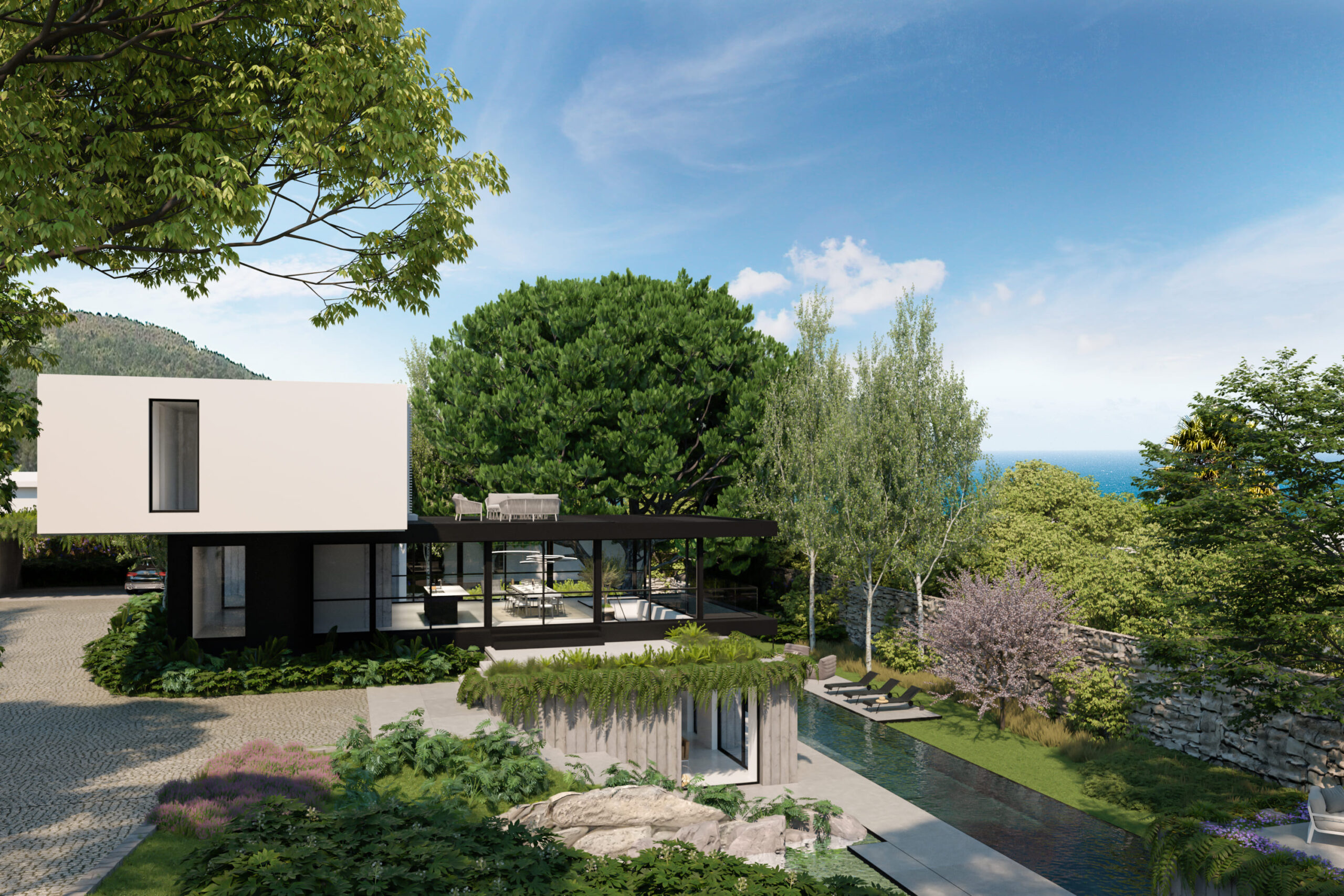
Rather than asserting a strong architectural presence over a landscape that already has one, the design subordinates itself entirely to the context. Every decision, siting, form, material, and spatial sequence, is driven by the question of how to fit into Quinta da Pingateca as naturally as possible, as if the building had always been part of the landscape rather than placed within it.
This is not a passive approach. Minimum touch requires a precise understanding of what the place already is: its topography, its light, its views, and its existing balance among forest, open ground, and horizon. The concept works with that understanding rather than against it.
The final goal is a villa that feels discovered, not designed. Spaces that emerge from the landscape rather than interrupt it. Architecture that belongs.
THE APPROACH
The design translates the concept through a consistent set of spatial and material decisions.
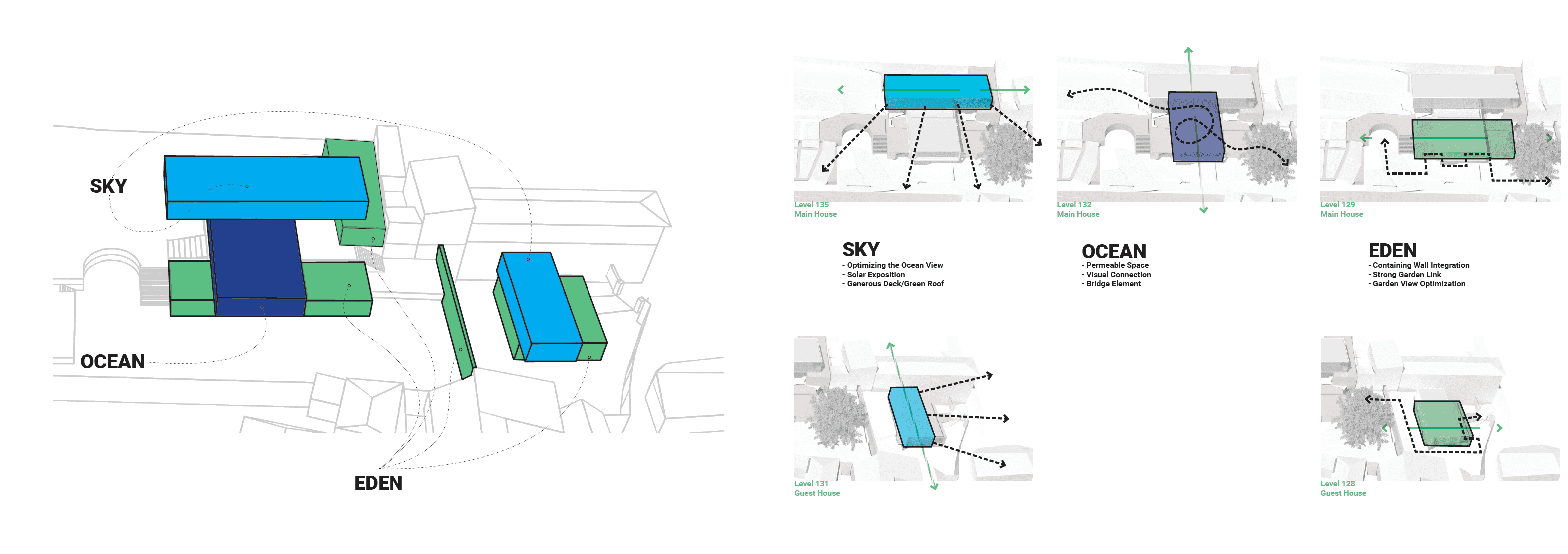
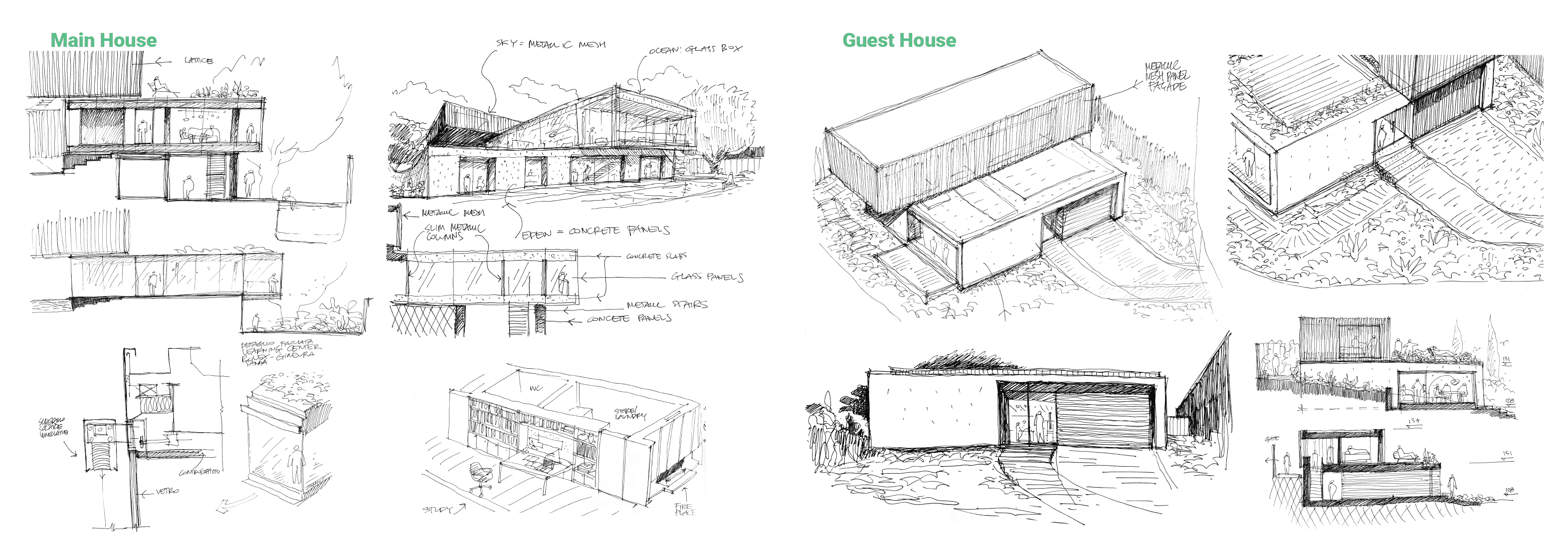
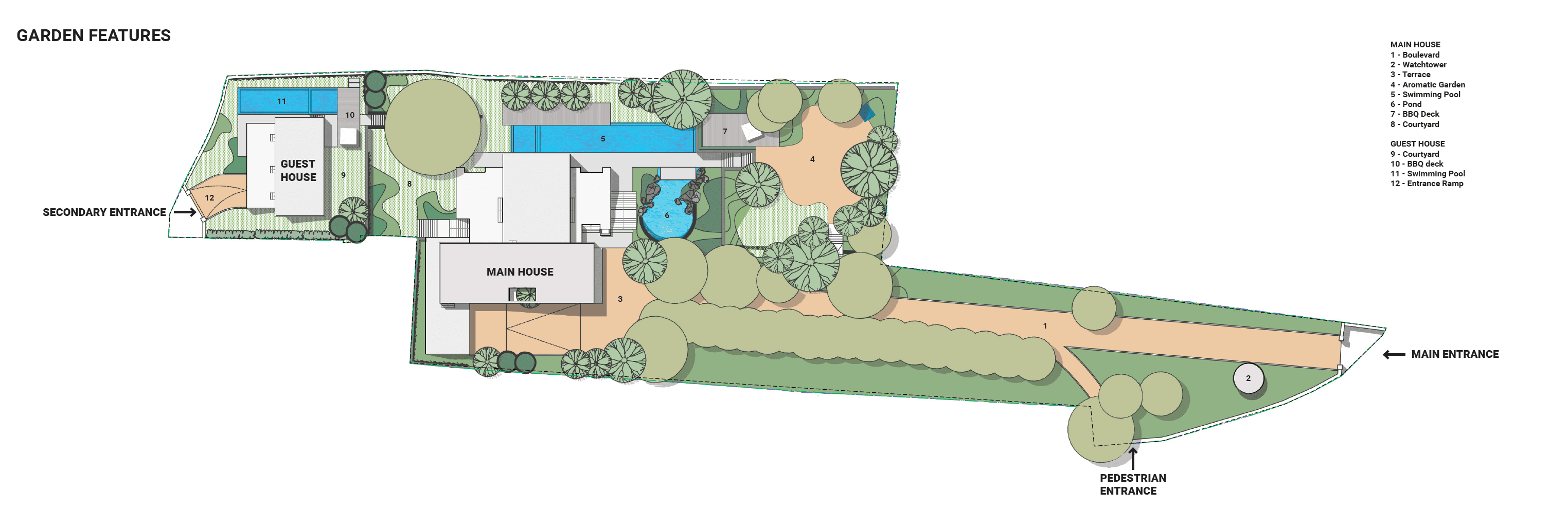
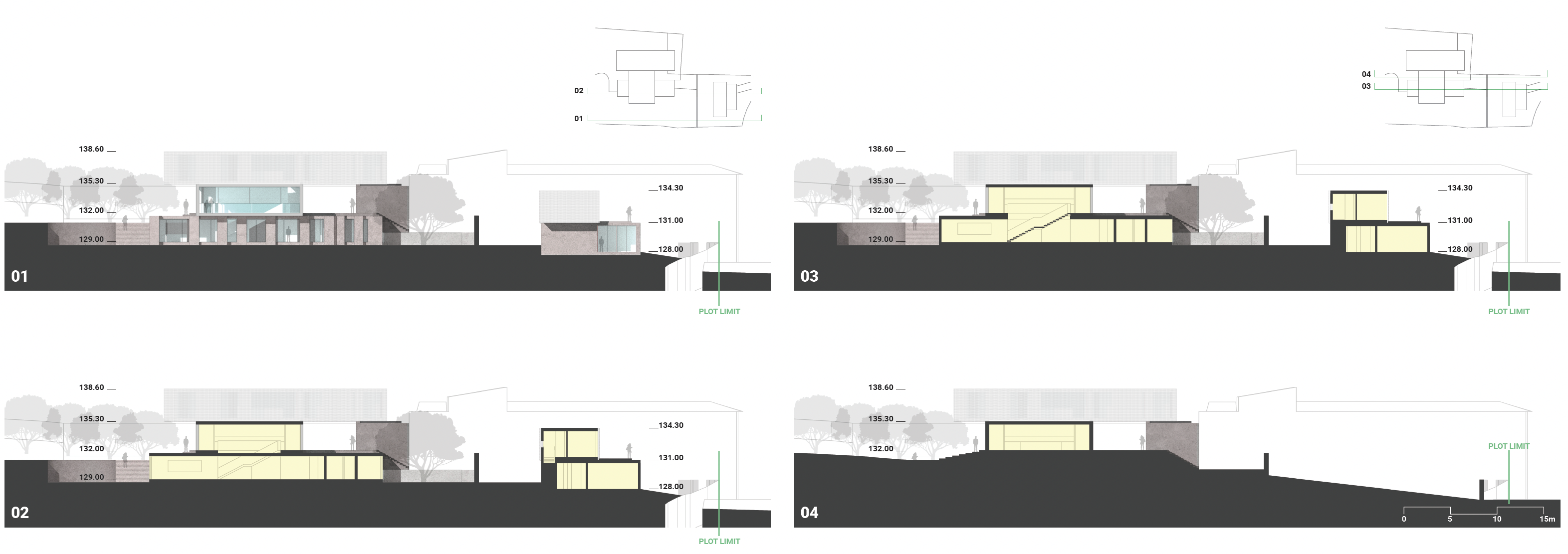
The building’s footprint follows the site’s natural topography, minimizing excavation and earthwork. Volumes are kept low and horizontal, echoing the way the existing structures of the Quinta relate to the ground. The roof profiles are calibrated to disappear into the treeline when viewed from the surrounding landscape.
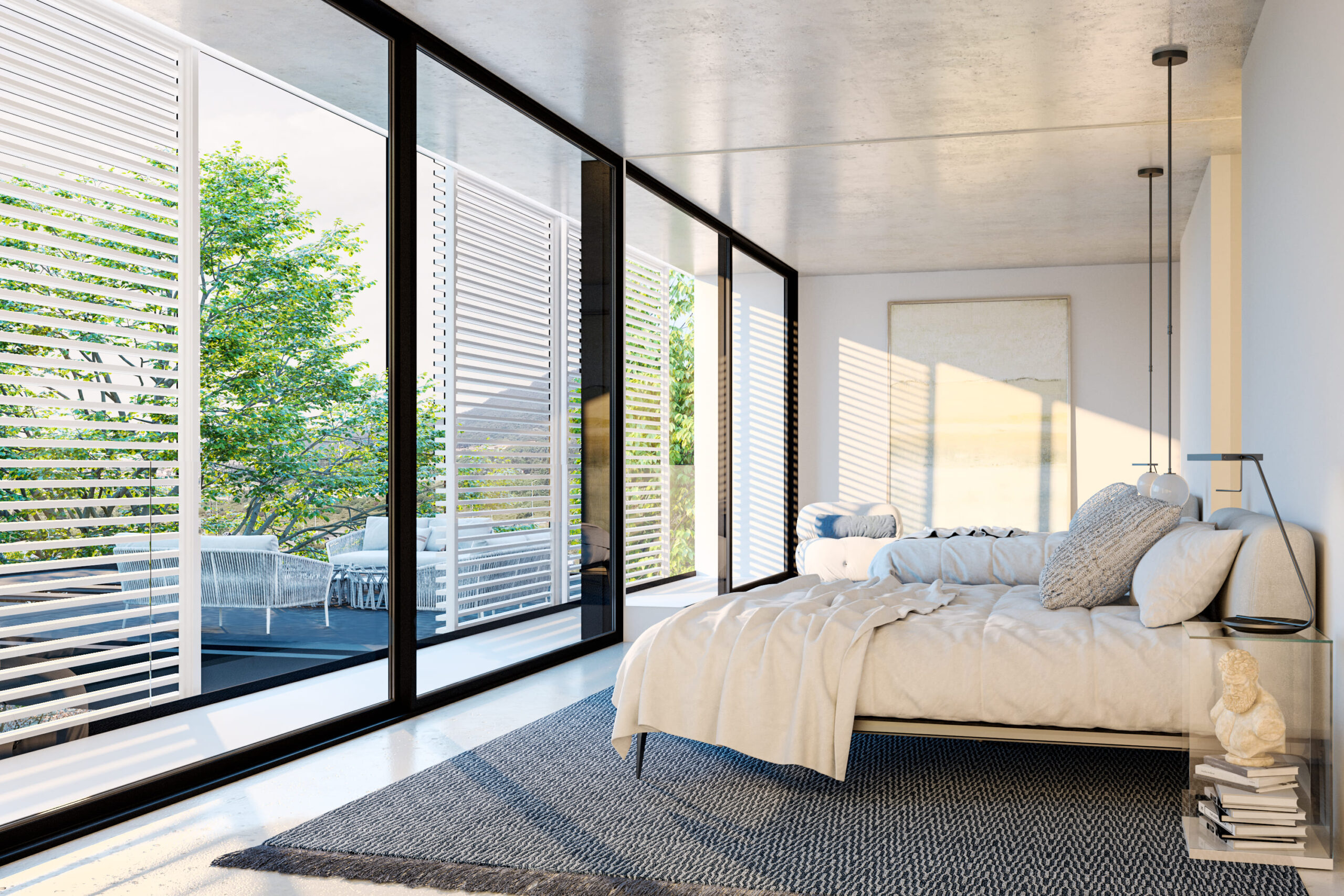
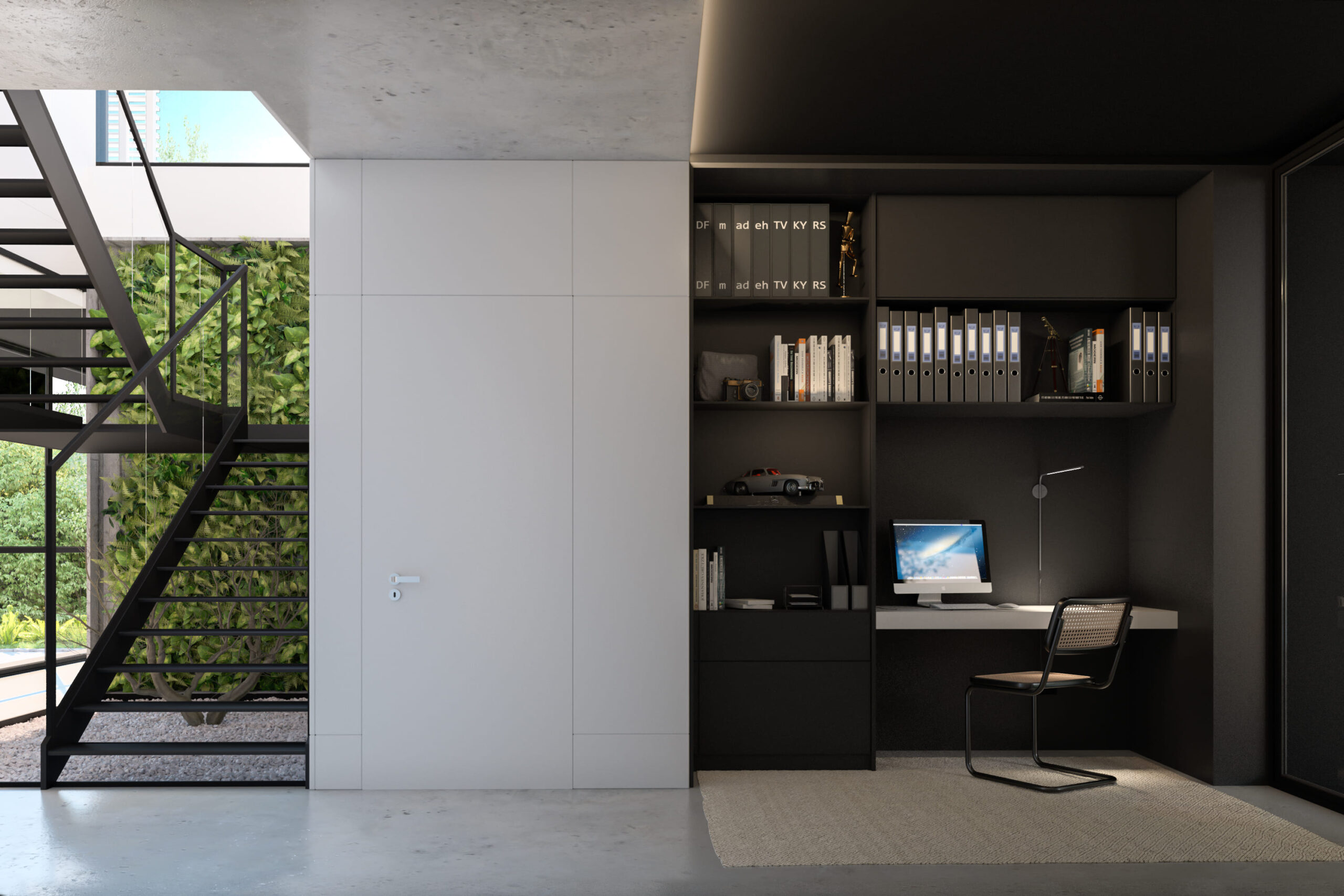
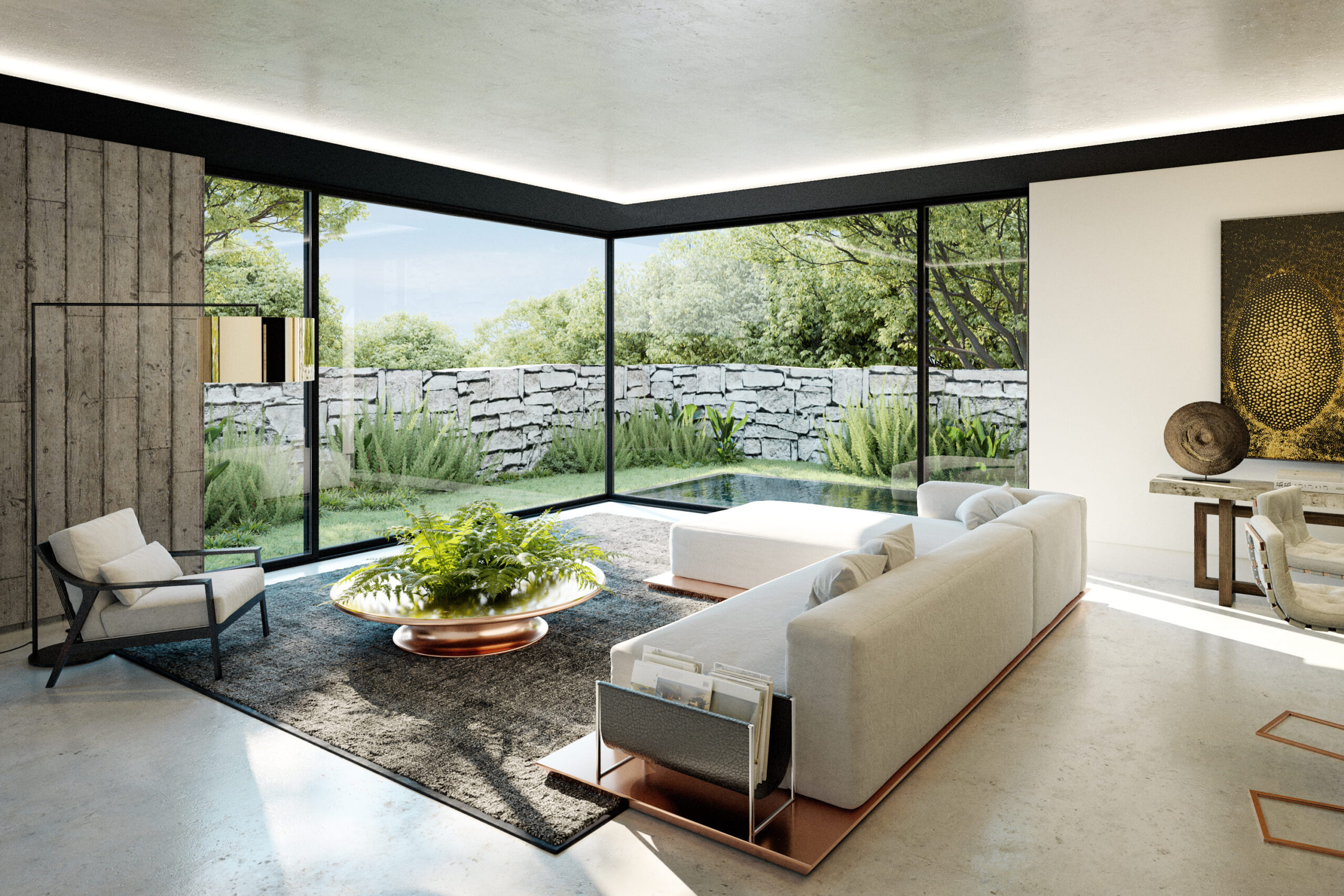
Materials are selected for their capacity to age into the context: natural stone, timber, and earth tones that connect the building to the Serra de Sintra’s existing palette of walls, paths, and vegetation. Interior finishes extend this logic inward, creating a spatial continuity between inside and outside that dissolves the boundary between built and natural environments.
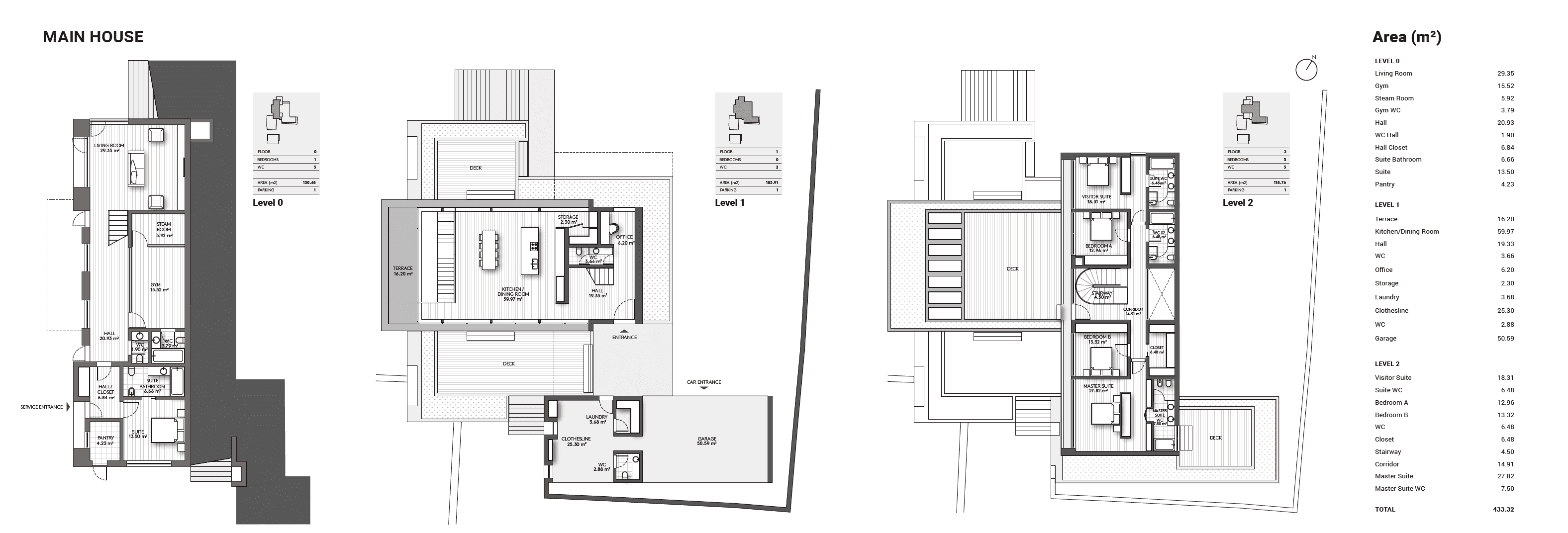
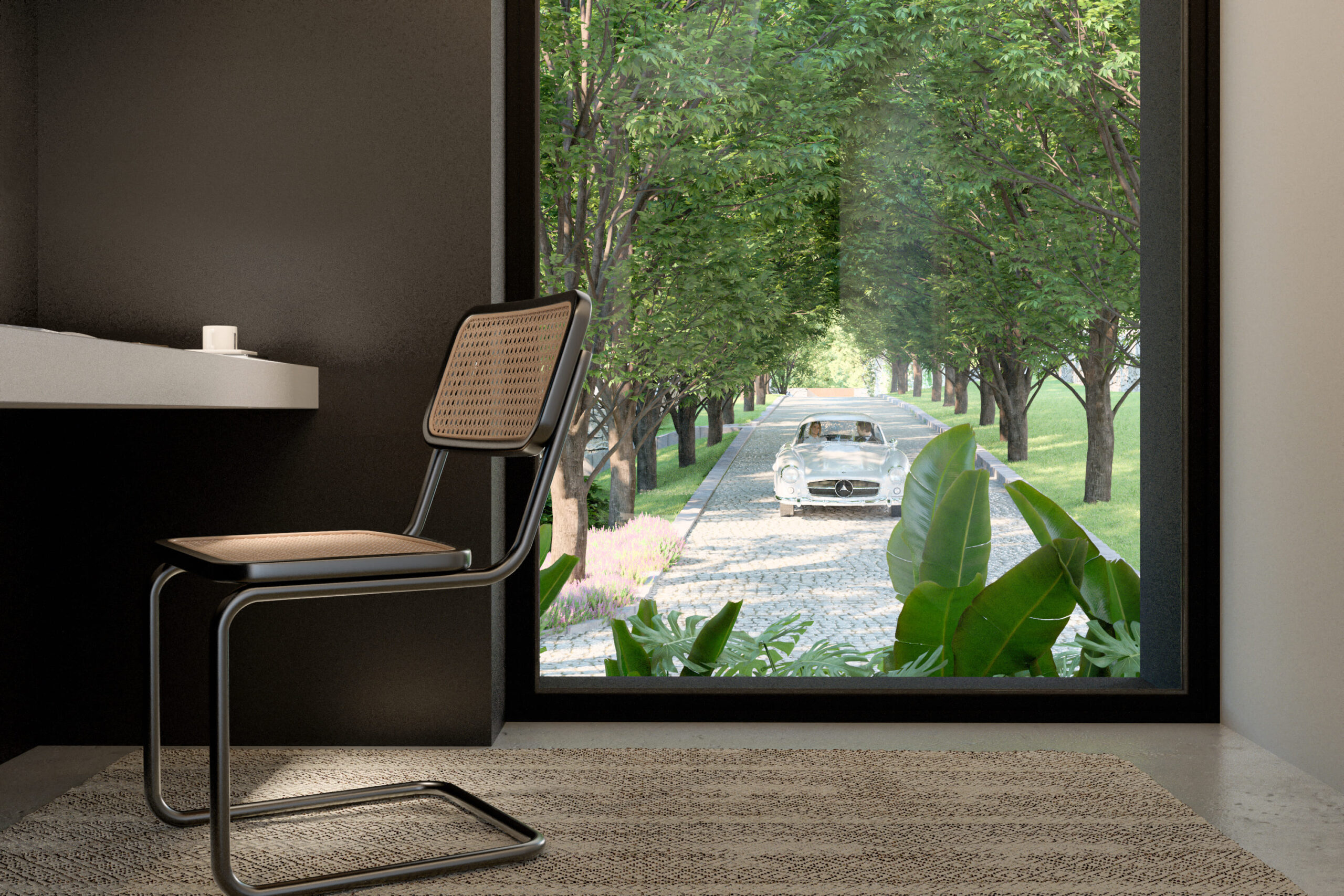
Spatial organization prioritizes views and light over program efficiency. Rooms are positioned to frame specific moments in the landscape: the ocean horizon, the forest edge, and the afternoon light on the hillside. Movement through the villa is choreographed as a sequence of framed experiences, each revealing a different dimension of the site.
KEY DESIGN DECISIONS
The decision to treat restraint as the primary design value was the most important choice. It resolved the tension between the desire to create something architecturally distinctive and the obligation to honor a site that needed no improvement, only a careful, considered addition.
The material palette was equally deliberate. In a landscape with strong existing character, materials that age gracefully and blend into the environment over time are not a compromise; they are the right answer. A building that looks better at ten years than at completion is a building that belongs.
WHY THIS PROJECT MATTERS
Private residential concept design in protected natural landscapes, particularly in areas like the Serra de Sintra with strong heritage and environmental sensitivities, requires a different design intelligence from that of urban or commercial projects. This project demonstrates how the principle of minimum touch, rigorously applied, can produce an architecture of genuine quality: one that adds value precisely by knowing what not to do.