Thomson Plaza — Mercatus Garden Retail Re-Design & Re-Branding · Singapore · 2018 Senior Designer, Woods Bagot · Competition Entry
Thomson Plaza is a neighbourhood mall in Singapore — familiar, functional, and quietly beloved by the community around it. The challenge was not to replace what people valued, but to amplify it. To transform a place where people go to get things done into a place where they also want to stay. A place that earns its place in the neighbourhood not just as a convenience, but as a destination.
The project was a competition entry developed at Woods Bagot in 2018. My contribution centred on two defining elements: the facade strategy and the interior concept — the ideas that gave the project its spatial identity and experiential logic.
The Facade
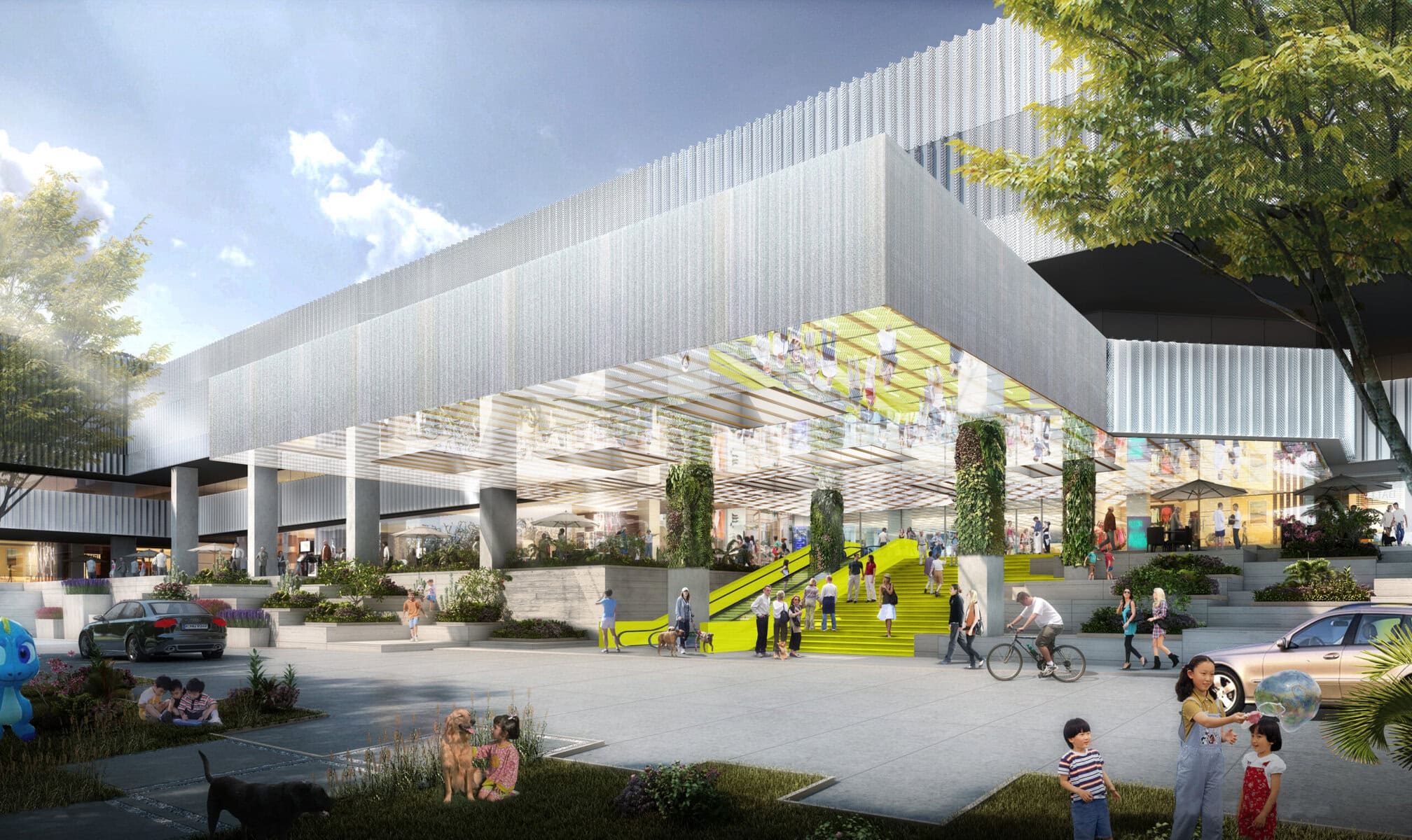
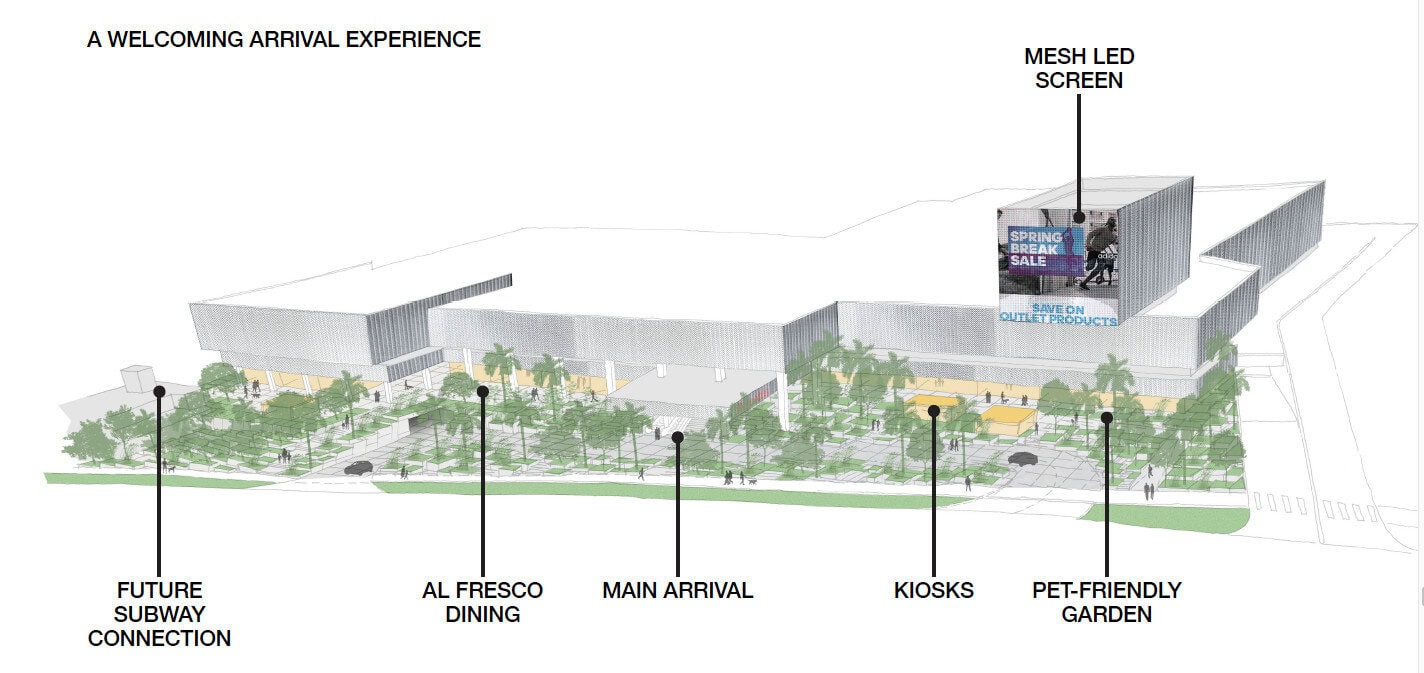
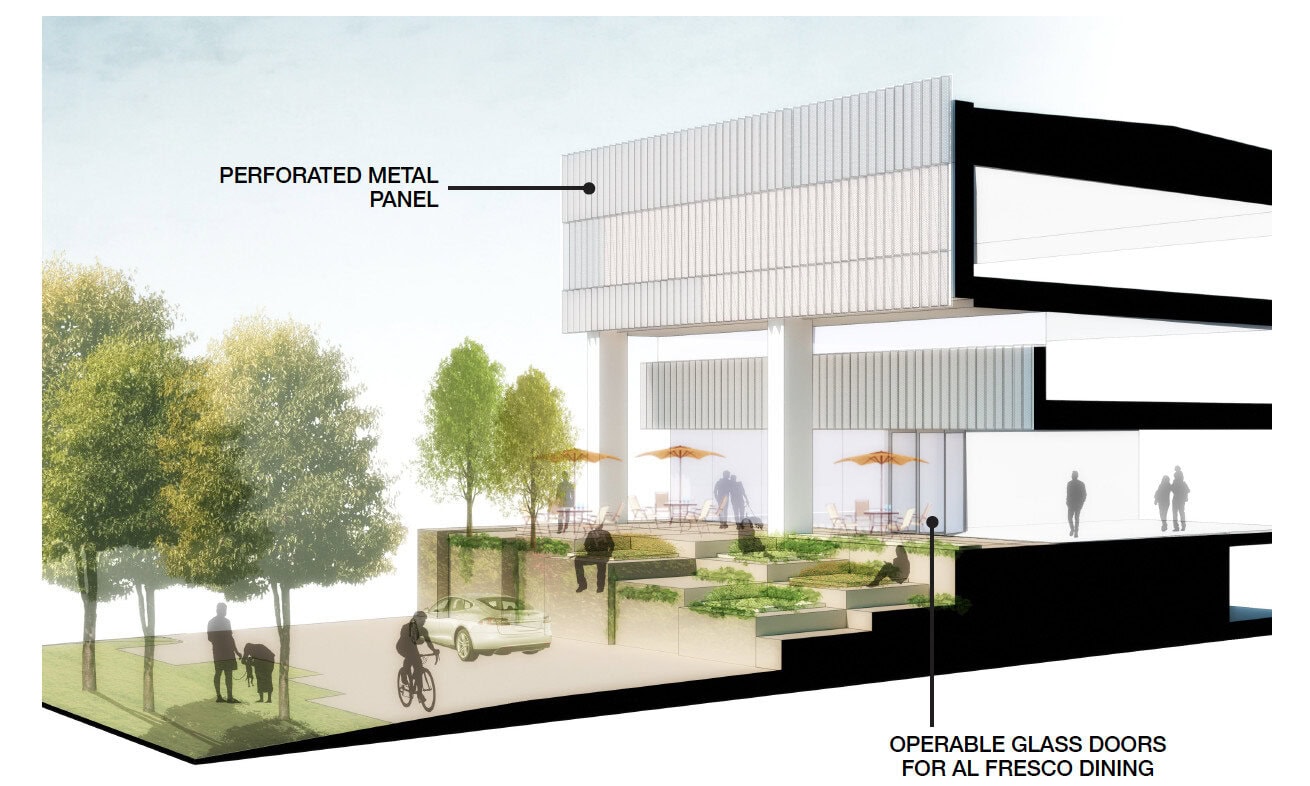
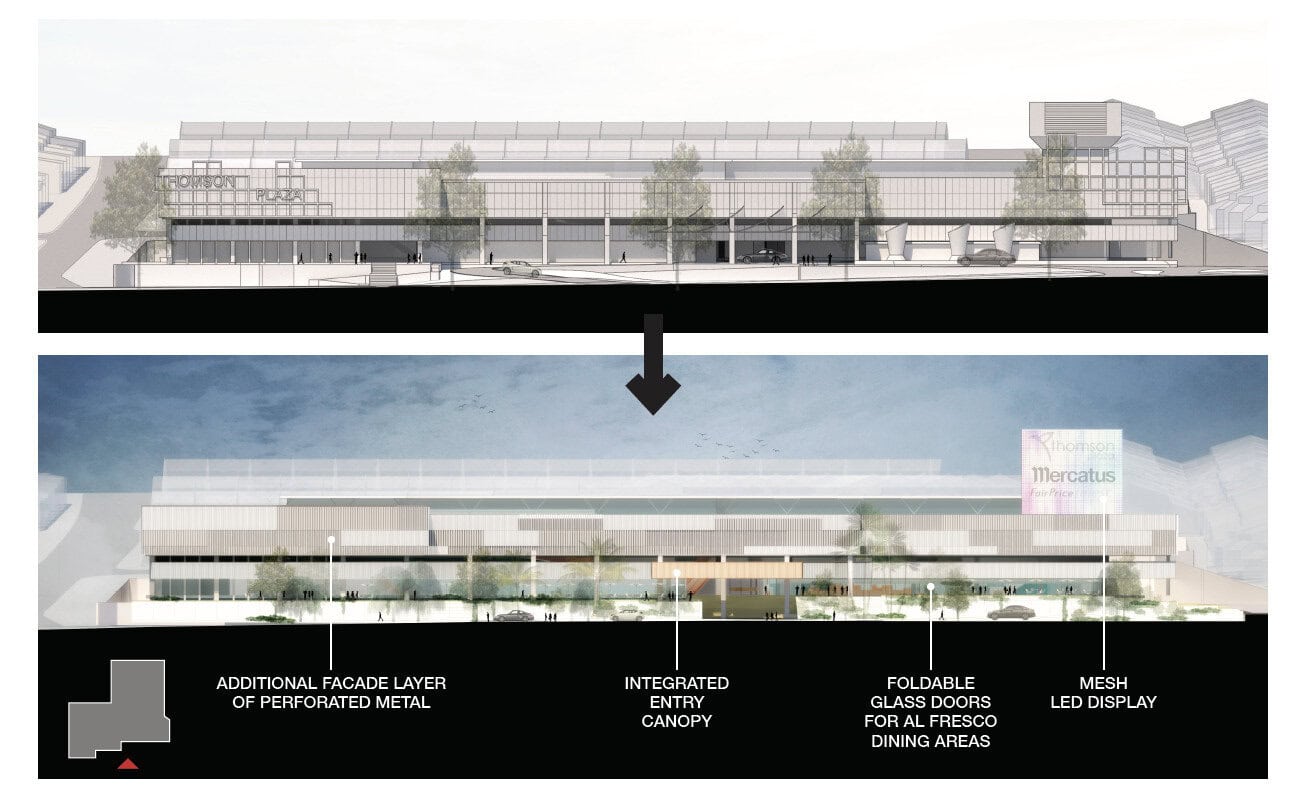
The existing building was closed, inward-facing, and disconnected from the street. My proposal introduced a second skin of perforated metal panels that wraps the building in a light, permeable layer — filtering sunlight, softening the massing, and creating a sense of depth and movement from the outside. A mesh LED display was integrated into the corner tower, turning the building into a visible landmark along Upper Thomson Road. Foldable glass doors along the ground level dissolve the boundary between inside and outside, allowing the al-fresco dining areas to spill naturally onto the arrival garden.
The Arrival Experience
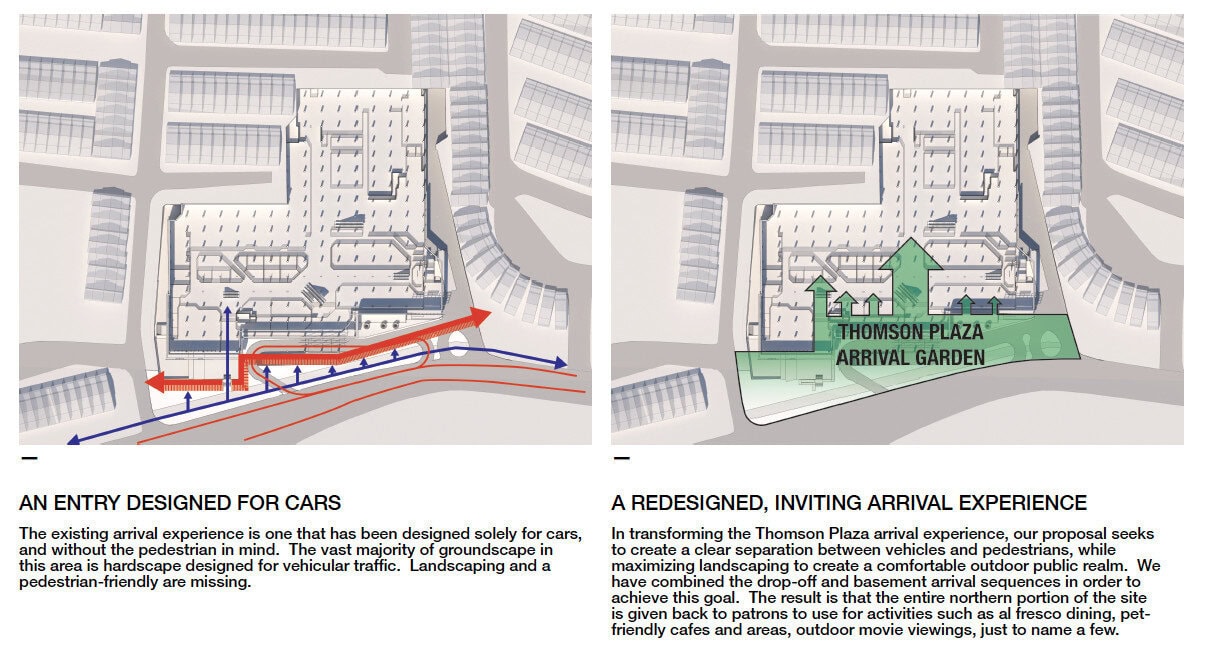
One of the central problems was the arrival. The existing entry was designed for cars, not people. The pedestrian experience was an afterthought — hardscape, service roads, and a back-of-mall feeling that undercut the potential of the site.
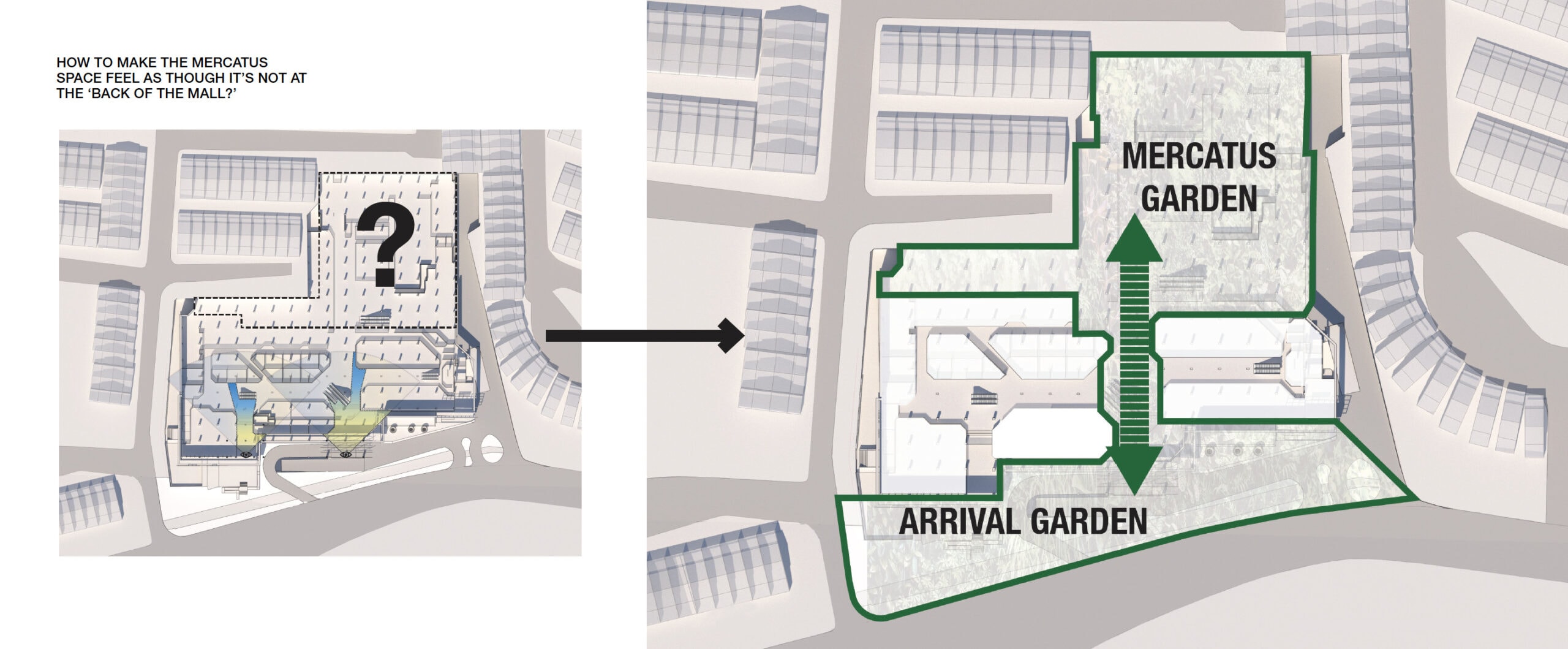
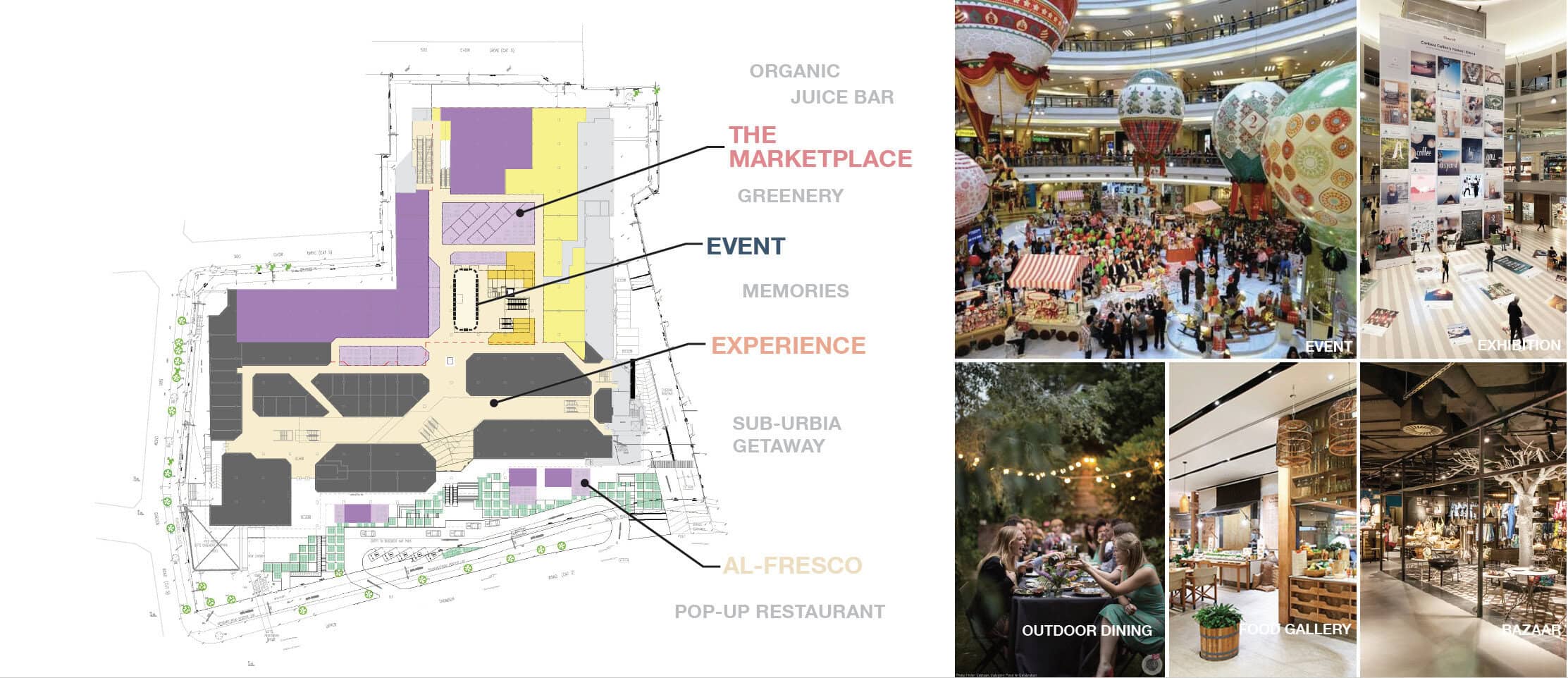
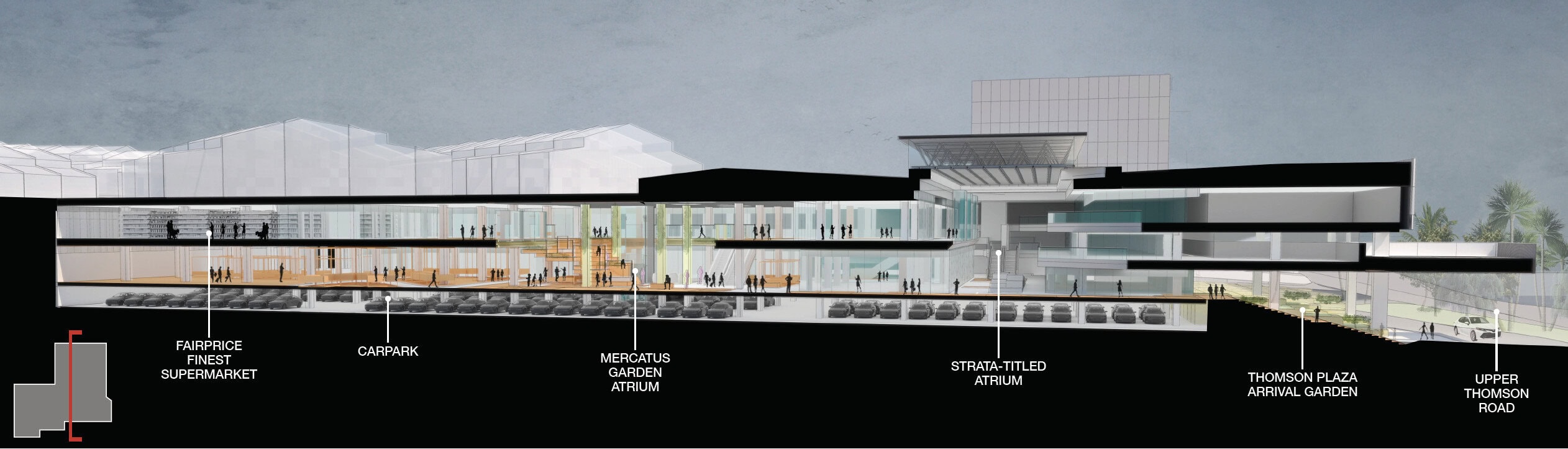
The concept repositioned the entire northern edge of the site as a public garden — the Thomson Plaza Arrival Garden. By separating vehicle drop-off from pedestrian movement, and combining the basement and ground-level arrival sequences, we reclaimed a generous outdoor zone for al-fresco dining, pet-friendly areas, kiosks, and community events. The result was a welcoming threshold that invited people in before they even entered the building. Arrival became part of the experience, not an obstacle to it.
The Interior Concept
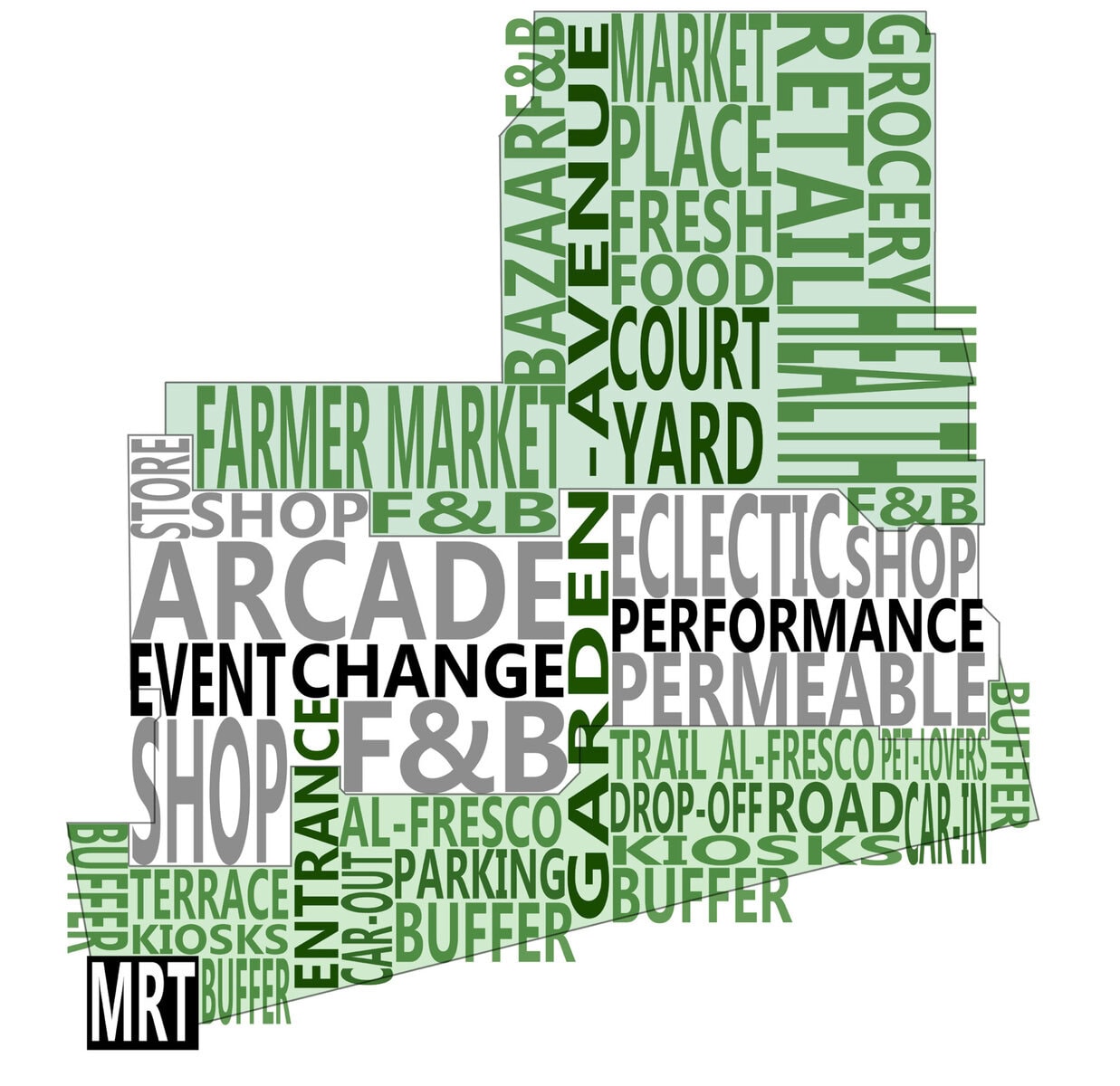
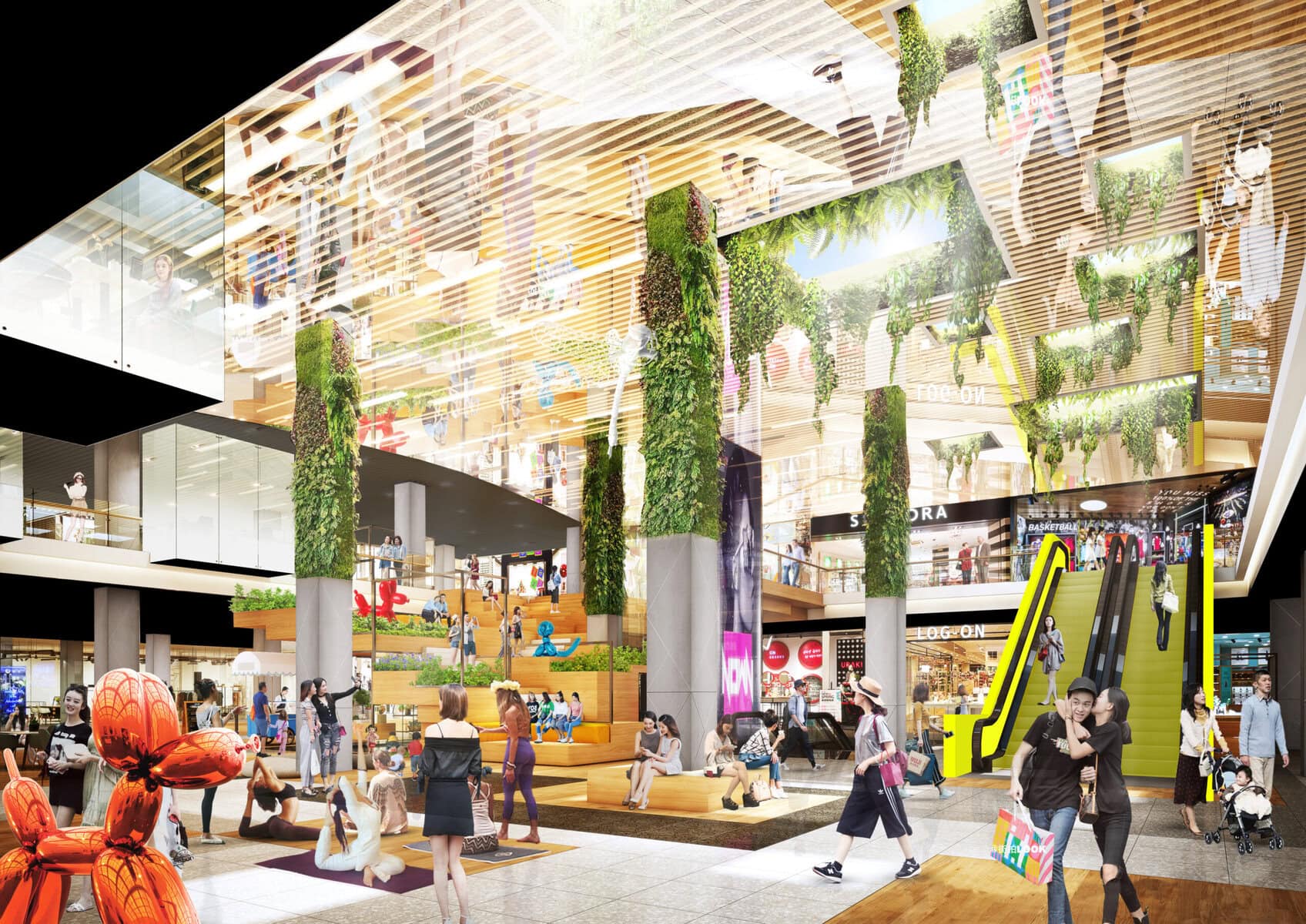
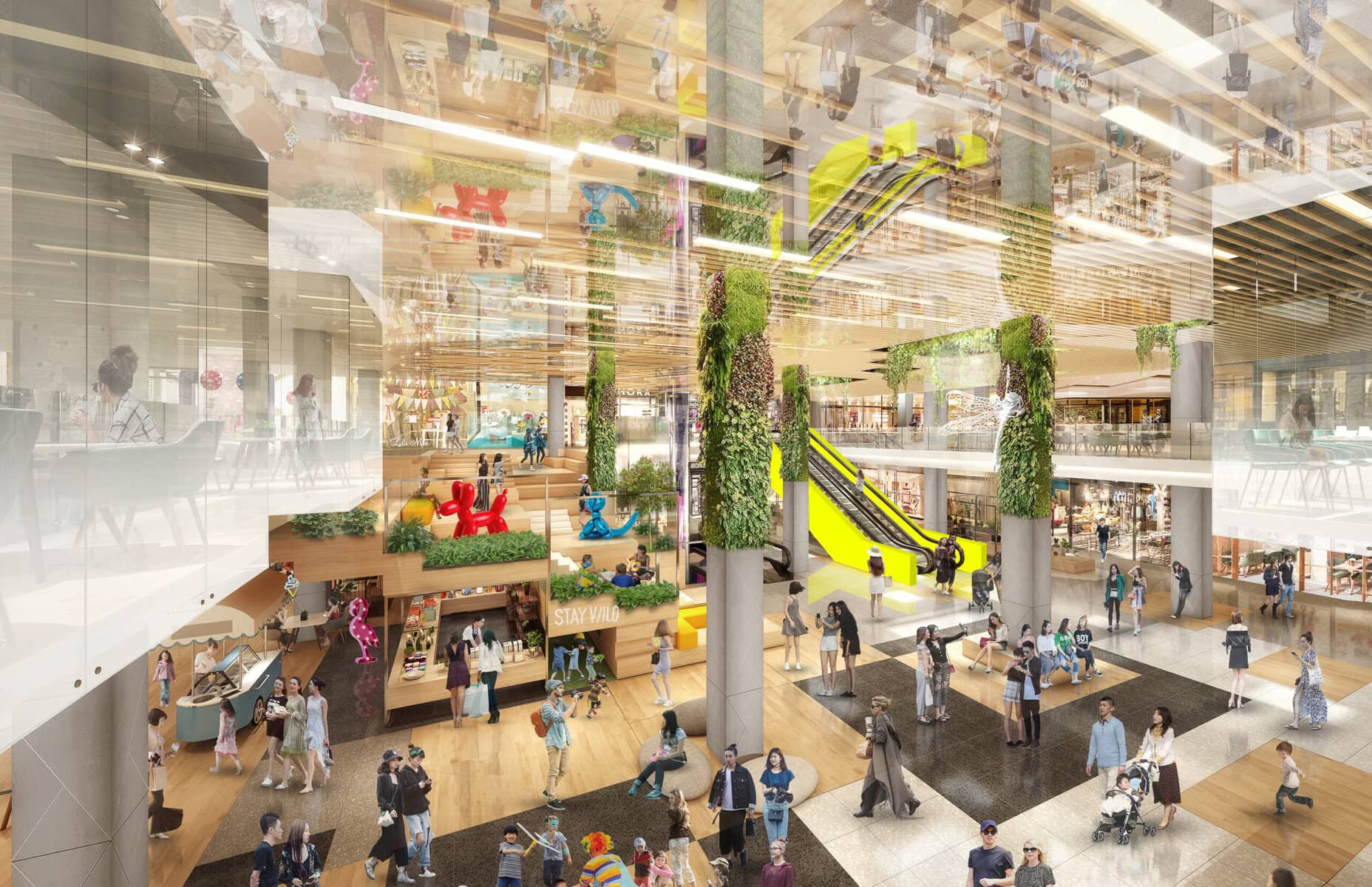
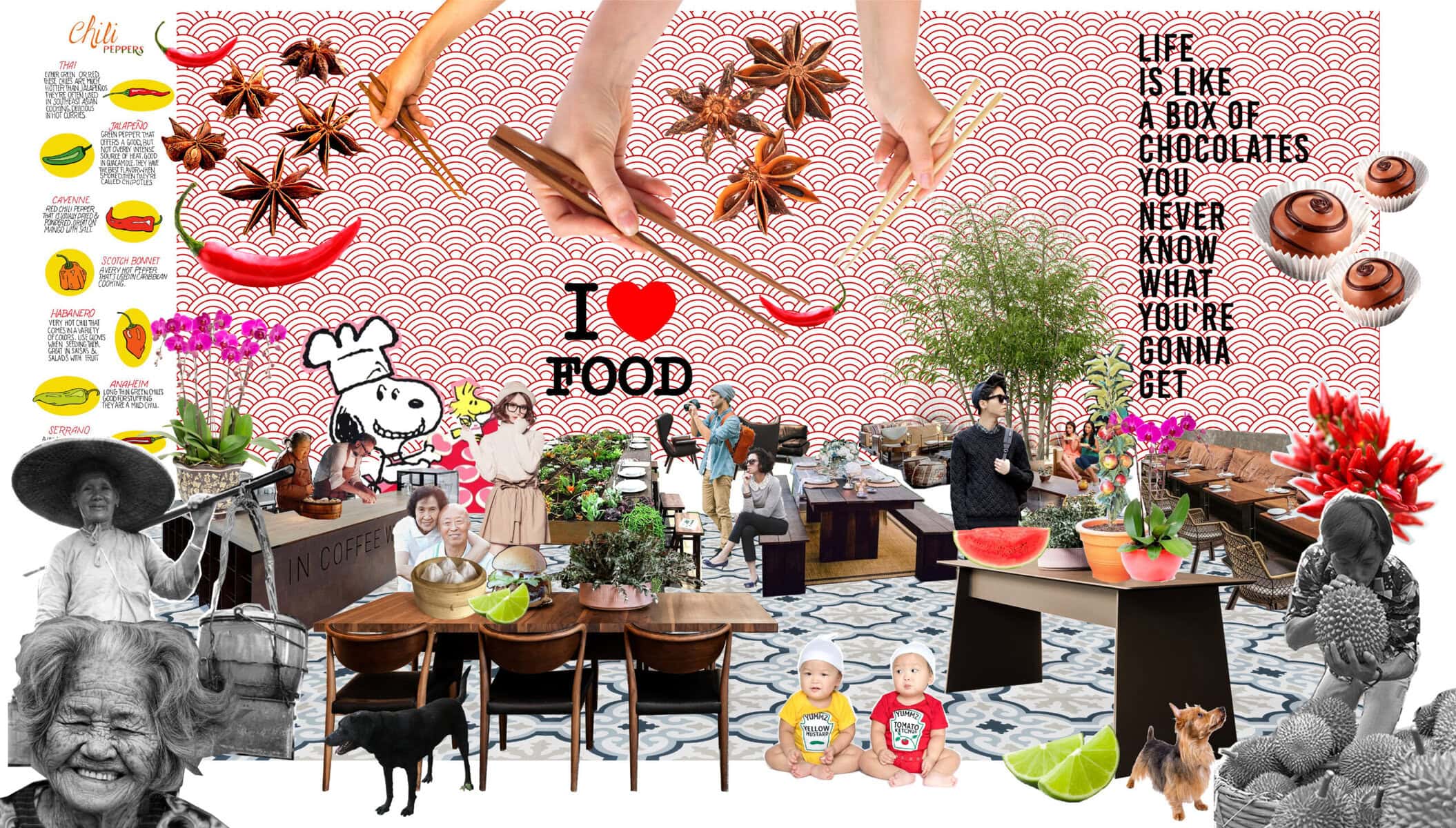
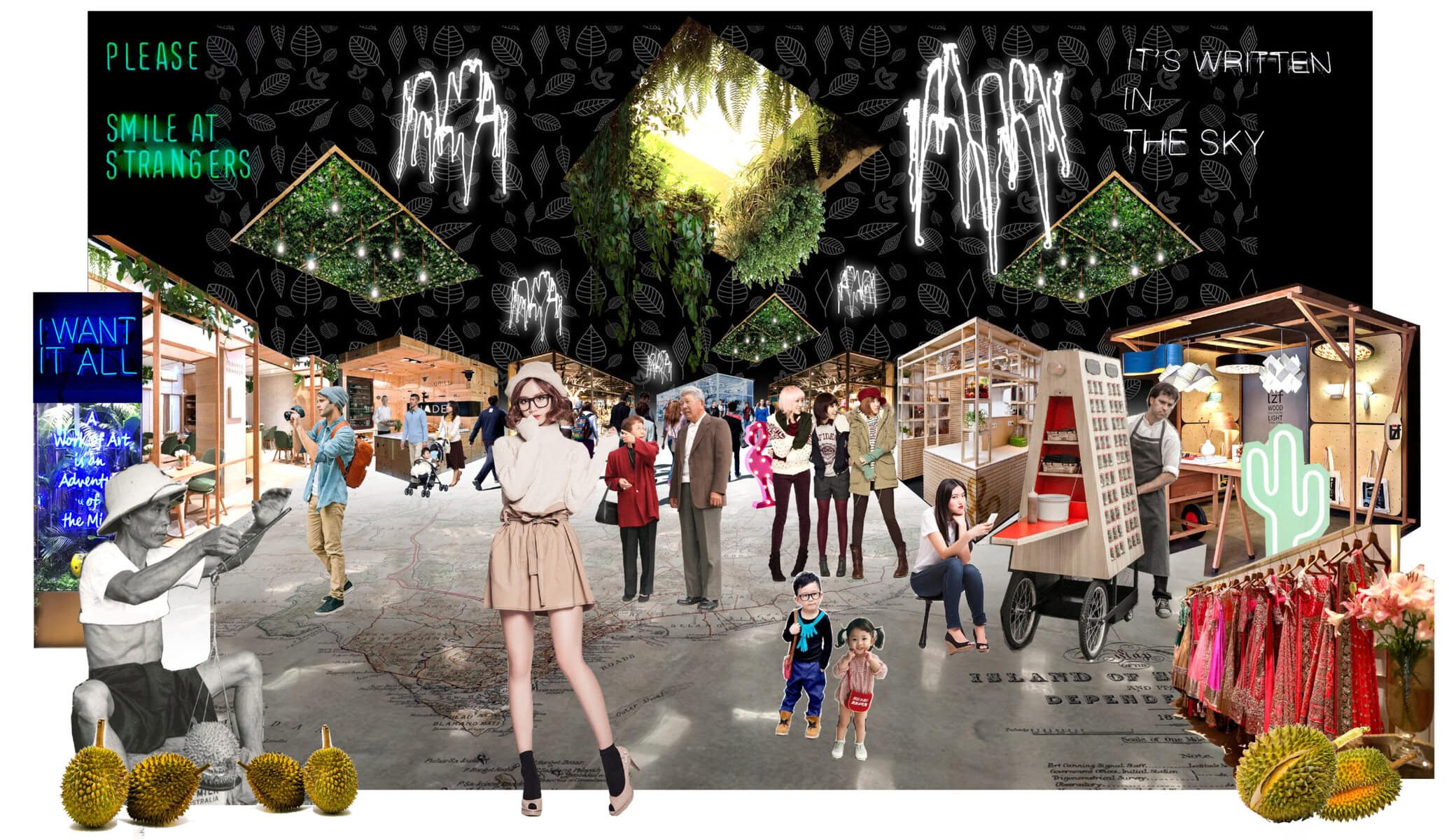
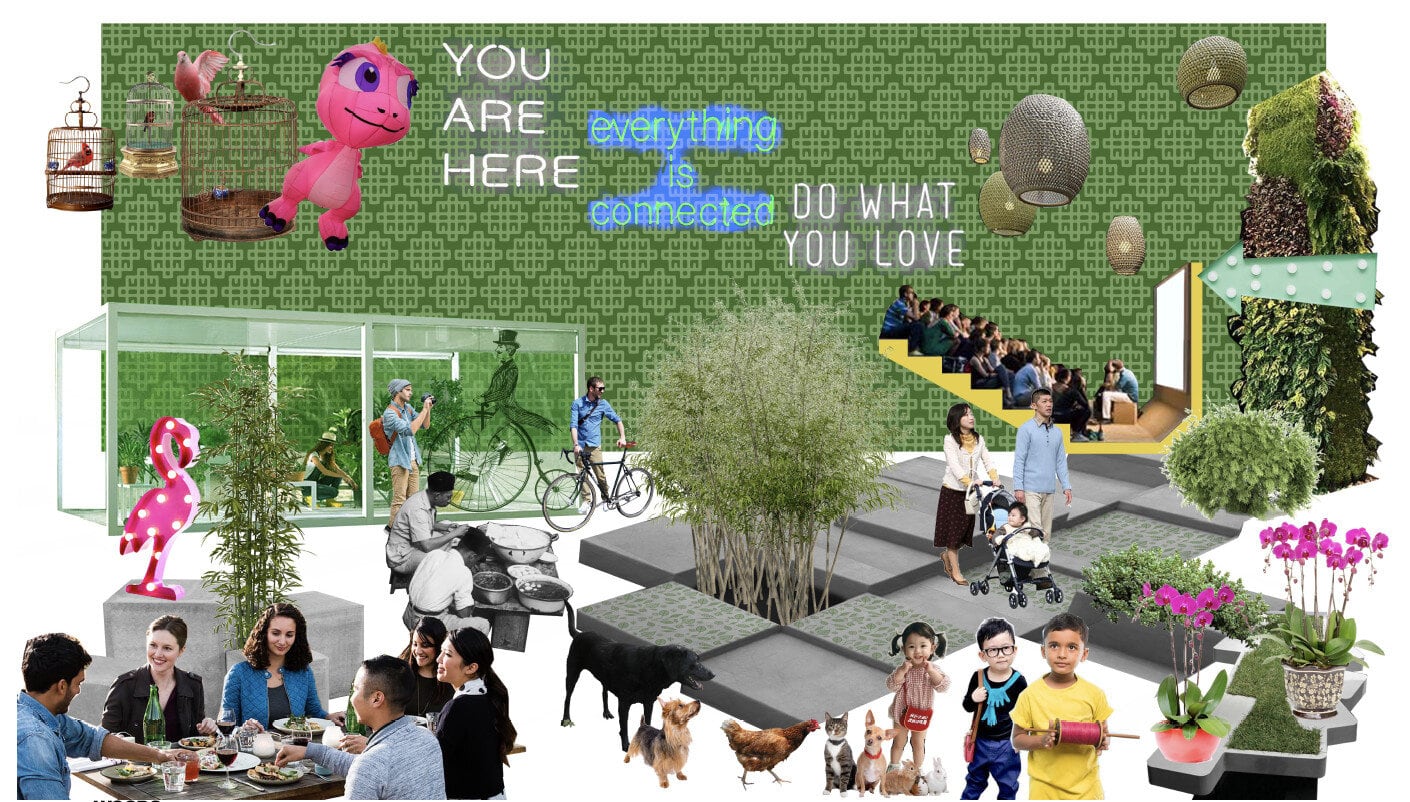
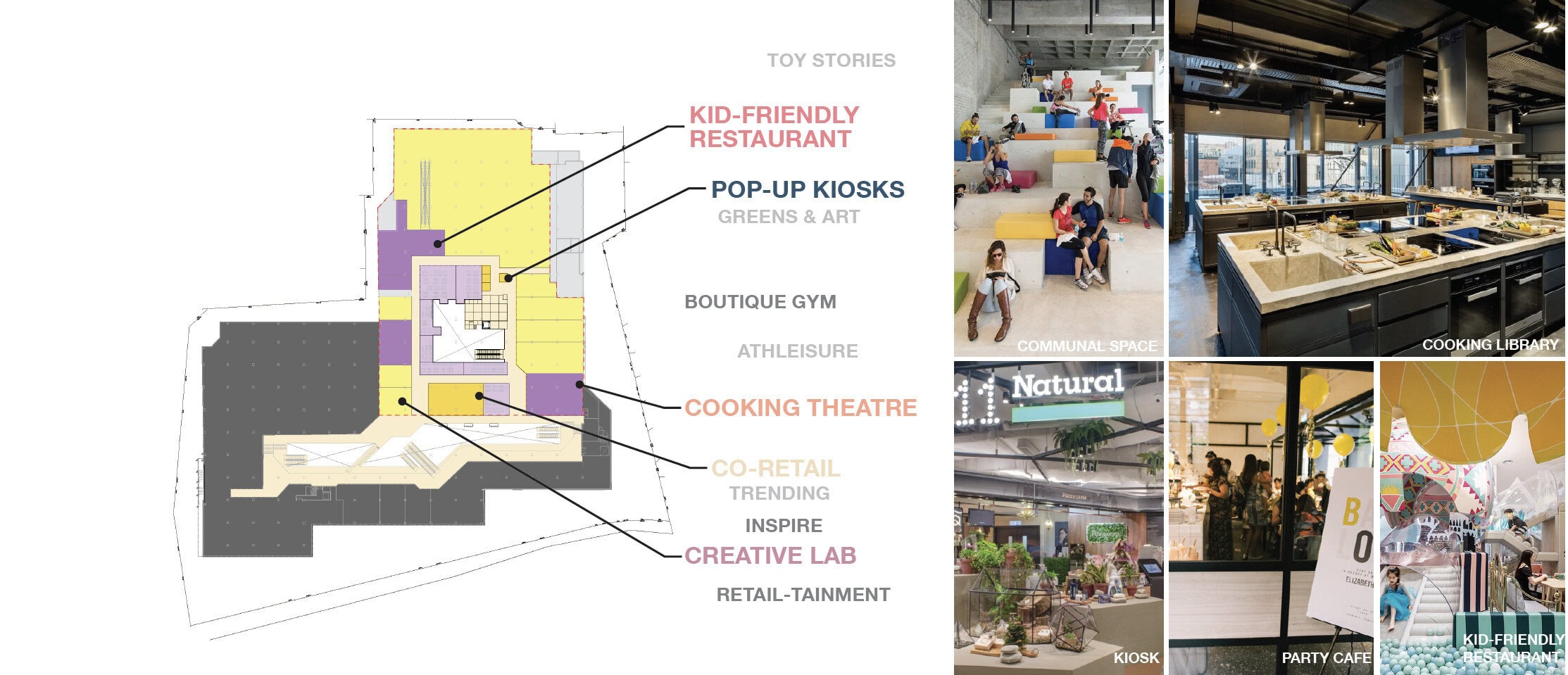
Inside, the proposal organised the programme into a series of distinct experience zones, each with its own identity and audience: The Marketplace for curated food and retail; the Creative Lab for discovery and co-retail; the Cooking Theatre for community and learning; the Mercatus Garden Atrium as the social heart of the building.
The concept was built around a simple idea — that a neighbourhood mall should reflect the life of the neighbourhood. Not the generic offer of a regional shopping centre, but something more personal, more local, and more alive. A place where vendors are friends, where children can learn, where families can spend a Sunday without needing a reason. Where commerce and community are not in competition, but in conversation.
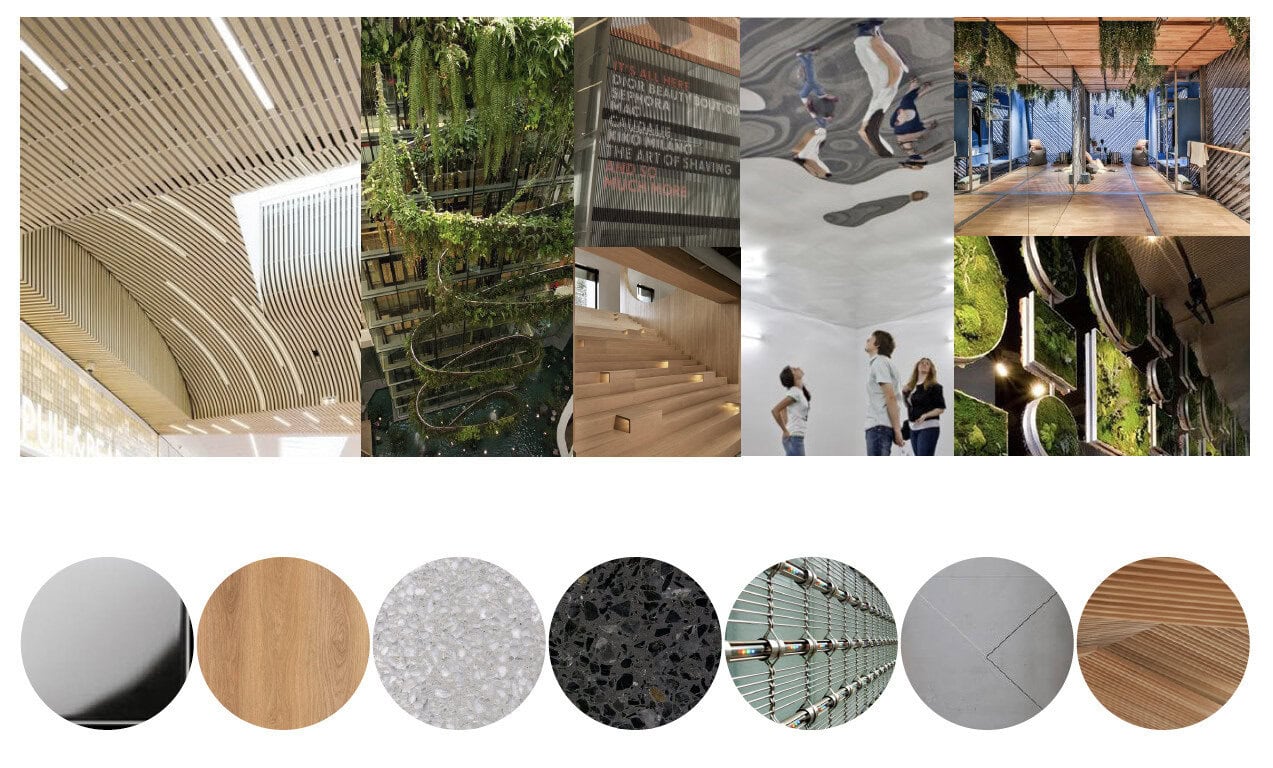
The interior language drew on natural materials — timber, terrazzo, greenery, and perforated metal — to create warmth and texture across a large floor plate. Living walls, planted columns, and a reflective ceiling system brought nature into the atrium, blurring the line between indoor and outdoor. The yellow escalators punctuated the space with energy and colour, becoming a visual anchor that tied the levels together.
Why This Project Matters
Mercatus Garden was never built. Like many competition entries, it remained a proposal. But the thinking behind it — how to design retail as experience, how to connect a building to its community, how to give a commercial space a reason to exist beyond consumption — remains as relevant today as it was in 2018.
Retail is changing. The question is no longer what to sell, but what to offer. Mercatus Garden was an answer to that question — rooted in place, designed for people, and built around the belief that the best retail spaces are, first and foremost, great public spaces.
This is the kind of design problem I find most interesting: not the shape of the building, but the logic behind it. The concept that makes everything else inevitable.