
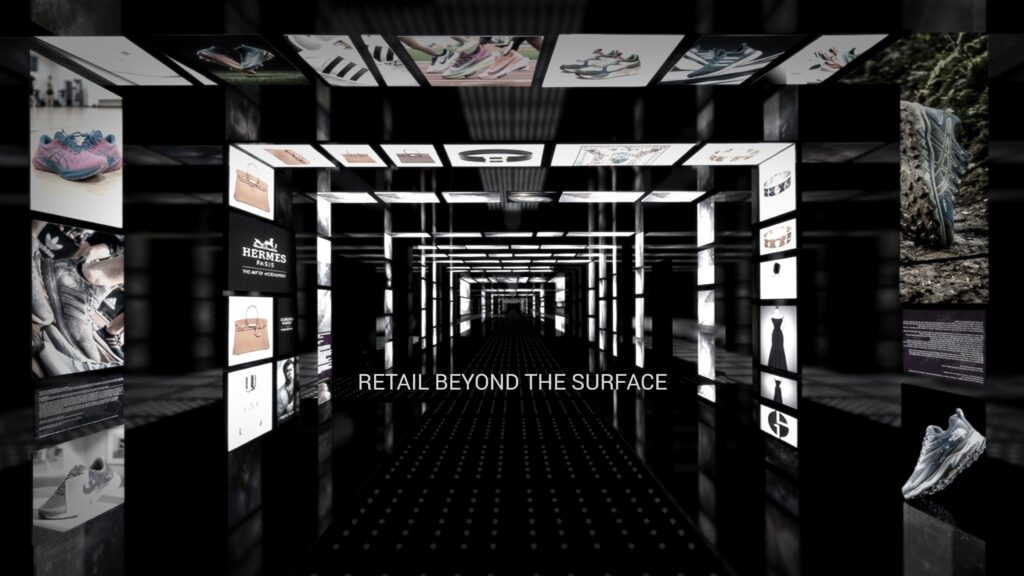
When Persuasion Moves Online, What Is Left for Architecture?
The crisis of retail is not that people have stopped buying.
The crisis is that architecture is no longer the primary mechanism through which people are persuaded to buy.
That distinction matters.
For centuries, retail architecture operated as a spatial machine of persuasion. The façade attracted. The window seduced. The entrance filtered. The interior oriented. The display intensified. The route prolonged attention. The counter completed the transaction.
Retail was never neutral. It did not simply contain products, organize circulation, or provide light, storage, counters, mirrors, fitting rooms, and payment points. It constructed the conditions through which someone became willing to buy. A product, a service, an identity, a lifestyle, a promise.
Retail architecture transformed looking into wanting, and wanting into buying.
The market persuaded through density, smell, voice, proximity, abundance, and negotiation. The shop persuaded through threshold, trust, familiarity, display, and encounter. The department store persuaded through spectacle, aspiration, vertical movement, and social performance. The shopping mall persuaded through climate, repetition, leisure, circulation, and duration. The flagship persuaded through aura, identity, material excess, and symbolic presence.
These spaces were architecturally different. Their scales were different. Their publics, atmospheres, and rituals were different. But beneath those differences lay a common mechanism.
Retail architecture existed to sell.
Not only by showing things, but by arranging the passage from attention to desire, from desire to confidence, from confidence to acquisition.
Today, that mechanism has migrated.
The decisive moment of persuasion increasingly happens before the body reaches the store. It happens on the screen, in the feed, through the search result, the recommendation, the review, the influencer, the saved image, the abandoned cart, the targeted advertisement, and the platform that remembers what the street cannot.
The algorithm has become a storefront.
It attracts, follows, compares, suggests, reminds, personalizes, discounts, and converts. It understands attention not as a general condition, but as data. It does not wait for the pedestrian to pass. It enters the bedroom, the train, the office, the sofa, and the airport queue. It collapses distance. It shortens hesitation. It removes the threshold.
This does not mean that physical retail is dead. The evidence is more complex. In the United States, e-commerce accounted for 16.9 percent of total retail sales in the first quarter of 2026, while e-commerce sales grew faster year-on-year than total retail sales overall. At the same time, CBRE reported that U.S. retail availability remained low at 4.9 percent in Q1 2026, while average asking rent rose 2.4 percent year-on-year.
So the crisis is not simply economic.
The crisis is spatial.
Physical retail remains valuable, but not in the same way. The store can no longer assume that its primary role is to make products visible and available. Visibility has been absorbed by media. Availability has been absorbed by logistics. Comparison has been absorbed by platforms. Payment has been absorbed by frictionless interfaces.
The store is no longer always the place where purchase happens.
Increasingly, it becomes the place where conviction is tested.
A showroom.
A place of touch.
A space of reassurance.
A setting for service.
A site where the brand becomes materially credible.
This is the key shift.
The store is no longer only a machine of transaction. It is becoming a space of verification.
The customer may discover the product online, compare it, read reviews, save it, configure it, and even purchase it before entering a physical space. But the store still offers something the screen cannot fully resolve: weight, scale, texture, atmosphere, comfort, fit, smell, temperature, service, trust, and presence.
The store becomes important not because it shows what the screen cannot show, but because it confirms what the screen cannot guarantee.
This explains why online-first brands continue to open physical showrooms. Article, the Vancouver-based furniture company built around online sales, is opening one of its first U.S. showrooms in San Francisco in fall 2026. The showroom is expected to allow customers to browse, place orders, buy selected items, and access design services. Its CEO described physical retail as a natural extension of the company’s online model.
This is not a return to the old store.
It is a new spatial role.
The store becomes the physical interval inside an otherwise digital system of persuasion. It is not outside e-commerce. It is part of it. It is where digital desire becomes bodily confidence.
This is why the language of “experiential retail” is both useful and dangerous.
Useful, because retail clearly needs more than display.
Dangerous, because experience is too often confused with stimulation.
More screens.
More immersion.
More events.
More mirrors.
More photogenic corners.
More spectacle.
More content.
But stimulation is not the same as experience.
Stimulation captures attention. Experience changes perception.
The screen is already excellent at stimulation. It multiplies images, accelerates novelty, personalizes desire, and shortens hesitation. If architecture tries to compete with the screen by becoming another media surface, it loses. The façade becomes a display. The interior becomes content. The store becomes a background for images rather than a condition for experience.
That is not enough.
When persuasion moves online, what is left for architecture?
Not the simple act of selling.
Architecture’s value lies elsewhere: in threshold, duration, atmosphere, resistance, material presence, orientation, silence, delay, and embodied memory.
This is where threshold becomes essential.
A threshold is not merely an entrance. It is a change of condition. It slows the body. It separates one state from another. It transforms perception. It creates anticipation, tension, orientation, and awareness.
Retail has always depended on thresholds because buying is rarely only practical. It is psychological. It requires transition. The consumer moves from indifference to attention, from attention to desire, from desire to trust, from trust to acquisition.
The market had thresholds of intensity: the movement from street to crowd, from distance to smell, from anonymity to voice.
The shop had thresholds of trust: the step inside, the counter, the gaze of the seller, the intimacy of scale.
The department store had thresholds of aspiration: the escalator, the atrium, the display floor, the theatrical sequence of goods.
The mall had thresholds of enclosure: the passage from weather into climate, from street into endless interior, from errand into leisure.
The flagship had thresholds of aura: compression, refinement, controlled lighting, distance, ritual, and access.
Digital platforms compress this sequence. Architecture should not imitate that compression. It must offer another kind of value.
Not speed, but depth.
Not frictionlessness, but memory.
Not immediate conversion, but meaningful mediation.
Because frictionless space often produces frictionless memory.
Many contemporary retail environments are technically successful and emotionally weak. They are bright, accessible, optimized, branded, and efficient. They communicate clearly. They photograph well. They move people smoothly.
Yet they disappear from memory almost immediately.
They function, but they do not remain.
This is the weakness of retail as surface. Surface can attract attention, but it rarely sustains perception. It can produce recognition, but not necessarily attachment. It can show the object, but it does not prepare the body to encounter it.
Threshold does something else.
Threshold gives weight to arrival. It turns movement into awareness. It allows hesitation, comparison, touch, withdrawal, return, and decision to become part of the experience. It does not eliminate the gap between desire and purchase.
It designs that gap.
That gap is where confidence forms.
That gap is where memory attaches.
That gap is where the body confirms what the screen proposed.
The future of retail architecture may therefore depend less on inventing new forms than on recovering a spatial intelligence that commerce has forgotten: the intelligence of transition, atmosphere, delay, and embodied trust.
This is not nostalgia for the old market, the arcade, the department store, the mall, or the luxury boutique. The online mechanism is real. AI-driven commerce, reimagined marketing, data-driven personalization, and value-seeking consumers are already reshaping the retail industry. Deloitte’s 2026 retail outlook identifies AI in commerce, reimagined marketing and customer experience, supply-chain transformation, margin discipline, and value-seeking consumers as major forces transforming the sector. Deloitte also reports that 67 percent of surveyed retail executives expect to have AI-driven personalization capabilities within the next year.
Architecture cannot reverse this.
But it can answer it.
Not by pretending the store is still the only place of persuasion.
Not by turning interiors into screens.
Not by producing louder spectacle.
Not by confusing immersion with meaning.
Architecture answers by doing what digital persuasion cannot fully do: giving desire a body, a temperature, a weight, a distance, a silence, a material resistance, and a remembered atmosphere.
The store of the future is not simply where we buy.
It is where the abstract promise of commerce becomes spatially believable.
This is why the retail crisis is also an architectural opportunity. Once the transaction migrates online, architecture is freed from pretending that display is enough. It can return to a deeper role: not as surface, but as mediator.
Between attention and trust.
Between image and touch.
Between desire and presence.
Between commerce and experience.
Retail spaces are still measured by rent, revenue, conversion, lighting levels, circulation, efficiency, and sales per square meter. But human beings are not made of square meters.
They remember thresholds.
They remember light.
They remember compression.
They remember silence.
They remember material.
They remember service.
They remember the way a place slowed them down.
They remember the moment when an object became more than an image.
The old retail model treated architecture as persuasive surface. The new retail condition demands architecture as experiential mediation.
In the old model, architecture helped sell by showing. In the new model, architecture helps sell by confirming, slowing, deepening, and materializing. The store becomes less a container of inventory and more a spatial argument for why the product matters.
Retail still sells. That is its reality. But the way it sells is changing.
The market sold through encounter.
The shop sold through trust.
The department store sold through aspiration.
The mall sold through duration.
The flagship sold through identity.
The digital platform sells through prediction.
What, then, can architecture sell now?
It can sell presence.
Not presence as a commodity, but presence as the condition that allows commodities to become meaningful.
Display belongs to visibility. Threshold belongs to experience. The display shows the object. The threshold prepares the body to encounter it.
And this preparation is where architecture still has power.
A good retail space does not simply present merchandise. It constructs a sequence of attention. It understands that the moment before the object may matter as much as the object itself. It gives architectural value to arrival, orientation, hesitation, touch, comparison, withdrawal, return, and decision.
It does not erase the interval between desire and possession.
It makes that interval meaningful.
Retail becomes architecture again when it stops behaving as pure surface and begins constructing the gap between wanting and having.
That gap is not empty.
It is where trust is formed.
It is where perception changes.
It is where memory begins.
It is where commerce becomes experience.
And it is where architecture still has something essential to say.
#Architecture #RetailArchitecture #RetailDesign #PhysicalRetail #DesignCriticism #UrbanDesign #FutureOfRetail