
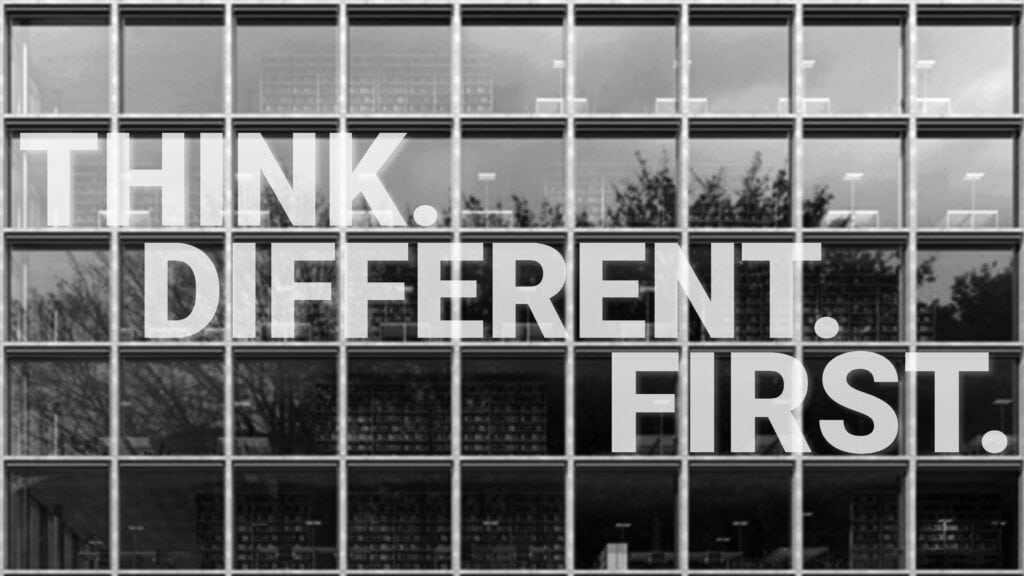
Did you notice how similar many contemporary residential buildings have become? Especially the expensive ones.
The same glass façades. The same thin frames. The same “minimal luxury”. The same open-plan interiors, neutral colours, beige furniture, perfect sunlight, and impossible calm. Everything appears elegant, transparent, and sophisticated.
But something essential has quietly disappeared.
Not only decoration. Not only architectural character. Logic itself has disappeared.
The logic of living.
The logic of use.
The logic of rooms, thresholds, storage, privacy, orientation, climate, routine, and time.
For decades, residential architecture was expected to support life. A home had to make sense. It had to allow people to cook, wash, gather, rest, work, store objects, raise children, receive guests, withdraw, regulate light, protect intimacy, and live ordinary routines with dignity. Architecture was not simply an image. It was an organisation of life.
Today, much of residential real estate seems increasingly disconnected from this responsibility.
The kitchen disappears and becomes a kitchenette. The laundry room disappears and becomes a hidden machine inside a cabinet. Storage disappears, becoming a future problem for the inhabitants. Corridors disappear in the name of efficiency, but with them disappears transition. Doors disappear in the name of openness, but with them disappears privacy. Walls disappear in the name of fluidity, but with them disappear acoustic comfort, retreat, and silence.
The living room becomes everything at once: kitchen, office, dining room, television room, circulation space, and visual showroom.
The apartment appears larger in the image while life inside it becomes smaller.
And this is sold as progress. And at a high price!
This is the central illusion of much contemporary luxury housing: it looks refined, but it often removes the very spaces that make living possible. It replaces function with atmosphere, comfort with finish, architectural intelligence with branding, and meaning with lifestyle.
Luxury becomes a surface.
A stone countertop. A full-height window. A black metal frame. A minimalist kitchen. A cinematic render carefully staged to hide the inadequacy of the plan.
But luxury without spatial logic is not luxury.
It is packaging.
A small apartment remains small. An overheated apartment remains overheated. A badly organised apartment remains exhausting to inhabit. A home without storage remains impractical. A home without privacy remains exposed. A home without silence remains incomplete.
Architecture cannot solve spatial poverty through expensive materials. It cannot solve bad planning with glass. It cannot solve density with a beautiful façade. And it cannot solve the absence of domestic meaning with visual sophistication.
Yet this is exactly what much of the real estate market increasingly asks architecture to do.
The contemporary residential building is often treated less as a place to live and more as a product to sell. The façade becomes a marketing surface. The rendering becomes a promise. The apartment becomes an atmosphere. The home becomes a financial object disguised as lifestyle.
This is not only an architectural problem.
It is cultural.
Why are people accepting homes that are smaller, hotter, more exposed, more expensive, and less capable of supporting everyday life?
Because people are no longer being invited to understand space. They are being trained to desire images.
The image arrives before the experience. The branding arrives before the plan. The lifestyle narrative arrives before the question of use. Before anyone asks how the apartment actually works, the rendering has already answered how it should feel: calm, elegant, minimal, exclusive, desirable.
But desire is not the same as quality.
A beautiful image can hide a weak plan. A refined façade can hide poor orientation. An expensive finish can hide the absence of storage. An open-plan interior can hide the loss of privacy. A luxury brand can hide a poor home.
This is where critical thinking must return.
THINK.
Before accepting the image passively. Before confusing transparency with quality. Before mistaking minimalism for intelligence. Before believing that openness always means freedom. Before accepting marketed luxury as architectural value. Do not look only at the sleek, crystal-clean kitchen in the background of a casual open-plan interior. Imagine frying fish or boiling beans. Imagine the smell and noise while trying to watch a film or speak with friends.
DIFFERENT.
Because architecture is not a product image. It is not a sales atmosphere. It is not a façade strategy. It is not a lifestyle render.
Architecture should not sell lifestyles.
Architecture is the construction of conditions for life. It is the space between public and private, between exposure and intimacy, between activity and rest, between light and shadow, between openness and protection, between body, routine, climate, memory, and time.
A good home is not only what can be photographed.
It is what can be inhabited.
It is where the laundry has a place, where the kitchen can actually be used, where objects can be stored naturally, where light is generous but controlled, where privacy is possible, where silence exists, and where daily life does not feel like a compromise hidden behind expensive finishes.
FIRST.
Because once the seductive image arrives, critical thought becomes more difficult. The render tells you what to desire. The marketing tells you how to feel. The brand tells you what status means. The apartment has already been emotionally staged before you even enter it.
That is why architecture must be questioned before it is consumed.
Before the marketing propaganda reaches you. Before someone builds it. Before the market asks for more of the same.
We need to learn to be critical FIRST.
Because the disappearance of logic in housing is not innocent. When functional space disappears, life becomes harder. When thresholds disappear, privacy becomes weaker. When storage disappears, daily life becomes cluttered. When rooms disappear, routines begin to collide. When meaning disappears, architecture becomes only a commodity.
And when architecture becomes only a commodity, the home becomes a luxury image that is beautiful to sell but difficult to live in. And inevitably, the culture that emerges from these spaces begins to change as well.
The future of housing should not be measured only by how elegant the image is, how expensive the finishes are, or how seductive the façade appears. It should be measured by a more demanding question:
Does this space protect the dignity of living?
Because a house should not be a financial product disguised as a lifestyle. It should not be a render made habitable only in imagination. It should not sacrifice logic, function, comfort, and meaning in the name of marketable luxury.
Architecture must move beyond the object. Beyond the façade. Beyond the image. Beyond the fake promise of luxury.
A good home is not the one that photographs well.
It is the one that supports life with intelligence, generosity, clarity, comfort, and dignity over time.
That is where architecture begins again.
All the rest is real estate. Yet, the real estate market is not an alien entity imposed on society from above.
It follows a very simple mechanism: supply and demand.
Developers build what people accept, desire, tolerate, and continue to buy. If society continuously rewards superficial image, excessive exposure, minimal functionality, and compressed living conditions disguised as luxury, the market will continue producing them.
But this also means something important:
People have more power than they think.
If buyers begin demanding better spatial quality, proper storage, climate intelligence, privacy, thresholds, usable kitchens, and meaningful layouts designed for real life rather than solely for marketing images, the market will eventually adapt.
The market always responds.
Architecture changes when expectations change.
This is why critical thinking matters.
We need to stop consuming architecture passively and start questioning it actively. We need to ask more from developers, from architects, from cities, and from the spaces where life unfolds every day.
Because housing should not only be profitable.
It should be inhabitable.
At MMA, we believe architecture begins before the image.
Our work focuses on early-stage concept design, spatial strategy, and architectural direction, helping developers, investors, and brands create projects that move beyond superficial market aesthetics toward meaningful spatial experiences rooted in logic, identity, atmosphere, and human life.
Because architecture should not only look valuable.
It should create value through the quality of living itself.
THINK.
DIFFERENT.
FIRST.
#Architecture #ArchitectureBeyondTheObject #ResidentialDesign #UrbanDesign #DesignCriticism #RealEstate